Kirjojen hintavertailu. Mukana 12 381 335 kirjaa ja 12 kauppaa.

Kirjailija

Quintard Taylor

Kirjat ja teokset yhdessä paikassa: 12 kirjaa, julkaisuja vuosilta 1994-2022, suosituimpien joukossa Free Radical. Vertaile teosten hintoja ja tarkista saatavuus suomalaisista kirjakaupoista.

12 kirjaa

Kirjojen julkaisuhaarukka 1994-2022.

Free Radical

Free Radical

Tekla Agbala Ali Johnson; Quintard Taylor

Texas Tech Press,U.S.
2016
nidottu
Amid the deadly racial violence of the 1960s, an unassuming student from a fundamentalist Christian home in Omaha emerged as a leader and nationally recognized black activist. Ernest Chambers, elected to the Nebraska State Legislature in 1970, eventually became one of the most powerful legislators the state has ever known. Omaha native Tekla Agbala Ali Johnson illuminates his embattled career as a fiercely independent defender of the downtrodden.Tracing the growth of the Black Power Movement in Nebraska and throughout the US, Johnson discovers its unprecedented emphasis on electoral politics. For the first time since Reconstruction, voters catapulted hundreds of African American community leaders into state and national political arenas. Special-interest groups and political machines would curb the success of aspiring African American politicians, just as urban renewal would erode their geographical and political bases, compelling the majority to join the Democratic or Republican parties. Chambers was one of few not to capitulate. In her revealing study of this man and those he represented, Johnson portrays one intellectual’s struggle alongside other African Americans to actualize their latent political power

Free Radical

Free Radical

Tekla Agbala Ali Johnson; Quintard Taylor

Texas Tech Press,U.S.
2012
sidottu
Amid the deadly racial violence of the 1960s, an unassuming student from a fundamentalist Christian home in Omaha emerged as a leader and nationally recognised black activist. Ernest Chambers, elected to the Nebraska State Legislature in 1970, eventually became one of the most influential legislators the state has ever known. As Chambers bids for re-election in 2012 to the office he held for thirty-eight years, Omaha native Tekla Agbala Ali Johnson illuminates his embattled career as a fiercely independent self-styled “defender of the downtrodden.” Tracing the growth of the Black Power Movement in Nebraska and throughout the U.S., Ali Johnson discovers its unprecedented emphasis on electoral politics. For the first time since Reconstruction, voters catapulted hundreds of African American community leaders into state and national political arenas. Special-interest groups and political machines would curb the success of aspiring African American politicians, just as urban renewal would erode their geographical and political bases, compelling the majority to join the Democratic or Republican parties. Chambers was one of the few not to capitulate. In her revealing study of the man and those he represented, Ali Johnson portrays one intellectual’s struggle alongside other African Americans to actualise their latent political power.
The Forging of a Black Community

The Forging of a Black Community

Quintard Taylor; Quin'Nita Cobbins-Modica; Norman Rice; Albert S. Broussard

UNIVERSITY OF WASHINGTON PRESS
2022
pokkari
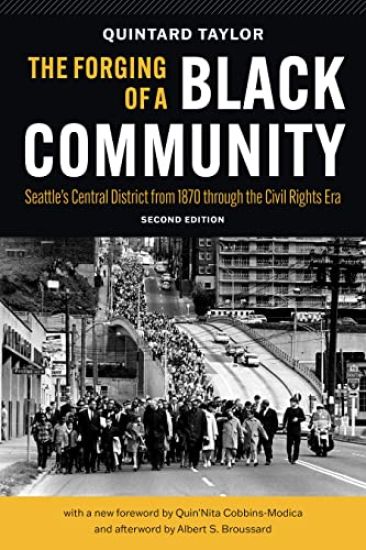
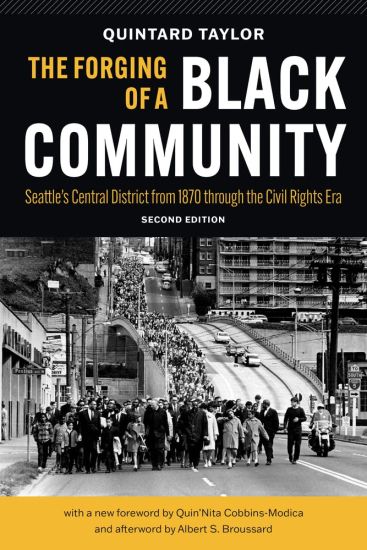
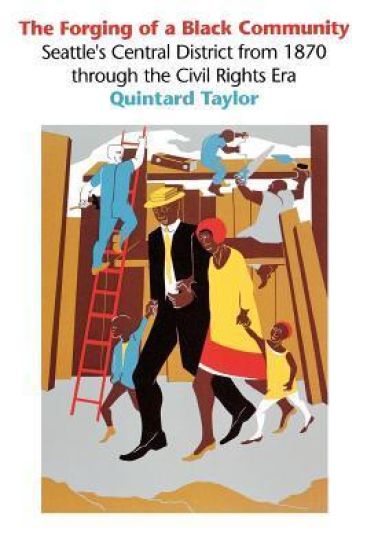
Seattle's first black resident was a sailor named Manuel Lopes who arrived in 1858 and became the small community's first barber. He left in the early 1870s to seek economic prosperity elsewhere, but as Seattle transformed from a stopover town to a full-fledged city, African Americans began to stay and build a community. By the early twentieth century, black life in Seattle coalesced in the Central District, a four-square-mile section east of downtown. Black Seattle, however, was never a monolith. Through world wars, economic booms and busts, and the civil rights movement, black residents and leaders negotiated intragroup conflicts and had varied approaches to challenging racial inequity. Despite these differences, they nurtured a distinct African American culture and black urban community ethos. With a new foreword and afterword, this second edition of The Forging of a Black Community is essential to understanding the history and present of the largest black community in the Pacific Northwest.
The Forging of a Black Community

The Forging of a Black Community

Quintard Taylor; Quin'Nita Cobbins-Modica; Norman Rice; Albert S. Broussard

UNIVERSITY OF WASHINGTON PRESS
2022
sidottu
Seattle's first black resident was a sailor named Manuel Lopes who arrived in 1858 and became the small community's first barber. He left in the early 1870s to seek economic prosperity elsewhere, but as Seattle transformed from a stopover town to a full-fledged city, African Americans began to stay and build a community. By the early twentieth century, black life in Seattle coalesced in the Central District, a four-square-mile section east of downtown. Black Seattle, however, was never a monolith. Through world wars, economic booms and busts, and the civil rights movement, black residents and leaders negotiated intragroup conflicts and had varied approaches to challenging racial inequity. Despite these differences, they nurtured a distinct African American culture and black urban community ethos. With a new foreword and afterword, this second edition of The Forging of a Black Community is essential to understanding the history and present of the largest black community in the Pacific Northwest.
Black Americans and the Civil Rights Movement in the West

Black Americans and the Civil Rights Movement in the West

Quintard Taylor

University of Oklahoma Press
2019
nidottu
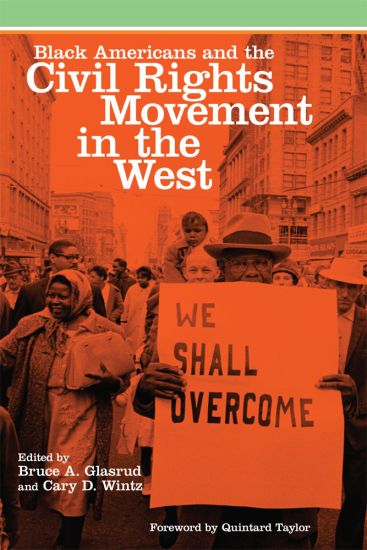
In 1927, Beatrice Cannady succeeded in removing racist language from the Oregon Constitution. During World War II, Rowena Moore fought for the right of black women to work in Omaha's meat packinghouses. In 1942, Thelma Paige used the courts to equalize the salaries of black and white schoolteachers across Texas. In 1950 Lucinda Todd of Topeka laid the groundwork for the landmark Supreme Court decision Brown v. Board of Education. These actions - including sit-ins long before the Greensboro sit-ins of 1960 - occurred well beyond the borders of the American South and East, regions most known as the home of the civil rights movement. By considering social justice efforts in western cities and states, Black Americans and the Civil Rights Movement in the West convincingly integrates the West into the historical narrative of black Americans' struggle for civil rights. From Iowa and Minnesota to the Pacific Northwest, and from Texas to the Dakotas, black westerners initiated a wide array of civil rights activities in the early to late twentieth century. Connected to national struggles as much as they were tailored to local situations, these efforts predated or prefigured events in the East and South. In this collection, editors Bruce A. Glasrud and Cary D. Wintz bring these moments into sharp focus, as the contributors note the ways in which the racial and ethnic diversity of the West shaped a specific kind of African American activism. Concentrating on the far West, the mountain states, the desert Southwest, the upper Midwest, and states both southern and western, the contributors examine black westerners' responses to racism in its various manifestations, whether as school segregation in Dallas, job discrimination in Seattle, or housing bias in San Francisco. Together their essays establish in unprecedented detail how efforts to challenge discrimination impacted and changed the West and ultimately the United States.
Freedom's Racial Frontier

Freedom's Racial Frontier

Quintard Taylor

University of Oklahoma Press
2018
sidottu
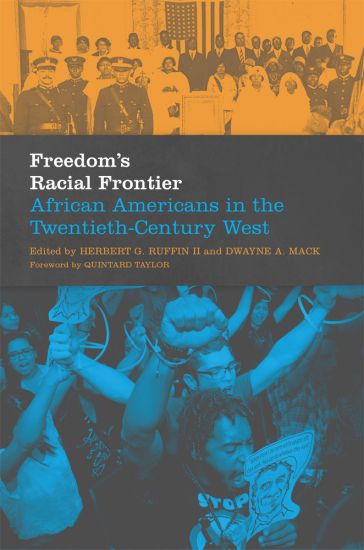
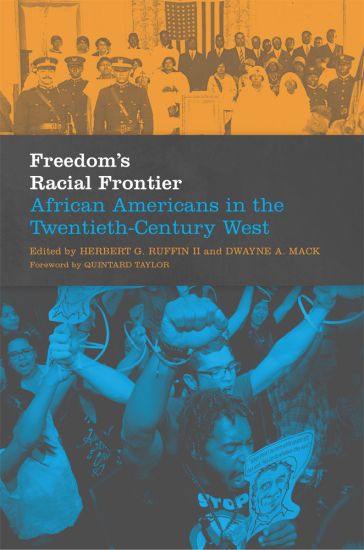
Between 1940 and 2010, the black population of the American West grew from 710,400 to 7 million. With that explosive growth has come a burgeoning interest in the history of the African American West - an interest reflected in the remarkable range and depth of the works collected in Freedom's Racial Frontier. Editors Herbert G. Ruffin II and Dwayne A. Mack have gathered established and emerging scholars in the field to create an anthology that links past, current, and future generations of African American West scholarship. The volume's sixteen chapters address the African American experience within the framework of the West as a multicultural frontier. The result is a fresh perspective on western-U.S. history, centered on the significance of African American life, culture, and social justice in almost every trans-Mississippi state. Examining and interpreting the twentieth century while mindful of events and developments since 2000, the contributors focus on community formation, cultural diversity, civil rights and black empowerment, and artistic creativity and identity. Reflecting the dynamic evolution of new approaches and new sites of knowledge in the field of western history, the authors consider its interconnections with fields such as cultural studies, literature, and sociology. Some essays deal with familiar places, while others look at understudied sites such as Albuquerque, Oahu, and Las Vegas, Nevada. By examining black suburbanization, the Information Age, and gentrification in the urban West, several authors conceive of a Third Great Migration of African Americans to and within the West. The West revealed in Freedom's Racial Frontier is a place where black Americans have fought - and continue to fight - to make their idea of freedom live up to their expectations of equality; a place where freedom is still a frontier for most persons of African heritage.
Freedom's Racial Frontier

Freedom's Racial Frontier

Quintard Taylor

University of Oklahoma Press
2018
nidottu
Between 1940 and 2010, the black population of the American West grew from 710,400 to 7 million. With that explosive growth has come a burgeoning interest in the history of the African American West - an interest reflected in the remarkable range and depth of the works collected in Freedom's Racial Frontier. Editors Herbert G. Ruffin II and Dwayne A. Mack have gathered established and emerging scholars in the field to create an anthology that links past, current, and future generations of African American West scholarship. The volume's sixteen chapters address the African American experience within the framework of the West as a multicultural frontier. The result is a fresh perspective on western-U.S. history, centered on the significance of African American life, culture, and social justice in almost every trans-Mississippi state. Examining and interpreting the twentieth century while mindful of events and developments since 2000, the contributors focus on community formation, cultural diversity, civil rights and black empowerment, and artistic creativity and identity. Reflecting the dynamic evolution of new approaches and new sites of knowledge in the field of western history, the authors consider its interconnections with fields such as cultural studies, literature, and sociology. Some essays deal with familiar places, while others look at understudied sites such as Albuquerque, Oahu, and Las Vegas, Nevada. By examining black suburbanization, the Information Age, and gentrification in the urban West, several authors conceive of a Third Great Migration of African Americans to and within the West. The West revealed in Freedom's Racial Frontier is a place where black Americans have fought - and continue to fight - to make their idea of freedom live up to their expectations of equality; a place where freedom is still a frontier for most persons of African heritage.
Black Pioneers

Black Pioneers

John Ravage; Quintard Taylor

University of Utah Press,U.S.
2009
nidottu
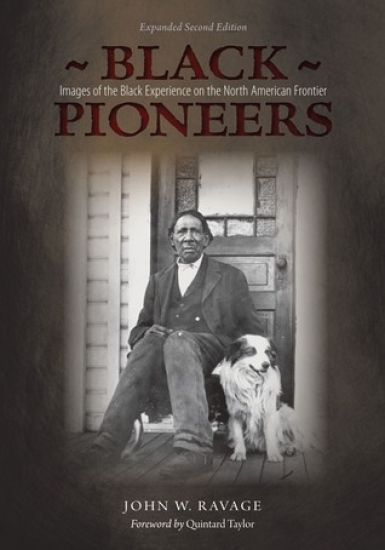
It is difficult to piece together existing records that describe the migrations of African Americans in the nineteenth-century American West. Efforts to assemble collections of oral histories, images, diaries, and other written documents on the black experience in the Western United States and Canada have proven surprisingly fruitful, however, and the rewarding culmination of such research flourished in the archival images found in this second edition of John Ravage's Black Pioneers. Using public and private collections in every western state and in Canada, Ravage has gathered more than three hundred photographs, line drawings, lithographs, stereoviews, and other images. This new edition also adds sections on black entertainers and ranchers, a chapter on the dating of historic photographs and their genealogical significance, as well as an expanded bibliography. All aid understanding of the black frontier experience. Ravage goes beyond the stereotypical photography of the era, which often reflected white fears and prejudices, to present the works of frontier photographers. Galveston's Lucius Harper, Denver's John Green, and the Northwest's nomadic James Presley Ball all bring life to their subjects and meaning to their presence in the American West. Black Pioneers is a vibrant visual document of the profound influence blacks had on communal and frontier history.
Terra Northwest

Terra Northwest

Susan Armitage; Kenneth S. Coates; James M. Dolliver; Gordon Hirabayashi; Alvin M. Josephy Jr.; Howard R. Lamar; John McClelland Jr.; E. Mark Moreno; Quintard Taylor

Washington State University Press
2007
pokkari
Eleven thought-provoking experts from the United States and Canada explore society, culture, and change in the great, resource-laden Northwest. Essays examine the European exploration of the Pacific coast, American and Canadian comparative development, the political and constitutional foundations, economic globalization, gendered and class history, and perspectives on the Native American, black, Asian American, and Hispanic citizenry.Included are contributions by Susan Armitage, Kenneth S. Coates, James M. Dolliver, Gordon Hirabayashi, Alvin M. Josephy Jr., Howard R. Lamar, John McClelland Jr., E. Mark Moreno, Quintard Taylor, David J. Weber, and Donald Worster. Terra Northwest continues the Sherman and Mabel Smith Pettyjohn Lecture Series of publications examining the essential aspects of Northwest history.
In Search of the Racial Frontier

In Search of the Racial Frontier

Quintard Taylor

WW Norton Co
1999
nidottu
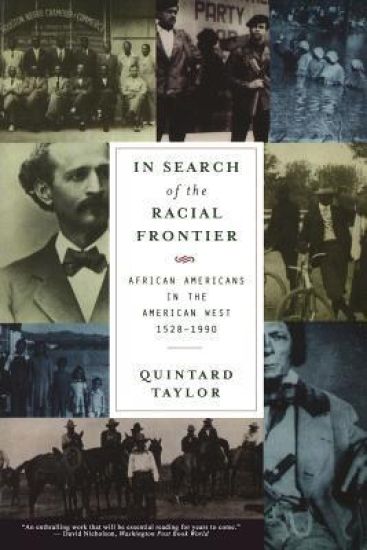
A landmark history of African Americans in the West, In Search of the Racial Frontier rescues the collective American consciousness from thinking solely of European pioneers when considering the exploration, settling, and conquest of the territory west of the Mississippi. From its surprising discussions of groups of African American wholly absorbed into Native American culture to illustrating how the largely forgotten role of blacks in the West helped contribute to everything from the Brown vs. Board of Education desegregation ruling to the rise of the Black Panther Party, Quintard Taylor fills a major void in American history and reminds us that the African American experience is unlimited by region or social status.
The Forging of a Black Community

The Forging of a Black Community

Quintard Taylor; Norman Rice

University of Washington Press
1994
pokkari
Through much of the twentieth century, black Seattle was synonymous with the Central District--a four-square-mile section near the geographic center of the city. Quintard Taylor explores the evolution of this community from its first few residents in the 1870s to a population of nearly forty thousand in 1970. With events such as the massive influx of rural African Americans beginning with World War II and the transformation of African American community leadership in the 1960s from an integrationist to a “black power” stance, Seattle both anticipates and mirrors national trends. Thus, the book addresses not only a particular city in the Pacific Northwest but also the process of political change in black America.Seattle's first black resident was a sailor named Manuel Lopes who arrived in 1858 and became the small community's first barber. By the early twentieth century, black life in Seattle coalesced in the Central District, a four-square-mile section east of downtown. Black Seattle, however, was never a monolith. Through world wars, economic booms and busts, and the civil rights and black power movements of the 1960s, the African American community negotiated intragroup conflicts and used varied approaches to challenge racial inequity. Despite these differences, the community shared a distinct African American culture and black urban ethos. With a new foreward and afterword, this second edition of The Forging of a Black Community is essential to understanding the history and present of the largest black community in the Pacific Northwest.