Kirjojen hintavertailu. Mukana 12 294 421 kirjaa ja 12 kauppaa.

Kirjailija

R. Barton Palmer

Kirjat ja teokset yhdessä paikassa: 16 kirjaa, julkaisuja vuosilta 2004-2027, suosituimpien joukossa An Introduction to the Gawain Poet. Vertaile teosten hintoja ja tarkista saatavuus suomalaisista kirjakaupoista.

Mukana myös kirjoitusasut: R Barton Palmer

16 kirjaa

Kirjojen julkaisuhaarukka 2004-2027.

An Introduction to the Gawain Poet

An Introduction to the Gawain Poet

John M. Bowers; R. Barton Palmer; Tison Pugh

University Press of Florida
2014
nidottu
In An Introduction to the Gawain Poet, John Bowers surveys an expanded selection of the works of Chaucer's anonymous contemporary, considering Sir Gawain and the Green Knight alongside the poet's lesser known but no less brilliant works. In addition to his succinct introductions and plot summaries, Bowers skillfully details the cultural, historical, political, and religious contexts for these works, synthesizing them with close reading of selected passages. Perhaps his most exciting contribution to the field is his choice to historicize the poet's life and works in the context of the royal culture of King Richard II, boldly contending that it was highly possible the Gawain Poet was a frequent visitor to Richard's court in London. The final chapter surveys the works influenced by, as well as the influences reflected in, the poet's work, from the Bible to The Lord of the Rings. The attention Bowers pays to the critical tradition that has developed around these texts over the past hundred years makes An Introduction to the Gawain Poet an ideal volume for both undergraduate students and scholars of the Gawain Poet. Bowers has marshaled his formidable skills to create a book impressive in its balanced combination of breadth and depth. John M. Bowers is professor of English at the University of Nevada, Las Vegas, and the author of five books, including Chaucer and Langland: The Antagonistic Tradition.
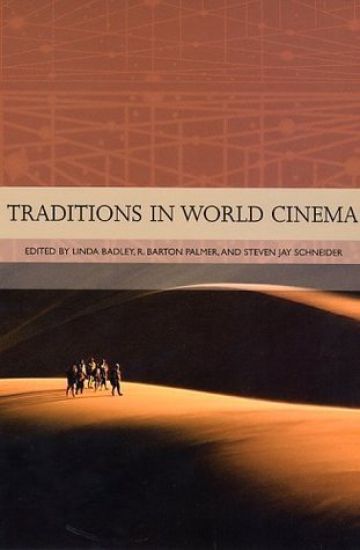
Traditions In World Cinema

Traditions In World Cinema

Linda R Badley; R Barton Palmer; Steven Jay Schneider

Rutgers University Press
2006
nidottu
Traditions in World Cinema brings together a colorful and wide ranging collection of world cinematic traditions—national, regional, and global—all of which are in need of introduction, investigation and, in some cases, critical reassessment. The movements described range from well-known traditions such as German expressionism, Italian neorealism, French, British, and Czech new wave, and new Hollywood cinema to those of emerging significance, such as Danish Dogma, postcommunist cinema, Brazilian post–Cinema Novo, new Argentine cinema, pre-independence African film traditions, Israeli persecution films, new Iranian cinema, Hindi film songs, Chinese wenyi pian melodrama, Japanese horror, and global found-footage cinema.The essays, all written by recognized experts in the field, are jargon free and accessible to both general readers and students. In addition, each chapter is followed by a list of suggested films and readings, offering readers pathways to further viewing and study.Bringing fresh insights to those movements that have provided significant and noteworthy alternatives to Hollywood, this book is an essential introduction to the rich diversity of world cinema.
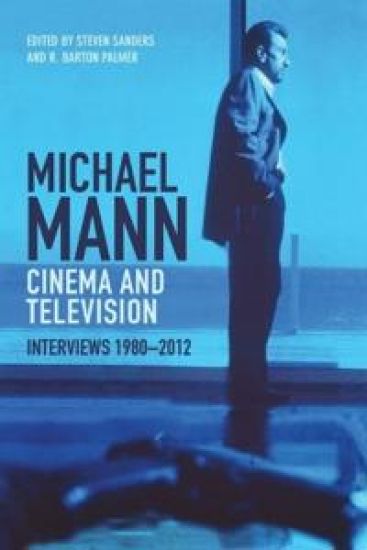
Michael Mann - Cinema and Television

Michael Mann - Cinema and Television

Steven Sanders; R. Barton Palmer

EDINBURGH UNIVERSITY PRESS
2026
nidottu
This reader is the first to bring together a selection of Mann's own interviews where he reflects on his film and television productions. The sixteen interviews provide historical context, interpretation and evaluation of the auteur's work. They encompass his entire career as a feature filmmaker and television producer/director as he and others reflect on his themes, working methods, artistic development and career achievements. The book aims to open up Mann's body of work, making it available for comparison with the work of his contemporaries, and to provide fresh insights into his film and television work. A substantive introductory essay, chronology and filmography provide additional bases for understanding the interviews, essays and work of this major filmmaker.
Adaptation and Literary Cinema

Adaptation and Literary Cinema

R. Barton Palmer

Bloomsbury Academic USA
2022
sidottu
Since the general entertainment model pioneered during the classic studio failed to continue to attract audiences sufficient to sustain the industry, niche production was the answer. Literary sources, screened in a fashion that emphasized their literariness, constituted one (if not the only) successful response of the industry to these changed conditions. Internationally-acclaimed scholar Barton Palmer illuminates the role played by adaptation in furthering a number of related cycles or more diffuse trends that were of central importance to the national cinemas in each case. During the 1960s, the 'Angry Young Men' movement in literature inspired its cinematic other in the British New Wave, while small-budget productions with adult subjects, as well as films modeled closely on the international art cinema. Adaptation and Literary Cinema is not on the adaptations themselves, but rather on the ways in which adaptation during this culturally turbulent era served two different but connected cinemas.Offering insights into the complex production histories of more than 40 key, if often underappreciated, texts through the discussion of relevant archival materials that identify the shaping pressures in each project. These films include Night of the Iguana, Who's Afraid of Virginia Woolf?, Toys in the Attic, The Dark at the Top of the Stairs, Nothing but a Man, Mickey, The Hustler, Up the Down Staircase, Life at the Top, Darling, Morgan!, All Fall Down, The Collector, The Hill, The Magus, The Loved One, The Fox, The Sterile Cuckoo, The Spy Who Came in from the Cold, The Ipcress File, Lord Jim, and King Rat.
Adaptation and Literary Cinema

Adaptation and Literary Cinema

R. Barton Palmer

Bloomsbury Academic USA
2022
nidottu
Since the general entertainment model pioneered during the classic studio failed to continue to attract audiences sufficient to sustain the industry, niche production was the answer. Literary sources, screened in a fashion that emphasized their literariness, constituted one (if not the only) successful response of the industry to these changed conditions. Internationally-acclaimed scholar Barton Palmer illuminates the role played by adaptation in furthering a number of related cycles or more diffuse trends that were of central importance to the national cinemas in each case. During the 1960s, the 'Angry Young Men' movement in literature inspired its cinematic other in the British New Wave, while small-budget productions with adult subjects, as well as films modeled closely on the international art cinema. Adaptation and Literary Cinema is not on the adaptations themselves, but rather on the ways in which adaptation during this culturally turbulent era served two different but connected cinemas.Offering insights into the complex production histories of more than 40 key, if often underappreciated, texts through the discussion of relevant archival materials that identify the shaping pressures in each project. These films include Night of the Iguana, Who's Afraid of Virginia Woolf?, Toys in the Attic, The Dark at the Top of the Stairs, Nothing but a Man, Mickey, The Hustler, Up the Down Staircase, Life at the Top, Darling, Morgan!, All Fall Down, The Collector, The Hill, The Magus, The Loved One, The Fox, The Sterile Cuckoo, The Spy Who Came in from the Cold, The Ipcress File, Lord Jim, and King Rat.
Shot on Location

Shot on Location

R. Barton Palmer

Rutgers University Press
2016
nidottu
In the early days of filmmaking, before many of Hollywood’s elaborate sets and soundstages had been built, it was common for movies to be shot on location. Decades later, Hollywood filmmakers rediscovered the practice of using real locations and documentary footage in their narrative features. Why did this happen? What caused this sudden change? Renowned film scholar R. Barton Palmer answers this question in Shot on Location by exploring the historical, ideological, economic, and technological developments that led Hollywood to head back outside in order to capture footage of real places. His groundbreaking research reveals that wartime newsreels had a massive influence on postwar Hollywood film, although there are key distinctions to be made between these movies and their closest contemporaries, Italian neorealist films. Considering how these practices were used in everything from war movies like Twelve O’Clock High to westerns like The Searchers, Palmer explores how the blurring of the formal boundaries between cinematic journalism and fiction lent a “reality effect” to otherwise implausible stories. Shot on Location describes how the period’s greatest directors, from Alfred Hitchcock to Billy Wilder, increasingly moved beyond the confines of the studio. At the same time, the book acknowledges the collaborative nature of moviemaking, identifying key roles that screenwriters, art designers, location scouts, and editors played in incorporating actual geographical locales and social milieus within a fictional framework. Palmer thus offers a fascinating behind-the-scenes look at how Hollywood transformed the way we view real spaces.
Shot on Location

Shot on Location

R. Barton Palmer

Rutgers University Press
2016
sidottu
In the early days of filmmaking, before many of Hollywood’s elaborate sets and soundstages had been built, it was common for movies to be shot on location. Decades later, Hollywood filmmakers rediscovered the practice of using real locations and documentary footage in their narrative features. Why did this happen? What caused this sudden change? Renowned film scholar R. Barton Palmer answers this question in Shot on Location by exploring the historical, ideological, economic, and technological developments that led Hollywood to head back outside in order to capture footage of real places. His groundbreaking research reveals that wartime newsreels had a massive influence on postwar Hollywood film, although there are key distinctions to be made between these movies and their closest contemporaries, Italian neorealist films. Considering how these practices were used in everything from war movies like Twelve O’Clock High to westerns like The Searchers, Palmer explores how the blurring of the formal boundaries between cinematic journalism and fiction lent a “reality effect” to otherwise implausible stories. Shot on Location describes how the period’s greatest directors, from Alfred Hitchcock to Billy Wilder, increasingly moved beyond the confines of the studio. At the same time, the book acknowledges the collaborative nature of moviemaking, identifying key roles that screenwriters, art designers, location scouts, and editors played in incorporating actual geographical locales and social milieus within a fictional framework. Palmer thus offers a fascinating behind-the-scenes look at how Hollywood transformed the way we view real spaces.
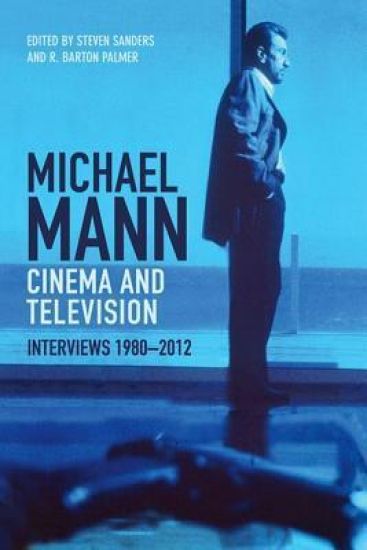
Michael Mann - Cinema and Television

Michael Mann - Cinema and Television

Steven Sanders; R. Barton Palmer

Edinburgh University Press
2014
sidottu
A reader containing selected interviews with Mann and key critical essays on his work. From philosopher/cinephiles Steven Sanders and R. Barton Palmer, Michael Mann/Cinema and Television: Interviews, 1980-2012 comprises 16 incisive interviews by an international roster of scholars, critics, commentators, journalists, and film insiders. Spanning the entire career of the award-winning screenwriter-director-producer, these interviews elicit some of his most revealing comments on his themes, methods, and style. He offers an assessment of his work in film and television and describes some of the things of which he is most proud. Throughout, topics and themes such as location shooting, working with stars, and developing technologies in cinema are introduced, elucidated, and applied to his work. Some of the interviews discuss Mann's existentialist ideas. In others he discusses his critique of the corporatization of crime and the evolution of a wholly new model of criminal trafficking on a global scale. And in others he shares his enjoyment in filming in the megalopolises of L.A. and Miami. It includes a substantive introduction, chronology, and filmography, making it invaluable for scholars and accessible for undergraduate students. It is the definitive account of Mann's reflections on his contributions to cinema and television. Open up Mann's body of work, making it available for comparison with the work of his contemporaries.
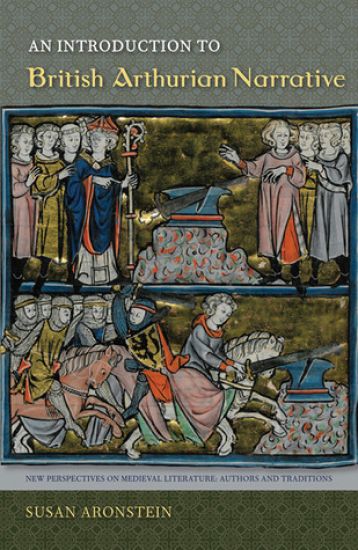
An Introduction to British Arthurian Narrative

An Introduction to British Arthurian Narrative

Susan Aronstein; R. Barton Palmer

University Press of Florida
2014
nidottu
The legends of King Arthur and the Knights of the Round Table permeate our culture: we find them in novels, movie parodies, and even the American government. Yet beneath and before it all lies a deep literary tradition that has influenced history, art, and culture over the centuries.Examining the legend at its very source, An Introduction to British Arthurian Narrative covers over 400 years and discusses a broad range of romances, histories, and parodies written about King Arthur in Britain during the medieval period.The modern Anglo-American version of the Arthurian tale stems from Sir Thomas Malory's fifteenth-century compendium Le Morte D'Arthur, which was written at the end of the tale's first period of widespread popularity, which began in the early twelfth century. Susan Aronstein demonstrates that, as Arthur's transformation from a ""leader of battles"" in early histories, to a powerful chieftain in Welsh tales, and, finally, into England’s ""once and future king,"" at every point, these tales reflected the ongoing contest for sovereignty over the island of Britain-and the very definition of ""British.
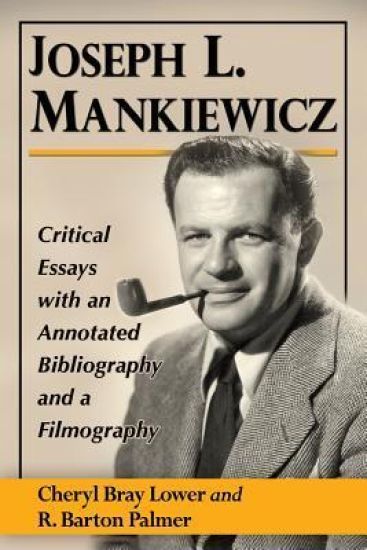
Joseph L. Mankiewicz

Joseph L. Mankiewicz

Cheryl Bray Lower; R. Barton Palmer

McFarland Co Inc
2014
pokkari
The Ghost and Mrs. Muir, The Barefoot Contessa, and All About Eve--just three of the most well-known films of writer, director, and producer Joseph L. Mankiewicz. This work contains critical essays about the man and his work, as well as a guide to resources, an annotated bibliography, and a filmography. The essays on each of his films are categorized under Mankiewicz's Dark Cinema, The Mankiewicz Woman, Filmed Theatre, and Literary Adaptations. The annotated bibliography includes writings by and about Mankiewicz; the filmography includes full cast and credit information and other data. Information on Mankiewicz's awards, miscellaneous and unrealized projects, and film festivals honoring him is also provided.
Hollywood's Tennessee

Hollywood's Tennessee

R. Barton Palmer; William Robert Bray

University of Texas Press
2009
nidottu
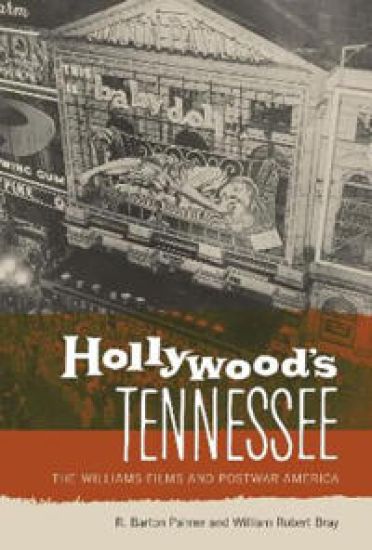
No American dramatist has had more plays adapted than Tennessee Williams, and few modern dramatists have witnessed as much controversy during the adaptation process. His Hollywood legacy, captured in such screen adaptations as A Streetcar Named Desire, Cat on a Hot Tin Roof, and Suddenly, Last Summer, reflects the sea change in American culture in the mid-twentieth century. Placing this body of work within relevant contexts ranging from gender and sexuality to censorship, modernism, art cinema, and the Southern Renaissance, Hollywood's Tennessee draws on rarely examined archival research to recast Williams's significance. Providing not only cultural context, the authors also bring to light the details of the arduous screenwriting process Williams experienced, with special emphasis on the Production Code Administration-the powerful censorship office that drew high-profile criticism during the 1950s-and Williams's innovative efforts to bend the code. Going well beyond the scripts themselves, Hollywood's Tennessee showcases findings culled from poster and billboard art, pressbooks, and other production and advertising material. The result is a sweeping account of how Williams's adapted plays were crafted, marketed, and received, as well as the lasting implications of this history for commercial filmmakers and their audiences.
Joel and Ethan Coen

Joel and Ethan Coen

R. Barton Palmer

University of Illinois Press
2004
sidottu
With landmark films such as Fargo, O Brother Where art Thou?, Blood Simple, and Raising Arizona, the Coen brothers have achieved both critical and commercial success. Proving the existence of a viable market for "small" films that are also intellectually rewarding, their work has exploded generic conventions amid rich webs of transtextual references. R. Barton Palmer argues that the Coen oeuvre forms a central element in what might be called postmodernist filmmaking. Mixing high and low cultural sources and blurring genres like noir and comedy, the use of pastiche and anti-realist elements in films such as The Hudsucker Proxy and Barton Fink clearly fit the postmodernist paradigm. Palmer argues that for a full understanding of the Coen brothers' unique position within film culture, it is important to see how they have developed a new type of text within general postmodernist practice that Palmer terms commercial/independent. Analyzing their substantial body of work from this "generic" framework is the central focus of this book.
Joel and Ethan Coen

Joel and Ethan Coen

R. Barton Palmer

University of Illinois Press
2004
nidottu
With landmark films such as Fargo, O Brother Where art Thou?, Blood Simple, and Raising Arizona, the Coen brothers have achieved both critical and commercial success. Proving the existence of a viable market for "small" films that are also intellectually rewarding, their work has exploded generic conventions amid rich webs of transtextual references. R. Barton Palmer argues that the Coen oeuvre forms a central element in what might be called postmodernist filmmaking. Mixing high and low cultural sources and blurring genres like noir and comedy, the use of pastiche and anti-realist elements in films such as The Hudsucker Proxy and Barton Fink clearly fit the postmodernist paradigm. Palmer argues that for a full understanding of the Coen brothers' unique position within film culture, it is important to see how they have developed a new type of text within general postmodernist practice that Palmer terms commercial/independent. Analyzing their substantial body of work from this "generic" framework is the central focus of this book.