Kirjailija
R. Kannan
Kirjat ja teokset yhdessä paikassa: 5 kirjaa, julkaisuja vuosilta 1996-2024, suosituimpien joukossa Anna:. Vertaile teosten hintoja ja tarkista saatavuus suomalaisista kirjakaupoista.
Mukana myös kirjoitusasut: R Kannan
5 kirjaa
Kirjojen julkaisuhaarukka 1996-2024.

Estimation of Expected Time to Seroconversion of HIV Infected
A Thirumurugan; R Kannan
LAP Lambert Academic Publishing
2019
pokkari
It is a historical fact that the sporadic outbreak of the epidemics such as plague, cholera and small-pox used to claim a great toll of human lives all over the world during the first half of the twentieth century. But in the later decades of the twentieth century, the whole world witnessed a pandemic situation with the advent of the dreadful and disastrous disease called Acquired Immuno Deficiency Syndrome (AIDS) caused by the Human Immuno deficiency Virus (HIV). This pandemic disease, HIV/AIDS is entirely different from the endemic like malaria and the epidemic diseases mentioned above, and it is caused by bacteria, viruses, fungi, parasites and other organisms. HIV the pathogenic micro organism which is a lentivirus attacks the immune system in the human body as all other viruses of this type do. It is unfortunate that there is no remedy or cure for this HIV; and the effects of the scientists (to invent a remedy for this) had to face only defiant result.
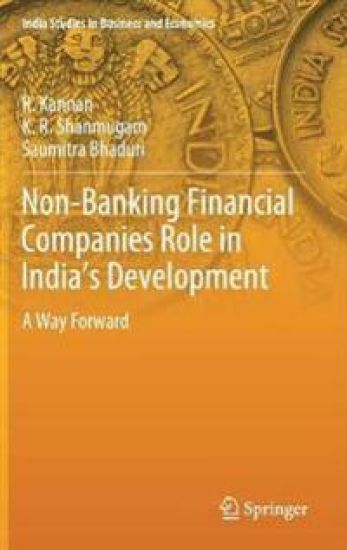
Non-Banking Financial Companies Role in India's Development
R. Kannan; K. R. Shanmugam; Saumitra Bhaduri
Springer Verlag, Singapore
2019
sidottu
This book examines the trend and growth of non-banking financial companies (NBFCs), both from balance sheet and regulations view-points. It further investigates the role of NBFCs in furthering financial inclusion, last-mile delivery of credit and their contribution to financial sector. Since the Reserve Bank of India (RBI) formally recognised the NBFCs in India in 1964, they have increased significantly in terms of size, form and types of products and instruments. They have also managed their asset quality better than banks. Traditionally they were dependent on banks for funds, but after the global financial crisis they began to tap the capital market. Concomitantly, the RBI regulations have closed the fault lines and tightened rules. The book assesses whether NBFCs in India should be treated as shadow banks, discusses how to achieve the right amount of regulation and safeguards without unduly stifling the NBFC sector, and studies the funding opportunities and challenges of NBFCs in India. As such, it serves as a basic reference for students in finance, and a valuable tool for professionals such as policymakers and investment analysts and other stakeholders in the finance area.