Kirjojen hintavertailu. Mukana 12 390 323 kirjaa ja 12 kauppaa.

Kirjailija

R. L. Brett

Kirjat ja teokset yhdessä paikassa: 6 kirjaa, julkaisuja vuosilta 1977-2022, suosituimpien joukossa William Hazlitt. Vertaile teosten hintoja ja tarkista saatavuus suomalaisista kirjakaupoista.

Mukana myös kirjoitusasut: R.L. Brett

6 kirjaa

Kirjojen julkaisuhaarukka 1977-2022.

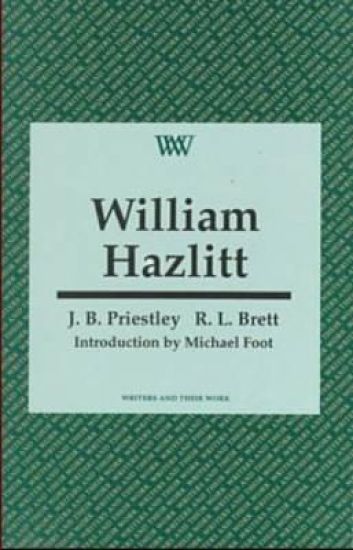
William Hazlitt

William Hazlitt

R. L. Brett

LIVERPOOL UNIVERSITY PRESS
1977
nidottu
William Hazlitt (1778-1830) was an essayist, critic, painter, and philosopher. In this 1977 study, R. L. Brett draws attention at the outset to the biographical standpoint which Hazlitt always adopts in his writings on literature and the arts, and recalls that Hazlitt considered the essay form as 'ideally fitted to approach life with a method that is concrete and particular, rather than a priori and theoretical'.A volume in the Writers and Their Work series, which draws upon recent thinking in English studies to introduce writers and their contexts. Each volume includes biographical material, an examination of recent criticism, a bibliography and a reappraisal of a major work by the writer. @font-face {font-family: "Cambria Math"; panose-1:2 4 5 3 5 4 6 3 2 4; mso-font-charset:0; mso-generic-font-family: roman; mso-font-pitch: variable; mso-font-signature:3 0 0 0 1 0;}@font-face {font-family: Calibri; panose-1:2 15 5 2 2 2 4 3 2 4; mso-font-charset:0; mso-generic-font-family: swiss; mso-font-pitch: variable; mso-font-signature: -536859905 -1073732485 9 0 511 0;}p.MsoNormal, li.MsoNormal, div.MsoNormal {mso-style-unhide: no; mso-style-qformat: yes; mso-style-parent: ""; margin:0cm; mso-pagination: widow-orphan; font-size:10.0pt; mso-bidi-font-size:12.0pt; font-family: "Calibri", sans-serif; mso-ascii-font-family: Calibri; mso-ascii-theme-font: minor-latin; mso-fareast-font-family: Calibri; mso-fareast-theme-font: minor-latin; mso-hansi-font-family: Calibri; mso-hansi-theme-font: minor-latin; mso-bidi-font-family: "Times New Roman"; mso-bidi-theme-font: minor-bidi; mso-fareast-language: EN-US;}.MsoChpDefault {mso-style-type: export-only; mso-default-props: yes; font-size:10.0pt; mso-ansi-font-size:10.0pt; font-family: "Calibri", sans-serif; mso-ascii-font-family: Calibri; mso-ascii-theme-font: minor-latin; mso-fareast-font-family: Calibri; mso-fareast-theme-font: minor-latin; mso-hansi-font-family: Calibri; mso-hansi-theme-font: minor-latin; mso-bidi-font-family: "Times New Roman"; mso-bidi-theme-font: minor-bidi; mso-fareast-language: EN-US;}div.WordSection1 {page: WordSection1;}
The Third Earl of Shaftesbury

The Third Earl of Shaftesbury

R.L. Brett

TAYLOR FRANCIS LTD
2022
nidottu
The third Earl of Shaftesbury had generally been known as the forerunner of the Moral Sense school of philosophers in the eighteenth century. Surprisingly little attention had been paid to his importance for literature and yet undoubtedly this had been very great. Originally published in 1951, this study gives an account of Shaftesbury’s aesthetic and literary theory; his discussion of the imagination, ridicule, the aesthetic judgment and the sublime; and his anticipation of later writers such as Burke, Coleridge and Kant. It also considers Shaftesbury’s thought as part of the background of ideas in the Augustan period and his influence in such fields as literature, architecture and landscape gardening. In addition, the author assesses in more general terms Shaftesbury’s attempt to maintain a Platonic viewpoint that would be more congenial to poetry than Locke’s "new way of ideas".
The Third Earl of Shaftesbury

The Third Earl of Shaftesbury

R.L. Brett

Routledge
2020
sidottu
The third Earl of Shaftesbury had generally been known as the forerunner of the Moral Sense school of philosophers in the eighteenth century. Surprisingly little attention had been paid to his importance for literature and yet undoubtedly this had been very great. Originally published in 1951, this study gives an account of Shaftesbury’s aesthetic and literary theory; his discussion of the imagination, ridicule, the aesthetic judgment and the sublime; and his anticipation of later writers such as Burke, Coleridge and Kant. It also considers Shaftesbury’s thought as part of the background of ideas in the Augustan period and his influence in such fields as literature, architecture and landscape gardening. In addition, the author assesses in more general terms Shaftesbury’s attempt to maintain a Platonic viewpoint that would be more congenial to poetry than Locke’s "new way of ideas".
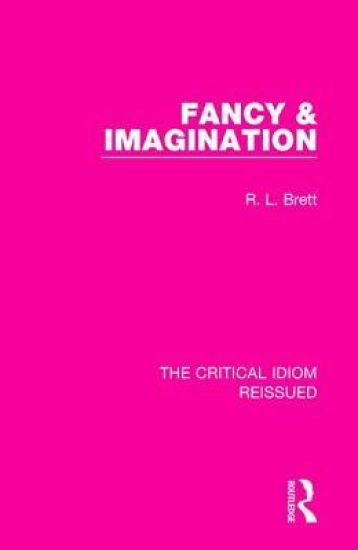
Fancy & Imagination

Fancy & Imagination

R. L. Brett

Routledge
2019
nidottu
First published in 1969, this book provides a concise and helpful introduction to the terms ‘fancy’ and ‘imagination’. Although they are generally associated with Samuel Taylor Coleridge, the work begins with a discussion the history of these concepts which were also known to Aristotle, the Elizabethans, Hobbes, Locke and Blake. It then goes on to examine Coleridge’s theory of imagination and the distinction he drew between fancy and imagination. This work will be of particular interest to those studying Coleridge and the Romantic Movement.
Fancy & Imagination

Fancy & Imagination

R. L. Brett

Routledge
2017
sidottu
First published in 1969, this book provides a concise and helpful introduction to the terms ‘fancy’ and ‘imagination’. Although they are generally associated with Samuel Taylor Coleridge, the work begins with a discussion the history of these concepts which were also known to Aristotle, the Elizabethans, Hobbes, Locke and Blake. It then goes on to examine Coleridge’s theory of imagination and the distinction he drew between fancy and imagination. This work will be of particular interest to those studying Coleridge and the Romantic Movement.
William Hazlitt

William Hazlitt

R. L. Brett; J. B. Priestley

Liverpool University Press
1994
nidottu
William Hazlitt was a brilliant and perceptive essayist and critic in the early 19th Century whose critical impressions of his contemporaries and their work gave a sense of an age and the leading figures who populated it in a particularly vivid way.