Kirjojen hintavertailu. Mukana 12 143 189 kirjaa ja 12 kauppaa.

Kirjailija

R. Lee Lyman

Kirjat ja teokset yhdessä paikassa: 16 kirjaa, julkaisuja vuosilta 1997-2026, suosituimpien joukossa The Rise and Fall of Culture History. Vertaile teosten hintoja ja tarkista saatavuus suomalaisista kirjakaupoista.

Mukana myös kirjoitusasut: R Lee Lyman

16 kirjaa

Kirjojen julkaisuhaarukka 1997-2026.

Applying Evolutionary Archaeology

Applying Evolutionary Archaeology

Michael J. O'Brien; R. Lee Lyman

Kluwer Academic/Plenum Publishers
2000
sidottu
Anthropology, and by extension archaeology, has had a long-standing interest in evolution in one or several of its various guises. Pick up any lengthy treatise on humankind written in the last quarter of the nineteenth century and the chances are good that the word evolution will appear somewhere in the text. If for some reason the word itself is absent, the odds are excellent that at least the concept of change over time will have a central role in the discussion. After one of the preeminent (and often vilified) social scientists of the nineteenth century, Herbert Spencer, popularized the term in the 1850s, evolution became more or less a household word, usually being used synonymously with change, albeit change over extended periods of time. Later, through the writings of Edward Burnett Tylor, Lewis Henry Morgan, and others, the notion of evolution as it applies to stages of social and political development assumed a prominent position in anthropological disc- sions. To those with only a passing knowledge of American anthropology, it often appears that evolutionism in the early twentieth century went into a decline at the hands of Franz Boas and those of similar outlook, often termed particularists. However, it was not evolutionism that was under attack but rather comparativism— an approach that used the ethnographic present as a key to understanding how and why past peoples lived the way they did (Boas 1896).
Applying Evolutionary Archaeology

Applying Evolutionary Archaeology

Michael J. O'Brien; R. Lee Lyman

Kluwer Academic/Plenum Publishers
2000
nidottu
Anthropology, and by extension archaeology, has had a long-standing interest in evolution in one or several of its various guises. Pick up any lengthy treatise on humankind written in the last quarter of the nineteenth century and the chances are good that the word evolution will appear somewhere in the text. If for some reason the word itself is absent, the odds are excellent that at least the concept of change over time will have a central role in the discussion. After one of the preeminent (and often vilified) social scientists of the nineteenth century, Herbert Spencer, popularized the term in the 1850s, evolution became more or less a household word, usually being used synonymously with change, albeit change over extended periods of time. Later, through the writings of Edward Burnett Tylor, Lewis Henry Morgan, and others, the notion of evolution as it applies to stages of social and political development assumed a prominent position in anthropological disc- sions. To those with only a passing knowledge of American anthropology, it often appears that evolutionism in the early twentieth century went into a decline at the hands of Franz Boas and those of similar outlook, often termed particularists. However, it was not evolutionism that was under attack but rather comparativism— an approach that used the ethnographic present as a key to understanding how and why past peoples lived the way they did (Boas 1896).
Seriation, Stratigraphy, and Index Fossils

Seriation, Stratigraphy, and Index Fossils

Michael J. O'Brien; R. Lee Lyman

Kluwer Academic/Plenum Publishers
1999
sidottu
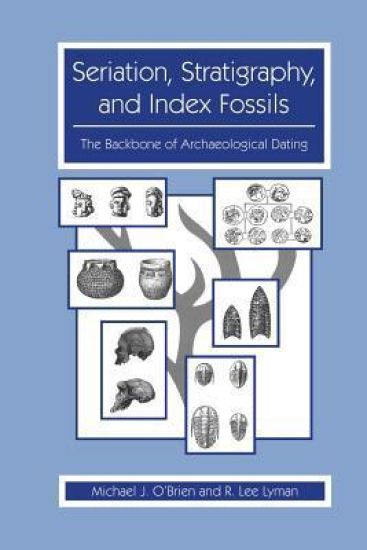
It is difficult for today's students of archaeology to imagine an era when chronometric dating methods were unavailable. However, even a casual perusal of the large body of literature that arose during the first half of the twentieth century reveals a battery of clever methods used to determine the relative ages of archaeological phenomena, often with considerable precision. Stratigraphic excavation is perhaps the best known of the various relative-dating methods used by prehistorians. Although there are several techniques of using artifacts from superposed strata to measure time, these are rarely if ever differentiated. Rather, common practice is to categorize them under the heading `stratigraphic excavation'. This text distinguishes among the several techniques and argues that stratigraphic excavation tends to result in discontinuous measures of time - a point little appreciated by modern archaeologists. Although not as well known as stratigraphic excavation, two other methods of relative dating have figured important in Americanist archaeology: seriation and the use of index fossils. The latter (like stratigraphic excavation) measures time discontinuously, while the former - in various guises - measures time continuously. Perhaps no other method used in archaeology is as misunderstood as seriation, and the authors provide detailed descriptions and examples of each of its three different techniques. Each method and technique of relative dating is placed in historical perspective, with particular focus on developments in North America, an approach that allows a more complete understanding of the methods described, both in terms of analytical technique and disciplinary history. This text will appeal to all archaeologists, from graduate students to seasoned professionals, who want to learn more about the backbone of archaeological dating.
The Rise and Fall of Culture History

The Rise and Fall of Culture History

R. Lee Lyman; Michael J. O'Brien; Robert C. Dunnell

Kluwer Academic/Plenum Publishers
1997
sidottu
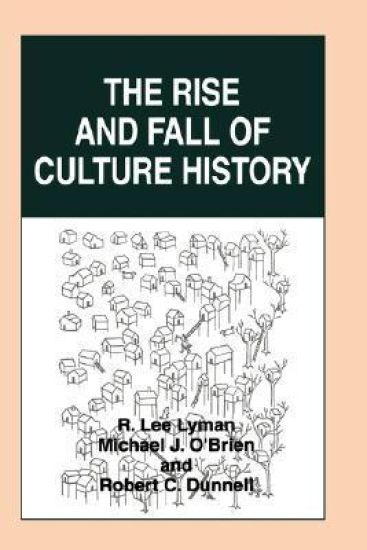
VJver forty years ago Gordon R. Willey (1953b:361) stated that "[t]he objectives of archeology ...are approached by the study and manipulation of three basic factors: form, space, and time. " A few years later, Albert C. Spaulding (1960b:439) repeated this thought using different words: "[AJrchaeology can be defined minimally as the study of the interrelation- ship of form, temporal locus, and spatial locus exhibited by artifacts. In other words, archaeologists are always concerned with these interrelation- ships, whatever broader interests they may have, and these interrelation- ships are the special business of archaeology. " Many of the means Americanist archaeologists use to examine formal variation in artifacts and the distribution of that variation across space and through time were formulated early in the twentieth century. The analytical tenets, or principles, underlying the various methods and techniques were formalized and axiomatized in later years such that by the 1930s they con- stituted the first formal paradigm for Americanist archaeology-a paradigm commonly termed culture history. This paradigm began with a very specific goal-to document the history of the development of prehistoric cultures in the Americas. Although it fell from favor in the 1960s, many of its central tenets were carried over to newer paradigms and thus continue to be fun- damental within Americanist archaeology. With Willey's and Spaulding's conceptions as our guide, we elsewhere reprinted (Lyman et al.
The Rise and Fall of Culture History

The Rise and Fall of Culture History

R. Lee Lyman; Michael J. O'Brien; Robert C. Dunnell

Kluwer Academic/Plenum Publishers
1997
nidottu
VJver forty years ago Gordon R. Willey (1953b:361) stated that "[t]he objectives of archeology ...are approached by the study and manipulation of three basic factors: form, space, and time. " A few years later, Albert C. Spaulding (1960b:439) repeated this thought using different words: "[AJrchaeology can be defined minimally as the study of the interrelation- ship of form, temporal locus, and spatial locus exhibited by artifacts. In other words, archaeologists are always concerned with these interrelation- ships, whatever broader interests they may have, and these interrelation- ships are the special business of archaeology. " Many of the means Americanist archaeologists use to examine formal variation in artifacts and the distribution of that variation across space and through time were formulated early in the twentieth century. The analytical tenets, or principles, underlying the various methods and techniques were formalized and axiomatized in later years such that by the 1930s they con- stituted the first formal paradigm for Americanist archaeology-a paradigm commonly termed culture history. This paradigm began with a very specific goal-to document the history of the development of prehistoric cultures in the Americas. Although it fell from favor in the 1960s, many of its central tenets were carried over to newer paradigms and thus continue to be fun- damental within Americanist archaeology. With Willey's and Spaulding's conceptions as our guide, we elsewhere reprinted (Lyman et al.
Fundamental Archaeological Concepts

Fundamental Archaeological Concepts

R. Lee Lyman

BLOOMSBURY PUBLISHING PLC
2026
sidottu
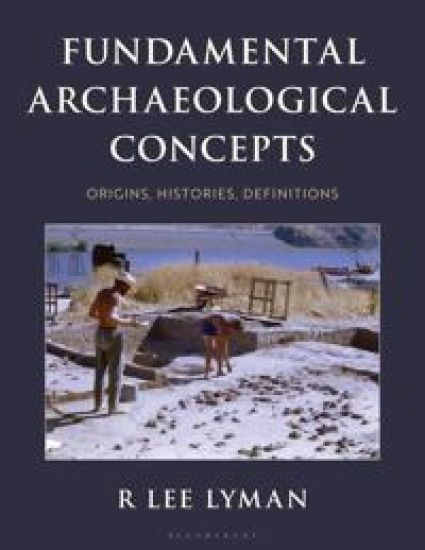
A much-needed deep dive into some of the main concepts of archaeology, offering a comprehensive explanation and definition of commonly used terms. Modern archaeology includes a number of fundamental concepts. This volume compiles in one place the origins, developmental histories, and definitions of more than two dozen of archaeology’s most fundamental concepts. Concepts discussed include artifact, assemblage, association, context, ecofact, feature, industry, in situ, period, provenience, site, stage, tool kit, and type/index fossil. The volume is neither a dictionary nor an encyclopedia. Its goals are: 1) to document the origin and history of each of the terms/concepts, 2) to present many of the definitions of each of the terms/concepts, and 3) to document the variability in definitions of each term/concept. Two sources of ‘formal’ data are reviewed. All sources were searched for the 27 concepts, and data recorded regarding (1) whether or not a term/concept appeared in each piece of literature, (2) the appearance of a particular concept without its associated term in each piece of literature, (3) the appearance of a particular term without definition or discussion of its associated concept in each piece of literature, and (4) the appearance of a particular term with an included definition and presenting the definition from each piece of literature. These formal data are supplemented with information on concepts encountered while reading other literature not included in the ‘formal’ samples of early literature and introductory textbooks. This book is unique among the archaeological literature for its synopses of much of the literature, coverage of the history and meanings of archaeological concepts used in fieldwork and analysis is thorough, and the varied definitions of concepts are summarized and easily consulted.
Graphing Culture Change in North American Archaeology

Graphing Culture Change in North American Archaeology

R. Lee Lyman

Oxford University Press
2021
sidottu
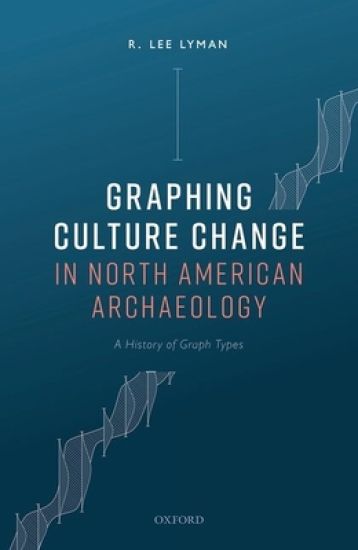
Documentation, analysis, and explanation of culture change have long been goals of archaeology. Scientific graphs facilitate the visual thinking that allow archaeologists to determine the relationship between variables, and, if well designed, comprehend the processes implied by the relationship. Different graph types suggest different ontologies and theories of change, and particular techniques of parsing temporally continuous morphological variation of artefacts into types influence graph form. North American archaeologists have grappled with finding a graph that effectively and efficiently displays culture change over time. Line graphs, bar graphs, and numerous one-off graph types were used between 1910 and 1950, after which spindle graphs displaying temporal frequency distributions of specimens within each of multiple artefact types emerged as the most readily deciphered diagram. The variety of graph types used over the twentieth century indicate archaeologists often mixed elements of both Darwinian variational evolutionary change and Midas-touch like transformational change. Today, there is minimal discussion of graph theory or graph grammar in introductory archaeology textbooks or advanced texts, and elements of the two theories of evolution are still mixed. Culture has changed, and archaeology provides unique access to the totality of humankind's cultural past. It is therefore crucial that graph theory, construction, and decipherment are revived in archaeological discussion.
Paleozoology and Paleoenvironments

Paleozoology and Paleoenvironments

J. Tyler Faith; R. Lee Lyman

Cambridge University Press
2019
pokkari
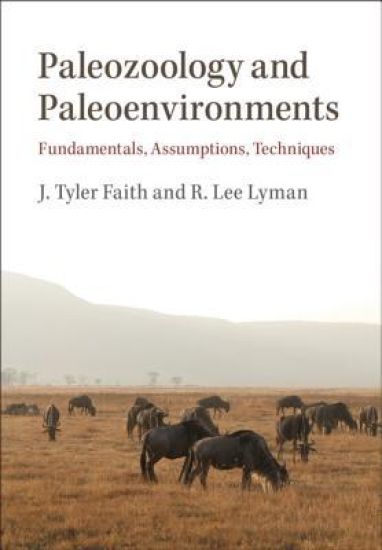
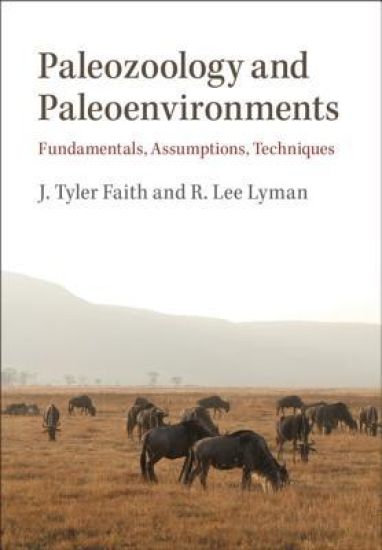
Paleozoology and Paleoenvironments outlines the reconstruction of ancient climates, floras, and habitats on the basis of animal fossil remains recovered from archaeological and paleontological sites. In addition to outlining the ecological fundamentals and analytical assumptions attending such analyzes, J. Tyler Faith and R. Lee Lyman describe and critically evaluate many of the varied analytical techniques that have been applied to paleozoological remains for the purpose of paleoenvironmental reconstruction. These techniques range from analyses based on the presence or abundance of species in a fossil assemblage to those based on taxon-free ecological characterizations. All techniques are illustrated using faunal data from archaeological or paleontological contexts. Aimed at students and professionals, this volume will serve as fundamental resource for courses in zooarchaeology, paleontology, and paleoecology.
Paleozoology and Paleoenvironments

Paleozoology and Paleoenvironments

J. Tyler Faith; R. Lee Lyman

Cambridge University Press
2019
sidottu
Paleozoology and Paleoenvironments outlines the reconstruction of ancient climates, floras, and habitats on the basis of animal fossil remains recovered from archaeological and paleontological sites. In addition to outlining the ecological fundamentals and analytical assumptions attending such analyzes, J. Tyler Faith and R. Lee Lyman describe and critically evaluate many of the varied analytical techniques that have been applied to paleozoological remains for the purpose of paleoenvironmental reconstruction. These techniques range from analyses based on the presence or abundance of species in a fossil assemblage to those based on taxon-free ecological characterizations. All techniques are illustrated using faunal data from archaeological or paleontological contexts. Aimed at students and professionals, this volume will serve as fundamental resource for courses in zooarchaeology, paleontology, and paleoecology.
Theodore E. White and the Development of Zooarchaeology in North America
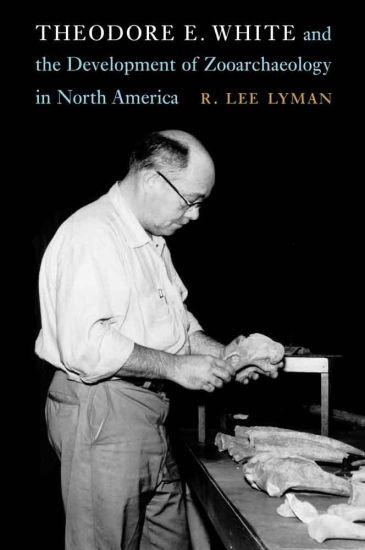
Theodore E. White and the Development of Zooarchaeology in North America illuminates the researcher and his lasting contribution to a field that has largely ignored him in its history. The few brief histories of North American zooarchaeology suggest that Paul W. Parmalee, John E. Guilday, Elizabeth S. Wing, and Stanley J. Olsen laid the foundation of the field. Only occasionally is Theodore White (1905–77) included, yet his research is instrumental for understanding the development of zooarchaeology in North America. R. Lee Lyman works to fill these gaps in the historical record and revisits some of White’s analytical innovations from a modern perspective. A comparison of publications shows that not only were White’s zooarchaeological articles first in print in archaeological venues but that he was also, at least initially, more prolific than his contemporaries. While the other “founders” of the field were anthropologists, White was a paleontologist by training who studied long-extinct animals and their evolutionary histories. In working with remains of modern mammals, the typical paleontological research questions were off the table simply because the animals under study were too recent. And yet White demonstrated clearly that scholars could infer significant information about human behaviors and cultures. Lyman presents a biography of Theodore White as a scientist and a pioneer in the emerging field of modern anthropological zooarchaeology.
Seriation, Stratigraphy, and Index Fossils

Seriation, Stratigraphy, and Index Fossils

Michael J. O'Brien; R. Lee Lyman

Springer-Verlag New York Inc.
2013
nidottu
It is difficult for today's students of archaeology to imagine an era when chronometric dating methods were unavailable. However, even a casual perusal of the large body of literature that arose during the first half of the twentieth century reveals a battery of clever methods used to determine the relative ages of archaeological phenomena, often with considerable precision. Stratigraphic excavation is perhaps the best known of the various relative-dating methods used by prehistorians. Although there are several techniques of using artifacts from superposed strata to measure time, these are rarely if ever differentiated. Rather, common practice is to categorize them under the heading `stratigraphic excavation'. This text distinguishes among the several techniques and argues that stratigraphic excavation tends to result in discontinuous measures of time - a point little appreciated by modern archaeologists. Although not as well known as stratigraphic excavation, two other methods of relative dating have figured important in Americanist archaeology: seriation and the use of index fossils. The latter (like stratigraphic excavation) measures time discontinuously, while the former - in various guises - measures time continuously. Perhaps no other method used in archaeology is as misunderstood as seriation, and the authors provide detailed descriptions and examples of each of its three different techniques. Each method and technique of relative dating is placed in historical perspective, with particular focus on developments in North America, an approach that allows a more complete understanding of the methods described, both in terms of analytical technique and disciplinary history. This text will appeal to all archaeologists, from graduate students to seasoned professionals, who want to learn more about the backbone of archaeological dating.
Prehistory of the Oregon Coast

Prehistory of the Oregon Coast

R Lee Lyman

Left Coast Press Inc
2009
sidottu
This book is the first synthesis of the prehistory of the coast of Oregon. It analyzes the artifacts and mammalian faunal remains of three representative sites on the coast. A model of the evolution of cultural adaptational strategies is presented and tested, from which it creates a model of coastal cultural development. On a methodological level, the volume examines the overriding importance and effects of various sampling techniques.
Quantitative Paleozoology

Quantitative Paleozoology

R. Lee Lyman

Cambridge University Press
2008
sidottu
Quantitative Paleozoology describes and illustrates how the remains of long-dead animals recovered from archaeological and paleontological excavations can be studied and analyzed. The methods range from determining how many animals of each species are represented to determining whether one collection consists of more broken and more burned bones than another. All methods are described and illustrated with data from real collections, while numerous graphs illustrate various quantitative properties.
Quantitative Paleozoology

Quantitative Paleozoology

R. Lee Lyman

Cambridge University Press
2008
pokkari
Quantitative Paleozoology describes and illustrates how the remains of long-dead animals recovered from archaeological and paleontological excavations can be studied and analyzed. The methods range from determining how many animals of each species are represented to determining whether one collection consists of more broken and more burned bones than another. All methods are described and illustrated with data from real collections, while numerous graphs illustrate various quantitative properties.
Measuring Time with Artifacts

Measuring Time with Artifacts

R. Lee Lyman; Michael J. O'Brien

University of Nebraska Press
2006
pokkari
Combining historical research with a lucid explication of archaeological methodology and reasoning, Measuring Time with Artifacts examines the origins and changing use of fundamental chronometric techniques and procedures and analyzes the different ways American archaeologists have studied changes in artifacts, sites, and peoples over time. In highlighting the underpinning ontology and epistemology of artifact-based chronometers—cultural transmission and how to measure it archaeologically—this volume covers issues such as why archaeologists used the cultural evolutionism of L. H. Morgan, E. B. Tylor, L. A. White, and others instead of biological evolutionism; why artifact classification played a critical role in the adoption of stratigraphic excavation; how the direct historical approach accomplished three analytical tasks at once; why cultural traits were important analytical units; why paleontological and archaeological methods sometimes mirror one another; how artifact classification influences chronometric method; and how graphs illustrate change in artifacts over time.An understanding of the history of artifact-based chronometers enables us to understand how we know what we think we know about the past, ensures against modern misapplication of the methods, and sheds light on the reasoning behind archaeologists' actions during the first half of the twentieth century.
Measuring Time with Artifacts

Measuring Time with Artifacts

R. Lee Lyman; Michael J. O'Brien

University of Nebraska Press
2006
sidottu
Combining historical research with a lucid explication of archaeological methodology and reasoning, Measuring Time with Artifacts examines the origins and changing use of fundamental chronometric techniques and procedures and analyzes the different ways American archaeologists have studied changes in artifacts, sites, and peoples over time. In highlighting the underpinning ontology and epistemology of artifact-based chronometers—cultural transmission and how to measure it archaeologically—this volume covers issues such as why archaeologists used the cultural evolutionism of L. H. Morgan, E. B. Tylor, L. A. White, and others instead of biological evolutionism; why artifact classification played a critical role in the adoption of stratigraphic excavation; how the direct historical approach accomplished three analytical tasks at once; why cultural traits were important analytical units; why paleontological and archaeological methods sometimes mirror one another; how artifact classification influences chronometric method; and how graphs illustrate change in artifacts over time.An understanding of the history of artifact-based chronometers enables us to understand how we know what we think we know about the past, ensures against modern misapplication of the methods, and sheds light on the reasoning behind archaeologists' actions during the first half of the twentieth century.