Kirjojen hintavertailu. Mukana 12 108 868 kirjaa ja 12 kauppaa.

Kirjailija

R. Murray Thomas

Kirjat ja teokset yhdessä paikassa: 31 kirjaa, julkaisuja vuosilta 1990-2017, suosituimpien joukossa Prevent, Repent, Reform, Revenge. Vertaile teosten hintoja ja tarkista saatavuus suomalaisista kirjakaupoista.

31 kirjaa

Kirjojen julkaisuhaarukka 1990-2017.

Drop That Chalk!

Drop That Chalk!

Marie K. Iding; R. Murray Thomas

Rowman Littlefield
2017
sidottu
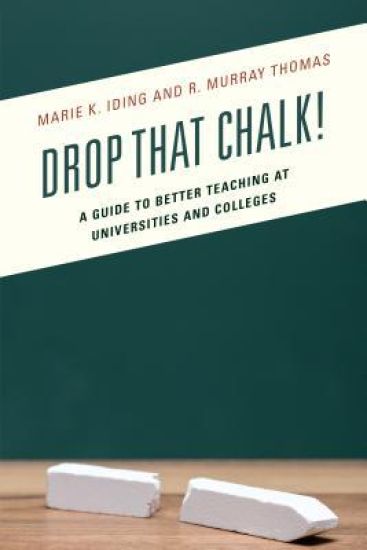
Drop that Chalk! A Guide to Better Teaching at Colleges and Universities is designed for those planning to teach – or already teaching and hoping to improve instruction – in colleges, universities, or other institutions of higher education. This book delineates the process of planning a course from designing course objectives to creating a syllabus, selecting course materials and technologies, determining which teaching strategies to employ and how to best implement them, to creating assessments, course evaluations, and assigning grades. Advantages and disadvantages of teaching and assessment techniques are shared, along with research-based guidance for effectively implementations. Guidelines for creating effective on-line courses are presented. This book also explains thirteen aspects of student diversity to help teachers understand their students, more effectively plan instruction for them, and shares a range of other suggestions to help maintain positive and effective learning environments that ensure students’ success. The techniques and myriad examples shared in this book are based on the authors’ over sixty years of combined teaching experiences, and on current research in educational psychology and related disciplines.
Drop That Chalk!

Drop That Chalk!

Marie K. Iding; R. Murray Thomas

Rowman Littlefield
2017
nidottu
Drop that Chalk! A Guide to Better Teaching at Colleges and Universities is designed for those planning to teach – or already teaching and hoping to improve instruction – in colleges, universities, or other institutions of higher education. This book delineates the process of planning a course from designing course objectives to creating a syllabus, selecting course materials and technologies, determining which teaching strategies to employ and how to best implement them, to creating assessments, course evaluations, and assigning grades. Advantages and disadvantages of teaching and assessment techniques are shared, along with research-based guidance for effectively implementations. Guidelines for creating effective on-line courses are presented. This book also explains thirteen aspects of student diversity to help teachers understand their students, more effectively plan instruction for them, and shares a range of other suggestions to help maintain positive and effective learning environments that ensure students’ success. The techniques and myriad examples shared in this book are based on the authors’ over sixty years of combined teaching experiences, and on current research in educational psychology and related disciplines.
Becoming a Professor

Becoming a Professor

Marie K. Iding; R. Murray Thomas

Rowman Littlefield
2015
nidottu
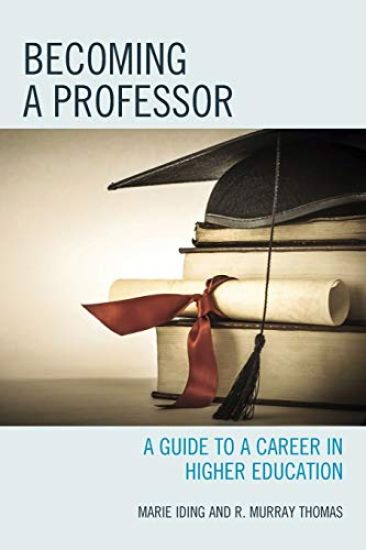
Becoming a Professor is designed primarily for graduate and undergraduate students and others – instructors, lecturers and new tenure-track professors – contemplating careers as professors in post-secondary education at colleges, institutes, and universities. The book identifies kinds of higher education institutions, and types of teaching positions along with the nature of each position’s responsibilities and advantages and disadvantages. It explains how graduate students can promote their future as faculty members while they are still in graduate school and suggests ways to find suitable faculty positions and succeed at the application and interview process. The book also addresses a range of other matters that influence careers in higher education once a candidate is hired in a faculty position – such matters as the tenure and promotion process and how to succeed in other aspects of the professorial role (research, service, teaching), and as well as how to avoid pitfalls (political and ethical aspects) in such positions.
Becoming a Professor

Becoming a Professor

Marie K. Iding; R. Murray Thomas

Rowman Littlefield
2015
sidottu
Becoming a Professor is designed primarily for graduate and undergraduate students and others – instructors, lecturers and new tenure-track professors – contemplating careers as professors in post-secondary education at colleges, institutes, and universities. The book identifies kinds of higher education institutions, and types of teaching positions along with the nature of each position’s responsibilities and advantages and disadvantages. It explains how graduate students can promote their future as faculty members while they are still in graduate school and suggests ways to find suitable faculty positions and succeed at the application and interview process. The book also addresses a range of other matters that influence careers in higher education once a candidate is hired in a faculty position – such matters as the tenure and promotion process and how to succeed in other aspects of the professorial role (research, service, teaching), and as well as how to avoid pitfalls (political and ethical aspects) in such positions.
Roots of Haiti's Vodou-Christian Faith

Roots of Haiti's Vodou-Christian Faith

R. Murray Thomas

Praeger Publishers Inc
2014
sidottu
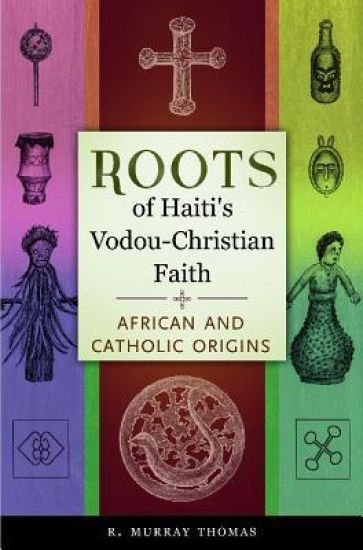
This book traces the development of Haiti's combined Vodou-Christian religion from 1500 to the present and explains how this combination of distinct faiths coalesces in a coherent belief system.What are the historical reasons for the popularity of two contradictory worldviews in Haiti, Vodou and Catholicism? What elements of Vodou and Catholicism are alike, and how are they drastically different? What is the connection between indigenous African religions and Vodou? And why has religion in Haiti evidenced an accelerating rate of change in recent decades? Roots of Haiti's Vodou-Christian Faith: African and Catholic Origins answers these questions and more in its examination of the highly unique and often-misunderstood religious practices in Haiti.Reaching back half a millennium to the European conquest of the island of Haiti, author R. Murray Thomas inspects the origins and nature of these two competing and complementary religious traditions: the traditional African faiths brought by the slaves who were imported to Haiti to labor in the fields and mines, and the Catholicism promoted—often violently—by Spanish and French colonial authorities. Following a historical background, the subsequent chapters focus on the organization of Haitian religion, spirits, creation belief, causes and ceremonies, maxims and tales, symbols and sacred objects, sacred sites, religious societies, and the future of the Vodou-Christian faith.
Creating Human Development Theories

Creating Human Development Theories

R. Murray Thomas

Praeger Publishers Inc
2014
sidottu
How—and why—do humans develop as they do? This book clearly explains the key components of human development theories and describes how to compose novel theories regarding this age-old puzzle.As college students progress through bachelor's degree programs and then advance to their master's degree theses and doctoral dissertations, they are bombarded with studies of countless theories, often adopting some author's theory for interpreting information about human development, even when the theory does not precisely meet their needs. One way to solve the problem—a way especially tuned to the current classroom push for creative, critical thinking—is for the student to create his or her own theory. Unfortunately, even students as high as the doctoral level often don't understand how to create a well-ordered, workable theory of their own—a crucial gap in their "critical thinking" skillsets. This book is the solution to that specific problem. In these pages, in clear and detailed steps, is a complete explanation for developing a theory.The book addresses key topics such as attention to need, population, basic assumptions, key terms, causes and stages, interpreting evidence, and applications. Author R. Murray Thomas—a well-known and highly respected elder in the social sciences—also details five illustrative theories, covering their history and providing insights about how they were developed. This work will be valuable to students of psychology, human development, child development, and theory as well as those in other disciplines seeking an understanding of theory building.
Creating Human Development Theories

Creating Human Development Theories

R. Murray Thomas

Praeger Publishers Inc
2014
nidottu
How—and why—do humans develop as they do? This book clearly explains the key components of human development theories and describes how to compose novel theories regarding this age-old puzzle.As college students progress through bachelor's degree programs and then advance to their master's degree theses and doctoral dissertations, they are bombarded with studies of countless theories, often adopting some author's theory for interpreting information about human development, even when the theory does not precisely meet their needs. One way to solve the problem—a way especially tuned to the current classroom push for creative, critical thinking—is for the student to create his or her own theory. Unfortunately, even students as high as the doctoral level often don't understand how to create a well-ordered, workable theory of their own—a crucial gap in their "critical thinking" skillsets. This book is the solution to that specific problem. In these pages, in clear and detailed steps, is a complete explanation for developing a theory.The book addresses key topics such as attention to need, population, basic assumptions, key terms, causes and stages, interpreting evidence, and applications. Author R. Murray Thomas—a well-known and highly respected elder in the social sciences—also details five illustrative theories, covering their history and providing insights about how they were developed. This work will be valuable to students of psychology, human development, child development, and theory as well as those in other disciplines seeking an understanding of theory building.
Violence in America's Schools

Violence in America's Schools

R. Murray Thomas

Rowman Littlefield Education
2009
nidottu
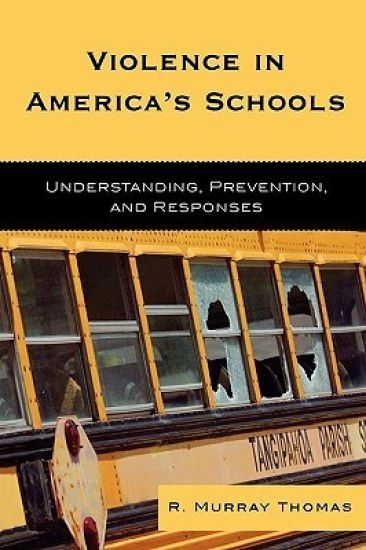
The problem of violence in schools has not gone away despite radical reductions in violent crimes throughout the country over the last decade. Students continue to harass, haze, and harm each other in a variety of ways, disrupting classrooms and entire schools. In the wake of the Columbine massacre, many focused on the worst kind of school violence: deadly assaults with dangerous weapons. But other forms of violence are more persistent, common, and just as destructive: fighting, sexual abuse, carrying weapons to school, vandalism, and assorted other crimes happen behind the closed doors of elementary, middle, and high schools across the country. The consequences range from violent victimization and death to fear and the disruption of learning among student bodies and teaching staffs. Thomas provides a foundation for understanding why violence occurs, preventing it from happening, and treating both offenders and victims after it takes place. Using scores of case descriptions to illustrate the types of school violence and their treatment in recent years, the author skillfully shows readers that the problem of violence and crime in schools is an insidious issue that cannot go untreated. He offers both tested and new methods for dealing with a host of violence issues as well as a guide to planning treatment of the problem and its associated consequences. He answers the questions: What are prominent types of violence in American schools? What conditions contribute to those types of violence? What methods can be applied in an effort to reduce school violence? Readers will come away from this book with a greater understanding of the scope of violence in America's schools, and the myriad ways of addressing it.
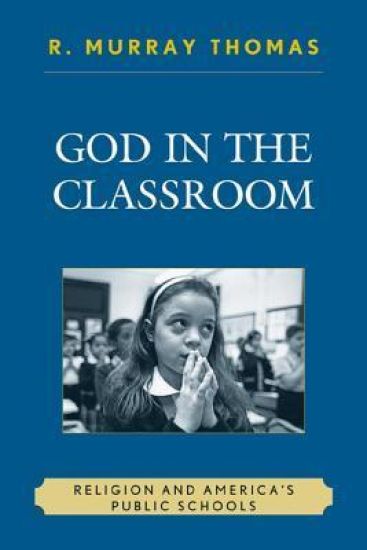
God in the Classroom

God in the Classroom

R. Murray Thomas

Rowman Littlefield Education
2008
nidottu
Conflicts over the proper role of religion in schools-and particularly in public schools supported by tax monies-are frequently featured in news reports. For example, in the United States there currently are conflicts over the teaching of evolution, inserting the word God in the pledge of allegiance, conducting school holiday celebrations, posting the biblical Ten Commandments in schools, and praying at school functions. People who are interested in such controversies often-or, perhaps, usually-fail to understand the historical backgrounds to the conflicts and therefore do not recognize the very complex factors that affect why the controversies become so heated. To help readers gain a better understanding of such matters, this book focuses on the seven major types of conflicts that have become particularly confrontational during the first decade of the twenty-first century. The cases on which the chapters focus concern issues that currently are being hotly debated in America. Controversies are described in relation to their historical origins and the author shows how the history affects current understanding of the issues. Thomas does not take sides in the arguments; rather, he lays out the arguments, their historical and cultural contexts, and the groups that debate them and their goals. Anyone wishing to gain a better understanding of the controversies surrounding religion in American schools will be happy to find here not just a review of the issues, but a deeper consideration of the causes, consequences, and future of the debates and the role of religion in our public schools.
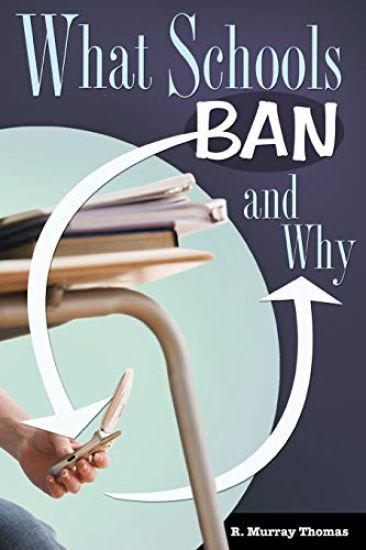
What Schools Ban and Why

What Schools Ban and Why

R. Murray Thomas

Praeger Publishers Inc
2008
nidottu
Schools in the United States have historically banned many different things. From clothing to weapons, from cell phones to books, schools have implemented various types of censorship and restrictions on their students for a variety of reasons and with a variety of results. This book's purpose is to describe the various things banned in schools, the reasons behind attempts to ban such things, the types of people who approve of censoring those things and the types who do not, the outcome of representative cases of censorship, and suggestions for school personnel about how to cope with bans. Each chapter addresses the same sequence of topics: a particular type of ban's domain and historical background; representative cases of the ban's application; ban supporters and their methods; ban critics and their methods; and ways of resolving conflicts over the ban.While some may argue that cell phones are necessary in today's school setting, others would suggest they are disruptive. While some may argue The Catcher in the Rye should be banned, others may say it is essential reading for American students. More recently, some schools have banned all of the Harry Potter books from their library shelves. Few would argue that a ban on weapons is a bad thing, but who determines what should be considered a weapon? In some schools, restrictions are placed on Web access, but who decides what to allow and what not to allow? Where do the lines get drawn? Here, Thomas reviews the many areas of censorship in our schools and helps readers draw their own conclusions.
What Schools Ban and Why

What Schools Ban and Why

R. Murray Thomas

Praeger Publishers Inc
2008
sidottu
Schools in the United States have historically banned many different things. From clothing to weapons, from cell phones to books, schools have implemented various types of censorship and restrictions on their students for a variety of reasons and with a variety of results. This book's purpose is to describe the various things banned in schools, the reasons behind attempts to ban such things, the types of people who approve of censoring those things and the types who do not, the outcome of representative cases of censorship, and suggestions for school personnel about how to cope with bans. Each chapter addresses the same sequence of topics: a particular type of ban's domain and historical background; representative cases of the ban's application; ban supporters and their methods; ban critics and their methods; and ways of resolving conflicts over the ban. While some may argue that cell phones are necessary in today's school setting, others would suggest they are disruptive. While some may argue The Catcher in the Rye should be banned, others may say it is essential reading for American students. More recently, some schools have banned all of the Harry Potter books from their library shelves. Few would argue that a ban on weapons is a bad thing, but who determines what should be considered a weapon? In some schools, restrictions are placed on Web access, but who decides what to allow and what not to allow? Where do the lines get drawn? Here, Thomas reviews the many areas of censorship in our schools and helps readers draw their own conclusions.
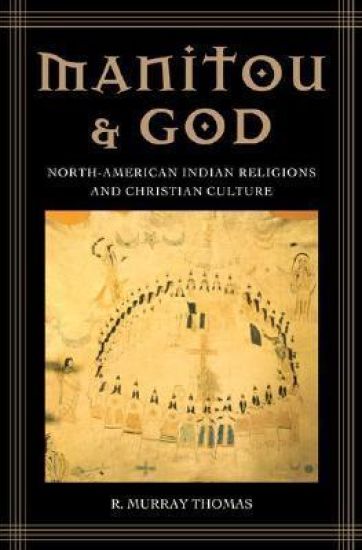
Manitou and God

Manitou and God

R. Murray Thomas

Praeger Publishers Inc
2007
sidottu
Manitou and God describes American Indian religions as they compare with principal features of Christian doctrine and practice. Thomas traces the development of sociopolitical and religious relations between American Indians and the European immigrants who, over the centuries, spread across the continent, captured Indian lands, and decimated Indian culture in general and religion in particular. He identifies the modern-day status of American Indians and their religions, including the progress Indians have made toward improving their political power, socioeconomic condition, and cultural/religious recovery and the difficulties they continue to face in their attempts to better their lot. Readers will gain a better sense of the give and take between these two cultures and the influence each has had on the other. In Algonquin Indian lore, Manitou is a supernatural power that permeates the world, a power that can assume the form of a deity referred to as The Great Manitou or The Great Spirit, creator of all things and giver of life. In that sense, Manitou can be considered the counterpart of the Christian God. From early times, the belief in Manitou extended from the Algonquins in Eastern Canada to other tribal nations—the Odawa, Ojibwa, Oglala, and even the Cheyenne in the Western plains. As European settlers made their way across the land, the confrontation between Christianity and Native American religions revealed itself in various ways. That confrontation continues to this day.
Theses and Dissertations

Theses and Dissertations

R. Murray Thomas; Dale L. Brubaker

SAGE Publications Inc
2007
nidottu
"This text moves beyond simplistic 'procedures to follow' to in-depth discussions of stages in the research process, providing strong reference points and examples for students embarking on the disciplined inquiry of thesis and dissertation research. A valuable text for proposal writing classes, faculty members who direct dissertations and theses, and students throughout the research process."—Betty J. Alford, Chair of Secondary Education and Educational LeadershipStephen F. Austin State University"Graduate students will be in debt to professors Thomas and Brubaker for providing a long-overdue guide to the rite of passage known as theses and dissertations. This book is realistic, clear, and refreshingly sensitive to what students need to know."—Seymour B. Sarason, Professor of Psychology EmeritusYale UniversityTake the anxiety out of preparing your thesis or dissertation!This revised classic helps graduate students approach the thesis or dissertation writing process with confidence, offering updated references and new information on Internet searches, narrative summaries, plagiarism, and Internet publishing options. The authors help readers stay on track by providing checklists and multiple examples as they progress through five critical stages:PreparationSelecting research topics Collecting and organizing information Interpreting the resultsThe final presentationWith thorough guidelines for evaluating research options, this indispensable resource helps make the writing process a satisfying and rewarding one!
God in the Classroom

God in the Classroom

R. Murray Thomas

Praeger Publishers Inc
2007
sidottu
To help readers gain a better understanding of conflicts over the proper role of religion in American public schools, this book focuses on the seven major types of conflicts that have become particularly confrontational. Thomas does not take sides; rather, he lays out the arguments, their historical and cultural contexts, and the groups that debate them and their goals. Anyone wishing to gain a better understanding of the controversies surrounding religion in American schools will find here not just a review of the issues, but a deeper consideration of the causes, consequences, and future of the debates.Conflicts over the proper role of religion in schools-and particularly in public schools supported by tax monies-are frequently featured in news reports. For example, in the United States there currently are conflicts over the teaching of evolution, inserting the word God in the pledge of allegiance, conducting school holiday celebrations, posting the biblical Ten Commandments in schools, and praying at school functions. People who are interested in such controversies often-or, perhaps, usually-fail to understand the historical backgrounds to the conflicts and therefore do not recognize the very complex factors that affect why the controversies become so heated. To help readers gain a better understanding of such matters, this book focuses on the seven major types of conflicts that have become particularly confrontational during the first decade of the twenty-first century.The cases on which the chapters focus concern issues that currently are being hotly debated in America. Controversies are described in relation to their historical origins and the author shows how the history affects current understanding of the issues. Thomas does not take sides in the arguments; rather, he lays out the arguments, their historical and cultural contexts, and the groups that debate them and their goals. Anyone wishing to gain a better understanding of the controversies surrounding religion in American schools will be happy to find here not just a review of the issues, but a deeper consideration of the causes, consequences, and future of the debates and the role of religion in our public schools.
Violence in America's Schools

Violence in America's Schools

R. Murray Thomas

Praeger Publishers Inc
2006
sidottu
The problem of violence in schools has not gone away despite radical reductions in violent crimes throughout the country over the last decade. Students continue to harrass, haze, and harm each other in a variety of ways, disrupting classrooms and whole schools. In the wake of the Columbine massacre, many focused on the worst kind of school violence: deadly assaults with dangerous weapons. But other forms of violence are more persistent, common, and just as destructive in many ways: fighting, sexual abuse, carrying weapons to school, vandalism, and assorted other crimes that happen behind the closed doors of elementary, middle, and high schools across the country. The consequences range from violent victimization and death, to the disruption of learning and fear among student bodies and teaching staffs. Here, Thomas provides a foundation for understanding why the violence occurs, preventing it from happening, and treating both offenders and victims after it happens.Using scores of case descriptions to illustrate the types of school violence and their treatment in recent years, the author skillfully shows readers how the problem of violence and crime in schools is an insidious issue that cannot go untreated. He offers both tested and proposed methods for dealing with a host of violence issues and a guide to planning treatment of the problem and its associated consequences. He answers the questions: What are prominent types of violence in American schools? What conditions contribute to those types of violence? What methods can be applied in an effort to reduce school violence? Readers will come away from this book with a greater understanding of the scope of violence in America's schools, and the myriad ways of addressing it.
Religion in Schools

Religion in Schools

R. Murray Thomas

Praeger Publishers Inc
2006
sidottu
Many Americans may believe that religion in the schools is a controversial subject only in the United States. But around the world, the subject has gained widespread notoriety, media coverage, and attention from governing bodies, school administrations, and individuals. In France, conflict erupted when a young girl wore a headscarf to her public school; the government there got involved to reassert the rule that no outward display of religion will be tolerated. In India, a panel was appointed to remove Hindu religious beliefs from high-school textbooks. In Pakistan, the government passed a law to make the curriculum of Islamic religious schools more secular in its approach. Here in the United States, debates abound regarding the Pledge of Allegiance, the posting of the Ten Commandments, prayer in school, and other familiar arguments. But why do these controversies exist? What prompts them? Why do particular conflicts arise, and what attempts are made to deal with them? How have solutions fared? How are the controversies in one country similar to or different from those in another?In Religion in Schools, R. Murray Thomas uses case examples from twelve countries around the world, covering all regions of the world and all the major religions, to examine and answer these questions. He reveals the complexities of the conflicts, and shows what brought them about. For example, in France, the conflicts often arise out of that nation's desire to remain intensely secular. Using case examples and applying a uniform approach to analyzing each country's particular focus on religion and education, he is able to show what these conflicts have in common, how well solutions have worked, and what may lie ahead.
High-Stakes Testing

High-Stakes Testing

R. Murray Thomas

Routledge Member of the Taylor and Francis Group
2005
sidottu
The federal government's No Child Left Behind Act has thrust high-stakes testing - its goals, methods, and consequences - into the educational limelight. The four-fold purpose of this book is to: describe the nature of high-stakes testing; identify types of collateral damage that have attended the testing programs; analyze methods different groups of people have chosen for coping with the damage and suggest lessons to be learned from the high-stakes-testing experience. The six groups of people whose coping strategies are inspected include: politicians and their staffs; educational administrators and their staffs; parents and the public; test makers and test administrators; teachers and students. Importantly, the author avoids aligning himself with the test-bashing rhetoric of those who oppose high-stakes testing, especially the No Child Left Behind Act.Key features of this outstanding new book include:illustrative cases. The book offers more than 350 cases of collateral damage from high-stakes testing--and people's coping strategies--as reported in newspapers over the 2002-2004 period.background perspectives. Part I examines the influence of high-stakes testing on: 1) what schools teach; 2) how student progress is evaluated; 3) how achievement standards are set; and 4) how test results are used.participant responses. Part II, which is the heart of the book, devotes a separate chapter to the coping strategies of each of the major participants in the high-stakes testing movement: politicians and their staffs, educational administrators and their staffs, parents and the public, test-makers and test-givers, teachers, and students.summary chapter. The last chapter (Lessons to Learn) offers suggestions for minimizing collateral damage by adopting alternative approaches not used in the creation of our current high-stakes testing programs, particularly the federal government's No Child Left Behind Act.This book is appropriate for any of the following audiences: students taking evaluation or administration courses in schools of education, inservice administrators and teachers, policy makers, and those members of the general public who are concerned about the fate of schooling in America.
High-Stakes Testing

High-Stakes Testing

R. Murray Thomas

Routledge Member of the Taylor and Francis Group
2005
nidottu
The federal government's No Child Left Behind Act has thrust high-stakes testing - its goals, methods, and consequences - into the educational limelight. The four-fold purpose of this book is to: describe the nature of high-stakes testing; identify types of collateral damage that have attended the testing programs; analyze methods different groups of people have chosen for coping with the damage and suggest lessons to be learned from the high-stakes-testing experience. The six groups of people whose coping strategies are inspected include: politicians and their staffs; educational administrators and their staffs; parents and the public; test makers and test administrators; teachers and students. Importantly, the author avoids aligning himself with the test-bashing rhetoric of those who oppose high-stakes testing, especially the No Child Left Behind Act.Key features of this outstanding new book include:illustrative cases. The book offers more than 350 cases of collateral damage from high-stakes testing--and people's coping strategies--as reported in newspapers over the 2002-2004 period.background perspectives. Part I examines the influence of high-stakes testing on: 1) what schools teach; 2) how student progress is evaluated; 3) how achievement standards are set; and 4) how test results are used.participant responses. Part II, which is the heart of the book, devotes a separate chapter to the coping strategies of each of the major participants in the high-stakes testing movement: politicians and their staffs, educational administrators and their staffs, parents and the public, test-makers and test-givers, teachers, and students.summary chapter. The last chapter (Lessons to Learn) offers suggestions for minimizing collateral damage by adopting alternative approaches not used in the creation of our current high-stakes testing programs, particularly the federal government's No Child Left Behind Act.This book is appropriate for any of the following audiences: students taking evaluation or administration courses in schools of education, inservice administrators and teachers, policy makers, and those members of the general public who are concerned about the fate of schooling in America.
Avoiding Thesis and Dissertation Pitfalls

Avoiding Thesis and Dissertation Pitfalls

R. Murray Thomas; Dale L. Brubaker

Praeger Publishers Inc
2001
sidottu
Being aware of thesis and dissertation pitfalls can help the graduate student make efficient use of resources available to him or her and bring precision to research and writing of that important project. The authors present 61 cases cast as an envisioned conversation between a student and a professor whom the student consults about a problem.The cases are presented within ten chapters that proceed through a sequence of typical stages in the production of a thesis or dissertation. Chapter titles include Choosing and Defining a Research Topic, Searching the Professional Literature, Developing a Proposal, Getting Help, Devising Data-Collection Procedures, Organizing the Collected Information, Interpreting the Results, Writing the Report, Defending the Finished Product, and Publishing the Study.
Recent Theories of Human Development

Recent Theories of Human Development

R. Murray Thomas

SAGE Publications Inc
2000
nidottu
Intended as supplemental reading in courses on theories of development, this book augments traditional core texts by providing students with more depth on about two dozen recent and emerging theories that have appeared over the course of the past 20 years. This period has seen a decline of the traditional "grand" theories that attempt to apply to all people all the time in favor of "micro theories" that focus more on individual differences, so a book like this actually points the way toward the future rather than dryly reviewing the past. In addition, the author inspects the changing ways in which the concept of "theory" itself has been interpreted during this period, and he concludes with a chapter suggesting future directions.