Kirjojen hintavertailu. Mukana 12 657 676 kirjaa ja 12 kauppaa.
Kirjailija
R P Reed
Kirjat ja teokset yhdessä paikassa: 3 kirjaa, julkaisuja vuosilta 2011-2020, suosituimpien joukossa The Monozygotic Touch. Vertaile teosten hintoja ja tarkista saatavuus suomalaisista kirjakaupoista.
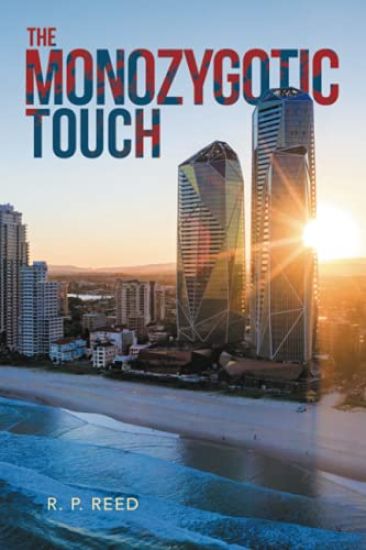
On Australia's Gold Coast, three unexplained murders had the local police struggling for answers. Desperate, they questioned a local businessman in regard to offensive weapons, so called, stored in his car. With his reputation and business threatened, David Searle undertook his own investigation his way. In doing so, he exposed his own personal history involving death from decades ago. Entwined with this a saga of loves lost and won, a confrontational business alliance, cultural differences, and a will to solve three murders and ensure public safety.
The need for alternate energy sources has led to the develop ment of prototype fusion and MHD reactors. Both possible energy systems in current designs usually require the use of magnetic fields for plasma confinement and concentration. For the creation and maintenance of large 5 to 15 tesla magnetic fields, supercon ducting magnets appear more economical. But the high magnetic fields create large forces, and the complexities of the conceptual reactors create severe space restrictions. The combination of re quirements, plus the desire to keep construction costs at a mini mum, has created a need for stronger structural alloys for service at liquid helium temperature (4 K). The complexity of the required structures requires that these alloys be weldable. Furthermore, since the plasma is influenced by magnetic fields and since magnet ic forces from the use of ferromagnetic materials in many configur ations may be additive, the best structural alloy for most applica tions should be nonmagnetic. These requirements have led to consideration of higher strength austenitic steels. Strength increases at low temperatures are achieved by the addition of nitrogen. The stability of the austenitic structure is retained by adding manganese instead of nickel, which is more expensive. Research to develop these higher strength austenitic steels is in process, primarily in Japan and the United States.
The Fourth International Cryogenic Materials Conference (ICMC) was held in San Diego, California in conjunction with the Cryogenic Engineer ing Conference (CEC) on August 10-l4, 1981. The synergism produced by conducting the two conferences together remains very strong. In the ap pl1cation of cryogenic technology, materials continue to be a demanding challenge, and sometimes, an obstacle. The association of materials and cryogenic engineers increases their awareness of recent research in each other's fields and influences the course of future research. Many contributed to the success of the 1981 conference. J. W. Morris of the University of California--Berkeley was ICMC Conference Chairman. E. N. C. Dalder of Lawrence Livermore Laboratories was ICMC Structural Program Chairman; D. C. Larbalestier of the University of Wisconsin- Madison, and D. K. Finnemore of Iowa State University were Superconducting Materials Program Chairmen. Local arrangments were expertly coordinated by R. E. Tatro of General Dynamics--San Diego. The CEC Board, especia11y their conference chairman, T. M. Flynn, of the National Bureau of Stan dards, Boulder, contributed very substantia1ly to conference planning and implementation. All of their efforts provided the foundation of the largest CEC/ICMC ever. We thank the Office of Naval Research and the Office of Fusion Energy and Basic Energy Sciences of the Department of Energy for providing needed financial support for the conference. Fina11y, we especially thank M. Stieg, who prepared the papers for the new procedures and format used in this volume.