Kirjojen hintavertailu. Mukana 12 595 353 kirjaa ja 12 kauppaa.

Kirjailija

R.W Hockney

Kirjat ja teokset yhdessä paikassa: 4 kirjaa, julkaisuja vuosilta 1988-2020, suosituimpien joukossa Computer Simulation Using Particles. Vertaile teosten hintoja ja tarkista saatavuus suomalaisista kirjakaupoista.

4 kirjaa

Kirjojen julkaisuhaarukka 1988-2020.

Parallel Computers 2

Parallel Computers 2

R.W Hockney; C.R Jesshope

CRC Press
2020
nidottu
Since the publication of the first edition, parallel computing technology has gained considerable momentum. A large proportion of this has come from the improvement in VLSI techniques, offering one to two orders of magnitude more devices than previously possible. A second contributing factor in the fast development of the subject is commercialization. The supercomputer is no longer restricted to a few well-established research institutions and large companies. A new computer breed combining the architectural advantages of the supercomputer with the advance of VLSI technology is now available at very attractive prices. A pioneering device in this development is the transputer, a VLSI processor specifically designed to operate in large concurrent systems. Parallel Computers 2: Architecture, Programming and Algorithms reflects the shift in emphasis of parallel computing and tracks the development of supercomputers in the years since the first edition was published. It looks at large-scale parallelism as found in transputer ensembles. This extensively rewritten second edition includes major new sections on the transputer and the OCCAM language. The book contains specific information on the various types of machines available, details of computer architecture and technologies, and descriptions of programming languages and algorithms. Aimed at an advanced undergraduate and postgraduate level, this handbook is also useful for research workers, machine designers, and programmers concerned with parallel computers. In addition, it will serve as a guide for potential parallel computer users, especially in disciplines where large amounts of computer time are regularly used.
Computer Simulation Using Particles
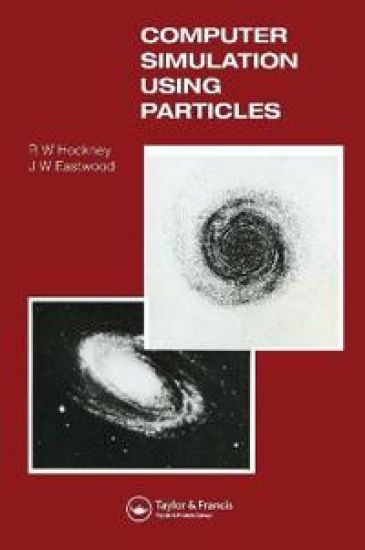
Computer simulation of systems has become an important tool in scientific research and engineering design, including the simulation of systems through the motion of their constituent particles. Important examples of this are the motion of stars in galaxies, ions in hot gas plasmas, electrons in semiconductor devices, and atoms in solids and liquids. The behavior of the system is studied by programming into the computer a model of the system and then performing experiments with this model. New scientific insight is obtained by observing such computer experiments, often for controlled conditions that are not accessible in the laboratory. Computer Simulation using Particles deals with the simulation of systems by following the motion of their constituent particles. This book provides an introduction to simulation using particles based on the NGP, CIC, and P3M algorithms and the programming principles that assist with the preparations of large simulation programs based on the OLYMPUS methodology. It also includes case study examples in the fields of astrophysics, plasmas, semiconductors, and ionic solids as well as more detailed mathematical treatment of the models, such as their errors, dispersion, and optimization. This resource will help you understand how engineering design can be assisted by the ability to predict performance using the computer model before embarking on costly and time-consuming manufacture.
Parallel Computers 2

Parallel Computers 2

R.W Hockney; C.R Jesshope

Institute of Physics Publishing
1988
sidottu
Since the publication of the first edition, parallel computing technology has gained considerable momentum. A large proportion of this has come from the improvement in VLSI techniques, offering one to two orders of magnitude more devices than previously possible. A second contributing factor in the fast development of the subject is commercialization. The supercomputer is no longer restricted to a few well-established research institutions and large companies. A new computer breed combining the architectural advantages of the supercomputer with the advance of VLSI technology is now available at very attractive prices. A pioneering device in this development is the transputer, a VLSI processor specifically designed to operate in large concurrent systems. Parallel Computers 2: Architecture, Programming and Algorithms reflects the shift in emphasis of parallel computing and tracks the development of supercomputers in the years since the first edition was published. It looks at large-scale parallelism as found in transputer ensembles. This extensively rewritten second edition includes major new sections on the transputer and the OCCAM language. The book contains specific information on the various types of machines available, details of computer architecture and technologies, and descriptions of programming languages and algorithms. Aimed at an advanced undergraduate and postgraduate level, this handbook is also useful for research workers, machine designers, and programmers concerned with parallel computers. In addition, it will serve as a guide for potential parallel computer users, especially in disciplines where large amounts of computer time are regularly used.
Computer Simulation Using Particles

Computer Simulation Using Particles

R.W Hockney

Institute of Physics Publishing
1988
nidottu
Computer simulation of systems has become an important tool in scientific research and engineering design, including the simulation of systems through the motion of their constituent particles. Important examples of this are the motion of stars in galaxies, ions in hot gas plasmas, electrons in semiconductor devices, and atoms in solids and liquids. The behavior of the system is studied by programming into the computer a model of the system and then performing experiments with this model. New scientific insight is obtained by observing such computer experiments, often for controlled conditions that are not accessible in the laboratory. Computer Simulation using Particles deals with the simulation of systems by following the motion of their constituent particles. This book provides an introduction to simulation using particles based on the NGP, CIC, and P3M algorithms and the programming principles that assist with the preparations of large simulation programs based on the OLYMPUS methodology. It also includes case study examples in the fields of astrophysics, plasmas, semiconductors, and ionic solids as well as more detailed mathematical treatment of the models, such as their errors, dispersion, and optimization. This resource will help you understand how engineering design can be assisted by the ability to predict performance using the computer model before embarking on costly and time-consuming manufacture.