Kirjailija
Rabindranath Tagore
Kirjat ja teokset yhdessä paikassa: 822 kirjaa, julkaisuja vuosilta 1910-2026, suosituimpien joukossa A Woman of India: Being the Life of Saroj Nalini, Founder of the Women's Institute Movement in India. Vertaile teosten hintoja ja tarkista saatavuus suomalaisista kirjakaupoista.
822 kirjaa
Kirjojen julkaisuhaarukka 1910-2026.
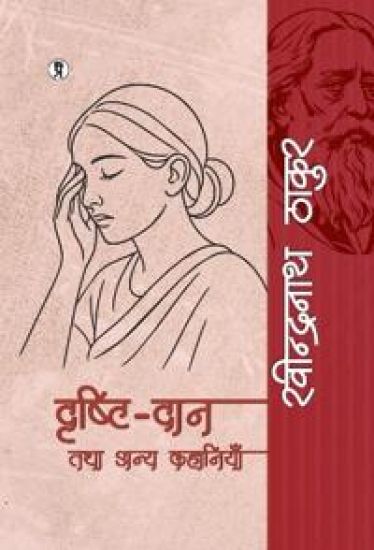
Drishti-daan tatha anya kahaniyaan
Rabindranath Tagore
Prabhakar Prakashan Private Limited
2025
sidottu
Rabindranath Tagore FRAS (born Robindronath Thakur, 7 May 1861 - 7 August 1941), sobriquets Gurudev, was a Bengali poet, writer, composer, philosopher and painter from Bengal. He reshaped Bengali literature and music, as well as Indian art with Contextual Modernism in the late 19th and early 20th centuries. Author of the ""profoundly sensitive, fresh and beautiful verse"" of Gitanjali, he became in 1913 the first non-European as well as the first lyricist to win the Nobel Prize in Literature. Tagore's poetic songs were viewed as spiritual and mercurial; however, his ""elegant prose and magical poetry"" remain largely unknown outside Bengal. He is sometimes referred to as ""the Bard of Bengal"".

Rabindranath Tagore FRAS (born Robindronath Thakur, 1861-1941), sobriquets Gurudev, was a Bengali polymath- poet, writer, composer, philosopher and painter. He reshaped Bengali literature and music, as well as Indian art with Contextual Modernism in the late 19th and early 20th centuries. Author of the "profoundly sensitive, fresh and beautiful verse" of Gitanjali, he became in 1913 the first non-European as well as the first lyricist to win the Nobel Prize in Literature. Tagore's poetic songs were viewed as spiritual and mercurial; however, his "elegant prose and magical poetry" remain largely unknown outside Bengal. He is sometimes referred to as "the Bard of Bengal".
Rabindranath Tagore FRAS (born Robindronath Thakur, 7 May 1861 - 7 August 1941), sobriquets Gurudev, was a Bengali poet, writer, composer, philosopher and painter from Bengal. He reshaped Bengali literature and music, as well as Indian art with Contextual Modernism in the late 19th and early 20th centuries. Author of the "profoundly sensitive, fresh and beautiful verse" of Gitanjali, he became in 1913 the first non-European as well as the first lyricist to win the Nobel Prize in Literature. Tagore's poetic songs were viewed as spiritual and mercurial; however, his "elegant prose and magical poetry" remain largely unknown outside Bengal. He is sometimes referred to as "the Bard of Bengal".

Rabindranath Tagore FRAS (born Robindronath Thakur, 7 May 1861 - 7 August 1941), sobriquets Gurudev, was a Bengali poet, writer, composer, philosopher and painter from Bengal. He reshaped Bengali literature and music, as well as Indian art with Contextual Modernism in the late 19th and early 20th centuries. Author of the "profoundly sensitive, fresh and beautiful verse" of Gitanjali, he became in 1913 the first non-European as well as the first lyricist to win the Nobel Prize in Literature. Tagore's poetic songs were viewed as spiritual and mercurial; however, his "elegant prose and magical poetry" remain largely unknown outside Bengal. He is sometimes referred to as "the Bard of Bengal".
Rabindranath Tagore FRAS (born Robindronath Thakur, 7 May 1861 - 7 August 1941), sobriquets Gurudev, was a Bengali poet, writer, composer, philosopher and painter from Bengal. He reshaped Bengali literature and music, as well as Indian art with Contextual Modernism in the late 19th and early 20th centuries. Author of the "profoundly sensitive, fresh and beautiful verse" of Gitanjali, he became in 1913 the first non-European as well as the first lyricist to win the Nobel Prize in Literature. Tagore's poetic songs were viewed as spiritual and mercurial; however, his "elegant prose and magical poetry" remain largely unknown outside Bengal. He is sometimes referred to as "the Bard of Bengal".