Kirjojen hintavertailu. Mukana 12 459 402 kirjaa ja 12 kauppaa.

Kirjailija

Rachael Z. DeLue

Kirjat ja teokset yhdessä paikassa: 3 kirjaa, julkaisuja vuosilta 2008-2020, suosituimpien joukossa Colonization, Wilderness, and Spaces Between. Vertaile teosten hintoja ja tarkista saatavuus suomalaisista kirjakaupoista.

3 kirjaa

Kirjojen julkaisuhaarukka 2008-2020.

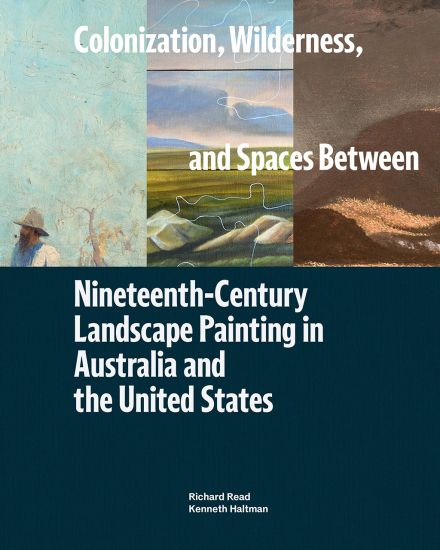
Colonization, Wilderness, and Spaces Between

Colonization, Wilderness, and Spaces Between

Peter John Brownlee; David Peters Corbett; Rachael Z. DeLue; Kenneth Haltman; David Hansen; Elizabeth Hutchinson; Alan Michelson; Christopher Pease; Ruth Pullin; Richard Read; Catherine Speck

Terra Foundation for the Arts,U.S.
2020
nidottu
This volume of essays frames a comparative history of landscape painting in Australia and the United States through recent considerations of the Anthropocene, arguing that careful and deep analysis of specific nineteenth-century artworks reveals issues of environmental concern both past and present. Carefully drawn from two symposia held at the Art Gallery of Western Australia in Perth in 2016 and at the Ian Potter Museum of Art, University of Melbourne the following year, the volume includes eight essays and a conversation between artists. Colonization, Wilderness, and Spaces Between brings together the fresh insights of scholars and artists from Australia, the United Kingdom, and the United States and provides a resource for thinking critically about the historical, imperial, and environmental information that can be gleaned from looking closely at landscape paintings.
Arthur Dove

Arthur Dove

Rachael Z. DeLue

University of Chicago Press
2016
sidottu
Arthur Dove, often credited as America's first abstract painter, created dynamic and evocative images inspired by his surroundings, from the farmland of upstate New York to the north shore of Long Island. But his interests did not stop with nature. Challenging earlier accounts that view him as simply a landscape painter, Arthur Dove: Always Connect reveals for the first time the artist's intense engagement with language, the nature of social interaction, and scientific and technological advances. Rachael Z. DeLue rejects the traditional assumption that Dove can only be understood in terms of his nature paintings and association with photographer and gallery director Alfred Stieglitz and his circle. Instead, she uncovers deep and complex connections between Dove's work and his world, including avant-garde literature, popular music, machine culture, meteorology, mathematics, aviation, and World War II, just to name a few. Arthur Dove also offers the first sustained account of Dove's Dadaesque multimedia projects and the first explorations of his animal imagery and the role of humor in his art. Beautifully illustrated with works from all periods of Dove's career, this book presents an unprecedented vision of one of America's most innovative and captivating artists-and reimagines how the story of modern art in the United States might be told.
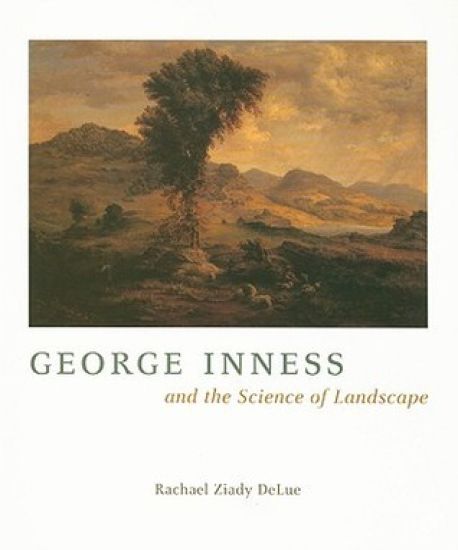
George Inness and the Science of Landscape

George Inness and the Science of Landscape

Rachael Z. DeLue

University of Chicago Press
2008
nidottu
George Inness (1825-94) is considered one of America's greatest landscape painters. A complicated artist and thinker, he painted stunning, evocative views of the American countryside.Throughout his career, Inness struggled to make visible what was invisible to the human eye by combining a deep interest in nineteenth-century scientific inquiry - including optics, psychology, physiology, and mathematics - with an idiosyncratic brand of mysticism. Rachael Ziady DeLue's "George Inness and the Science of Landscape" - the first in-depth examination of Inness' career to appear in several decades - demonstrates how the artistic, spiritual, and scientific aspects of Inness' art found expression in his masterly landscapes. In fact, Inness' practice was not merely shaped by his preoccupation with the nature and limits of human perception; he conceived of his labor as a science in its own right. This beautifully illustrated work reveals Inness' profound investment in the science and philosophy of his time and illuminates the complex manner in which the fields of art and science intersected in nineteenth-century America.