

Kirjailija
Rachel Armstrong
Kirjat ja teokset yhdessä paikassa: 26 kirjaa, julkaisuja vuosilta 2014-2025, suosituimpien joukossa Rêves de Noël à Elizadale. Vertaile teosten hintoja ja tarkista saatavuus suomalaisista kirjakaupoista.
26 kirjaa
Kirjojen julkaisuhaarukka 2014-2025.



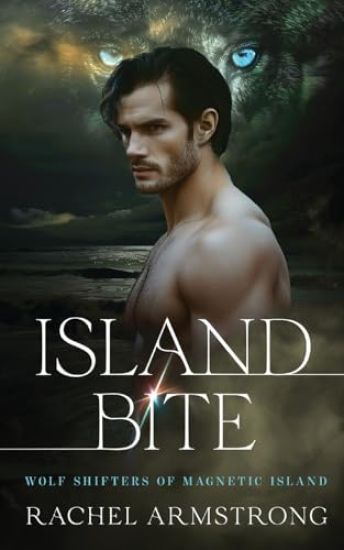
"I can tell you one thing, wolfie. She tastes good."The Magnetic Island Pack have won a battle against the rogues, but the war is far from over. The Dark Alpha will retaliate quickly and hit the pack where it hurts most, by targeting their Fated mates. And he's about to unleash his deadliest assassins yet. Vampires.Rain Blackwood has resisted his Fated mate for years to protect her from his enemy. Since his brother abandoned the pack, Rain has made it his mission to restore Sly's faith in the Moon Goddess and save from turning feral. He needs to prove that the pack can protect their mates and form his own mating bond. That is, if it's not already too late.Eden Starr has loved Rain since she first laid eyes on him. But despite the unexplainable connection she feels with her mysterious friend, she can't wait for him any longer. Determined to move on, Eden finds herself strangely infatuated with a charming, charismatic stranger interested in supporting her koala hospital. But Lucas isn't who he seems, and Eden suddenly finds herself facing the horrors of the paranormal world. With her life on the line, Rain is the only man with the power to save her. But can Eden find the strength to overcome her fears and embrace her new fate? Can Rain defeat the devious bat-shifting vampires hiding in shadows? Or will saving Eden's life cost Rain everything he believes in beneath the darkness of the new moon? Book Two of the Wolf Shifters of Magnetic Island series

"There is just one rule. Don't. Eat. The koalas."The Alpha of the Magnetic Island Pack has neglected his duties and is living as a wolf after the death of his mate. With rogue wolves on the mainland threatening to destroy them, the pack make a desperate attempt to defend their territory. They call a Warrior of the Moon Goddess for help. Finn Cassidy has lived a nomadic life saving wolf packs in the hope of finding a home. Since escaping his ruthless father, it has been his mission to honor the Goddess and fight those who don't-rogue wolves. But to restore the Alpha on Magnetic Island, Finn must face his darkest rivals yet. And the far greater challenge of meeting his mate. Finn won't let distractions deter him from his mission, but he can't ignore Fate. Ava Hart has been hurt by the rogues and though she remains ignorant of the paranormal world, the only way to protect her is to forge their mating bond. As they work together rehabilitating injured koalas, desire ignites and Finn gains her trust. But can Ava embrace his world and accept his wolf? Will proving the pack can protect their mates from the rogues be enough to lure the Alpha out of the bush? Or does Fate have other plans this full moon?

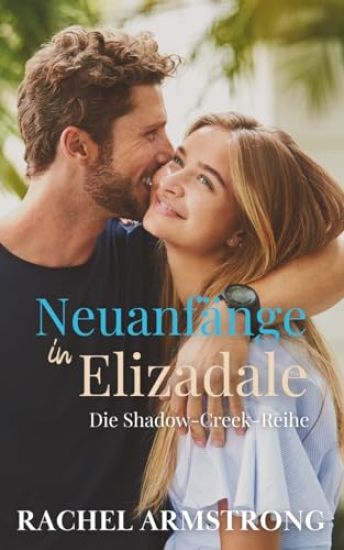
Can Elizadale's crown jewel convince her brooding best friend to face his torment and embrace her love to secure their happily ever after?Meg Riley was a rising star in country music when an accident crushed her muse and stalled her career. Devoted to her hometown of Elizadale, Meg is content working as a schoolteacher, organising the local show, and fundraising for causes dear to her heart. But one thing remains missing from her golden life and as her friends begin to settle down, Meg's longing for family can no longer be ignored. If only the man she loves wasn't determined to be just friends. Jack Maguire takes his position as the firstborn son seriously and protects those he loves at all costs. Rooted to his family property, expanding Shadow Creek and building a farming empire has always been his priority. But Jack knows life is a gloomy road he must travel alone as marriage will never be an option after a traumatic incident forced him to sacrifice his future with Meg. When a cyclone devastates North Queensland, the recovery effort leads Meg and Jack to discovering the power of second chances. But as Meg uncovers Jack's secret anguish, can she help him lower his defences and open his heart? Or will their pursuit of happiness unleash the danger Jack has fought so hard to contain?Book 3 of the Shadow Creek series


Can the spirited doctor help the troubled bad boy shed his reputation and feel worthy of her love?Adam Maguire wore the title of Elizadale's bad boy with pride, until he woke in the park with no memory of the night before. Fearing the unknown, Adam re-evaluates his history of reckless behaviour and determines to focus on building a business out of his passion for woodwork. But with his ex determined to lure him back, Adam doubts he'll ever escape his past.Doctor Natalia Hamilton has left the city after suffering harassment that left her confidence shattered. Reunited with her sister in Elizadale, Natalia hopes the small town vibe will help her rediscover the value of her work. Dating is the last thing on her mind when she's been constantly burned by romance. Until Adam rides in on his motorcycle and takes her breath away.As sparks ignite between the unlikely couple, Adam and Natalia begin to trust again. But when a story about his forgotten night is revealed, can Adam determine the truth from a web of lies? Or is it already too late for him to start over?Book Two of the Shadow Creek Series

Can the timid schoolteacher, the laidback guy-next-door, and two cheeky border collies overcome their painful pasts and form a home together?Ana Hamilton stood up for herself and sent a man to prison. Now he's out and she's on the run. Arriving in the small North Queensland town of Elizadale, Ana finds herself reigniting her lost social life with new friendships, yoga, and dog agility training with her beloved border collie. But with the threat of revenge pursuing her, Ana can't dare put down roots. Liam Maguire has it all, a beautiful house and a thriving business. Passionate about Elizadale's tourism, he's about to open a caf to highlight fresh produce from his family's banana farm, Shadow Creek. All that's missing from his life is the right woman ... and the intriguing new teacher may be the one he's been waiting for. But burned by a city girl before, can Liam risk his heart over another blow-in with flighty feet and shadows in her eyes? Drawn together through a budding friendship and the playful antics of their border collies, Ana and Liam begin to open their hearts. But as danger lurks in the darkness, can Ana risk staying in Elizadale with him when she may need to run again? Or worse, have her life violently cut short and leave Liam bereft? Book One of the Shadow Creek Series
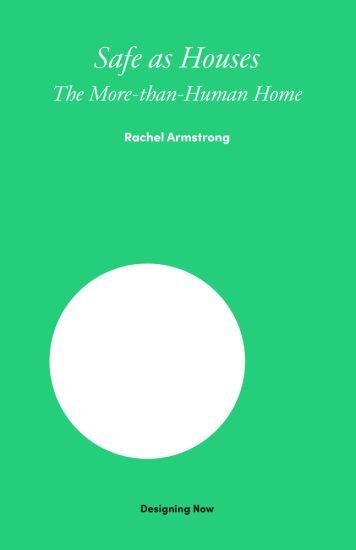
Our relationship with our homes changed in 2020 when the pandemic known as Covid-19 led to enforced periods of self-isolation, called 'lockdown'. We got to know our living spaces intimately and learned the greatest risk of infection was indoors through the breath we shared in poorly ventilated spaces, where microbial atmospheres could work their way inside, through every door, window and with every visitor. Our fear of such invisible threats will persist long after the pandemic ends and reflects a growing divide between the human and the microbial realm. This book examines the notion of the home in the context of the pandemic and lockdown, as they relate to environmental concerns and how we live with viruses and bacteria. It argues that, in order to decrease our vulnerability to infective agents, we need to acknowledge the link between people, space, daily routines and microbes and explore how the predominantly benign microbial world might be harnessed to combat and boost our immunity to future pathogens. Suggesting more than environmental home improvements, it explores new innovations and new materials which incorporate microbes for more ecological designs, such as ceramic tiles, concrete bio-receptive surfaces, building skins, fabrics, waste management and alternative energy supplies. A series of drawings which reveal the evolution of microbial technologies, infrastructures, spaces, dwellings, and architectures sets out a prototype for an ecological home for post pandemic times. Identifying the lessons that COVID-19 has brought us, the book highlights the need for humans to consider and take microbes into account in future built environments.
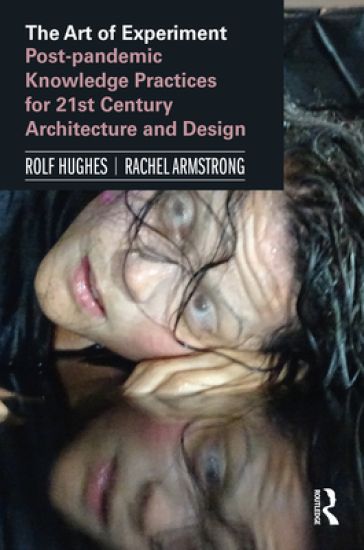
A handbook for navigating our troubled and precarious times intended to help readers imagine and make their world anew. In search of new knowledge practices that can help us make the world livable again, this book takes the reader on a journey across time—from the deep past to the unfolding future. The authors search beyond human knowledge to establish negotiated partnerships with forms of knowledge within the planet itself, examining how we have manipulated these historically through an anthropocentric focus. The book explores the many different kinds of knowledge, and the diversity of instruments needed to invoke and actuate the potency of human and nonhuman agencies. Four key phases in our ways of knowing are identified: material, strengthening, reconfiguring and extending, which are exemplified through case studies that take the form of worlding experiments. This pioneering work will inspire architects, artists and designers as well as students, teachers and researchers across arts and design disciplines.
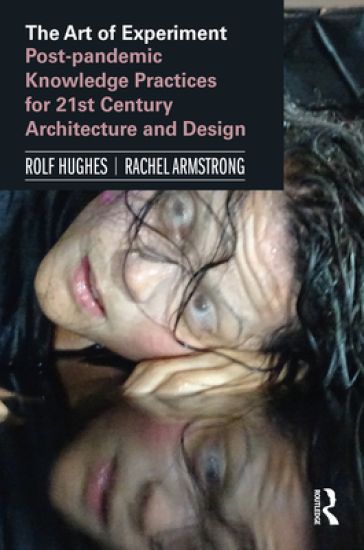
A handbook for navigating our troubled and precarious times intended to help readers imagine and make their world anew. In search of new knowledge practices that can help us make the world livable again, this book takes the reader on a journey across time—from the deep past to the unfolding future. The authors search beyond human knowledge to establish negotiated partnerships with forms of knowledge within the planet itself, examining how we have manipulated these historically through an anthropocentric focus. The book explores the many different kinds of knowledge, and the diversity of instruments needed to invoke and actuate the potency of human and nonhuman agencies. Four key phases in our ways of knowing are identified: material, strengthening, reconfiguring and extending, which are exemplified through case studies that take the form of worlding experiments. This pioneering work will inspire architects, artists and designers as well as students, teachers and researchers across arts and design disciplines.

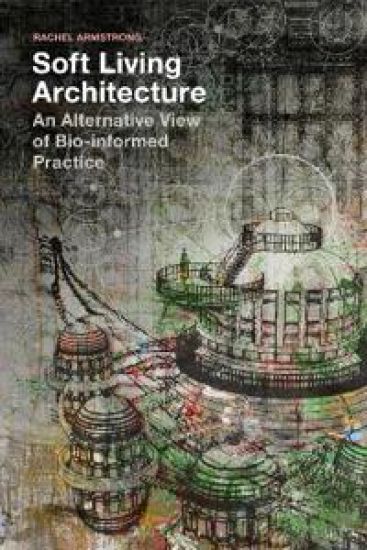
Soft Living Architecture explores the invention of new architectures based on living processes. It crafts a unique intersection between two fast-developing disciplines: biomimicry and biodesign in architecture, and bioinformatics and natural computing in the natural sciences.This is the first book to examine both the theory and methodology of architecture and design working directly with the natural world. It explores a range of approaches from the use of life-like systems in building design to the employment of actual growing and living cell and tissue cultures as architectural materials - creating architecture that can change, learn and grow with us. The use of ‘living architecture’ is cutting-edge and speculative, yet it is also inspiring a growing number of designers worldwide to adopt alternative perspectives on sustainability and environmental design. The book examines the ethical and theoretical issues arising alongside case-studies of experimental practice, to explore what we mean by ‘natural’ in the Anthropocene, and raise deep questions about the nature of design and the design of nature. This provocative and at times controversial book shows why it will become ever more necessary to embrace living processes in architecture if we are to thrive in a sustainable future.

If we lived in a liquid world, the concept of a "machine" would make no sense. Liquid life is metaphor and apparatus that discusses the consequences of thinking, working, and living through liquids. It is an irreducible, paradoxical, parallel, planetary-scale material condition, unevenly distributed spatially, but temporally continuous. It is what remains when logical explanations can no longer account for the experiences that we recognize as part of "being alive."Liquid life references a third-millennial understanding of matter that seeks to restore the agency of the liquid soul for an ecological era, which has been banished by reductionist, "brute" materialist discourses and mechanical models of life. Offering an alternative worldview of the living realm through a "new materialist" and "liquid" study of matter, it conjures forth examples of creatures that do not obey mechanistic concepts like predictability, efficiency, and rationality. With the advent of molecular science, an increasingly persuasive ontology of liquid technologies can be identified. Through the lens of lifelike dynamic droplets, the agency for these systems exists at the interfaces between different fields of matter/energy that respond to highly local effects, with no need for a central organizing system.Liquid Life seeks an alternative partnership between humanity and the natural world. It provokes a re-invention of the languages of the living realm to open up alternative spaces for exploration: Rolf Hughes' "angelology" of language explores the transformative invocations of prose poetry, and Simone Ferracina's graphical notations help shape our concepts of metabolism, upcycling, and designing with fluids. A conceptual and practical toolset for thinking and designing, Liquid Life reunites us with the irreducible "soul substance" of living things, which will neither be simply "solved," nor go away.Rachel Armstrong is Professor of Experimental Architecture at Newcastle University (UK), and has also been a Rising Waters II Fellow for the Robert Rauschenberg Foundation (April-May 2016), TWOTY futurist in 2015, Fellow of the British Interplanetary Society, and a Senior TED Fellow in 2010. She is also the coordinator of the Living Architecture project, an EU-funded project that establishes the principles for our buildings to share some of the properties of living things, e.g. metabolism, operating at the intersection of architecture, building construction, bio-energy and synthetic biology. She is also the author of Vibrant Architecture (De Gruyter, 2015), Star Ark: A Living, Self-Sustaining Spaceship (Springer, 2017), and Soft Living Architecture: An Alternative View of Bio-informed Design Practice (Bloomsbury, 2018).
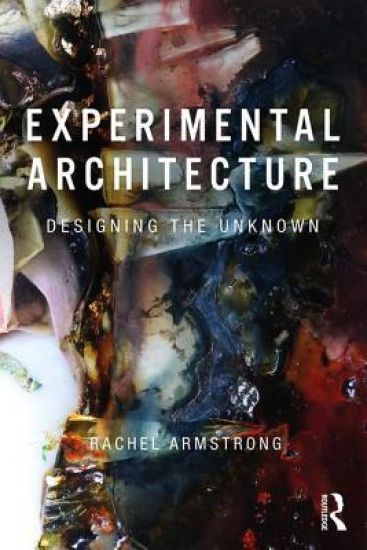
In this ground-breaking book, the first to provide an overview of the theory and practice of experimental architecture, Rachel Armstrong explores how interdisciplinary, design-led research practices are beginning to redefine the possibilities of architecture as a profession. Drawing on experts from disciplines as varied as information technology, mathematics, poetry, graphic design, scenography, bacteriology, marine applied science and robotics, Professor Armstrong delineates original, cutting-edge architectural experiments through essays, quotes, poetry, equations and stories.Written by an acknowledged pioneer of architectural experiment, this visionary book is ideal for students and researchers wishing to engage in experimental, practice-based architectural and artistic research. It introduces radical new ideas about architecture and provides ideas and inspiration which students and researchers can apply in their own work and proposals, while practitioners can draw on it to transform their creative assumptions and develop thereby a distinctive "edge" to stand out in a highly competitive profession.

In this ground-breaking book, the first to provide an overview of the theory and practice of experimental architecture, Rachel Armstrong explores how interdisciplinary, design-led research practices are beginning to redefine the possibilities of architecture as a profession. Drawing on experts from disciplines as varied as information technology, mathematics, poetry, graphic design, scenography, bacteriology, marine applied science and robotics, Professor Armstrong delineates original, cutting-edge architectural experiments through essays, quotes, poetry, equations and stories.Written by an acknowledged pioneer of architectural experiment, this visionary book is ideal for students and researchers wishing to engage in experimental, practice-based architectural and artistic research. It introduces radical new ideas about architecture and provides ideas and inspiration which students and researchers can apply in their own work and proposals, while practitioners can draw on it to transform their creative assumptions and develop thereby a distinctive "edge" to stand out in a highly competitive profession.