Kirjojen hintavertailu. Mukana 12 390 323 kirjaa ja 12 kauppaa.

Kirjailija

Rachel Muers

Kirjat ja teokset yhdessä paikassa: 14 kirjaa, julkaisuja vuosilta 2004-2025, suosituimpien joukossa The Text in Play. Vertaile teosten hintoja ja tarkista saatavuus suomalaisista kirjakaupoista.

14 kirjaa

Kirjojen julkaisuhaarukka 2004-2025.

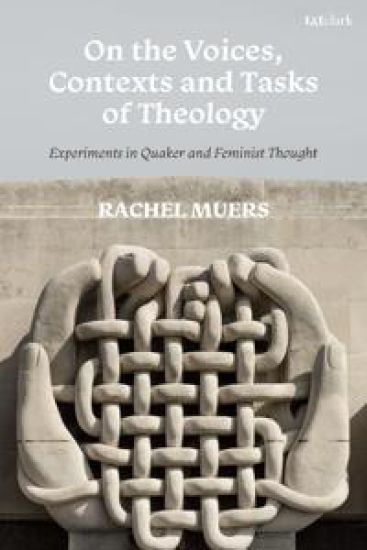
On the Voices, Contexts and Tasks of Theology: Experiments in Quaker and Feminist Thought
Who is Christian theology for, what is it for, and what can it do? Rachel Muers explores the voice of Christian theology – the relationship between the subject of theology and theological discourse. The book begins with the question ‘how does someone speak of God?’, understood not as a question about the criteria or authorised sources for theology, but as a question of what is going on when theology is done. How is it possible to speak as this particular historical embodied subject about God? Muers investigates voice through engagement with historical and contemporary theologians, particularly but not only with women who are speaking from relatively marginalised positions and contending with the lack of societal authorisation for their theological work. Recognising that the question of ‘voice’ is often equated in the contemporary context with the representation of identities and with how spaces and institutions can facilitate that representation, the narrative considers more directly how questions of identity and context – particularly in relation to gender – shape the construction and representation of systematic theology, and of theological tradition. Muers examines the vocation of theology, particularly in the contemporary Western academy and alongside other ‘humanities’ subjects, and a concluding chapter sets out a vision for ecumenical theological work. The book draws extensively on the author’s own Quaker tradition and on her experience of teaching and mentoring theologians.
Towards Tragedy/Reclaiming Hope

Towards Tragedy/Reclaiming Hope

Pink Dandelion; Douglas Gwyn; Rachel Muers; Brian Phillips

Routledge
2018
nidottu
The 'death of tragedy' in the modern era has been proposed and debated in recent years, largely in terms of literature and western culture in general. Today, any catastrophe or misadventure is likely to be labeled a 'tragedy', without any inference of a larger, transcendent horizon or providential design that the word once conveyed. This book offers new perspectives on the idea of the 'death of tragedy', taking England and the Religious Society of Friends (Quakers) in particular as a case study. Chapters focus on the origins of tragedy in ancient Greece, gospel and tragedy, the beginnings of the Quaker movement in seventeenth-century England, apocalyptic versus secularized experiences of time, Edwardian Quaker triumphalism, the search for English identity in postcolonial Britain, liberal Quakerism at the end of the twentieth century, and the promise and dilemma of postmodernity. The different disciplinary perspectives of the contributing authors bring literature, history, theology and sociology into a creative and revealing conversation. A Foreword by Richard Fenn introduces the book with an original and provocative meditation on tragedy and time.
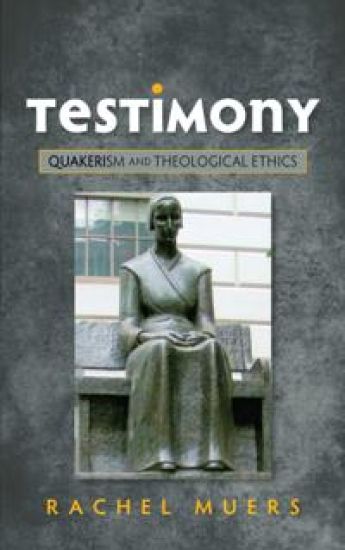
Testimony

Testimony

Rachel Muers

SCM Press
2015
nidottu
This book brings Quaker thought on theological ethics into constructive dialogue with Christian tradition while engaging with key contemporary ethical debates and with wider questions about the public role of church-communities in a post-secular context. The focus for the discussion is the distinctive Quaker concept and practice of ‘testimony’ – understood as a sustained pattern of action and life within and by the community and the individuals within it, in communicative and transformative relation to its context, and located in everyday life. In the first section, Rachel Muers presents a constructive theological account of testimony, drawing on historical and contemporary Quaker sources, that makes explicit its roots in Johannine Christology and pneumatology, as well as its connections with other Quaker “distinctives” such as unprogrammed worship and non-creedalism. She focuses in particular on the character of testimonies as sustained refusals of specific practices and structures, and on the way in which this sustained opposition gives rise to new attitudes and forms of life. Articulating the ongoing relevance of this approach for theology, Rachel Muers engages with the “ethics of witness” in contemporary Protestant theology and with a longer tradition of thought (and debates) about the significance of Christian ascesis. In the second section, she develops this general account through a series of case studies in Quaker testimony, written and practised. She uses each one to explore aspects of the meaning of, and need for, shared and individual testimony.
Modern Theology

Modern Theology

Rachel Muers; Mike Higton

Routledge
2012
nidottu
This book offers a fresh and up-to-date introduction to modern Christian theology. The ‘long nineteenth century’ saw enormous transformations of theology, and of thought about religion, that shaped the way both Christianity and ‘religion’ are understood today. Muers and Higton provide a lucid guide to the development of theology since 1789, giving students a critical understanding of their own ‘modern’ assumptions, of the origins of the debates and the fields of study in which they are involved, and of major modern thinkers.Modern Theology:introduces the context and work of a selection of major nineteenth-century thinkers who decisively affected the shape of modern theology presents key debates and issues that have their roots in the nineteenth century but are also central to the study of twentieth- and twenty-first-century theology includes exercises and study materials that explicitly focus on the development of core academic skills.This valuable resource also contains a glossary, timeline, annotated bibliographies and illustrations.
Modern Theology

Modern Theology

Rachel Muers; Mike Higton

Routledge
2012
sidottu
This book offers a fresh and up-to-date introduction to modern Christian theology. The ‘long nineteenth century’ saw enormous transformations of theology, and of thought about religion, that shaped the way both Christianity and ‘religion’ are understood today. Muers and Higton provide a lucid guide to the development of theology since 1789, giving students a critical understanding of their own ‘modern’ assumptions, of the origins of the debates and the fields of study in which they are involved, and of major modern thinkers.Modern Theology:introduces the context and work of a selection of major nineteenth-century thinkers who decisively affected the shape of modern theology presents key debates and issues that have their roots in the nineteenth century but are also central to the study of twentieth- and twenty-first-century theology includes exercises and study materials that explicitly focus on the development of core academic skills.This valuable resource also contains a glossary, timeline, annotated bibliographies and illustrations.
Living for the Future

Living for the Future

Rachel Muers

T. T.Clark Ltd
2011
nidottu
Our relationship to future generations raises fundamental issues for ethical thought, to which a Christian theological response is both possible and significant. A relationship to future generations is implicitly central to many of today's most public controversies - over environmental protection, genetic research, and the purpose of education, to name but a few; but it has received little explicit or extended consideration. In Living for the Future Rachel Muers argues and seeks to demonstrate that to consider future generations as ethically significant is not simply to extend an existing ethical framework, but to rethink how ethics is done. Doing intergenerationally responsible theology and ethics means paying attention to how people are formed as theological and ethical reasoners (reasoners about the good), how social practices of deliberation about the good are maintained and developed, and how all of this relates to an understanding of the world as the sphere of God's transforming action. In other words, an intergenerationally responsible theological ethics will pay attention to the ethics, and the spirituality, of "ethics" itself. Her account of the ethical relation to future generations centres on three key concepts: "choosing life" (see Deut 30:19); "keeping the sources open"; and "sustaining fruitful contexts. These concepts are developed theologically and in engagement with extra-theological conversations on intergenerational responsibility. She shows how they take up and move beyond concerns expressed in those conversations - for "survival", for the right distribution of resources, and for the maintenance of human values.
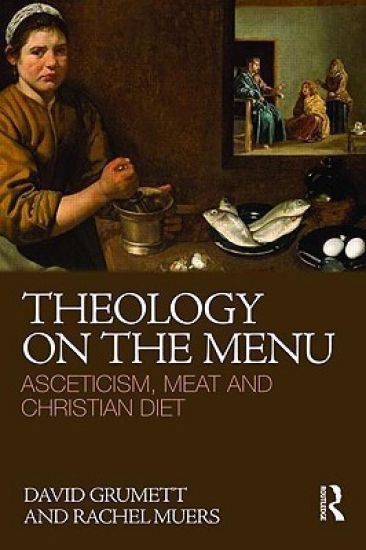
Theology on the Menu

Theology on the Menu

David Grumett; Rachel Muers

Routledge
2010
sidottu
Food - what we eat, how much we eat, how it is produced and prepared, and its cultural and ecological significance- is an increasingly significant topic not only for scholars but for all of us. Theology on the Menu is the first systematic and historical assessment of Christian attitudes to food and its role in shaping Christian identity. David Grumett and Rachel Muers unfold a fascinating history of feasting and fasting, food regulations and resistance to regulation, the symbolism attached to particular foods, the relationship between diet and doctrine, and how food has shaped inter-religious encounters. Everyone interested in Christian approaches to food and diet or seeking to understand how theology can engage fruitfully with everyday life will find this book a stimulus and an inspiration.
Theology on the Menu

Theology on the Menu

David Grumett; Rachel Muers

Routledge
2010
nidottu
Food - what we eat, how much we eat, how it is produced and prepared, and its cultural and ecological significance- is an increasingly significant topic not only for scholars but for all of us. Theology on the Menu is the first systematic and historical assessment of Christian attitudes to food and its role in shaping Christian identity. David Grumett and Rachel Muers unfold a fascinating history of feasting and fasting, food regulations and resistance to regulation, the symbolism attached to particular foods, the relationship between diet and doctrine, and how food has shaped inter-religious encounters. Everyone interested in Christian approaches to food and diet or seeking to understand how theology can engage fruitfully with everyday life will find this book a stimulus and an inspiration.
Living for the Future

Living for the Future

Rachel Muers

T. T.Clark Ltd
2008
sidottu
Our relationship to future generations raises fundamental issues for ethical thought, to which a Christian theological response is both possible and significant. A relationship to future generations is implicitly central to many of today's most public controversies - over environmental protection, genetic research, and the purpose of education, to name but a few; but it has received little explicit or extended consideration. In Living for the Future Rachel Muers argues and seeks to demonstrate that to consider future generations as ethically significant is not simply to extend an existing ethical framework, but to rethink how ethics is done. Doing intergenerationally responsible theology and ethics means paying attention to how people are formed as theological and ethical reasoners (reasoners about the good), how social practices of deliberation about the good are maintained and developed, and how all of this relates to an understanding of the world as the sphere of God's transforming action. In other words, an intergenerationally responsible theological ethics will pay attention to the ethics, and the spirituality, of "ethics" itself.Her account of the ethical relation to future generations centres on three key concepts: "choosing life" (see Deut 30:19); "keeping the sources open"; and "sustaining fruitful contexts". These concepts are developed theologically and in engagement with extra-theological conversations on intergenerational responsibility. She shows how they take up and move beyond concerns expressed in those conversations - for "survival", for the right distribution of resources, and for the maintenance of human values.
Keeping God's Silence

Keeping God's Silence

Rachel Muers

Wiley-Blackwell (an imprint of John Wiley Sons Ltd)
2004
sidottu
This ground-breaking book provides a new perspective on Christian practices of silence. An original, theologically informed work, written by a significant Quaker theologian Provides a new perspective on Christian practices of silence Considers the theological and ethical significance of these practices Relates silence, listening and communication to major contemporary issues Takes forward theological engagement with feminist thought Contributes to ongoing research into the theology of Dietrich Bonhoeffer.
Keeping God's Silence

Keeping God's Silence

Rachel Muers

Wiley-Blackwell (an imprint of John Wiley Sons Ltd)
2004
nidottu
This ground-breaking book provides a new perspective on Christian practices of silence. An original, theologically informed work, written by a significant Quaker theologian Provides a new perspective on Christian practices of silence Considers the theological and ethical significance of these practices Relates silence, listening and communication to major contemporary issues Takes forward theological engagement with feminist thought Contributes to ongoing research into the theology of Dietrich Bonhoeffer.
Towards Tragedy/Reclaiming Hope

Towards Tragedy/Reclaiming Hope

Pink Dandelion; Douglas Gwyn; Rachel Muers; Brian Phillips

Ashgate Publishing Limited
2004
sidottu
The 'death of tragedy' in the modern era has been proposed and debated in recent years, largely in terms of literature and western culture in general. Today, any catastrophe or misadventure is likely to be labeled a 'tragedy', without any inference of a larger, transcendent horizon or providential design that the word once conveyed. This book offers new perspectives on the idea of the 'death of tragedy', taking England and the Religious Society of Friends (Quakers) in particular as a case study. Chapters focus on the origins of tragedy in ancient Greece, gospel and tragedy, the beginnings of the Quaker movement in seventeenth-century England, apocalyptic versus secularized experiences of time, Edwardian Quaker triumphalism, the search for English identity in postcolonial Britain, liberal Quakerism at the end of the twentieth century, and the promise and dilemma of postmodernity. The different disciplinary perspectives of the contributing authors bring literature, history, theology and sociology into a creative and revealing conversation. A Foreword by Richard Fenn introduces the book with an original and provocative meditation on tragedy and time.