Kirjojen hintavertailu. Mukana 12 657 676 kirjaa ja 12 kauppaa.
Kirjailija
Rachel Thomson
Kirjat ja teokset yhdessä paikassa: 11 kirjaa, julkaisuja vuosilta 2005-2023, suosituimpien joukossa Making modern mothers. Vertaile teosten hintoja ja tarkista saatavuus suomalaisista kirjakaupoista.
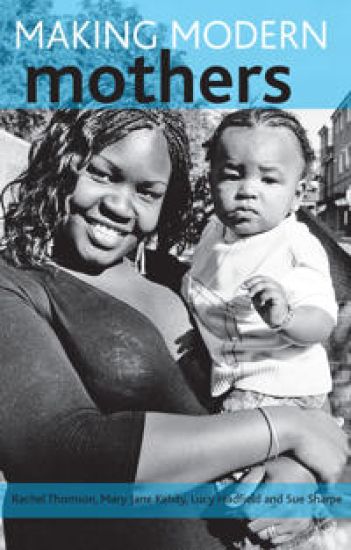
What does motherhood mean today? Drawing on interviews with new mothers and intergenerational chains of women in the same family, this exciting and timely book documents the transition to motherhood over generations and time. Exploring, amongst other things, the trend to later motherhood and the experience of teenage pregnancy, a compelling picture emerges. Becoming a mother is not only a profound moment of identity change but also a site of socio-economic difference that shapes women's lives.
At a time of contested realities and a renewed focus on the power of personal stories, narrative research is as relevant as ever. But while it has been praised for ‘giving voice’ to individuals and highlighting how they make sense of the social world, critics are starting to question which voices are being heard, or allowed to speak, and which experiences are made to count. Supported by the editors’ popular podcast Narrative Now, this interdisciplinary volume addresses timely concerns about representation, power, voice, and the ethics of storytelling. Contributors explore the capacities and limitations of narrative research, and map out new directions for the field while honouring its legacy.
How can we know about children’s everyday lives in a digitally saturated world? What is it like to grow up in and through new media? What happens between the ages of 7 and 15 and does it make sense to think of maturation as mediated? These questions are explored in this innovative open access book, which synthesizes empirical documentation of children’s everyday lives with discussions of key theoretical and methodological concepts to provide a unique guide to researching childhood and youth. Researching Everyday Childhoods begins by asking what recent ‘post-empirical’ and ‘post-digital’ frameworks can offer researchers of children and young people’s lives, particularly in researching and theorising how the digital remakes childhood and youth. The key ideas of time, technology and documentation are then introduced and are woven throughout the book’s chapters. Research-led, the book is informed by two state of the art empirical studies – ‘Face 2 Face’ and ‘Curating Childhoods’ – and links to a dynamic multimedia archive generated by the studies.The ebook editions of this book are available open access under a Creative Commons Attribution Non-Commercial Licence on bloomsburycollections.com. Open access was funded by University of Sussex, UK.
How can we know about children’s everyday lives in a digitally saturated world? What is it like to grow up in and through new media? What happens between the ages of 7 and 15 and does it make sense to think of maturation as mediated? These questions are explored in this innovative open access book, which synthesizes empirical documentation of children’s everyday lives with discussions of key theoretical and methodological concepts to provide a unique guide to researching childhood and youth. Researching Everyday Childhoods begins by asking what recent ‘post-empirical’ and ‘post-digital’ frameworks can offer researchers of children and young people’s lives, particularly in researching and theorising how the digital remakes childhood and youth. The key ideas of time, technology and documentation are then introduced and are woven throughout the book’s chapters. Research-led, the book is informed by two state of the art empirical studies – ‘Face 2 Face’ and ‘Curating Childhoods’ – and links to a dynamic multimedia archive generated by the studies.The ebook editions of this book are available open access under a [INSERT CC LICENCE HERE, e.g. CC BY-NC-ND 4.0] licence on bloomsburycollections.com. Open access was funded by University of Sussex, UK.
The process of becoming an adult in contemporary times is fragmented and unequal, shaped by chance, choice and timing. "Unfolding lives" presents a unique approach to understanding the changing face of youth transitions, addressing the question of how gender identities are constituted in late modern culture. The book follows individual lives over time, enabling the reader to witness gender identities in the making and breathing new life into static analytic models. At the heart of the book are vivid in-depth accounts of four young lives, emblematic of broader biographical trends. They reveal how inequalities and privileges are made in new and unexpected ways, through practices such as falling in love, coming out, acting out and religious conversion. A focus on temporal processes and changing meanings captures what it feels like to be young and shows the creative ways that young people navigate the conflicting and changing demands of personal relationships, schooling, work and play. "Unfolding lives" is also a demonstration of a method-in-practice, describing how longitudinal material can be analysed and animated to realise the relationship between personal and social change. Written in an accessible style that breaks the conventional academic mould, "Unfolding lives" is a compelling and provocative read. The book will be an essential text for students and academics involved in youth and gender studies as well as those interested in new directions in qualitative research methods and writing.
The process of becoming an adult in contemporary times is fragmented and unequal, shaped by chance, choice and timing. "Unfolding lives" presents a unique approach to understanding the changing face of youth transitions, addressing the question of how gender identities are constituted in late modern culture. The book follows individual lives over time, enabling the reader to witness gender identities in the making and breathing new life into static analytic models. At the heart of the book are vivid in-depth accounts of four young lives, emblematic of broader biographical trends. They reveal how inequalities and privileges are made in new and unexpected ways, through practices such as falling in love, coming out, acting out and religious conversion. A focus on temporal processes and changing meanings captures what it feels like to be young and shows the creative ways that young people navigate the conflicting and changing demands of personal relationships, schooling, work and play. "Unfolding lives" is also a demonstration of a method-in-practice, describing how longitudinal material can be analysed and animated to realise the relationship between personal and social change. Written in an accessible style that breaks the conventional academic mould, "Unfolding lives" is a compelling and provocative read. The book will be an essential text for students and academics involved in youth and gender studies as well as those interested in new directions in qualitative research methods and writing.
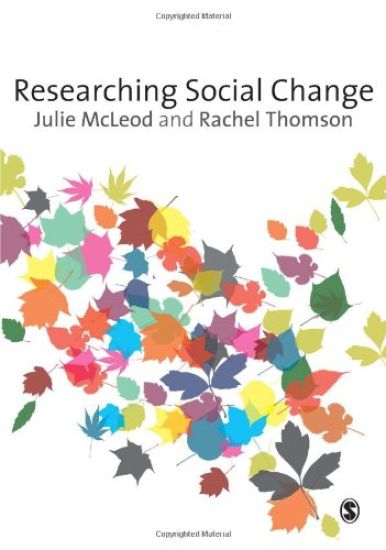
Questions about change in social and personal life are a feature of many accounts of the contemporary world. While theories of social change abound, discussions about how to research it are much less common. This book provides a timely guide to qualitative methodologies that investigate processes of personal, generational and historical change. The authors showcase a range of methods that explore temporality and the dynamic relations between past, present and future. Through case studies, they review six methodological traditions: memory-work, oral/life history, qualitative longitudinal research, ethnography, intergenerational and follow-up studies. It illustrates how these research approaches are translated into research projects and considers the practical as well as the theoretical and ethical challenges they pose. Research methods are also the product of times and places, and this book keeps to the fore the cultural and historical context in which these methods developed, the theoretical traditions on which they draw, and the empirical questions they address. Researching Social Change is an invaluable resource for researchers and graduate students across the social sciences who are interested in understanding and researching social change.
Questions about change in social and personal life are a feature of many accounts of the contemporary world. While theories of social change abound, discussions about how to research it are much less common. This book provides a timely guide to qualitative methodologies that investigate processes of personal, generational and historical change. The authors showcase a range of methods that explore temporality and the dynamic relations between past, present and future. Through case studies, they review six methodological traditions: memory-work, oral/life history, qualitative longitudinal research, ethnography, intergenerational and follow-up studies. It illustrates how these research approaches are translated into research projects and considers the practical as well as the theoretical and ethical challenges they pose. Research methods are also the product of times and places, and this book keeps to the fore the cultural and historical context in which these methods developed, the theoretical traditions on which they draw, and the empirical questions they address. Researching Social Change is an invaluable resource for researchers and graduate students across the social sciences who are interested in understanding and researching social change.
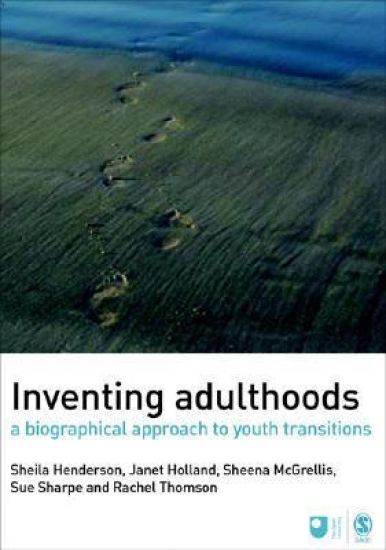
'The series Youth: Perspectives and Practice provides a distinctive and rare combination of expert commentary, new research, original theorising and critical reflection on how we should understand youth and work with young people. These books deserve a wide readership … the way they are written and organised will make them particularly appealing to students' - Professor Robert MacDonald, University of Teesside Inventing Adulthoods offers a ground-breaking new perspective on young peoples' experiences of growing up at the turn of the 21st century, arguing that a biographical approach is vital to understanding the holistic and dynamic character of their lives. Based on a study of a diverse group of young people over a 10 year period, the book explores high profile policy issues: education, employment, drugs, cultures of violence and well-being. It also considers the significance of those things that mean most to young people themselves: mobility, home, belonging, intimacy and social life. The book is written in a lively and engaging style and, through case studies and interviews, examines: " the impact that social factors such as gender, class, sexuality, religion, disability and family have on life opportunities; and " connections between young people's lives, social policy frameworks and practice applications. Inventing Adulthoods is an invaluable resource to anyone interested in the lives of young people. Thought-provoking yet accessible, this book is ideal for students in youth studies and education, as it is for youth workers, social workers and other practitioners. Inventing Adulthoods is the set book for the Open University course Youth: Perspectives and Practice (KE308). Sheila Henderson is a Visiting Fellow at London South Bank University. Janet Holland is Professor of Social Research and Co-director of the Families and Social Capital ESRC Research Group at London South Bank University. Sheena McGrellis is a Senior Research Fellow in the Families Group, but is based at University of Ulster. Sue Sharpe is a Visiting Fellow at London South Bank University. Rachel Thomson is Professor of Social Research in the Faculty of Health and Social Care at The Open University.
'The series Youth: Perspectives and Practice provides a distinctive and rare combination of expert commentary, new research, original theorising and critical reflection on how we should understand youth and work with young people. These books deserve a wide readership … the way they are written and organised will make them particularly appealing to students' - Professor Robert MacDonald, University of Teesside Inventing Adulthoods offers a ground-breaking new perspective on young peoples' experiences of growing up at the turn of the 21st century, arguing that a biographical approach is vital to understanding the holistic and dynamic character of their lives. Based on a study of a diverse group of young people over a 10 year period, the book explores high profile policy issues: education, employment, drugs, cultures of violence and well-being. It also considers the significance of those things that mean most to young people themselves: mobility, home, belonging, intimacy and social life. The book is written in a lively and engaging style and, through case studies and interviews, examines: " the impact that social factors such as gender, class, sexuality, religion, disability and family have on life opportunities; and " connections between young people's lives, social policy frameworks and practice applications. Inventing Adulthoods is an invaluable resource to anyone interested in the lives of young people. Thought-provoking yet accessible, this book is ideal for students in youth studies and education, as it is for youth workers, social workers and other practitioners. Inventing Adulthoods is the set book for the Open University course Youth: Perspectives and Practice (KE308). Sheila Henderson is a Visiting Fellow at London South Bank University. Janet Holland is Professor of Social Research and Co-director of the Families and Social Capital ESRC Research Group at London South Bank University. Sheena McGrellis is a Senior Research Fellow in the Families Group, but is based at University of Ulster. Sue Sharpe is a Visiting Fellow at London South Bank University. Rachel Thomson is Professor of Social Research in the Faculty of Health and Social Care at The Open University.
Providing a unique insight into young people's sexual values for adults working with them, this book relays the voices of young people and their views about the morality of sexual relationships.In All You Need is Love young people consider the factors that make sex legitimate in their opinion, and their feelings about under-age sex, the age of consent, sexual pressures, teenage pregnancy, abortion, teenage magazines, pornography, homosexuality and raising a child.