Kirjojen hintavertailu. Mukana 12 595 353 kirjaa ja 12 kauppaa.

Kirjailija

Rae Earnshaw

Kirjat ja teokset yhdessä paikassa: 9 kirjaa, julkaisuja vuosilta 1998-2023, suosituimpien joukossa An Introductory Guide to Scientific Visualization. Vertaile teosten hintoja ja tarkista saatavuus suomalaisista kirjakaupoista.

9 kirjaa

Kirjojen julkaisuhaarukka 1998-2023.

Creativity in Art, Design and Technology

Creativity in Art, Design and Technology

Susan Liggett; Rae Earnshaw; Jill Townsley

Springer International Publishing AG
2023
nidottu
This is an open access book.Creativity is a difficult concept, how can it best be defined, understood, applied, and practiced? This book provides important answers to these questions. Technology can enable artists to be more creative. Scientific and artistic thinking give us two complementary tools to understand the complexity of the world, with science reducing subjective experience to essential principles and art intensifying and expanding our experiences. These examples also show how artists can push the boundaries of technology into exciting new realms that have not been explored before. The impact that art and art practice can have on culture, society, and social responsibility is explored in detail through examples and case studies. In addition, the book presents how artists are creating and reflecting cultural and societal resonance in their work. Can other disciplines help artists to be morecreative? All are part of an interrelated wider society and enables artists to develop artwork fit for highly interfaced and conceptually broad contemporary contexts. This is illustrated with examples which show exciting and challenging results. Creativity in Art, Design and Technology is relevant for artists, designers, scientists and technologists. All can benefit in a major way from a greater understanding of creativity, and the ways in which mutual interaction and collaboration enables all areas to develop. The potential for the future is immense and this book signposts the way forward.
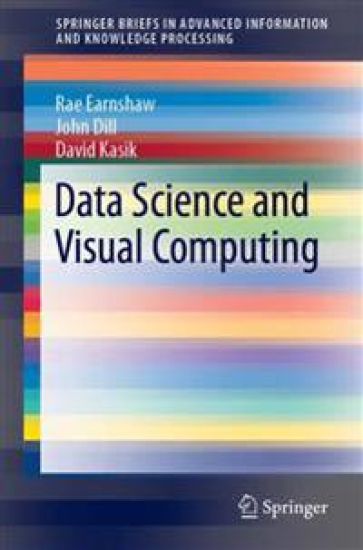
Data Science and Visual Computing

Data Science and Visual Computing

Rae Earnshaw; John Dill; David Kasik

Springer Nature Switzerland AG
2019
nidottu
Data science addresses the need to extract knowledge and information from data volumes, often from real-time sources in a wide variety of disciplines such as astronomy, bioinformatics, engineering, science, medicine, social science, business, and the humanities. The range and volume of data sources has increased enormously over time, particularly those generating real-time data. This has posed additional challenges for data management and data analysis of the data and effective representation and display. A wide range of application areas are able to benefit from the latest visual tools and facilities. Rapid analysis is needed in areas where immediate decisions need to be made. Such areas include weather forecasting, the stock exchange, and security threats. In areas where the volume of data being produced far exceeds the current capacity to analyze all of it, attention is being focussed how best to address these challenges. Optimum ways ofaddressing large data sets across a variety of disciplines have led to the formation of national and institutional Data Science Institutes and Centers. Being driven by national priority, they are able to attract support for research and development within their organizations and institutions to bring together interdisciplinary expertise to address a wide variety of problems. Visual computing is a set of tools and methodologies that utilize 2D and 3D images to extract information from data. Such methods include data analysis, simulation, and interactive exploration. These are analyzed and discussed.
Research and Development in Digital Media

Research and Development in Digital Media

Rae Earnshaw

Springer International Publishing AG
2018
nidottu
This book presents an overview of the technical underpinnings in the field of digital media. This includes theory, imaging, big data, interaction, and the research and development that is needed in order to make digital media interfaces more natural and easy to use. Grant funding sources for R & D are detailed and current priority areas are summarized. Developments in the relevant commercial areas are also reviewed. This is Professor Earnshaw’s fifth book in the series on digital media and its applications and creative uses. These books explain the significance and importance of digital media and how it has developed and advanced.They also explore the impact digital media is having on a range of domains including art and design, the creative industries, visual analytics, big data, and digital humanities.The convergence of IT, telecommunications and media is bringing about a revolution in the way information is being collected, stored, accessed and distributed. Digital media is expected to play an increasing role in these processes. State of the art digital technologies are increasingly utilized in order to deliver to the user requirements and also to be effective and efficient in this delivery, given the increasing demands by users and other third parties involved in the content creation and service delivery pipeline. Research and Development in Digital Media will be invaluable for readers that want a summary of the technical research and development aspects of digital media, how such work is being funded, and the kind of changes in digital media provision that may result.
State of the Art in Digital Media and Applications

State of the Art in Digital Media and Applications

Rae Earnshaw

Springer International Publishing AG
2017
nidottu
This book presents the user-facing aspects of digital media, from the web and computer games, to mobile technologies and social media, and demonstrates how these are continuously growing and developing. The convergence of IT, telecommunications, and media is bringing about a revolution in the way information is collected, stored, accessed and distributed. Rae Earnshaw's book explores the principal factors driving this and the ways in which social and cultural contexts are affected by media content. This is Professor Earnshaw's fourth book in a series that focuses on digital media and creativity, and through the use of Case Studies; the theoretical, practical and technical aspects of digital media are examined. Readers are informed about how the user as content creator, publisher and broadcaster is changing the traditional roles of news media, publishers and entertainment corporations. Topics such as the evolution of digital imaging and the phenomenon of socialmedia are discussed in relation to this. Professor Earnshaw also demonstrates how changes in technology produce shifts in the ways that consumers utilize it, in an increasing variety of application domains such as e-books, digital cameras, Facebook and Twitter.State of the Art in Digital Media and Applications will be invaluable for readers that want a comprehensive look at how emerging digital media technologies are being used, and how they are transforming how we create, consume, exchange and manipulate media content.
Art, Design and Technology: Collaboration and Implementation

Art, Design and Technology: Collaboration and Implementation

Rae Earnshaw

Springer International Publishing AG
2017
nidottu
This book examines how digital technology is being used to assist the artists and designers. The computer is able to store data and reproduce designs, thus facilitating the speed-up of the iterative process towards a final design which meets the objectives of the designer and the requirements of the user. Collaborative design enables the sharing of information across digital networks to produce designed objects in virtual spaces. Augmented and virtual reality techniques can be used to preview designs before they are finalized and implemented. Art and design have shaped the values, social structures, communications, and the culture of communities and civilisations. The direct involvement of artists and designers with their creative works has left a legacy enabling subsequent generations to understand more about their skills, their motivations, and their relationship to the wider world, and to see it from a variety of perspectives. This in turn causes the viewers of their works to reflect upon their meaning for today and the lasting value and implications of what has been created. Art installations are harnessing modern technology to process information and to display it. Such environments have also proved useful in engaging users and visitors with real-time images and interactive art.
Research and Development in the Academy, Creative Industries and Applications
This book examines how creativity feeds through into typical application areas, and the lessons that can be learned from this. A number of Case Studies in creative and general application domains are included which illustrate how the academy and industry can collaborate to mutual benefit and advantage. It also examines the pros and cons of the collaboration, and what lessons can be learned from successes or failures in aspects of the implementation and delivery. The academy has played a key role in the past in the research and development of key ideas and patents that have been migrated into successful industrial products and services and continues to do so. A variety of models of interaction between the academy and industry have been developed depending on the circumstances of the institution, its mission, its values, its expertise, and its relationship to the local and cultural environment in which it is situated. These models are reviewed and evaluated. The process of initial idea through to design and successful implementation is a pipeline. If this process requires the involvement of technology (as is more often the case – as creative applications are increasingly dependent on technology) then there is need to understand how this can efficiently and optimally be done. A number of factors tend to be generic and permeate many application areas (such as bandwidth requirements, use of colour, interaction methods) whilst others are more customized with specialist hardware and software (e.g. shared virtual environments, augmented reality).
Research and Development in Art, Design and Creativity

Research and Development in Art, Design and Creativity

Rae Earnshaw

Springer International Publishing AG
2016
nidottu
This book details how research and development in art and design can be formulated, progressed, measured, and reviewed. It explores the challenges of interdisciplinary research and highlights its importance and significance for the future of research in art and design and its relationship to science and technology. The author looks at how creative processes and ideas are devised and how technology and its applications are changing these processes and the way in which research is developed and advanced. The use of digital environments in art and design, and the application of new frameworks, tools, and opportunities for the expression of new ideas and design are discussed. Research and Development in Art, Design and Creativity is an essential read for anyone interested in the concept of collaboration and communication and how this applies to art and its creation.
An Introductory Guide to Scientific Visualization

An Introductory Guide to Scientific Visualization

Rae Earnshaw; Norman Wiseman

Springer-Verlag Berlin and Heidelberg GmbH Co. K
2012
nidottu
Scientific visualization is concerned with exploring data and information insuch a way as to gain understanding and insight into the data. This is a fundamental objective of much scientific investigation. To achieve this goal, scientific visualization utilises aspects in the areas of computergraphics, user-interface methodology, image processing, system design, and signal processing. This volume is intended for readers new to the field and who require a quick and easy-to-read summary of what scientific visualization is and what it can do. Written in a popular andjournalistic style with many illustrations it will enable readers to appreciate the benefits of scientific visualization and how current tools can be exploited in many application areas. This volume is indispensible for scientists and research workers who have never used computer graphics or other visual tools before, and who wish to find out the benefitsand advantages of the new approaches.
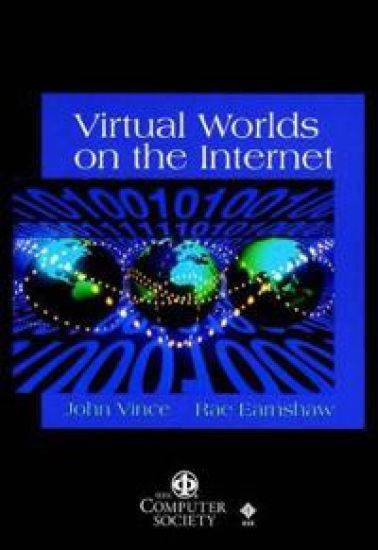
Virtual Worlds on the Internet

Virtual Worlds on the Internet

John Vince; Rae Earnshaw

IEEE Computer Society Press,U.S.
1998
nidottu
In recent years, computer graphics has evolved into four major disciplines: computer animation, image processing, visualization, and virtual reality. Now these technologies are converging into one seamless digital medium resulting in various tools that will transform the way we work in the next century. Virtual Worlds on the Internet examines how the latest developments in virtual environments, computer animation, communication networks, and the Internet are being configured to create revolutionary tools and systems. Vince and Earnshaw have selected twenty papers they believe will influence computer systems of the twenty-first century. The topics discussed in this book include:*A toolkit for the development of virtual environment applications for education and research *Behavior descriptions used in expansive virtual environments. *Different uses of VRML in information system interfaces. *An examination of research in virtual reality environment interfaces. *Five approaches to supporting changes in virtual environments. *How ATM networks can support multi-user 3D virtual environments. *The transmission of vector graphics and animations over narrow-band transmission channels. *An exploration of an implicit modeling system including an interactive editor for building models. *A description of the advantages of 3D environments for shopping applications on the Internet. *The prototype of a software tool that automatically generates 3D models of virtual supermarkets. *A "VR Workbench" that displays strategic information viewable by a user groups. *An overview of a VR display system describing its workbench technology and its applications. *How to separate the functionality of a multi-user 3D modeling system into functional tools with interface specifications.