Kirjojen hintavertailu. Mukana 12 595 353 kirjaa ja 12 kauppaa.

Kirjailija

Rafael Campo

Kirjat ja teokset yhdessä paikassa: 12 kirjaa, julkaisuja vuosilta 1996-2018, suosituimpien joukossa The Enemy. Vertaile teosten hintoja ja tarkista saatavuus suomalaisista kirjakaupoista.

12 kirjaa

Kirjojen julkaisuhaarukka 1996-2018.

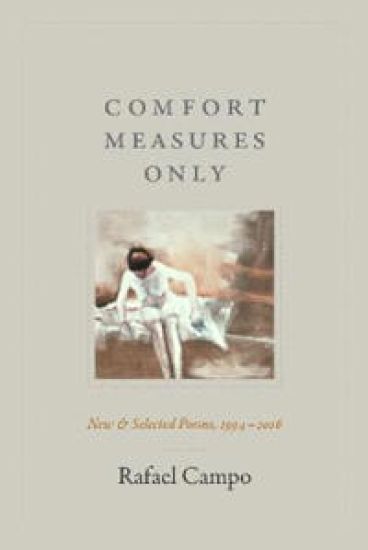
Comfort Measures Only

Comfort Measures Only

Rafael Campo

Duke University Press
2018
pokkari
In Comfort Measures Only, Rafael Campo bears witness to the unspeakable beauty bound up with human suffering. Gathered from his over twenty-year career as a poet-physician, these eighty-nine poems-thirty-one of which have never been previously published in a collection-pull back the curtain in the ER, laying bare our pain and joining us all in spellbinding moments of pathos. The poet, who is also truly a healer, revives language itself-its sounds channeled through our hearts and lungs, its rhythms amplified through the stethoscope-to make meaning of our bewilderment when our bodies so eloquently and yet wordlessly fail us. Campo’s transcendent poems, in all their modernity amidst the bleep of heart monitors and the wail of ambulance sirens, remind us of what the ancients understood: that poetry sustains us, and whether we live or die, through what we can imagine and create in our shared voices we may yet achieve immortality.
Comfort Measures Only

Comfort Measures Only

Rafael Campo

Duke University Press
2018
sidottu
In Comfort Measures Only, Rafael Campo bears witness to the unspeakable beauty bound up with human suffering. Gathered from his over twenty-year career as a poet-physician, these eighty-nine poems-thirty-one of which have never been previously published in a collection-pull back the curtain in the ER, laying bare our pain and joining us all in spellbinding moments of pathos. The poet, who is also truly a healer, revives language itself-its sounds channeled through our hearts and lungs, its rhythms amplified through the stethoscope-to make meaning of our bewilderment when our bodies so eloquently and yet wordlessly fail us. Campo’s transcendent poems, in all their modernity amidst the bleep of heart monitors and the wail of ambulance sirens, remind us of what the ancients understood: that poetry sustains us, and whether we live or die, through what we can imagine and create in our shared voices we may yet achieve immortality.
Alternative Medicine

Alternative Medicine

Rafael Campo

Duke University Press
2013
sidottu
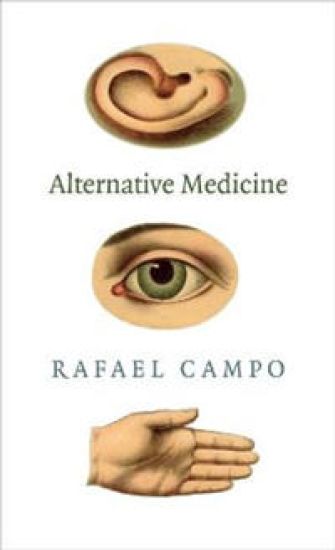
In his sixth collection of poetry, the celebrated poet-physician Rafael Campo examines the primal relationship between language, empathy, and healing. As masterfully crafted as they are viscerally powerful, these poems propose voice itself as a kind of therapeutic medium. For all that most ails us, Alternative Medicine offers the balm of song and the salve of the imagination: from the wounds of our stubborn differences of identity, to the pain of alienation in a world of unfeeling technologies, to the shame of the persistent injustices in our society, Campo's poetry displays a deep understanding of hurt as the possibility for healing. Demonstrating an abiding faith in our survival, this stunning, heartfelt book ultimately embraces the great diversity of our ways of knowing and dreaming, of needing and loving, and of living and dying.
Alternative Medicine

Alternative Medicine

Rafael Campo

Duke University Press
2013
pokkari
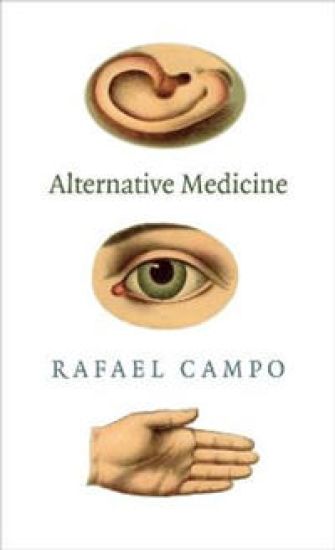
In his sixth collection of poetry, the celebrated poet-physician Rafael Campo examines the primal relationship between language, empathy, and healing. As masterfully crafted as they are viscerally powerful, these poems propose voice itself as a kind of therapeutic medium. For all that most ails us, Alternative Medicine offers the balm of song and the salve of the imagination: from the wounds of our stubborn differences of identity, to the pain of alienation in a world of unfeeling technologies, to the shame of the persistent injustices in our society, Campo's poetry displays a deep understanding of hurt as the possibility for healing. Demonstrating an abiding faith in our survival, this stunning, heartfelt book ultimately embraces the great diversity of our ways of knowing and dreaming, of needing and loving, and of living and dying.
The Enemy

The Enemy

Rafael Campo

Duke University Press
2007
sidottu
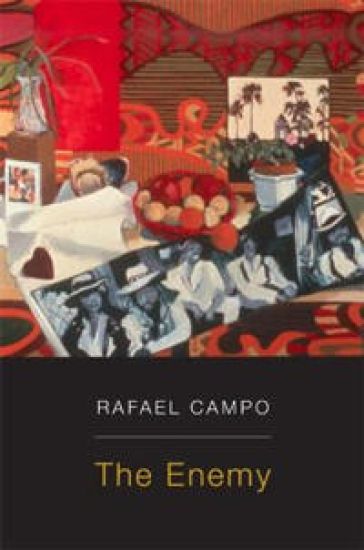
In his fifth collection of poetry, the physician and award-winning writer Rafael Campo considers what it means to be the enemy in America today. Using the empathetic medium of a poetry grounded in the sentient physical body we all share, he writes of a country endlessly at war-not only against the presumed enemy abroad but also with its own troubled conscience. Yet whether he is addressing the U.S. invasion of Iraq, the battle against the AIDS pandemic, or the culture wars surrounding the issues of feminism and gay marriage, Campo’s compelling poems affirm the notion that hope arises from even the most bitter of conflicts. That hope-manifest here in the Cuban exile’s dream of returning to his homeland, in a dying IV drug user’s wish for humane medical treatment, in a downcast housewife’s desire to express herself meaningfully through art-is that somehow we can be better than ourselves. Through a kaleidoscopic lens of poetic forms, Campo soulfully reveals this greatest of human aspirations as the one sustaining us all.
The Enemy

The Enemy

Rafael Campo

Duke University Press
2007
pokkari
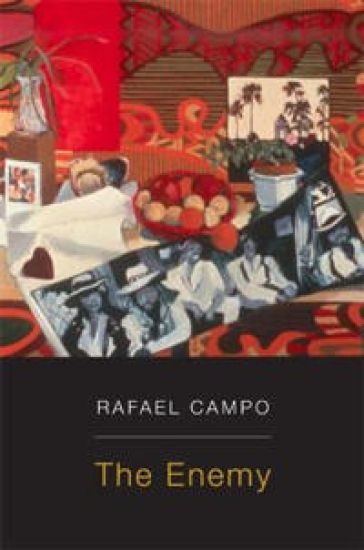
In his fifth collection of poetry, the physician and award-winning writer Rafael Campo considers what it means to be the enemy in America today. Using the empathetic medium of a poetry grounded in the sentient physical body we all share, he writes of a country endlessly at war-not only against the presumed enemy abroad but also with its own troubled conscience. Yet whether he is addressing the U.S. invasion of Iraq, the battle against the AIDS pandemic, or the culture wars surrounding the issues of feminism and gay marriage, Campo’s compelling poems affirm the notion that hope arises from even the most bitter of conflicts. That hope-manifest here in the Cuban exile’s dream of returning to his homeland, in a dying IV drug user’s wish for humane medical treatment, in a downcast housewife’s desire to express herself meaningfully through art-is that somehow we can be better than ourselves. Through a kaleidoscopic lens of poetic forms, Campo soulfully reveals this greatest of human aspirations as the one sustaining us all.
Landscape with Human Figure

Landscape with Human Figure

Rafael Campo

Duke University Press
2002
pokkari
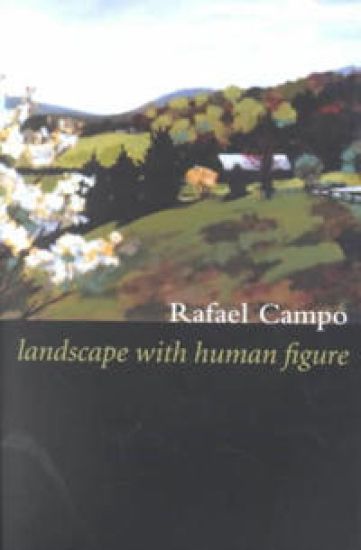
In Landscape with Human Figure, his fourth and most compelling collection of poetry, Rafael Campo confirms his status as one of America’s most important poets. Like his predecessor William Carlos Williams, who was also a physician, Campo plumbs the depths of our capacity for empathy. Campo writes stunning, candid poems from outside the academy, poems that arise with equal beauty from a bleak Boston tenement or a moonlit Spanish plaza, poems that remain unafraid to explore and to celebrate his identity as a doctor and Cuban American gay man. Yet no matter what their unexpected and inspired sources, Campo’s poems insistently remind us of the necessity of poetry itself in our increasingly fractured society; his writing brings us together-just as did the incantations of humankind’s earliest healers-into the warm circle of community and connectedness. In this heart-wrenching, haunting, and ultimately humane work, Rafael Campo has painted as if in blood and breath a gorgeously complex world, in which every one of us can be found.
Landscape with Human Figure

Landscape with Human Figure

Rafael Campo

Duke University Press
2002
sidottu
In Landscape with Human Figure, his fourth and most compelling collection of poetry, Rafael Campo confirms his status as one of America’s most important poets. Like his predecessor William Carlos Williams, who was also a physician, Campo plumbs the depths of our capacity for empathy. Campo writes stunning, candid poems from outside the academy, poems that arise with equal beauty from a bleak Boston tenement or a moonlit Spanish plaza, poems that remain unafraid to explore and to celebrate his identity as a doctor and Cuban American gay man. Yet no matter what their unexpected and inspired sources, Campo’s poems insistently remind us of the necessity of poetry itself in our increasingly fractured society; his writing brings us together-just as did the incantations of humankind’s earliest healers-into the warm circle of community and connectedness. In this heart-wrenching, haunting, and ultimately humane work, Rafael Campo has painted as if in blood and breath a gorgeously complex world, in which every one of us can be found.
Diva

Diva

Rafael Campo

Duke University Press
1999
pokkari
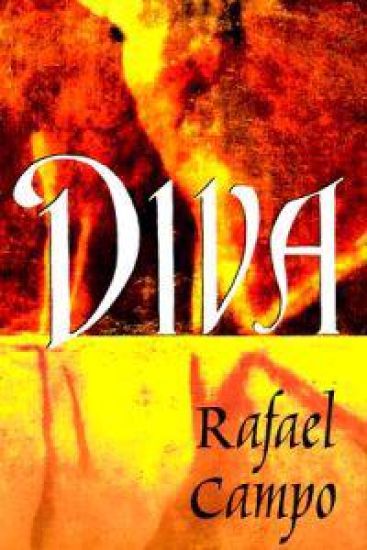
A major new work from one of America's most acclaimed younger poets, Rafael Campo's Diva appears at the intersection of confession and confinement, hyperbole and humility. In his masterful third collection, Campo explores further the epic themes of his Cuban heritage and America's newness, his work as a doctor caring for AIDS patients and his identity as a gay man. At once relishing and resisting the poetic traditions of formal English verse, Diva showcases Campo moving deftly between received forms and free verse. In each poem the sound of words is transformed into the highest of arts, the act of performance into the exercise of power, and the most profound abjection into the sweet promise of divinity. Culminating with his new and daring translations of Federico GarcÍa Lorca's sonetos-the great Spanish poet's most homoerotically explicit and formally accomplished poems-Campo's music instills in the reader an exalted understanding of beauty, suffering, and, ultimately, the human capacity for empathy. From reviews of Campo's previous poetry: “Extraordinary meditations on illness and the healing power of words.”-Lambda Literary Foundation“Read Campo to enter the bloodstream of a man who, with a haunting clarity of vision, shares his memories, his anguish, his healing love.”-Cortney Davis, Literature and Medicine“Riveting, provocative, and refreshing-[this volume] is a gift to the clinician who is trying to re-invoke in his or her students the humility, compassion, and deep caring that brought us all into medicine in the first place.”-Dr. Sandra L. Bertman, Annals of Internal Medicine“[Campo] listens to the sounds the body makes, but what he hears is poetry.”-ZoË Ingalls, Chronicle of Higher Education“Powerful and accessible.”-Jonathan Jackson, Washington Blade“Bemused, indelible, and heartbreaking.”-Marilyn Hacker, Out“[Campo’s] private corral of disparate words twist, torque, collide with gorgeous creative imperative.”-Nomi Eve, Independent Weekly
Diva

Diva

Rafael Campo

Duke University Press
1999
sidottu
A major new work from one of America's most acclaimed younger poets, Rafael Campo's Diva appears at the intersection of confession and confinement, hyperbole and humility. In his masterful third collection, Campo explores further the epic themes of his Cuban heritage and America's newness, his work as a doctor caring for AIDS patients and his identity as a gay man. At once relishing and resisting the poetic traditions of formal English verse, Diva showcases Campo moving deftly between received forms and free verse. In each poem the sound of words is transformed into the highest of arts, the act of performance into the exercise of power, and the most profound abjection into the sweet promise of divinity. Culminating with his new and daring translations of Federico GarcÍa Lorca's sonetos-the great Spanish poet's most homoerotically explicit and formally accomplished poems-Campo's music instills in the reader an exalted understanding of beauty, suffering, and, ultimately, the human capacity for empathy. From reviews of Campo's previous poetry: “Extraordinary meditations on illness and the healing power of words.”-Lambda Literary Foundation“Read Campo to enter the bloodstream of a man who, with a haunting clarity of vision, shares his memories, his anguish, his healing love.”-Cortney Davis, Literature and Medicine“Riveting, provocative, and refreshing-[this volume] is a gift to the clinician who is trying to re-invoke in his or her students the humility, compassion, and deep caring that brought us all into medicine in the first place.”-Dr. Sandra L. Bertman, Annals of Internal Medicine“[Campo] listens to the sounds the body makes, but what he hears is poetry.”-ZoË Ingalls, Chronicle of Higher Education“Powerful and accessible.”-Jonathan Jackson, Washington Blade“Bemused, indelible, and heartbreaking.”-Marilyn Hacker, Out“[Campo’s] private corral of disparate words twist, torque, collide with gorgeous creative imperative.”-Nomi Eve, Independent Weekly
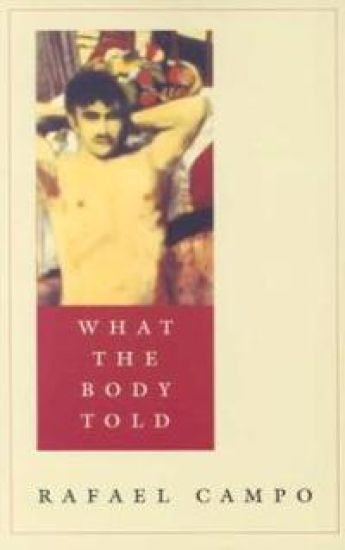
What the Body Told

What the Body Told

Rafael Campo

Duke University Press
1996
sidottu
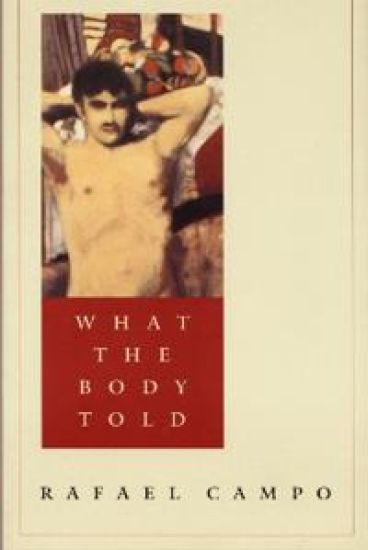
What the Body Told is the second book of poetry from Rafael Campo, a practicing physician, a gay Cuban American, and winner of the National Poetry Series 1993 Open Competition. Exploring the themes begun in his first book, The Other Man Was Me, Campo extends the search for identity into new realms of fantasy and physicality. He travels inwardly to the most intimate spaces of the imagination where sexuality and gender collide and where life crosses into death. Whether facing a frenetic hospital emergency room to assess a patient critically ill with AIDS, or breathing in the quiet of his mother’s closet, Campo proposes with these poems an alternative means of healing and exposes the extent to which words themselves may be the most vital working parts of our bodies. The secret truths in What the Body Told, as the title implies, are already within each of us; in these vivid and provocative poems, Rafael Campo gives them a voice.Lost in the Hospital It’s not that I don’t like the hospital.Those small bouquets of flowers, pert and brave.The smell of antiseptic cleansers.The ill, so wistful in their rooms, so true.My friend, the one who’s dying, took me outTo where the patients go to smoke, IV’sAnd oxygen tanks attached to them-A tiny patio for skeletons. We sharedA cigaratte, which was delicious butToo brief. I held his hand; it feltLike someone’s keys. How beautiful it was,The sunlight pointing down at us, as ifWe were important, full of life, unbound.I wandered for a moment where his ribsHad made a space for me, and there, besideThe thundering waterfall of is heart,I rubbed my eyes and thought “I’m lost.”
What the Body Told

What the Body Told

Rafael Campo

Duke University Press
1996
pokkari
What the Body Told is the second book of poetry from Rafael Campo, a practicing physician, a gay Cuban American, and winner of the National Poetry Series 1993 Open Competition. Exploring the themes begun in his first book, The Other Man Was Me, Campo extends the search for identity into new realms of fantasy and physicality. He travels inwardly to the most intimate spaces of the imagination where sexuality and gender collide and where life crosses into death. Whether facing a frenetic hospital emergency room to assess a patient critically ill with AIDS, or breathing in the quiet of his mother’s closet, Campo proposes with these poems an alternative means of healing and exposes the extent to which words themselves may be the most vital working parts of our bodies. The secret truths in What the Body Told, as the title implies, are already within each of us; in these vivid and provocative poems, Rafael Campo gives them a voice.Lost in the Hospital It’s not that I don’t like the hospital.Those small bouquets of flowers, pert and brave.The smell of antiseptic cleansers.The ill, so wistful in their rooms, so true.My friend, the one who’s dying, took me outTo where the patients go to smoke, IV’sAnd oxygen tanks attached to them-A tiny patio for skeletons. We sharedA cigaratte, which was delicious butToo brief. I held his hand; it feltLike someone’s keys. How beautiful it was,The sunlight pointing down at us, as ifWe were important, full of life, unbound.I wandered for a moment where his ribsHad made a space for me, and there, besideThe thundering waterfall of is heart,I rubbed my eyes and thought “I’m lost.”