Kirjojen hintavertailu. Mukana 12 390 323 kirjaa ja 12 kauppaa.

Kirjailija

Rafael Sánchez

Kirjat ja teokset yhdessä paikassa: 5 kirjaa, julkaisuja vuosilta 2016-2025, suosituimpien joukossa Reconocimientos. Vertaile teosten hintoja ja tarkista saatavuus suomalaisista kirjakaupoista.

5 kirjaa

Kirjojen julkaisuhaarukka 2016-2025.

Reconocimientos

Reconocimientos

Rafael Sánchez; Igor Barreto; Luis Pérez-Oramas; Claudio Lomnitz

FORDHAM UNIVERSITY PRESS
2025
sidottu
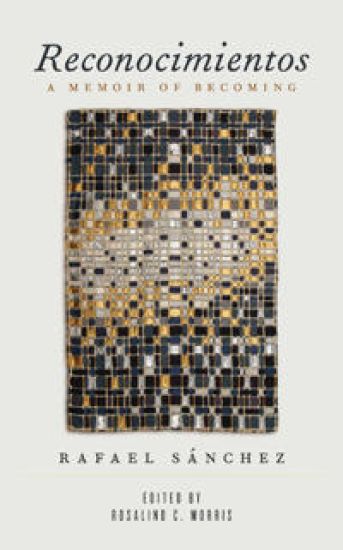
What is the relationship between a writer's life, milieu, and thought? In this daring and intellectually expansive text, part memoir and part political philosophy, the anthropologist Rafael Sánchez explores the forces and events that shaped him and the nations through which he moved. Reconocimientos is a book of both personal and political reckoning, from the thrillingly emancipatory possibilities of Venezuela's plazas to the political promise and disappointments of revolution. Written in the final year of his life, Reconocimientos moves from scenes of Sánchez's youth in Cuba to fieldwork on the cult of Maria Lionza in Venezuela to confront the terrifying and alluring forces of patriarchal privilege at the base of monumentalist authoritarianism. Sánchez's intimate prose speaks with the urgency both of his own mortality and of the political crises of our moment. Amid the resurgence of patriarchy, hierarchy, and the valorization of inequality that have become pillars of populist movements in Latin America and beyond, Sánchez finds a residual radical possibility in 'horizontal' spaces, where the forces of mimesis permit manifold transformations.
Reconocimientos

Reconocimientos

Rafael Sánchez; Igor Barreto; Luis Pérez-Oramas; Claudio Lomnitz

FORDHAM UNIVERSITY PRESS
2025
pokkari
What is the relationship between a writer's life, milieu, and thought? In this daring and intellectually expansive text, part memoir and part political philosophy, the anthropologist Rafael Sánchez explores the forces and events that shaped him and the nations through which he moved. Reconocimientos is a book of both personal and political reckoning, from the thrillingly emancipatory possibilities of Venezuela's plazas to the political promise and disappointments of revolution. Written in the final year of his life, Reconocimientos moves from scenes of Sánchez's youth in Cuba to fieldwork on the cult of Maria Lionza in Venezuela to confront the terrifying and alluring forces of patriarchal privilege at the base of monumentalist authoritarianism. Sánchez's intimate prose speaks with the urgency both of his own mortality and of the political crises of our moment. Amid the resurgence of patriarchy, hierarchy, and the valorization of inequality that have become pillars of populist movements in Latin America and beyond, Sánchez finds a residual radical possibility in 'horizontal' spaces, where the forces of mimesis permit manifold transformations.

Dancing Jacobins

Dancing Jacobins

Rafael Sánchez

Fordham University Press
2016
pokkari
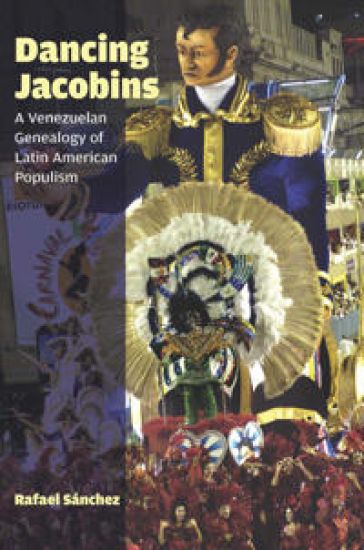
Since independence from Spain, a trope has remained pervasive in Latin America's republican imaginary: that of an endless antagonism pitting civilization against barbarism as irreconcilable poles within which a nation's life unfolds. This book apprehends that trope not just as the phantasmatic projection of postcolonial elites fearful of the popular sectors but also as a symptom of a stubborn historical predicament: the cyclical insistence with which the subaltern populations menacingly return to the nation's public spaces in the form of crowds. Focused on Venezuela but relevant to the rest of Latin America, and drawing on a rich theoretical literature including authors like Derrida, Foucault, Lacoue-Labarthe, Nancy, Lyotard, Laclau, Taussig, and others, Dancing Jacobins is a genealogical investigation of the intrinsically populist "monumental governmentality" that in response to this predicament began to take shape in that nation at the time of independence. Informed by a Bolivarian political theology, the nation's representatives, or "dancing Jacobins," recursively draw on the repertoire of busts, portraits, and equestrian statues of national heroes scattered across Venezuela in a montage of monuments and dancing—or universal and particular. They monumentalize themselves on the stage of the polity as a ponderously statuesque yet occasionally riotous reflection of the nation's general will. To this day, the nervous oscillation between crowds and peoplehood intrinsic to this form of government has inflected the republic's institutions and constructs, from the sovereign "people" to the nation's heroic imaginary, its constitutional texts, representative figures, parliamentary structures, and, not least, its army. Through this movement of collection and dispersion, these institutions are at all times haunted and imbued from within by the crowds they otherwise set out to mold, enframe, and address.
Dancing Jacobins

Dancing Jacobins

Rafael Sánchez

Fordham University Press
2016
sidottu
Since independence from Spain, a trope has remained pervasive in Latin America's republican imaginary: that of an endless antagonism pitting civilization against barbarism as irreconcilable poles within which a nation's life unfolds. This book apprehends that trope not just as the phantasmatic projection of postcolonial elites fearful of the popular sectors but also as a symptom of a stubborn historical predicament: the cyclical insistence with which the subaltern populations menacingly return to the nation's public spaces in the form of crowds. Focused on Venezuela but relevant to the rest of Latin America, and drawing on a rich theoretical literature including authors like Derrida, Foucault, Lacoue-Labarthe, Nancy, Lyotard, Laclau, Taussig, and others, Dancing Jacobins is a genealogical investigation of the intrinsically populist "monumental governmentality" that in response to this predicament began to take shape in that nation at the time of independence. Informed by a Bolivarian political theology, the nation's representatives, or "dancing Jacobins," recursively draw on the repertoire of busts, portraits, and equestrian statues of national heroes scattered across Venezuela in a montage of monuments and dancing—or universal and particular. They monumentalize themselves on the stage of the polity as a ponderously statuesque yet occasionally riotous reflection of the nation's general will. To this day, the nervous oscillation between crowds and peoplehood intrinsic to this form of government has inflected the republic's institutions and constructs, from the sovereign "people" to the nation's heroic imaginary, its constitutional texts, representative figures, parliamentary structures, and, not least, its army. Through this movement of collection and dispersion, these institutions are at all times haunted and imbued from within by the crowds they otherwise set out to mold, enframe, and address.