Kirjojen hintavertailu. Mukana 12 595 353 kirjaa ja 12 kauppaa.

Kirjailija

Rafael Schacter

Kirjat ja teokset yhdessä paikassa: 7 kirjaa, julkaisuja vuosilta 2014-2024, suosituimpien joukossa Brad Downey – Slapstick Formalism. Vertaile teosten hintoja ja tarkista saatavuus suomalaisista kirjakaupoista.

7 kirjaa

Kirjojen julkaisuhaarukka 2014-2024.

Brad Downey – Slapstick Formalism

Brad Downey – Slapstick Formalism

Jimmie Durham; Lukas Feiress; Matthew Murphy; Rafael Schacter; Angelique Spaninks; Jennifer Thatcher; Hrag Vartanian; Marc Wellmann; Ed Zipco

Hatje Cantz
2020
nidottu
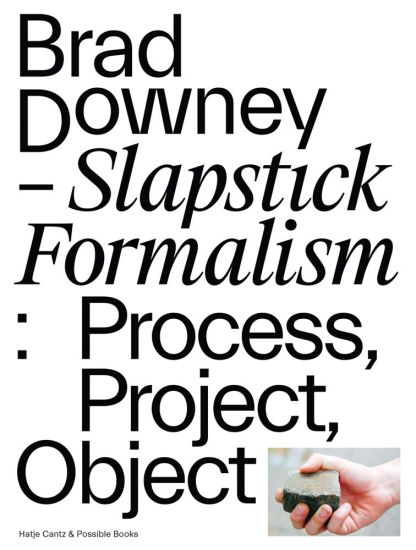
Using humour, sensitivity, and precise interventions, the American artist Brad Downey investigates the underlying structure of our cities, our landscapes, our sacred sites, as well as the forgotten peripheries and contested borders. In the process he weaves entirely new narratives with their chaotic patterns, obscuring the separation between art and everyday life. Slapstick Formalism presents a synopsis of his overall multifaceted oeuvre: sculptures, architecture, performances, installations, films, drawings, collages, and activism, each of which is inspired by the objects and activities of daily life.
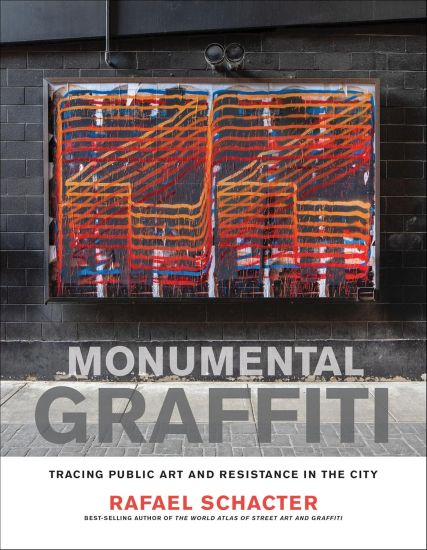
Monumental Graffiti

Monumental Graffiti

Rafael Schacter

MIT PRESS LTD
2024
sidottu
What graffiti says about contemporary society, and why it demands our urgent attention as a form of civic expression. What is graffiti vandalism, ornament, art? What if, rather than any of those things, we thought of graffiti as a monument? How would that change our understanding of graffiti, and, in turn, our understanding of monument? In Monumental Graffiti, anthropologist Rafael Schacter focuses on the material, communicative, and contextual aspects of these two forms of material culture to provide a timely perspective on public art, citizenship, and the city today. He applies monument as a lens to understand graffiti and graffiti as a lens to comprehend monument, challenging us to consider what the appropriate monument for our contemporary world could be. Monumental Graffiti unpacks today s iconoclastic moment, showing us why graffiti demands our urgent attention as a form of expression that challenges power structures by questioning whose voices are included in and whose are excluded from public space. Written from 20 years of embedded research on graffiti, the book includes works from graffiti writers such as 10Foot, Delta, Egs, Honet, Mosa, Petro, Revok, and Wombat, alongside those of artists such as Francis Alys, Jeremy Deller, Thomas Hirschhorn, Jenny Holzer, Klara Liden, Gordan Matta-Clark, William Pope. L, Cy Twombly, and many more. Richly illustrated, this study of graffiti as monument and monument as graffiti is as fascinating as it is ethnographically expansive.
World Atlas of Street Art

World Atlas of Street Art

Rafael Schacter; Lachlan MacDowall

Quarto Publishing Plc
2023
sidottu
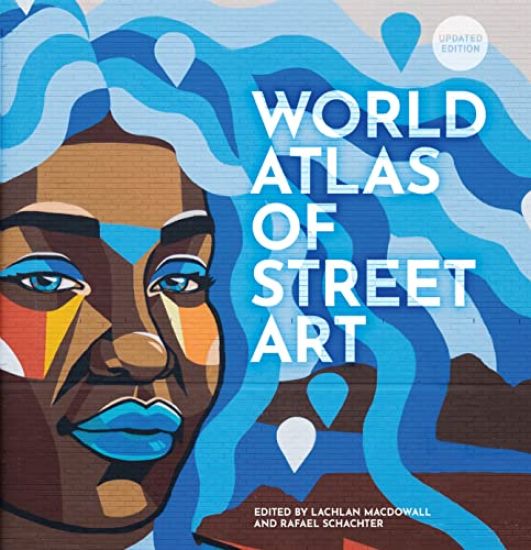
This truly global and visually stunning compendium showcases some of the most breath-taking pieces of street art and graffiti from around the world. Since its genesis on the East Coast of the United States in the late 1960s, street art has travelled to nearly every corner of the globe, morphing into highly ornate and vibrant new styles. This unique atlas is the first truly geographical survey of urban art, revised and updated in 2023 to include new voices, increased female representation and cities emerging as street art hubs. Featuring specially commissioned works from major graffiti and street art practitioners, it offers you an insider's view of the urban landscape as the artists themselves experience it. Organized geographically, by continent and by city - from New York, Los Angeles and Montreal in North America, through Mexico City and Buenos Aires in Latin America, to London, Berlin and Madrid in Europe, Sydney and Auckland in the Pacific, as well as brand new chapters covering Africa and Asia - it profiles more than 100 of today's most important artists and features over 700 astonishing artworks. This beautifully illustrated book, produced with the help of many of the artists it features, dispels the idea of such art as a thoughtless defacement of pristine surfaces, and instead celebrates it as a contemporary and highly creative inscription upon the skin of the built environment.
The World Atlas of Street Art and Graffiti

The World Atlas of Street Art and Graffiti

Rafael Schacter; Lachlan Macdowall

YALE UNIVERSITY PRESS
2023
sidottu
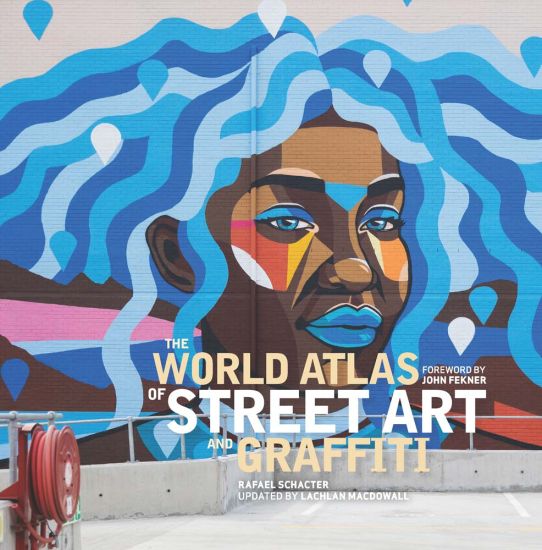
Bursting with color and energy, this revised edition of the definitive guide to street art and graffiti covers the world's most significant artists, styles, and the urban landscapes that form their canvas Ten years after its original publication, The World Atlas of Street Art and Graffiti is recognized as the definitive guide to the most significant artists and styles of street art and graffiti around the world. This revised edition brings the content up to our present moment, expanding its geographic breadth to six continents. Featuring more than 700 full-color photographs of raw, energetic, whimsical, and eye-catching art, the book is visually exciting as well as an essential survey of the urban art of our time. Organized geographically by country and city, the publication profiles more than 100 of today's most important street artists--Espo in New York, Merlot in Seattle, Os G meos in S o Paulo, Michael Pederson in Sydney, Essu in Tokyo, Lady K in Paris, Milu Correch in Buenos Aires, and Nardstar in Cape Town----alongside key examples of their work. With contributions by the foremost authorities on street art and graffiti, this landmark publication continues to provide a nuanced understanding of a global contemporary art practice.
Street to Studio

Street to Studio

Rafael Schacter; Carlo McCormick

Lund Humphries Publishers Ltd
2018
sidottu
For fifty years, graffiti and street art have been challenging conventions and stimulating debate around our perceptions of what constitutes art. As the genre enters its sixth decade, this ground-breaking book presents a new interpretation of where these alternative artforms are situated today. Introducing the concept of 'Intermural Art' - art in-between the walls - Rafael Schacter presents a genre at a key moment of transition. While many street and graffiti artists are still challenging the orthodoxies of the public sphere, an increasingly prevalent group are reshaping the field by their studio practice. No longer furtively entering the institution, no longer slavishly reproducing exterior works inside, these artists have begun to create a form that articulates graffiti, street and contemporary-art influences, a form beholden on high art techniques and practices whilst simultaneously embracing its non-institutional roots. Through forty profiles of the leading proponents of this new approach from around the globe, Rafael Schacter presents a compelling analysis for 'Intermural Art' while also showcasing some of the boldest work being made within contemporary art today.
Ornament and Order

Ornament and Order

Rafael Schacter

Routledge
2016
nidottu
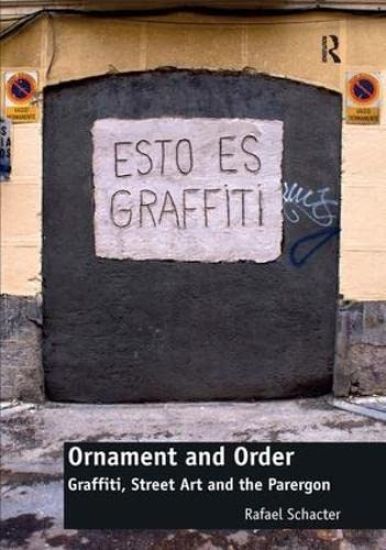
Over the last forty years, graffiti and street-art have become a global phenomenon within the visual arts. Whilst they have increasingly been taken seriously by the art establishment (or perhaps the art market), their academic and popular examination still remains within old debates which argue over whether these acts are vandalism or art, and which examine the role of graffiti in gang culture and in terms of visual pollution. Based on an in-depth ethnographic study working with some of the world’s most influential Independent Public Artists, this book takes a completely new approach. Placing these illicit aesthetic practices within a broader historical, political, and aesthetic context, it argues that they are in fact both intrinsically ornamental (working within a classic architectonic framework), as well as innately ordered (within a highly ritualized, performative structure). Rather than disharmonic, destructive forms, rather than ones solely working within the dynamics of the market, these insurgent images are seen to reface rather than deface the city, operating within a modality of contemporary civic ritual. The book is divided into two main sections, Ornament and Order. Ornament focuses upon the physical artifacts themselves, the various meanings these public artists ascribe to their images as well as the tensions and communicative schemata emerging out of their material form. Using two very different understandings of political action, it places these illicit icons within the wider theoretical debate over the public sphere that they materially re-present. Order is focused more closely on the ephemeral trace of these spatial acts, the explicitly performative, practice-based elements of their aesthetic production. Exploring thematics such as carnival and play, risk and creativity, it tracks how the very residue of this cultural production structures and shapes the socio-ethico guidelines of these artists’ lifeworlds.
Ornament and Order

Ornament and Order

Rafael Schacter

Routledge
2014
sidottu
Over the last forty years, graffiti and street-art have become a global phenomenon within the visual arts. Whilst they have increasingly been taken seriously by the art establishment (or perhaps the art market), their academic and popular examination still remains within old debates which argue over whether these acts are vandalism or art, and which examine the role of graffiti in gang culture and in terms of visual pollution. Based on an in-depth ethnographic study working with some of the world’s most influential Independent Public Artists, this book takes a completely new approach. Placing these illicit aesthetic practices within a broader historical, political, and aesthetic context, it argues that they are in fact both intrinsically ornamental (working within a classic architectonic framework), as well as innately ordered (within a highly ritualized, performative structure). Rather than disharmonic, destructive forms, rather than ones solely working within the dynamics of the market, these insurgent images are seen to reface rather than deface the city, operating within a modality of contemporary civic ritual. The book is divided into two main sections, Ornament and Order. Ornament focuses upon the physical artifacts themselves, the various meanings these public artists ascribe to their images as well as the tensions and communicative schemata emerging out of their material form. Using two very different understandings of political action, it places these illicit icons within the wider theoretical debate over the public sphere that they materially re-present. Order is focused more closely on the ephemeral trace of these spatial acts, the explicitly performative, practice-based elements of their aesthetic production. Exploring thematics such as carnival and play, risk and creativity, it tracks how the very residue of this cultural production structures and shapes the socio-ethico guidelines of these artists’ lifeworlds.