Kirjojen hintavertailu. Mukana 12 304 533 kirjaa ja 12 kauppaa.

Kirjailija

Rafael Yuste

Kirjat ja teokset yhdessä paikassa: 7 kirjaa, julkaisuja vuosilta 2010-2023, suosituimpien joukossa Imaging in Neuroscience: A Laboratory Manual. Vertaile teosten hintoja ja tarkista saatavuus suomalaisista kirjakaupoista.

7 kirjaa

Kirjojen julkaisuhaarukka 2010-2023.

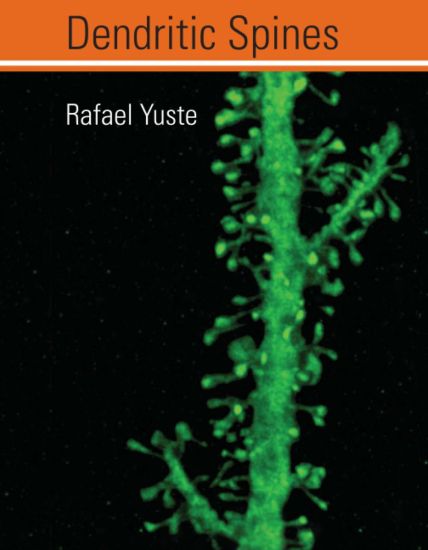
Dendritic Spines

Dendritic Spines

Rafael Yuste

MIT PRESS LTD
2023
pokkari
A leading neurobiologist explores the fundamental function of dendritic spines in neural circuits by analyzing different aspects of their biology, including structure, development, motility, and plasticity. Most neurons in the brain are covered by dendritic spines, small protrusions that arise from dendrites, covering them like leaves on a tree. But a hundred and twenty years after spines were first described by Ram n y Cajal, their function is still unclear. Dozens of different functions have been proposed, from Cajal's idea that they enhance neuronal interconnectivity to hypotheses that spines serve as plasticity machines, neuroprotective devices, or even digital logic elements. In Dendritic Spines, leading neurobiologist Rafael Yuste attempts to solve the "spine problem," searching for the fundamental function of spines. He does this by examining many aspects of spine biology that have fascinated him over the years, including their structure, development, motility, plasticity, biophysical properties, and calcium compartmentalization. Yuste argues that we may never understand how the brain works without understanding the specific function of spines. In this book, he offers a synthesis of the information that has been gathered on spines (much of which comes from his own studies of the mammalian cortex), linking their function with the computational logic of the neuronal circuits that use them. He argues that once viewed from the circuit perspective, all the pieces of the spine puzzle fit together nicely into a single, overarching function. Yuste connects these two topics, integrating current knowledge of spines with that of key features of the circuits in which they operate. He concludes with a speculative chapter on the computational function of spines, searching for the ultimate logic of their existence in the brain and offering a proposal that is sure to stimulate discussions and drive future research.
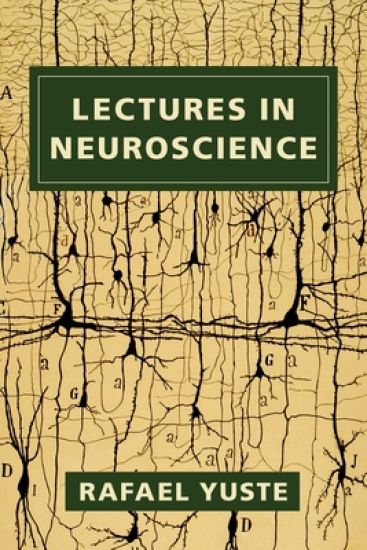
Lectures in Neuroscience

Lectures in Neuroscience

Rafael Yuste

Columbia University Press
2023
pokkari
The human brain is perhaps the most intricate and fascinating object in the known universe. Through a mysterious process, the activity of billions of neurons within a few pounds of matter generates the unfathomable complexity of the mind.This book is a conversational and accessible introduction to the brain. Beginning from basic elements of neuroscience, the acclaimed scientist Rafael Yuste guides readers through increasingly sophisticated topics, developing a unified framework for how the brain functions. He describes how the brain is organized and how it develops, how neurons operate and form neural circuits, and how these circuits function as neural networks to generate behavior and mental states.Yuste challenges the traditional view that the brain is an input-output machine that reacts reflexively to sensory stimuli. Instead, he argues, the purpose of the brain is to make a predictive model of the world in order to anticipate the future and choose successful courses of action. He gives readers insight into the workings of sensory and motor systems and the neurobiological basis of our perceptions, thoughts, emotions, memories, and consciousness.Peppered with anecdotes and illustrated with elegant drawings and diagrams, this succinct and cohesive book is accessible to readers without previous background in the subject. It is written for anyone seeking to grasp the core principles of neuroscience or looking for a fresh and clear perspective on how the brain works.
Lectures in Neuroscience

Lectures in Neuroscience

Rafael Yuste

Columbia University Press
2023
sidottu
The human brain is perhaps the most intricate and fascinating object in the known universe. Through a mysterious process, the activity of billions of neurons within a few pounds of matter generates the unfathomable complexity of the mind.This book is a conversational and accessible introduction to the brain. Beginning from basic elements of neuroscience, the acclaimed scientist Rafael Yuste guides readers through increasingly sophisticated topics, developing a unified framework for how the brain functions. He describes how the brain is organized and how it develops, how neurons operate and form neural circuits, and how these circuits function as neural networks to generate behavior and mental states.Yuste challenges the traditional view that the brain is an input-output machine that reacts reflexively to sensory stimuli. Instead, he argues, the purpose of the brain is to make a predictive model of the world in order to anticipate the future and choose successful courses of action. He gives readers insight into the workings of sensory and motor systems and the neurobiological basis of our perceptions, thoughts, emotions, memories, and consciousness.Peppered with anecdotes and illustrated with elegant drawings and diagrams, this succinct and cohesive book is accessible to readers without previous background in the subject. It is written for anyone seeking to grasp the core principles of neuroscience or looking for a fresh and clear perspective on how the brain works.
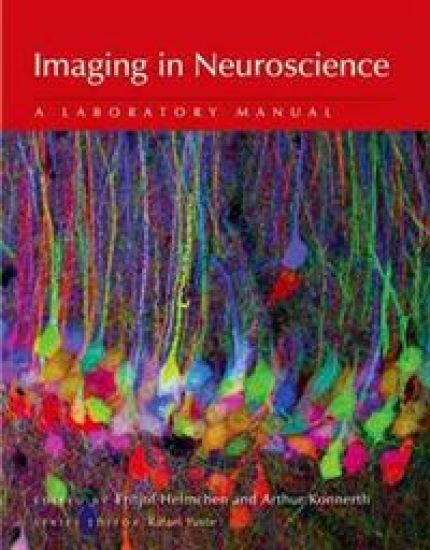
Imaging in Neuroscience: A Laboratory Manual

Imaging in Neuroscience: A Laboratory Manual

Fritjof Helmchen; Arthur Konnerth; Rafael Yuste

Cold Spring Harbor Laboratory Press,U.S.
2011
sidottu
As imaging technologies have revolutionized research in many areas of biology and medicine, neuroscientists have often pioneered the use of these new visualization techniques. This volume is an essential guide to discovering and implementing these techniques in the neuroscience lab.
Imaging in Neuroscience

Imaging in Neuroscience

Fritjof Helmchen; Arthur Konnerth; Rafael Yuste

Cold Spring Harbor Laboratory Press,U.S.
2011
nidottu
As imaging technologies have revolutionized research in many areas of biology and medicine, neuroscientists have often pioneered the use of new visualization techniques. Imaging in Neuroscience: A Laboratory Manual provides the definitive collection of methods in use in this groundbreaking field. With more than 90 chapters, the manual offers a depth of coverage unavailable from any other source. Sections focus on imaging at the molecular level, axons and nerve terminals, spines and dendrites, neurons and circuits in vitro, neurons and circuits in vivo, glia, brain dynamics and behavior, and brain pathology. Protocols range from basic techniques to recent breakthroughs. Imaging in Neuroscience: A Laboratory Manual is an essential guide to discovering and implementing these techniques.