Kirjojen hintavertailu. Mukana 12 390 323 kirjaa ja 12 kauppaa.

Kirjailija

Raffaele Pisano

Kirjat ja teokset yhdessä paikassa: 9 kirjaa, julkaisuja vuosilta 2014-2025, suosituimpien joukossa Homage to Evangelista Torricelli’s Opera Geometrica 1644–2024. Vertaile teosten hintoja ja tarkista saatavuus suomalaisista kirjakaupoista.

9 kirjaa

Kirjojen julkaisuhaarukka 2014-2025.

Homage to Evangelista Torricelli’s Opera Geometrica 1644–2024

Homage to Evangelista Torricelli’s Opera Geometrica 1644–2024

Raffaele Pisano; Jean Dhombres; Patricia Radelet de Grave; Paolo Bussotti

Springer International Publishing AG
2025
nidottu
Evangelista Torricelli exemplifies the use the moderns made of the ancients' mathematical methods. Celebrating Evangelista Torricelli's monumental Opera geometrica, this book marks 380 years since its publication (1644-2024). This homage to Torricelli introduces the magnificent major work in Mechanics and Mathematics of a brilliant Archimedean–and–Galilean scientist to modern readers.Opera geometrica deals with Motion & Mechanics and Geometry & Infinitesimals. In quibus Archimedis doctrina Torricelli also presents his mechanical principle of equilibrium – the foundation of the modern Principle of Virtual Work/Static.This outstanding source and research book spotlights the relevance and originality of Torricelli’s Mechanics, and is the first and most profound analysis of the Opera geometrica to date. The historical study is achieved in extensive Introduction, 5 Essays and an accurate Transcription of Opera geometrica with parallel side–by–side text, including substantive explicative notes. The book is an accessible avenue to understanding this work by leading authorities who offer much-needed insights into the relationship Physics–Mathematics, Mechanics and Fundamentals. It appeals to historians, epistemologists and scientists.
Homage to Evangelista Torricelli’s Opera Geometrica 1644–2024

Homage to Evangelista Torricelli’s Opera Geometrica 1644–2024

Raffaele Pisano; Jean Dhombres; Patricia Radelet De Grave; Paolo Bussotti

Springer International Publishing AG
2024
sidottu
Evangelista Torricelli exemplifies the use the moderns made of the ancients' mathematical methods. Celebrating Evangelista Torricelli's monumental Opera geometrica, this book marks 380 years since its publication (1644-2024). This homage to Torricelli introduces the magnificent major work in Mechanics and Mathematics of a brilliant Archimedean–and–Galilean scientist to modern readers.Opera geometrica deals with Motion & Mechanics and Geometry & Infinitesimals. In quibus Archimedis doctrina Torricelli also presents his mechanical principle of equilibrium – the foundation of the modern Principle of Virtual Work/Static.This outstanding source and research book spotlights the relevance and originality of Torricelli’s Mechanics, and is the first and most profound analysis of the Opera geometrica to date. The historical study is achieved in extensive Introduction, 5 Essays and an accurate Transcription of Opera geometrica with parallel side–by–side text, including substantive explicative notes. The book is an accessible avenue to understanding this work by leading authorities who offer much-needed insights into the relationship Physics–Mathematics, Mechanics and Fundamentals. It appeals to historians, epistemologists and scientists.
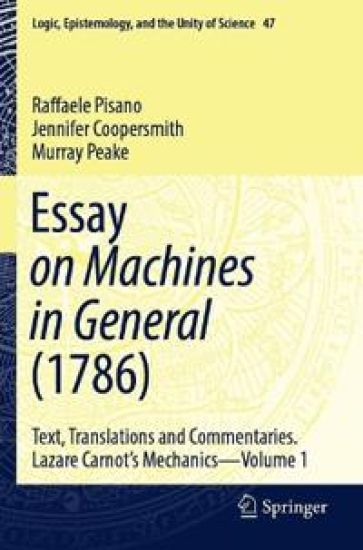
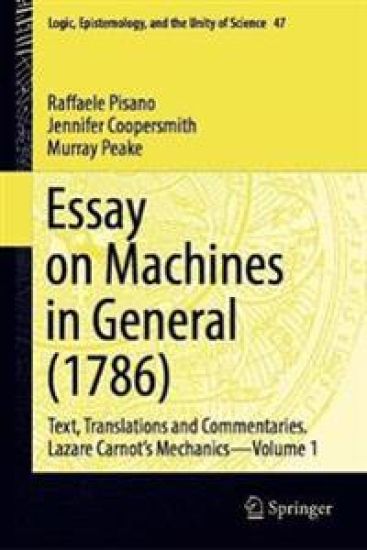
Essay on Machines in General (1786)

Essay on Machines in General (1786)

Raffaele Pisano; Jennifer Coopersmith; Murray Peake

Springer Nature Switzerland AG
2022
nidottu
This book offers insights relevant to modern history and epistemology of physics,mathematics and, indeed, to all the sciences and engineering disciplines emergingof 19th century. This research volume is the first of a set of three Springer books onLazare Nicolas Marguérite Carnot’s (1753–1823) remarkable work: Essay on Machines inGeneral (Essai sur les machines en général [1783] 1786). The other two forthcomingvolumes are: Principes fondamentaux de l’équilibre et du mouvement (1803) andGéométrie de position (1803).Lazare Carnot – l'organisateur de la victoire – in Essai sur le machine en général (1786)assumed that the generalization of machines was a necessity for society and its economicdevelopment. Subsequently, his new coming science applied to machines attractedconsiderable interest for technician, as well, already in the 1780’s. With no lack inrigour, Carnot used geometric and trigonometric rather than algebraic arguments, andusually went on to explain in words what the formulae contained. His main physical–mathematical concepts were the Geometric motion and Moment of activity–concept ofWork . In particular, he found the invariants of the transmission of motion (by statingthe principle of the moment of the quantity of motion) and theorized the condition ofthe maximum efficiency of mechanical machines (i.e., principle of continuity in thetransmission of power).While the core theme remains the theories and historical studies of the text, the bookcontains an extensive Introduction and an accurate critical English Translation –including the parallel text edition and substantive critical/explicative notes – of Essaisur les machines en général (1786). The authors offer much-needed insight into therelation between mechanics, mathematics and engineering from a conceptual, empiricaland methodological, and universalis point of view. As a cutting–edge writing byleading authorities on the history of physics and mathematics, and epistemologicalaspects, it appeals to historians, epistemologist–philosophers and scientists (physicists, mathematicians and applied sciences and technology).
Essay on Machines in General (1786)

Essay on Machines in General (1786)

Raffaele Pisano; Jennifer Coopersmith; Murray Peake

Springer Nature Switzerland AG
2021
sidottu
This book offers insights relevant to modern history and epistemology of physics,mathematics and, indeed, to all the sciences and engineering disciplines emergingof 19th century. This research volume is the first of a set of three Springer books onLazare Nicolas Marguérite Carnot’s (1753–1823) remarkable work: Essay on Machines inGeneral (Essai sur les machines en général [1783] 1786). The other two forthcomingvolumes are: Principes fondamentaux de l’équilibre et du mouvement (1803) andGéométrie de position (1803).Lazare Carnot – l'organisateur de la victoire – in Essai sur le machine en général (1786)assumed that the generalization of machines was a necessity for society and its economicdevelopment. Subsequently, his new coming science applied to machines attractedconsiderable interest for technician, as well, already in the 1780’s. With no lack inrigour, Carnot used geometric and trigonometric rather than algebraic arguments, andusually went on to explain in words what the formulae contained. His main physical–mathematical concepts were the Geometric motion and Moment of activity–concept ofWork . In particular, he found the invariants of the transmission of motion (by statingthe principle of the moment of the quantity of motion) and theorized the condition ofthe maximum efficiency of mechanical machines (i.e., principle of continuity in thetransmission of power).While the core theme remains the theories and historical studies of the text, the bookcontains an extensive Introduction and an accurate critical English Translation –including the parallel text edition and substantive critical/explicative notes – of Essaisur les machines en général (1786). The authors offer much-needed insight into therelation between mechanics, mathematics and engineering from a conceptual, empiricaland methodological, and universalis point of view. As a cutting–edge writing byleading authorities on the history of physics and mathematics, and epistemologicalaspects, it appeals to historians, epistemologist–philosophers and scientists (physicists, mathematicians and applied sciences and technology).
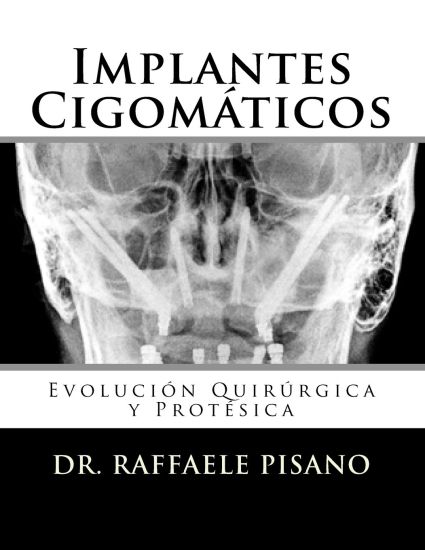
Implantes Cigomáticos: Evolución Quirúrgica y Protésica

Implantes Cigomáticos: Evolución Quirúrgica y Protésica

Raffaele Pisano

Createspace Independent Publishing Platform
2018
nidottu
El Dr. Rafaelle Pisano, con m s de 20 a os de experiencia profesional, es un odont logo prostodoncista, egresado de la Universidad Central de Venezuela, Master en Prostodoncia por la Northwestern University, pionero de la Restauraci n de implantes cigom ticos, profesor universitario, autor cient fico y conferencista nos trae en esta oportunidad todo lo referente a los Implantes Cigom ticos, publicaci n fundamental para la educaci n de los nuevos profesionales y la actualizaci n de las ltimas t cnicas que se ejercer n para el bienestar colectivo. La cirug a para la inserci n de implantes zigom ticos est basada en la pr tesis, sta simbiosis cirujano-prostodoncista es fundamental para tener rehabilitaciones funcional y est ticamente ideales. La evoluci n de pr tesis incomodas para la higiene, con implantes palatinizados, grosor aumentado del acr lico o zirconia, han sido marcadamente mejoradas, estableciendo la comunicaci n s lida y respetada entre cirug a y pr tesis. El Dr Raffaele Pisano ha descrito en detalle los grandes avances a nivel prot sico y exigencias quir rgicas necesarias para un trabajo inter-disciplinario, de forma sistem tica, dise protocolos basados en una clasificaci n para el tratamiento definitivo con carga inmediata los cuales incluyen todas las situaciones cl nicas posibles. El objetivo del Dr Pisano de presentar el material educativo en forma de casos cl nicos progresivamente de m s sencillo a m s complejo, permite al cl nico entender la complejidad de la atrofia maxilar, brindando soluciones claras y precisas desde una atrofia leve hasta pacientes con maxilectom a secundario a cirug a oncol gica, con o sin reconstrucci n de los tejidos blandos. Especial nfasis se aprecia en situaciones cl nicas unilaterales. En todo este tiempo ha restaurado m s de 900 implantes cigom ticos, acumulando una gran cantidad de experiencia que ha transmitido en m ltiples presentaciones en Venezuela y en otros pa ses. Todos estos conocimientos los ha resumido en este libro. En palabras del Dr. Pisano "El objetivo del mismo es transmitir a los odont logos y especialistas en el rea de cirug a y pr tesis bucal laevoluci n y los cambios que se ha logrado del protocolo inicial de tratamientos con implantes cigom ticos, los procedimientos para realizar estos cambios, sus ventajas y desventajas, tomando en cuenta las diferentes situaciones de pacientes que vemos en nuestras consultas, especialmente pacientes con atrofias severas de huesoalveolar, traumatismos de la zona bucal o sobrevivientes de tumores. Estos pacientes dif cilmente tendr n oportunidad de mejorar sus condiciones de vida sin estos avances en los tratamientos"
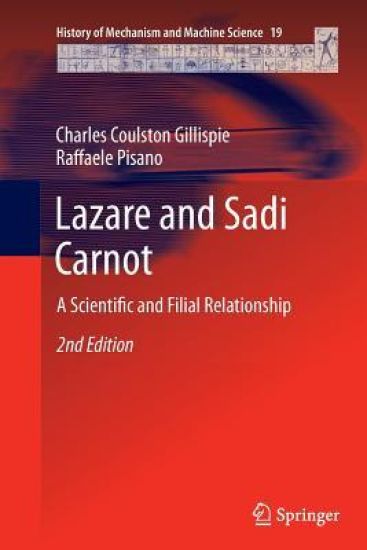
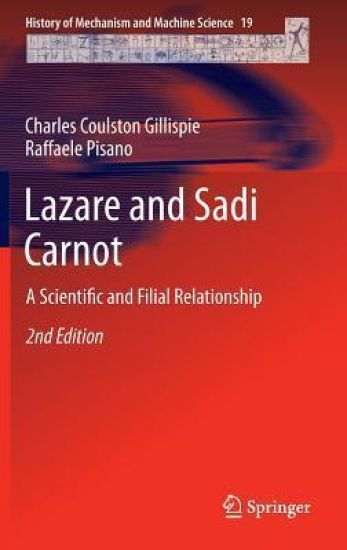
Lazare and Sadi Carnot

Lazare and Sadi Carnot

Charles Coulston Gillispie; Raffaele Pisano

Springer
2016
nidottu
Lazare Carnot was the unique example in the history of science of someone who inadvertently owed the scientific recognition he eventually achieved to earlier political prominence. He and his son Sadi produced work that derived from their training as engineering and went largely unnoticed by physicists for a generation or more, even though their respective work introduced concepts that proved fundamental when taken up later by other hands. There was, moreover, a filial as well as substantive relation between the work of father and son. Sadi applied to the functioning of heat engines the analysis that his father had developed in his study of the operation of ordinary machines. Specifically, Sadi's idea of a reversible process originated in the use his father made of geometric motions in the analysis of machines in general.This unique book shows how the two Carnots influenced each other in their work in the fields of mechanics and thermodynamics and how future generations of scientists have further benefited from their work.
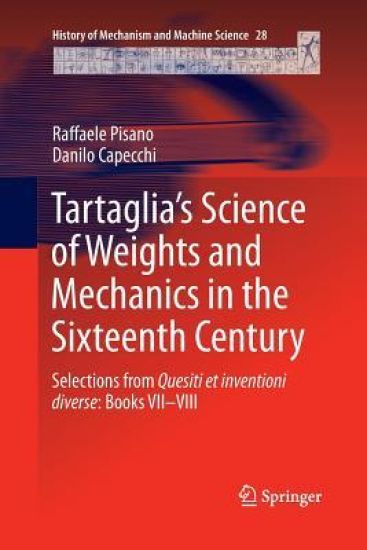
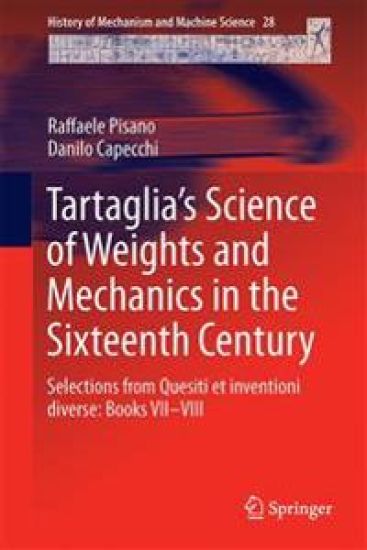
Tartaglia’s Science of Weights and Mechanics in the Sixteenth Century
This book presents a historical and scientific analysis as historical epistemology of the science of weights and mechanics in the sixteenth century, particularly as developed by Tartaglia in his Quesiti et inventioni diverse, Book VII and Book VIII (1546; 1554). In the early 16th century mechanics was concerned mainly with what is now called statics and was referred to as the Scientia de ponderibus, generally pursued by two very different approaches. The first was usually referred to as Aristotelian, where the equilibrium of bodies was set as a balance of opposite tendencies to motion. The second, usually referred to as Archimedean, identified statics with centrobarica, the theory of centres of gravity based on symmetry considerations. In between the two traditions the Italian scholar Niccolò Fontana, better known as Tartaglia (1500?–1557), wrote the treatise Quesiti et inventioni diverse (1546).This volume consists of three main parts. In the first, a historical excursus regarding Tartaglia’s lifetime, his scientific production and the Scientia de ponderibus in the Arabic-Islamic culture, and from the Middle Ages to the Renaissance, is presented. Secondly, all the propositions of Books VII and VIII, by relating them with the Problemata mechanica by the Aristotelian school and Iordani opvsculvm de ponderositate by Jordanus de Nemore are examined within the history and historical epistemology of science. The last part is relative to the original texts and critical transcriptions into Italian and Latin and an English translation. This work gathers and re-evaluates the current thinking on this subject. It brings together contributions from two distinguished experts in the history and historical epistemology of science, within the fields of physics, mathematics and engineering. It also gives much-needed insight into the subject from historical and scientific points of view. The volume composition makes for absorbing reading for historians, epistemologists, philosophers and scientists.
Tartaglia’s Science of Weights and Mechanics in the Sixteenth Century
This book presents a historical and scientific analysis as historical epistemology of the science of weights and mechanics in the sixteenth century, particularly as developed by Tartaglia in his Quesiti et inventioni diverse, Book VII and Book VIII (1546; 1554). In the early 16th century mechanics was concerned mainly with what is now called statics and was referred to as the Scientia de ponderibus, generally pursued by two very different approaches. The first was usually referred to as Aristotelian, where the equilibrium of bodies was set as a balance of opposite tendencies to motion. The second, usually referred to as Archimedean, identified statics with centrobarica, the theory of centres of gravity based on symmetry considerations. In between the two traditions the Italian scholar Niccolò Fontana, better known as Tartaglia (1500?–1557), wrote the treatise Quesiti et inventioni diverse (1546).This volume consists of three main parts. In the first, a historical excursus regarding Tartaglia’s lifetime, his scientific production and the Scientia de ponderibus in the Arabic-Islamic culture, and from the Middle Ages to the Renaissance, is presented. Secondly, all the propositions of Books VII and VIII, by relating them with the Problemata mechanica by the Aristotelian school and Iordani opvsculvm de ponderositate by Jordanus de Nemore are examined within the history and historical epistemology of science. The last part is relative to the original texts and critical transcriptions into Italian and Latin and an English translation. This work gathers and re-evaluates the current thinking on this subject. It brings together contributions from two distinguished experts in the history and historical epistemology of science, within the fields of physics, mathematics and engineering. It also gives much-needed insight into the subject from historical and scientific points of view. The volume composition makes for absorbing reading for historians, epistemologists, philosophers and scientists.
Lazare and Sadi Carnot

Lazare and Sadi Carnot

Charles Coulston Gillispie; Raffaele Pisano

Springer
2014
sidottu
Lazare Carnot was the unique example in the history of science of someone who inadvertently owed the scientific recognition he eventually achieved to earlier political prominence. He and his son Sadi produced work that derived from their training as engineering and went largely unnoticed by physicists for a generation or more, even though their respective work introduced concepts that proved fundamental when taken up later by other hands. There was, moreover, a filial as well as substantive relation between the work of father and son. Sadi applied to the functioning of heat engines the analysis that his father had developed in his study of the operation of ordinary machines. Specifically, Sadi's idea of a reversible process originated in the use his father made of geometric motions in the analysis of machines in general.This unique book shows how the two Carnots influenced each other in their work in the fields of mechanics and thermodynamics and how future generations of scientists have further benefited from their work.