Kirjojen hintavertailu. Mukana 12 390 323 kirjaa ja 12 kauppaa.

Kirjailija

Rahul Banerjee

Kirjat ja teokset yhdessä paikassa: 12 kirjaa, julkaisuja vuosilta 2008-2024, suosituimpien joukossa Indian Philosophy and Meditation. Vertaile teosten hintoja ja tarkista saatavuus suomalaisista kirjakaupoista.

12 kirjaa

Kirjojen julkaisuhaarukka 2008-2024.

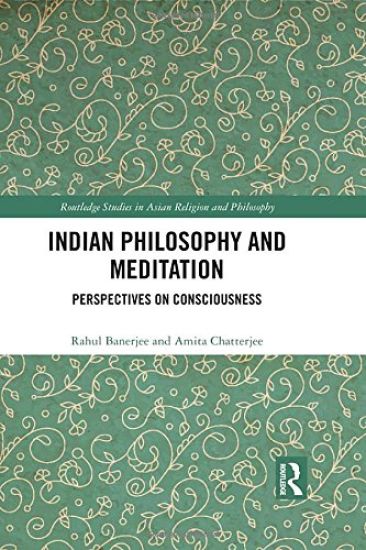
Indian Philosophy and Meditation

Indian Philosophy and Meditation

Rahul Banerjee; Amita Chatterjee

Routledge
2020
nidottu
India has a rich tradition of meditative practices designed to study the phenomenon of consciousness. From the distant past to the present, India has evolved a unique psychological culture with grand unifying themes and universal modes of meditative practice. This book provides a detailed analysis of classical and modern Indian views on consciousness along with their related meditative methods. It offers a critical analysis of three distinct trends of Indian thought, viz., a dualistic mode of understanding and realizing consciousness in Hindu Sa?khya, an interactive mode in early Buddhist abhidhamma, and the evolutionary transformational mode in the teachings of the twentieth-century sage Sri Aurobindo. This book explores the unifying features in Indian first person practices with regard to consciousness and the importance of these applied psychological practices and their associated understanding of our conscious inner lives. The most striking feature of the work is that side by side theoretical exposition of consciousness, it includes a number of worksheets which explain how to use meditation to achieve relaxation as well as cognitive ‘maps’ of the different levels of conscious states and instruction and how one can traverse from one state to another. The final chapter explores Sri Aurobindo who introduced new and decisive Indian spiritual thought and practice to India in the form of Integral Yoga. This innovative book will be of interest to scholars studying Indian philosophy, Indian religion and the emerging field of contemplation studies.
Indian Philosophy and Meditation

Indian Philosophy and Meditation

Rahul Banerjee; Amita Chatterjee

Routledge
2017
sidottu
India has a rich tradition of meditative practices designed to study the phenomenon of consciousness. From the distant past to the present, India has evolved a unique psychological culture with grand unifying themes and universal modes of meditative practice. This book provides a detailed analysis of classical and modern Indian views on consciousness along with their related meditative methods. It offers a critical analysis of three distinct trends of Indian thought, viz., a dualistic mode of understanding and realizing consciousness in Hindu Sa?khya, an interactive mode in early Buddhist abhidhamma, and the evolutionary transformational mode in the teachings of the twentieth-century sage Sri Aurobindo. This book explores the unifying features in Indian first person practices with regard to consciousness and the importance of these applied psychological practices and their associated understanding of our conscious inner lives. The most striking feature of the work is that side by side theoretical exposition of consciousness, it includes a number of worksheets which explain how to use meditation to achieve relaxation as well as cognitive ‘maps’ of the different levels of conscious states and instruction and how one can traverse from one state to another. The final chapter explores Sri Aurobindo who introduced new and decisive Indian spiritual thought and practice to India in the form of Integral Yoga. This innovative book will be of interest to scholars studying Indian philosophy, Indian religion and the emerging field of contemplation studies.

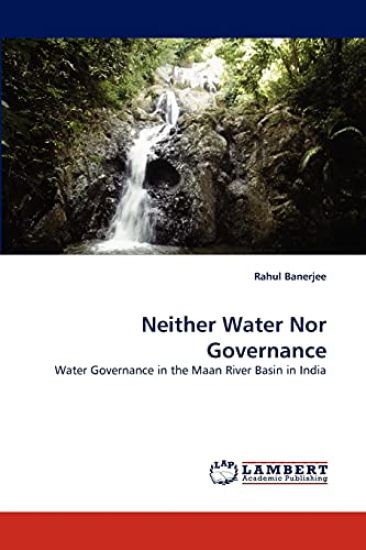
Neither Water Nor Governance

Neither Water Nor Governance

Rahul Banerjee

LAP Lambert Academic Publishing
2011
pokkari
Neither Water Nor Governance is a study of the problems of water governance in the Maan river basin in Madhya Pradesh state of India. Hydrological estimation has been done to find out whether the current use of water in the basin through various technologies is sustainable or not. The cost effectiveness of an irrigation dam that has been built on the river is also analysed. The policy framework that has led to the present situation and the effects that it has had on sustainability are analysed in detail. Steps that need to be taken to ensure sustainability in future are underlined in conclusion.