Kirjojen hintavertailu. Mukana 12 266 926 kirjaa ja 12 kauppaa.

Kirjailija

Rahul Jain

Kirjat ja teokset yhdessä paikassa: 43 kirjaa, julkaisuja vuosilta 2017-2026, suosituimpien joukossa Beyond the Black Box. Vertaile teosten hintoja ja tarkista saatavuus suomalaisista kirjakaupoista.

43 kirjaa

Kirjojen julkaisuhaarukka 2017-2026.

Implications of Generative AI on Future Autonomous and Industrial Systems
Implications of Generative AI on Future Autonomous and Industrial Systems Generative Artificial Intelligence (GenAI) is no longer a futuristic concept-it's a disruptive force already shaping the present and defining the trajectory of tomorrow's technologies. As the world moves toward smarter, more autonomous systems, the implications of GenAI for industrial and autonomous sectors are profound and far-reaching. This book offers a deep dive into the transformative role that generative AI is playing in reshaping how intelligent machines are designed, deployed, and evolved across a broad spectrum of applications. From manufacturing floors powered by AI-driven automation to autonomous vehicles navigating complex environments using synthetically generated training data, generative AI is accelerating innovation across every layer of industrial operations. Its ability to simulate, optimize, and innovate is revolutionizing traditional workflows-enabling systems to become self-adaptive, predictive, and context-aware. In this comprehensive volume, readers will explore: The foundations and evolution of generative AI technologies, including large language models, generative adversarial networks (GANs), transformers, diffusion models, and more. Practical applications of GenAI in sectors such as manufacturing, robotics, energy, transportation, logistics, and smart infrastructure. The convergence of generative AI with cyber-physical systems and Industry 4.0 initiatives to create hyper-efficient, autonomous industria
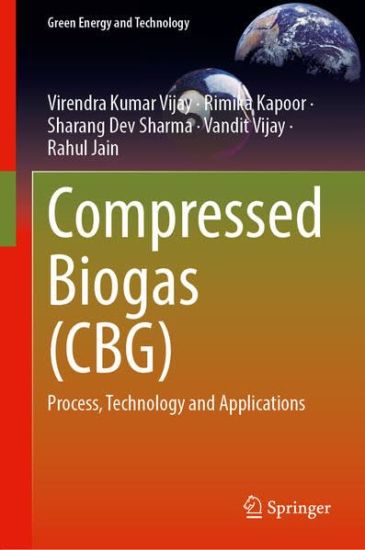
Compressed Biogas (CBG)

Compressed Biogas (CBG)

Virendra Kumar Vijay; Rimika Kapoor; Sharang Dev Sharma; Vandit Vijay; Rahul Jain

Springer Nature Switzerland AG
2025
sidottu
This book provides theoretical and practical information on biogas production and degradation ( CBG) in a lucid manner and real-life scenarios. The core topics covered include: (i) introduction to biogas production, cleaning and up-gradation and specifications of biomethane in various countries for different applications; (ii) description of various processes and technologies for the cleaning of biogas; (iii) a detailed information on the technologies for separation of carbon dioxide from biogas to upgrade it to biomethane (CBG), (iii) assessment and comparison of the biogas up-gradation technologies on the basis of various techno-economic factors, (iv) design and development of water scrubbing technology and (v) future prospects of decentralized biogas up-gradation and bottling technology. CBG is a growing field for mitigating climate change, waste management, and disposal. This book provides information on how the biogas up-gradation sector is developing and how it could harness its potential in a decentralised manner. A broad description of technological innovations and developments in the sector has been provided. This book will be of use to students, researchers, professionals, entrepreneurs, municipalities, nodal agencies of state and central governments, CBG Plant owners & operators, etc. It can also be used as a text for professional training, skill development and capacity building for stakeholders.
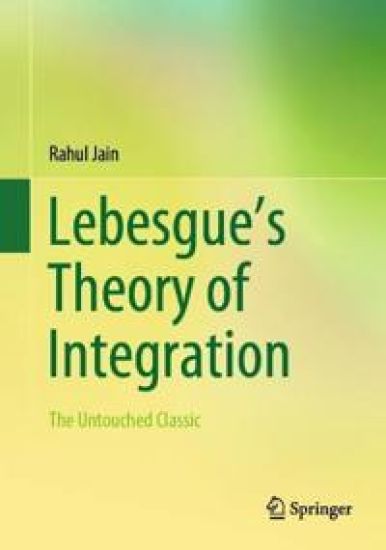
Lebesgue’s Theory of Integration

Lebesgue’s Theory of Integration

Rahul Jain

Springer Nature Switzerland AG
2025
sidottu
This is an invaluable book that presents the original work published in French, in 1904, by Henry Leon Lebesgue, the creator of the theory of integration. Translated into English for the first time, the book offers readers a unique opportunity to explore Lebesgue’s groundbreaking ideas and delves into the mind of one of the greatest mathematicians in history. The book provides historical context and explanations that enhance readers’ comprehension and appreciation of the material. Covering a wide range of topics, from the integration before Riemann to the search for primitive functions, it offers a comprehensive understanding of Lebesgue’s theories and their significance in the field of mathematics. It inspires readers to explore further in the field, stimulates new ideas, and opens avenues for future research. The book bridges the gap between theory and practice by providing examples and applications that contributed to the development of Lebesgue integration theory. The book serves as a valuable resource for courses in analysis, measure theory, and Lebesgue integration theory, providing students with the opportunity to study the original work of Lebesgue and deepen their understanding of integration theory. It is meant for a broad audience, including advanced undergraduate and graduate students, mathematics scholars, researchers, educators, and enthusiasts, seeking a comprehensive understanding of Lebesgue’s theories and the historical development of integration theory. Mathematicians and researchers will find this book essential for its historical significance and the preservation of important mathematical literature.
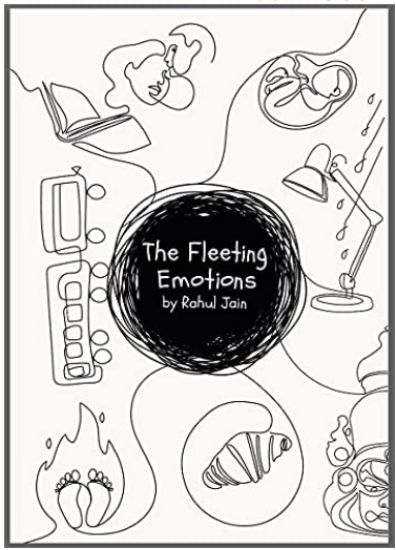
The Fleeting Emotions

The Fleeting Emotions

Rahul Jain

Notion Press
2021
pokkari
A couple trying to conceive A teenage boy crushing on his teacher's niece A man with a plan to kill himself A forgotten love story A son remembering his father A girl having nightmares A brother strives to fulfill his sister's wish Which one would you read first?
Optical and Electronic Properties of II-VI Group Semiconductors
In semiconductors, two basic properties namely energy gap and refractive index mostly determine their optical and electronic operation. Refractive index of a material usually decreases with an increase in energy gap fostering an underlying relationship between these two fundamental quantities. There have been many attempts to correlate these two quantities with a suitable empirical or semi-empirical relation. The refractive index and energy gap of semiconductors represent two fundamental physical aspects thatcharacterize their optical and electronic properties. In the present work, I have investigated some of the optical and electronic properties of II-VI group semiconductors.The II-VI compounds are being extensively used in infrared detectors, ultra high speed bipolar transistors, optical fiber communications and advanced microwave devices. Thesematerials possess the appropriate direct band gap to produce light emitting diodes and lasers from blue to red wavelength.
Studium programów specjalnych i rozwoju obszarów wiejskich w wiosce Khambale
Rząd Indii ustanowil Ministerstwo Panchayati Raj w celu osiągnięcia zdecentralizowanego i partycypacyjnego samorządu lokalnego poprzez instytucje Panchayati Raj (PRI). Planowanie Rozwoju Wioski (Smart village) odnosi się do procesu identyfikacji naglących problem w w wiosce i znalezienia najlepszych sposob w ich rozwiązania oraz w wioskach, kt re posiadają większośc podstawowych udogodnień i udogodnień; oznacza to r wnież identyfikację wsp lnych aspiracji mieszkańc w i znalezienie sposob w ich realizacji. Niniejsze studium zawiera propozycję rozwoju wsi w Khambale przez Government Schemes. Khambale jest wioską w Trimbak Taluka w Dystrykcie Nashik stanu Maharashtra w Indiach. Należąca do Khandesh i p lnocnego regionu Maharasztra. Khambale znajduje się 38 KM na zach d od gl wnej siedziby okręgu Nashik. Propozycja opiera się na specjalnych programach uruchomionych przez rząd Indii w celu rozwoju obszar w wiejskich z udzialem wszystkich zainteresowanych stron (czlonk w Gramsabha, Sarpanch, Gramsevak & Localities). Gl wnymi problemami zidentyfikowanymi w wiosce Khambale są brak plac wek edukacyjnych, Centrum Zdrowia, bezpieczna woda pitna, zatrudnienie, toalety komunalne.
Estudo de Esquemas Especiais & Desenvolvimento Rural da Aldeia de Khambale
O Governo da ndia criou o Minist rio de Panchayati Raj para alcan ar o auto-governo local descentralizado e participativo atrav s das Institui es Panchayati Raj (PRIs). O Planejamento de Desenvolvimento da Aldeia (Aldeia Inteligente) refere-se ao processo de identificar os problemas urgentes numa aldeia e encontrar as melhores maneiras de resolv -los e nas aldeias que t m a maioria das comodidades e instala es b sicas; tamb m significa identificar as aspira es comuns dos residentes e encontrar maneiras de alcan -las. O presente estudo apresenta uma proposta para o desenvolvimento rural da aldeia de Khambale atrav s de Esquemas do Governo. Khambale uma aldeia em Trimbak Taluka, no Distrito de Nashik, no Estado de Maharashtra, ndia. Pertence regi o de Khandesh e Northern Maharashtra. Khambale est localizada a 38 KM a oeste da sede do Distrito de Nashik. A proposta baseada em Esquemas Especiais lan ados pelo Governo da ndia para o desenvolvimento da rea rural com o envolvimento de todos os interessados (membros de Gramsabha, Sarpanch, Gramsevak & Localidades). Os principais problemas identificados na aldeia de Khambale s o a falta de instala es de Educa o, Centro de Sa de, gua Pot vel Segura, Emprego, Banheiros Comunit rios.
Studie über Sonderprogramme und ländliche Entwicklung des Dorfes Khambale
Die indische Regierung hat das Ministerium von Panchayati Raj eingerichtet, um eine dezentralisierte und partizipatorische lokale Selbstverwaltung durch Panchayati Raj-Institutionen (PRI) zu erreichen. Dorfentwicklungsplanung (Smart Village) bezieht sich auf den Prozess, die dr ngenden Probleme in einem Dorf zu identifizieren und die besten Wege zu ihrer L sung zu finden, und in D rfern, die ber die meisten grundlegenden Annehmlichkeiten und Einrichtungen verf gen; es bedeutet auch, die gemeinsamen W nsche der Bewohner zu identifizieren und Wege zu finden, diese zu erf llen. Die vorliegende Studie enth lt Vorschl ge f r die l ndliche Entwicklung des Dorfes Khambale durch Regierungsprogramme. Khambale ist ein Dorf in Trimbak Taluka im Distrikt Nashik im Bundesstaat Maharashtra, Indien. Es geh rt zu Khandesh und der n rdlichen Region Maharashtra. Khambale liegt 38 km westlich vom Distrikthauptquartier Nashik entfernt und basiert auf Sonderprogrammen der indischen Regierung zur Entwicklung l ndlicher Gebiete unter Beteiligung aller Interessengruppen (Gramsabha-Mitglieder, Sarpanch, Gramsevak und Gemeinden). Die Hauptprobleme, die im Dorf Khambale festgestellt wurden, sind der Mangel an Bildungseinrichtungen, Gesundheitszentrum, sicherem Trinkwasser, Besch ftigung und Gemeinschaftstoiletten.
Studie van speciale regelingen & plattelandsontwikkeling van Khambale Village
De regering van India heeft het ministerie van Panchayati Raj opgericht om via de Panchayati Raj-instellingen (PRI's) een gedecentraliseerd en participatief lokaal zelfbestuur tot stand te brengen. Village Development Planning (Smart village) verwijst naar het proces van het identificeren van de dringende problemen in een dorp en het vinden van de beste manieren om deze op te lossen en in dorpen die de meeste basisvoorzieningen en faciliteiten hebben; het betekent ook het identificeren van de gemeenschappelijke aspiraties van de bewoners en het vinden van manieren om deze te bereiken. De huidige studie geeft een voorstel voor de plattelandsontwikkeling van het Khambale dorp door Regeringsregelingen. Khambale is een dorp in Trimbak Taluka in het Nashik District van de staat Maharashtra, India. Behoort tot Khandesh en de noordelijke Maharashtra regio. Khambale ligt 38 KM naar het westen vanuit het hoofdkantoor van het district Nashik. Het voorstel is gebaseerd op speciale regelingen die de Indiase regering heeft gelanceerd voor de ontwikkeling van het platteland met betrokkenheid van alle belanghebbenden (leden van Gramsabha, Sarpanch, Gramsevak & Localities). De belangrijkste problemen die in het dorp Khambale zijn vastgesteld, zijn het gebrek aan onderwijsfaciliteiten, een gezondheidscentrum, veilig drinkwater, werkgelegenheid en gemeenschapstoiletten.
Studio di schemi speciali e sviluppo rurale del villaggio di Khambale
Il governo indiano ha istituito il Ministero del Panchayati Raj per ottenere un'autogoverno locale decentralizzato e partecipativo attraverso le istituzioni del Panchayati Raj (PRI). Village Development Planning (Smart village) si riferisce al processo di identificazione dei problemi pressanti in un villaggio e alla ricerca dei modi migliori per risolverli e nei villaggi che hanno la maggior parte dei servizi e delle strutture di base; significa anche identificare le aspirazioni comuni dei residenti e trovare il modo di realizzarle. Il presente studio fornisce una proposta per lo sviluppo rurale del villaggio di Khambale da parte del governo Schemes. Khambale un villaggio a Trimbak Taluka nel distretto di Nashik, nello Stato del Maharashtra, India. Appartiene a Khandesh e alla regione del Nord Maharashtra. Khambale si trova a 38 km a ovest della sede centrale del Distretto di Nashik. La proposta si basa su schemi speciali lanciati dal Governo indiano per lo sviluppo dell'area rurale con il coinvolgimento di tutti gli stakeholder (membri di Gramsabha, Sarpanch, Gramsevak & Localities). I principali problemi individuati nel villaggio di Khambale sono la mancanza di strutture per l'istruzione, il centro sanitario, l'acqua potabile, l'occupazione, i servizi igienici della comunit .
Étude des régimes spéciaux et du développement rural du village de Khambale
Le gouvernement indien a cr le minist re du Panchayati Raj pour parvenir une autonomie locale d centralis e et participative par le biais des institutions du Panchayati Raj (PRI). La planification du d veloppement des villages (village intelligent) d signe le processus consistant identifier les probl mes urgents d'un village et trouver les meilleurs moyens de les r soudre, ainsi que ceux des villages qui disposent de la plupart des quipements et des installations de base; cela signifie galement identifier les aspirations communes des r sidents et trouver les moyens de les r aliser. La pr sente tude propose un d veloppement rural du village de Khambale par le biais de programmes gouvernementaux. Khambale est un village de Trimbak Taluka dans le district de Nashik de l' tat de Maharashtra, en Inde. Il appartient la r gion de Khandesh et du nord du Maharashtra. Khambale est situ 38 km l'ouest du si ge du district de Nashik. La proposition est bas e sur les programmes sp ciaux lanc s par le gouvernement indien pour le d veloppement des zones rurales avec la participation de toutes les parties prenantes (membres de Gramsabha, Sarpanch, Gramsevak et localit s). Les principaux probl mes identifi s dans le village de Khambale sont le manque d' quipements ducatifs, de centre de sant , d'eau potable, d'emploi et de toilettes communautaires.
Estudio de los planes especiales y el desarrollo rural de la aldea de Khambale
El Gobierno de la India ha establecido el Ministerio del Panchayati Raj para lograr un autogobierno local descentralizado y participativo a trav s de las instituciones del Panchayati Raj. La planificaci n del desarrollo de las aldeas (aldea inteligente) se refiere al proceso de determinar los problemas acuciantes de una aldea y encontrar las mejores formas de resolverlos, as como en las aldeas que cuentan con la mayor a de los servicios e instalaciones b sicos; tambi n significa determinar las aspiraciones comunes de los residentes y encontrar formas de alcanzarlas. El presente estudio ofrece una propuesta para el desarrollo rural de la aldea de Khambale mediante planes gubernamentales. Khambale es una aldea de Trimbak Taluka en el distrito de Nashik del estado de Maharashtra, India. Pertenece a Khandesh y a la regi n norte de Maharashtra. Khambale est situada a 38 km hacia el oeste de la sede del distrito de Nashik. La propuesta se basa en los planes especiales puestos en marcha por el Gobierno de la India para el desarrollo de la zona rural con la participaci n de todos los interesados (miembros de Gramsabha, Sarpanch, Gramsevak y Localidades). Los principales problemas identificados en la aldea de Khambale son la falta de instalaciones de educaci n, centro de salud, agua potable, empleo, ba os comunitarios.
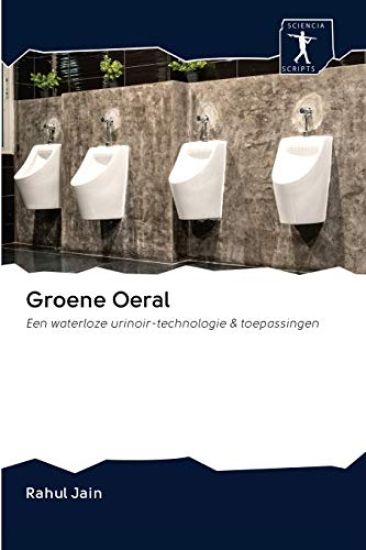
Groene Oeral

Groene Oeral

Rahul Jain

Sciencia Scripts
2020
nidottu
Waterloze Urinoirs hebben geen water nodig om te spoelen en kunnen worden gepromoot bij huizen, instellingen en openbare plaatsen om water, energie en urine te besparen als bron. De vermindering van de infrastructuur die nodig is voor de watervoorziening en de behandeling van afvalwater is ook een spin-off van de installatie van waterloze urinoirs. Het concept, dat gebaseerd is op de principes van ecologische sanering, helpt bij het voorkomen van milieuschade die wordt veroorzaakt door conventionele spoelsystemen. In de afgelopen jaren is de menselijke urine ge dentificeerd als een potenti le hulpbron die nuttig kan worden gebruikt voor de landbouw en de industrie. Menselijke urine bevat een aanzienlijk deel van de essenti le voedingsstoffen voor planten, zoals stikstof, fosfaat en kalium, die door de mens worden uitgescheiden.urine en feces kunnen ook worden gescheiden met behulp van systemen zoals urineafscheidingstoiletten. In het licht van de afnemende fosfaat- en oliereserves in de wereld, die bepalend zijn voor de beschikbaarheid en de prijs van minerale meststoffen, is de oogst van urine voor hergebruik in de landbouw van groot belang. Net als bij de beweging voor het oogsten van regenwater, is het oogsten van urine een concept dat enorme gevolgen kan hebben voor het behoud van hulpbronnen.