Kirjojen hintavertailu. Mukana 12 595 353 kirjaa ja 12 kauppaa.

Kirjailija

Rahul Rao

Kirjat ja teokset yhdessä paikassa: 36 kirjaa, julkaisuja vuosilta 2010-2026, suosituimpien joukossa Third World Protest. Vertaile teosten hintoja ja tarkista saatavuus suomalaisista kirjakaupoista.

36 kirjaa

Kirjojen julkaisuhaarukka 2010-2026.

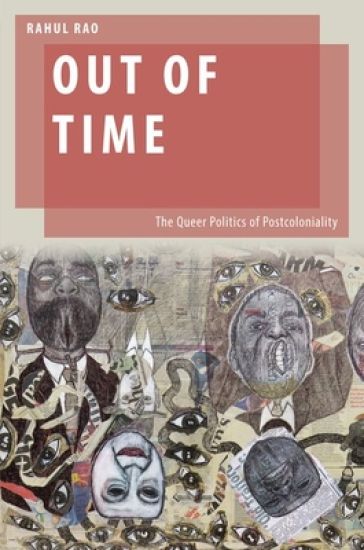
Out of Time

Out of Time

Rahul Rao

Oxford University Press Inc
2020
nidottu
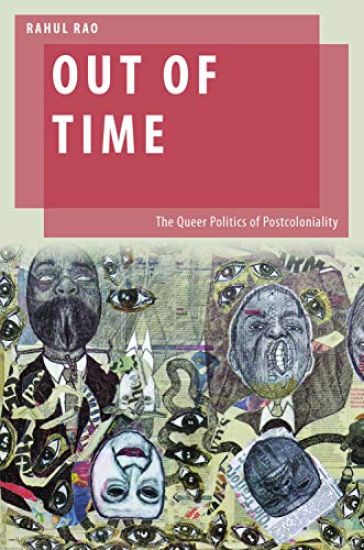
Between 2009 and 2014, an anti-homosexuality law circulating in the Ugandan parliament came to be the focus of a global conversation about queer rights. The law attracted attention for the draconian nature of its provisions and for the involvement of US evangelical Christian activists who were said to have lobbied for its passage. Focusing on the Ugandan case, this book seeks to understand the encounters and entanglements across geopolitical divides that produce and contest contemporary queerphobias. It investigates the impact and memory of the colonial encounter on the politics of sexuality, the politics of religiosity of different Christian denominations, and the political economy of contemporary homophobic moral panics. In addition, Out of Time places the Ugandan experience in conversation with contemporaneous developments in India and Britain--three locations that are yoked together by the experience of British imperialism and its afterlives. Intervening in a queer theoretical literature on temporality, Rahul Rao argues that time and space matter differently in the queer politics of postcolonial countries. By employing an intersectional analysis and drawing on a range of sources, Rao offers an original interpretation of why queerness mutates to become a metonym for categories such as nationality, religiosity, race, class, and caste. The book argues that these mutations reveal the deep grammars forged in the violence that founds and reproduces the social institutions in which queer difference struggles to make space for itself.
Out of Time

Out of Time

Rahul Rao

Oxford University Press Inc
2020
sidottu
Between 2009 and 2014, an anti-homosexuality law circulating in the Ugandan parliament came to be the focus of a global conversation about queer rights. The law attracted attention for the draconian nature of its provisions and for the involvement of US evangelical Christian activists who were said to have lobbied for its passage. Focusing on the Ugandan case, this book seeks to understand the encounters and entanglements across geopolitical divides that produce and contest contemporary queerphobias. It investigates the impact and memory of the colonial encounter on the politics of sexuality, the politics of religiosity of different Christian denominations, and the political economy of contemporary homophobic moral panics. In addition, Out of Time places the Ugandan experience in conversation with contemporaneous developments in India and Britain--three locations that are yoked together by the experience of British imperialism and its afterlives. Intervening in a queer theoretical literature on temporality, Rahul Rao argues that time and space matter differently in the queer politics of postcolonial countries. By employing an intersectional analysis and drawing on a range of sources, Rao offers an original interpretation of why queerness mutates to become a metonym for categories such as nationality, religiosity, race, class, and caste. The book argues that these mutations reveal the deep grammars forged in the violence that founds and reproduces the social institutions in which queer difference struggles to make space for itself.
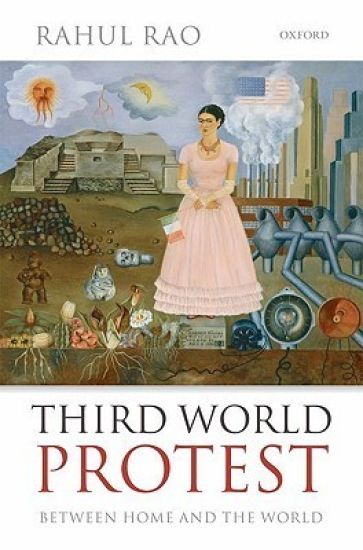
Third World Protest

Third World Protest

Rahul Rao

Oxford University Press
2012
nidottu
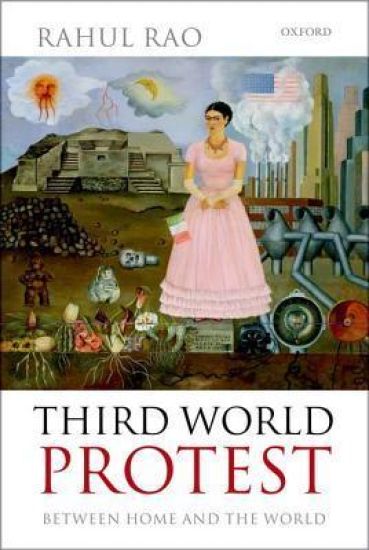
If boundaries protect us from threats, how should we think about the boundaries of states in a world where threats to human rights emanate from both outside the state and the state itself? Arguing that attitudes towards boundaries are premised on assumptions about the locus of threats to vital interests, Rahul Rao digs beneath two major normative orientations towards boundaries-cosmopolitanism and nationalism-which structure thinking on questions of public policy and identity. Insofar as the Third World is concerned, hegemonic versions of both orientations are underpinned by simplistic imageries of threat. In the cosmopolitan gaze, political and economic crises in the Third World are attributed mainly to factors internal to the Third World state with the international playing the role of heroic saviour. In Third World nationalist imagery, the international is portrayed as a realm of neo-imperialist predation from which the domestic has to be secured. Both images capture widely held intuitions about the sources of threats to human rights, but each by itself provides a resolutely partial inventory of these threats. By juxtaposing critical accounts of both discourses, Rao argues that protest sensibilities in the current conjuncture must be critical of hegemonic variants of both cosmopolitanism and nationalism. The second half of the book illustrates what such a critique might look like. Journeying through the writings of James Joyce, Rabindranath Tagore, Edward Said and Frantz Fanon, the activism of 'anti-globalisation' protesters, and the dilemmas of queer rights activists, Rao demonstrates that important currents of Third World protest have long battled against both the international and the domestic, in a manner that combines nationalist and cosmopolitan sensibilities.
Third World Protest

Third World Protest

Rahul Rao

Oxford University Press
2010
sidottu
If boundaries protect us from threats, how should we think about the boundaries of states in a world where threats to human rights emanate from both outside the state and the state itself? Arguing that attitudes towards boundaries are premised on assumptions about the locus of threats to vital interests, Rahul Rao digs beneath two major normative orientations towards boundaries-cosmopolitanism and nationalism-which structure thinking on questions of public policy and identity. Insofar as the Third World is concerned, hegemonic versions of both orientations are underpinned by simplistic imageries of threat. In the cosmopolitan gaze, political and economic crises in the Third World are attributed mainly to factors internal to the Third World state with the international playing the role of heroic saviour. In Third World nationalist imagery, the international is portrayed as a realm of neo-imperialist predation from which the domestic has to be secured. Both images capture widely held intuitions about the sources of threats to human rights, but each by itself provides a resolutely partial inventory of these threats. By juxtaposing critical accounts of both discourses, Rao argues that protest sensibilities in the current conjuncture must be critical of hegemonic variants of both cosmopolitanism and nationalism. The second half of the book illustrates what such a critique might look like. Journeying through the writings of James Joyce, Rabindranath Tagore, Edward Said and Frantz Fanon, the activism of 'anti-globalisation' protesters, and the dilemmas of queer rights activists, Rao demonstrates that important currents of Third World protest have long battled against both the international and the domestic, in a manner that combines nationalist and cosmopolitan sensibilities.
The Psychic Lives of Statues

The Psychic Lives of Statues

Rahul Rao

PLUTO PRESS
2026
nidottu
'An unimpeachable, erudite jewel of a book, showing how tenaciously the shadows of colonialism reach into our lives' - Neel Mukherjee, Booker Prize shortlisted author of The Lives of Others 'Compulsively readable. The struggle over statues is about how we live with and relate to one another, and the fight over equality and dignity' - Laleh Khalili, author of Extractive Capitalism 'Powerfully grounded and eminently thoughtful. Rao's account of how we grapple with the imperial past and present will stand even as statues rise and fall' - Priyamvada Gopal, author of Insurgent Empire Statues around the world have become lightning rods for public debates over the meaning of our imperial past and postcolonial present. The Psychic Lives of Statues is an insightful exploration of these global controversies, demonstrating that beneath their surface lie deeper struggles over race, caste and the politics of decolonisation. Rahul Rao takes readers on an international journey, revealing how these controversies have dramatically rearranged anticolonial political thought through the multifaceted lenses of justice, cultural memory and belonging. The Psychic Lives of Statues explores both the toppling of colonial statues and the erection of postcolonial ones, illuminating how statues remain powerful and compelling forms of memorialisation. Engaging with artists, scholars and activists, Rao offers a fresh and exciting perspective on how we understand our past and present through iconography.
Nanotechnology

Nanotechnology

Rahul Rao

ICON BOOKS
2026
pokkari
Nanotechnology could be the key to future scientific and engineering breakthroughs, space travel and kickstarting a new industrial revolution. But what exactly is it? In this accessible and concise primer, Rahul Rao takes the reader on a journey to the hidden world of the nano realm. This world exists is invisible to the human eye but, without it, life as we know it simply wouldn't exist. Nanotechnology is the craft of editing, manipulating and shaping this parallel world in ways that can have profound impacts on a huge scale. Celebrating the power and potential of the small things, this book looks at a diverse range of examples of nanotechnology including super-strength carbon nanotubes, speciality nanoparticles and biological nanomachinery. It explains the science behind these breakthroughs and offers a tantalising glimpse at what may await us in the world of tomorrow.
Avaliação do risco de cáries

Avaliação do risco de cáries

Ankita Tripathi; Rahul Rao; Ashish Jain

Edicoes Nosso Conhecimento
2025
nidottu
Este livro descreve a import ncia da Avalia o do risco de c ries para o paciente. Quais s o os fatores que influenciam as c ries e como avaliar se o paciente apresenta um risco elevado ou baixo de c ries. Com a capacidade de detetar c ries nos seus est gios iniciais, os profissionais de sa de podem ajudar a prevenir a forma o de c ries. Hoje em dia, mais pacientes querem manter os seus dentes por mais tempo e se preocupam com a sua sa de oral, por isso esta avalia o de risco importante, porque melhor prevenir do que remediar.
Valutazione del rischio di carie

Valutazione del rischio di carie

Ankita Tripathi; Rahul Rao; Ashish Jain

Edizioni Sapienza
2025
nidottu
Questo libro descrive l'importanza della "valutazione del rischio di carie" per il paziente. Quali sono i fattori che influiscono sulla carie e come valutare se un paziente ad alto o basso rischio di carie. Grazie alla capacit di individuare la carie nelle sue fasi iniziali, gli operatori sanitari possono aiutare a prevenirne la formazione. Oggigiorno sempre pi pazienti desiderano conservare i propri denti pi a lungo e si preoccupano della propria salute orale, pertanto questa valutazione del rischio importante, perch "prevenire meglio che curare".
Stomatologia minimalnie inwazyjna

Stomatologia minimalnie inwazyjna

Ashima Jakhar; Ashish Jain; Rahul Rao

Wydawnictwo Nasza Wiedza
2025
nidottu
Wszystkie dzialania w dziedzinie nauk o zdrowiu mają jeden podstawowy cel: ochronę ludzkiego ciala i jego funkcji. Podobnie utrata nawet części zęba ludzkiego powinna byc traktowana jako poważny problem, kt rego nie należy lekceważyc, a ząb z pewnością zasluguje na najstaranniejsze leczenie."Minimalnie inwazyjne" podejście do leczenia pr chnicy zęb w obejmuje stomatologiczną wiedzę na temat wykrywania, diagnozowania, zatrzymywania i leczenia pr chnicy na poziomie mikroskopowym.2 Podejście to obejmuje wiele metod niechirurgicznych, a także kluczową koncepcję, zgodnie z kt rą pr chnica powinna byc traktowana jako choroba zakaźna.