Kirjojen hintavertailu. Mukana 12 595 353 kirjaa ja 12 kauppaa.

Kirjailija

Raimond Gaita

Kirjat ja teokset yhdessä paikassa: 13 kirjaa, julkaisuja vuosilta 1990-2025, suosituimpien joukossa Breach of Trust: Truth, morality and politics. Vertaile teosten hintoja ja tarkista saatavuus suomalaisista kirjakaupoista.

13 kirjaa

Kirjojen julkaisuhaarukka 1990-2025.

A Common Humanity

A Common Humanity

Raimond Gaita

TAYLOR FRANCIS LTD
2025
sidottu
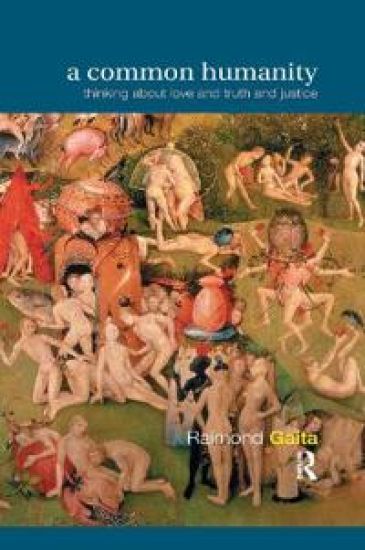
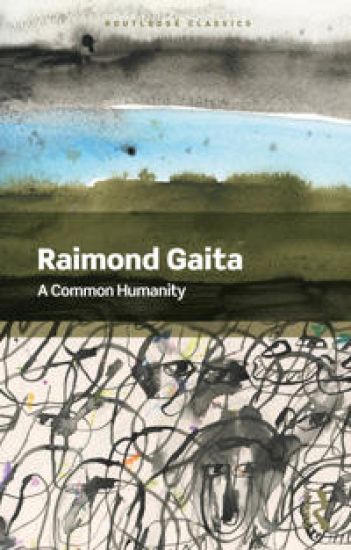
Holocaust denial, racism, genocide of indigenous peoples and the long-lasting harms inflicted by colonialism pose deep challenges to any idea of a common humanity. How can we include these and countless other examples of evil within our vision of a shared morality? These painful human incongruities are precisely what Raimond Gaita boldly harmonizes in A Common Humanity.Hatred with forgiveness, evil with love, suffering with compassion, and the mundane with the precious. Gaita asserts that our conception of humanity cannot be based upon the empty language of individual rights when it is our shared feelings of grief, hope, love, guilt, shame and remorse that offer a more potent foundation for common understanding.Drawing on the work of Hannah Arendt, Simon Weil, Primo Levi and Iris Murdoch, amongst others, Gaita creates a beautifully written and provocative new picture of our common humanity.This Routledge Classics edition includes a new Preface and a substantial Postscript by the author, in which he revisits some of the main themes of A Common Humanity and engages with responses to it since it was first published.
A Common Humanity

A Common Humanity

Raimond Gaita

TAYLOR FRANCIS LTD
2025
nidottu
Holocaust denial, racism, genocide of indigenous peoples and the long-lasting harms inflicted by colonialism pose deep challenges to any idea of a common humanity. How can we include these and countless other examples of evil within our vision of a shared morality? These painful human incongruities are precisely what Raimond Gaita boldly harmonizes in A Common Humanity.Hatred with forgiveness, evil with love, suffering with compassion, and the mundane with the precious. Gaita asserts that our conception of humanity cannot be based upon the empty language of individual rights when it is our shared feelings of grief, hope, love, guilt, shame and remorse that offer a more potent foundation for common understanding.Drawing on the work of Hannah Arendt, Simon Weil, Primo Levi and Iris Murdoch, amongst others, Gaita creates a beautifully written and provocative new picture of our common humanity.This Routledge Classics edition includes a new Preface and a substantial Postscript by the author, in which he revisits some of the main themes of A Common Humanity and engages with responses to it since it was first published.
Justice and Hope

Justice and Hope

Raimond Gaita

MELBOURNE UNIVERSITY PRESS
2024
nidottu
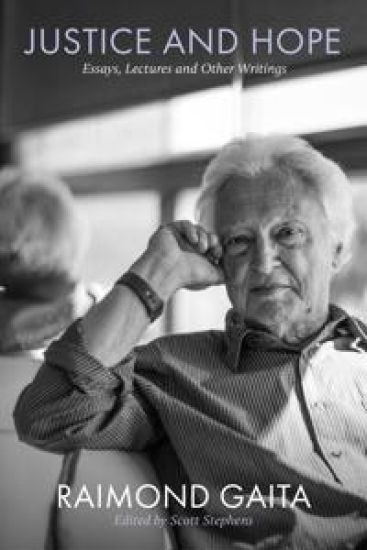
'From where will we draw the moral energy to stay true to justice?' For more than three decades the incomparable voice of Raimond Gaita has been summoning us to new conversations that deepen our understanding of what matters most to human life and awaken the sense of our common humanity. For Gaita, we are never more fully alive than when we are fully present to one another in conversation.In a time when modes of communication tend to superficiality and self-promotion, when political debates are increasingly inured to lies and even violence, and the moral demands of dialogue give way to a torrent of competing monologues, Gaita's invitation to rediscover what genuine conversation requires of us could not be more timely.These collected writings at once invite us into that conversation and enact its severe demands. Gaita asks us to confront the distinctive evil of genocide, to examine the true cost of the 'War on Terror', to interrogate what justice requires in response to Australia's dispossession of its First Peoples, to understand our need for truth in politics, especially during war, to see what is at stake in the decline of the universities, to grasp what was lost during the Black Summer bushfires, and to reckon with the experience of the COVID-19 pandemic-when we learned, he writes, 'how much we needed to touch and hold other people'.Gaita's astonishing range of concerns is held together by the consistency and unrelenting tenderness of his moral vision. To see the world through Gaita's eyes is to discover, once again, what it means to love the world and to remain faithful to it. He tells us that an unconditional love of the world is the deepest form of hope and the truest source of our energies to honour the demands of justice. This is how we learn to be human.
Justice and Hope

Justice and Hope

Raimond Gaita

MELBOURNE UNIVERSITY PRESS
2023
sidottu
'From where will we draw the moral energy to stay true to justice?' For more than three decades the incomparable voice of Raimond Gaita has been summoning us to new conversations that deepen our understanding of what matters most to human life and awaken the sense of our common humanity. For Gaita, we are never more fully alive than when we are fully present to one another in conversation. In a time when modes of communication tend to superficiality and self-promotion, when political debates are increasingly inured to lies and even violence, and the moral demands of dialogue give way to a torrent of competing monologues, Gaita's invitation to rediscover what genuine conversation requires of us could not be more timely. These collected writings at once invite us into that conversation and enact its severe demands. Gaita asks us to confront the distinctive evil of genocide, to examine the true cost of the 'War on Terror', to interrogate what justice requires in response to Australia's dispossession of its First Peoples, to understand our need for truth in politics, especially during war, to see what is at stake in the decline of the universities, to grasp what was lost during the Black Summer bushfires, and to reckon with the experience of the COVID-19 pandemic-when we learned, he writes, 'how much we needed to touch and hold other people'. Gaita's astonishing range of concerns is held together by the consistency and unrelenting tenderness of his moral vision. To see the world through Gaita's eyes is to discover, once again, what it means to love the world and to remain faithful to it. He tells us that an unconditional love of the world is the deepest form of hope and the truest source of our energies to honour the demands of justice. This is how we learn to be human.
The Philosopher's Dog

The Philosopher's Dog

Raimond Gaita

Routledge
2016
nidottu
In this beautifully written book Raimond Gaita tells inspirational, poignant, sometimes funny but never sentimental stories of the dogs, cats and cockatoos that lived and died within his own family. He asks fascinating questions about animals: Is it wrong to attribute the concepts of love, devotion, loyalty, grief or friendship to them? Why do we care so much for some creatures but not for others? Why are we so concerned with proving that animals have minds? Reflecting on these questions, and drawing on the ideas of Descartes, Wittgenstein and J.M. Coetzee, Gaita pleads that we ask ourselves what it means to be creatures of ‘flesh and blood.’ He discusses mortality and sexuality, the relations between storytelling, philosophy and science and the spiritual love of mountains.An arresting and profound book, The Philosopher’s Dog is a triumph of both storytelling and philosophy.This Routledge Classics edition includes a substantial new introduction and afterword by the author.
Good and Evil

Good and Evil

Raimond Gaita

Routledge
2004
nidottu
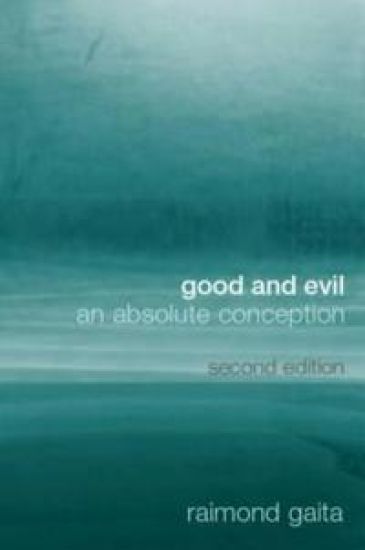
Raimond Gaita's Good and Evil is one of the most important, original and provocative books on the nature of morality to have been published in recent years. It is essential reading for anyone interested in what it means to talk about good and evil. Gaita argues that questions about morality are inseparable from the preciousness of each human being, an issue we can only address if we place the idea of remorse at the centre of moral life. Drawing on an astonishing range of thinkers and writers, including Plato, Wittgenstein, George Orwell and Primo Levi, Gaita also reflects on the place of reason and truth in morality and ultimately how questions about good and evil are connected to the meaning of our lives.This revised edition of Good and Evil includes a substantial new preface and afterword by the author.
Good and Evil

Good and Evil

Raimond Gaita

Routledge
2004
sidottu
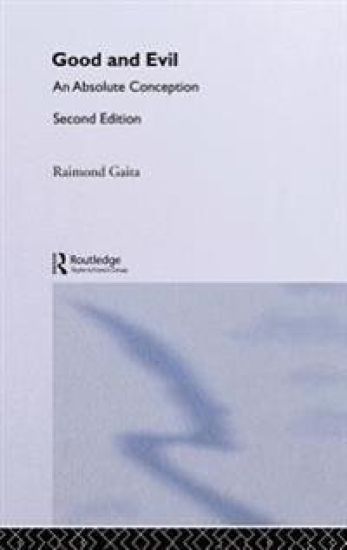
Raimond Gaita's Good and Evil is one of the most important, original and provocative books on the nature of morality to have been published in recent years. It is essential reading for anyone interested in what it means to talk about good and evil. Gaita argues that questions about morality are inseparable from the preciousness of each human being, an issue we can only address if we place the idea of remorse at the centre of moral life. Drawing on an astonishing range of thinkers and writers, including Plato, Wittgenstein, George Orwell and Primo Levi, Gaita also reflects on the place of reason and truth in morality and ultimately how questions about good and evil are connected to the meaning of our lives.This revised edition of Good and Evil includes a substantial new preface and afterword by the author.
A Common Humanity

A Common Humanity

Raimond Gaita

Routledge
2002
nidottu
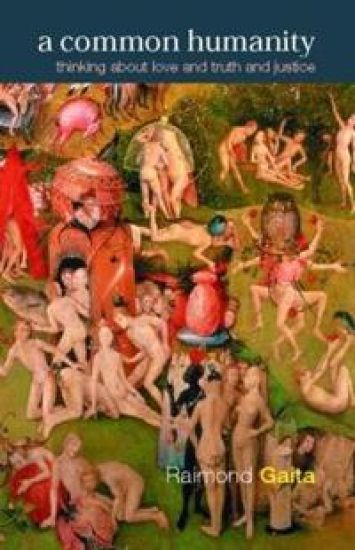
The Holocaust and attempts to deny it, racism, murder, the case of Mary Bell. How can we include these and countless other examples of evil within our vision of a common humanity? These painful human incongruities are precisely what Raimond Gaita boldly harmonizes in his powerful new book, A Common Humanity.Hatred with forgiveness, evil with love, suffering with compassion, and the mundane with the precious. Gaita asserts that our conception of humanity cannot be based upon the empty language of individual rights when it is our shared feelings of grief, hope, love, guilt, shame and remorse that offer a more potent foundation for common understanding. Drawing on the work of Hannah Arendt, Simon Weil, Primo Levi, George Orwell, Iris Murdoch and Sigmund Freud, Gaita creates a beautifully written and provocative new picture of our common humanity.
A Common Humanity

A Common Humanity

Raimond Gaita

Routledge
2000
sidottu
The Holocaust and attempts to deny it, racism, murder, the case of Mary Bell. How can we include these and countless other examples of evil within our vision of a common humanity? These painful human incongruities are precisely what Raimond Gaita boldly harmonizes in his powerful new book, A Common Humanity.Hatred with forgiveness, evil with love, suffering with compassion, and the mundane with the precious. Gaita asserts that our conception of humanity cannot be based upon the empty language of individual rights when it is our shared feelings of grief, hope, love, guilt, shame and remorse that offer a more potent foundation for common understanding. Drawing on the work of Hannah Arendt, Simon Weil, Primo Levi, George Orwell, Iris Murdoch and Sigmund Freud, Gaita creates a beautifully written and provocative new picture of our common humanity.