Kirjojen hintavertailu. Mukana 12 390 323 kirjaa ja 12 kauppaa.

Kirjailija

Raine Waters

Kirjat ja teokset yhdessä paikassa: 4 kirjaa, julkaisuja vuosilta 2019-2025, suosituimpien joukossa We Could Perceive No Sign of Them: Failed Colonies in North America, 1526-1689. Vertaile teosten hintoja ja tarkista saatavuus suomalaisista kirjakaupoista.

4 kirjaa

Kirjojen julkaisuhaarukka 2019-2025.

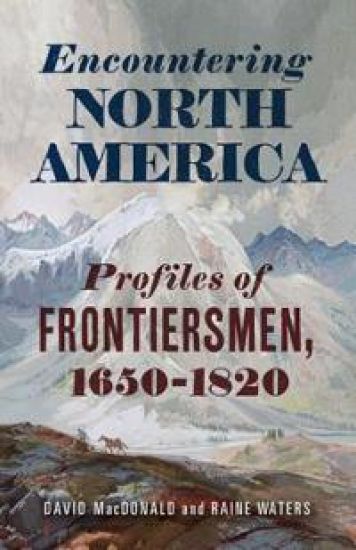
Encountering North America: Profiles of Frontiersmen

Encountering North America: Profiles of Frontiersmen

David MacDonald; Raine Waters

Westholme Publishing
2025
sidottu
How European settlers learned of the vast North American continent was often through the accounts of men who individually or in groups trekked into the wilderness. Their chief motivation was ascertaining or obtaining natural resources for commerce, such as beaver pelts and other hides, which took them from the eastern forests, across the Great Plains, into the Rocky Mountains, or to the Pacific Ocean--years before the celebrated Lewis and Clark Expedition. Their information about Indigenous Peoples, the landscape, and the waterways influenced the course of North American history. While a few frontiersmen, such as Daniel Boone, are well known, most--predominantly Canadian and French--are forgotten, their activities recalled only by scholars. Encountering North America: Profiles of Frontiersmen, 1650-1820 by David MacDonald and Raine Waters presents men whose far-reaching explorations opened the continent to further settlements and trade routes. One was torn between the French and British, while another between Indigenous and white societies. One was Spanish. One was an administrator, a force for order in an unsettled world. Two were certainly homicidal. As with the authors' previous volumes on failed European attempts to colonize both North and South America, each narrative is supported by discursive commentary on the primary source materials available.
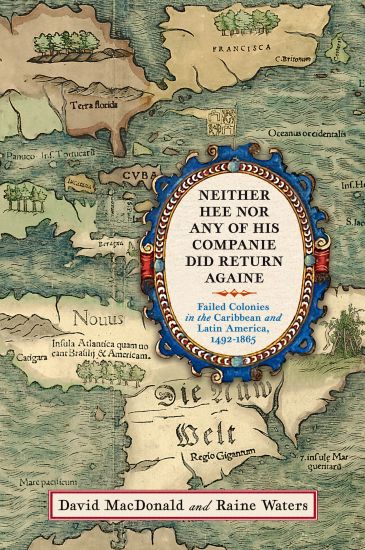
Neither Hee Nor Any of His Companie Did Return Againe: Failed Colonies in the Caribbean and Latin America, 1492-1865
During the sixteenth and seventeenth centuries European powers vied for control of the land and resources in the Caribbean and Latin America. Colonies made Spain rich through gold, silver, and gems looted from the Native cultures, along with rare and exotic goods such as tobacco, sugar, and dyewood, and even humble products such as hides. In rapid turn, other European monarchies and merchants sent out colonizing expeditions to the region to exploit the resources of the New World, but creating permanent footholds was perilous. All European settlements founded in the New World faced a variety of challenges, including food supply, inconsistent support from Europe, leadership, ignorance of the area colonized, irrational expectations, religious discord, relations with Native peoples, and violent national rivalries. Colonies that succeeded and those that failed faced the same challenges, although in differing degrees and circumstances. The margin between survival and disaster was always small--there were few chances to succeed and the risk of failure was never far away. In Neither Hee Nor Any of His Companie Did Return Againe: Failed Colonies in the Caribbean and Latin America, 1492-1865, historians David MacDonald and Raine Waters examine the European, and later American, failures to establish permanent settlements in the region. Beginning with Columbus's ill-conceived ventures, the authors discuss the efforts, from German claims in Venezuela and Scottish attempts in Panama to defeated Confederates fleeing to Mexico, Brazil, and elsewhere. For each colony, the primary source information is contextualized and evaluated. Along the way, the authors determine commonalities across these ill-fated colonies as well as underscore the fact that while Indigenous peoples of the region often vigorously resisted predatory European colonization, their numbers were decimated by relentless warfare, slave raids, and European diseases. As Indian populations declined, colonists imported African slaves in large numbers. The brutal treatment of slaves resulted in those who escaped creating their own settlements that existed in a state of endemic warfare with European colonists. An important contribution to Atlantic World studies, this volume reveals the fine line between colonies that thrived and those that failed.
We Could Perceive No Sign of Them: Failed Colonies in North America, 1526-1689
The Story of the Many Ill-Fated Attempts by Europeans to Create Permanent Settlements in the New World The nations of the modern Americas began as successful colonies, but not all colonies succeeded, and the margin between colonies that survived and those that failed was small. Both contribute to our understanding of the ordeals of the Europeans who first settled in the New World and of the Native Americans who had to interact with them, but with the exception of the famous lost Roanoke colony, the failed colonies of North America remain largely unknown except to specialists in colonial history. The Spanish and French repeatedly attempted to colonize parts of Georgia, Florida, and Virginia, while the Dutch, French, and English sought to establish permanent settlements along the northern waterways of the New World. The greatest problem faced by every colony was the specter of starvation. Native Americans gave food to newly arrived colonists, but such generosity could not endure. Indigenous people soon realized that colonists of every nationality were prepared to make war against Native peoples, conquer, subjugate, and even massacre whole communities unless they were cooperative and offered no resistance to the intrusion into their territory. In response, Native Americans withheld aid or resorted to retaliatory violence, dooming many European settlements. In We Could Perceive No Sign of Them: Failed Colonies in North America, 1526-1689, historians David MacDonald and Raine Waters tell the fascinating stories of the many attempts to establish a European foothold in the New World, from the first Spanish colony in 1526 on the coast of Georgia to the final disastrous French endeavors near the arctic. Using primary source texts, the authors synthesize the shared experiences of Europeans to better understand the very fine line between success and failure and the varieties of Native American responses.
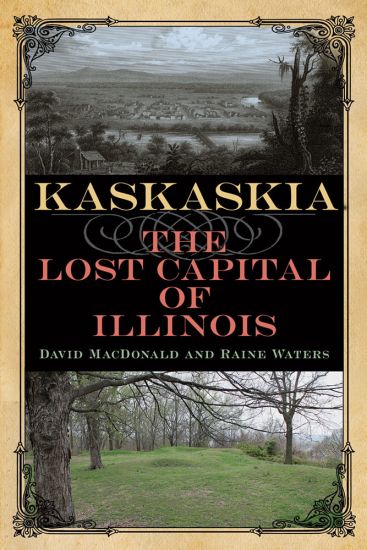
Kaskaskia

Kaskaskia

David MacDonald; Raine Waters

Southern Illinois University Press
2019
nidottu
This first comprehensive account of the Illinois village of Kaskaskia covers more than two hundred years in the vast and compelling history of the state. David MacDonald and Raine Waters explore Illinois’s first capital in great detail, from its foundation in 1703 to its destruction by the Mississippi River in the latter part of the nineteenth century, as well as everything in between: successes, setbacks, and the lives of the people who inhabited the space.At the outset the Kaskaskia tribe, along with Jesuit missionaries and French traders, settled near the confluence of the Kaskaskia and Mississippi rivers, about sixty miles south of modern-day St. Louis. The town quickly became the largest French town and most prosperous settlement in the Illinois Country. After French control ended, Kaskaskia suffered under corrupt British and then inept American rule. In the 1790s the town revived and became the territorial capital, and in 1818 it became the first state capital. Along the way Kaskaskia was beset by disasters: crop failures, earthquakes, tornadoes, floods, epidemics, and the loss of the capital-city title to Vandalia. Likewise, human activity and industry eroded the river’s banks, causing the river to change course and eventually wash away the settlement. All that remains of the state’s first capital today is a village several miles from the original site.MacDonald and Waters focus on the town’s growth, struggles, prosperity, decline, and obliteration, providing an overview of its domestic architecture to reveal how its residents lived. Debunking the notion of a folklore tradition about a curse on the town, the authors instead trace those stories to late nineteenth-century journalistic inventions. The result is a vibrant, heavily illustrated, and highly readable history of Kaskaskia that sheds light on the entire early history of Illinois.