Kirjojen hintavertailu. Mukana 12 595 353 kirjaa ja 12 kauppaa.

Kirjailija

Rainer F. Buschmann

Kirjat ja teokset yhdessä paikassa: 6 kirjaa, julkaisuja vuosilta 2008-2024, suosituimpien joukossa Navigating the Spanish Lake. Vertaile teosten hintoja ja tarkista saatavuus suomalaisista kirjakaupoista.

6 kirjaa

Kirjojen julkaisuhaarukka 2008-2024.

Exploring Iberian Counterpoints in the Eighteenth- and Nineteenth-Century Pacific

Exploring Iberian Counterpoints in the Eighteenth- and Nineteenth-Century Pacific

Rainer F. Buschmann; David Manzano Cosano

TAYLOR FRANCIS LTD
2024
sidottu
Through a number of significant case studies, this volume examines changing Iberian dynamics in the Pacific, bridging the gaps between English and Spanish speaking scholarship to highlight understudied actors and debates in the eighteenth and nineteenth centuries.The book shifts the predominant emphasis on Anglo-American studies and the historical neglect of Iberian endeavors in this ocean by focusing on several episodes that illuminate Spanish engagement in the Pacific. It describes Spain’s treatment of this sea from its discovery to the end of the overseas empire in 1899, becoming the first book to place its analytical focus in the heart of the islands rather than the Pacific Rim. In tracing shifting Spanish positions and policies, the book cautions against making generalities about the distinct histories of Pacific islands and their Indigenous populations, uncovering a much more heterogeneous world than previous research may convey.Exploring Iberian Counterpoints in the Eighteenth and Nineteenth-Century Pacific is the perfect resource for students and researchers of the Iberian world, Hispanic studies, and the Pacific Ocean in early modern and modern eras.
Exploring Iberian Counterpoints in the Eighteenth- and Nineteenth-Century Pacific

Exploring Iberian Counterpoints in the Eighteenth- and Nineteenth-Century Pacific

Rainer F. Buschmann; David Manzano Cosano

TAYLOR FRANCIS LTD
2024
nidottu
Through a number of significant case studies, this volume examines changing Iberian dynamics in the Pacific, bridging the gaps between English and Spanish speaking scholarship to highlight understudied actors and debates in the eighteenth and nineteenth centuries.The book shifts the predominant emphasis on Anglo-American studies and the historical neglect of Iberian endeavors in this ocean by focusing on several episodes that illuminate Spanish engagement in the Pacific. It describes Spain’s treatment of this sea from its discovery to the end of the overseas empire in 1899, becoming the first book to place its analytical focus in the heart of the islands rather than the Pacific Rim. In tracing shifting Spanish positions and policies, the book cautions against making generalities about the distinct histories of Pacific islands and their Indigenous populations, uncovering a much more heterogeneous world than previous research may convey.Exploring Iberian Counterpoints in the Eighteenth and Nineteenth-Century Pacific is the perfect resource for students and researchers of the Iberian world, Hispanic studies, and the Pacific Ocean in early modern and modern eras.
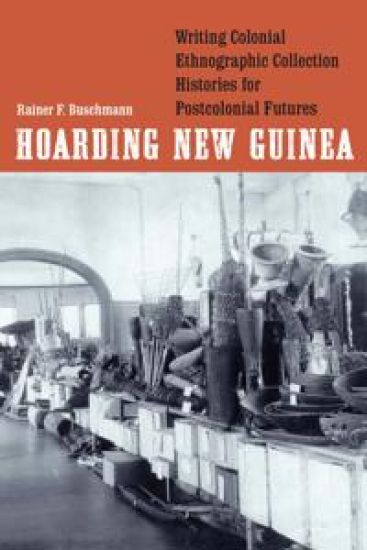
Hoarding New Guinea

Hoarding New Guinea

Rainer F. Buschmann

University of Nebraska Press
2023
sidottu
Hoarding New Guinea provides a new cultural history of colonialism that pays close attention to the millions of Indigenous artifacts that serve as witnesses to Europe’s colonial past in ethnographic museums. Rainer F. Buschmann investigates the roughly two hundred thousand artifacts extracted from the colony of German New Guinea from 1870 to 1920. Reversing the typical trajectories that place ethnographic museums at the center of the analysis, he concludes that museum interests in material culture alone cannot account for the large quantities of extracted artifacts. Buschmann moves beyond the easy definition of artifacts as trophies of colonial defeat or religious conversion, instead employing the term hoarding to describe the irrational amassing of Indigenous artifacts by European colonial residents. Buschmann also highlights Indigenous material culture as a bargaining chip for its producers to engage with the imposed colonial regime. In addition, by centering an area of collection rather than an institution, he opens new areas of investigation that include non-professional ethnographic collectors and a sustained rather than superficial consideration of Indigenous peoples as producers behind the material culture. Hoarding New Guinea answers the call for a more significant historical focus on colonial ethnographic collections in European museums.
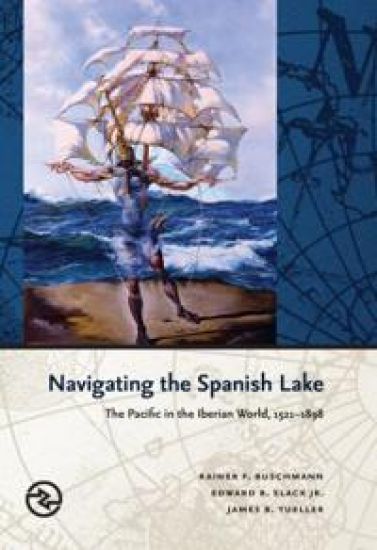
Navigating the Spanish Lake

Navigating the Spanish Lake

Rainer F. Buschmann; Edward R. Slack; James B. Tueller

UNIVERSITY OF HAWAI'I PRESS
2023
nidottu
Navigating the Spanish Lake examines Spain’s long presence in the Pacific Ocean (1521–1898) in the context of its global empire. Building on a growing body of literature on the Atlantic world and indigenous peoples in the Pacific, this pioneering book investigates the historiographical "Spanish Lake" as an artifact that unites the Pacific Rim (the Americas and Asia) and Basin (Oceania) with the Iberian Atlantic. Incorporating an impressive array of unpublished archival materials on Spain’s two most important island possessions (Guam and the Philippines) and foreign policy in the South Sea, the book brings the Pacific into the prevailing Atlanticentric scholarship, challenging many standard interpretations. By examining Castile’s cultural heritage in the Pacific through the lens of archipelagic Hispanization, the authors bring a new comparative methodology to an important field of research.The book opens with a macrohistorical perspective of the conceptual and literal Spanish Lake. The chapters that follow explore both the Iberian vision of the Pacific and indigenous counternarratives; chart the history of a Chinese mestizo regiment that emerged after Britain’s occupation of Manila in 1762-1764; and examine how Chamorros responded to waves of newcomers making their way to Guam from Europe, the Americas, and Asia. An epilogue analyzes the decline of Spanish influence against a backdrop of European and American imperial ambitions and reflects on the legacies of archipelagic Hispanization into the twenty-first century.Specialists and students of Pacific studies, world history, the Spanish colonial era, maritime history, early modern Europe, and Asian studies will welcome Navigating the Spanish Lake as a persuasive reorientation of the Pacific in both Iberian and world history.
Navigating the Spanish Lake

Navigating the Spanish Lake

Rainer F. Buschmann

University of Hawai'i Press
2014
sidottu
Navigating the Spanish Lake examines Spain’s long presence in? the Pacific Ocean (1521–1898) in the context of its global empire. Building on a growing body of literature on the Atlantic world and indigenous peoples in the Pacific, this pioneering book investigates the historiographical “Spanish Lake” as an artifact that unites the Pacific Rim (the Americas and Asia) and Basin (Oceania) with the Iberian Atlantic. Incorporating an impressive array of unpublished archival materials on Spain’s two most important island possessions (Guam and the Philippines) and foreign policy in the South Sea, the book brings the Pacific into the prevailing Atlanticentric scholarship, challenging many standard interpretations. By examining Castile’s cultural heritage in the Pacific through the lens of archipelagic Hispanization, the authors bring a new comparative methodology to an important field of research.The book opens with a macrohistorical perspective of the conceptual and literal Spanish Lake. The chapters that follow explore both the Iberian vision of the Pacific and indigenous counter- narratives; chart the history of a Chinese mestizo regiment that emerged after Britain’s occupation of Manila in 1762–1764; and examine how Chamorros responded to waves of newcomers making their way to Guam from Europe, the Americas, and Asia. An epilogue analyzes the decline of Spanish influence against a back- drop of European and American imperial ambitions and reflects on the legacies of archipelagic Hispanization into the twenty-first century.Specialists and students of Pacific studies, world history,?the Spanish colonial era, maritime history, early modern Europe, and Asian studies will welcome Navigating the Spanish Lake as a persuasive reorientation of the Pacific in both Iberian and world history.
Anthropology's Global Histories

Anthropology's Global Histories

Rainer F. Buschmann

University of Hawai'i Press
2008
sidottu
Anthropologists and world historians make strange bedfellows. Although the latter frequently employ anthropological methods in their descriptions of cross-cultural exchanges, the former have raised substantial reservations about global approaches to history. Fearing loss of specificity, anthropologists object to the effacing qualities of techniques employed by world historians - this despite the fact that anthropology itself was a global, comparative enterprise in the nineteenth century.Rainer Buschmann here seeks to recover some of anthropology's global flavor by viewing its history in Oceania through the notion of the ethnographic frontier - the furthermost limits of the anthropologically known regions of the Pacific. The colony of German New Guinea (1884-1914) presents an ideal example of just such a contact zone. Colonial administrators there were drawn to approaches partially inspired by anthropology. Anthropologists and museum officials exploited this interest by preparing largescale expeditions to German New Guinea.Buschmann explores the resulting interactions between German colonial officials, resident ethnographic collectors, and indigenous peoples, arguing that all were instrumental in the formation of anthropological theory. He shows how changes in collecting aims and methods helped shift ethnographic study away from its focus on material artifacts to a broader consideration of indigenous culture. He also shows how ethnological collecting, often a competitive affair, could become politicized and connect to national concerns. Finally, he places the German experience in the broader context of Euro-American anthropology.""Anthropology's Global Histories"" will interest students and scholars of anthropology, history, world history, and Pacific studies.