Kirjojen hintavertailu. Mukana 12 595 353 kirjaa ja 12 kauppaa.

Kirjailija

Rainer Schnell

Kirjat ja teokset yhdessä paikassa: 6 kirjaa, julkaisuja vuosilta 1994-2023, suosituimpien joukossa Graphisch Gestützte Datenanalyse. Vertaile teosten hintoja ja tarkista saatavuus suomalaisista kirjakaupoista.

6 kirjaa

Kirjojen julkaisuhaarukka 1994-2023.

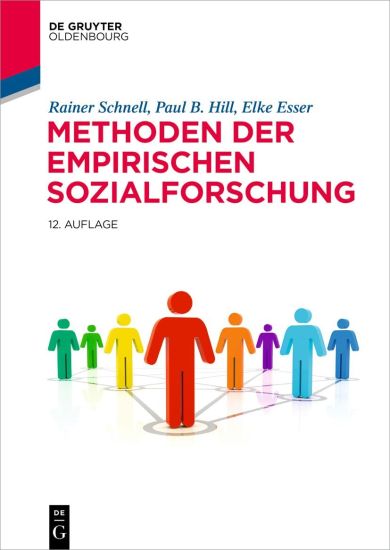
Methoden der empirischen Sozialforschung

Methoden der empirischen Sozialforschung

Rainer Schnell; Paul B Hill; Elke Esser

de Gruyter Oldenbourg
2023
sidottu
Dieser Bestseller mit ber 80.000 verkauften Exemplaren bietet verst ndliche und detaillierte Erkl rungen der Methoden der empirischen Sozialforschung. Es werden nicht nur einzelne Verfahren vorgestellt, sondern auch die theoretischen Grundlagen und praktischen Probleme bei der Durchf hrung erl utert. Die kritische Darstellung auch der neueren Entwicklungen der Methoden und Techniken der empirischen Sozialforschung weist ber andere Lehrb cher hinaus. Auch daher ist das Buch das am h ufi gsten zitierte Lehrbuch zum Thema in deutscher Sprache.F r die durchgehend aktualisierte 12. Aufl age wurde der Band u.a. um Abschnitte zu Anwendungen des Rasch-Modells wie den PISA-Studien, zu Websurveys, Effektst rkema en, zur Literatursuche sowie zu Replikationsstudien erweitert.
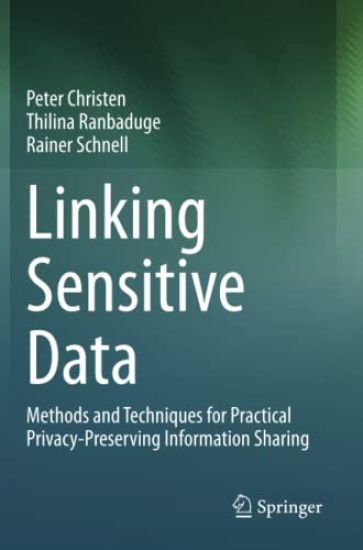
Linking Sensitive Data

Linking Sensitive Data

Peter Christen; Thilina Ranbaduge; Rainer Schnell

Springer Nature Switzerland AG
2021
nidottu
This book provides modern technical answers to the legal requirements of pseudonymisation as recommended by privacy legislation. It covers topics such as modern regulatory frameworks for sharing and linking sensitive information, concepts and algorithms for privacy-preserving record linkage and their computational aspects, practical considerations such as dealing with dirty and missing data, as well as privacy, risk, and performance assessment measures. Existing techniques for privacy-preserving record linkage are evaluated empirically and real-world application examples that scale to population sizes are described. The book also includes pointers to freely available software tools, benchmark data sets, and tools to generate synthetic data that can be used to test and evaluate linkage techniques. This book consists of fourteen chapters grouped into four parts, and two appendices. The first part introduces the reader to the topic of linking sensitive data, the second part coversmethods and techniques to link such data, the third part discusses aspects of practical importance, and the fourth part provides an outlook of future challenges and open research problems relevant to linking sensitive databases. The appendices provide pointers and describe freely available, open-source software systems that allow the linkage of sensitive data, and provide further details about the evaluations presented. A companion Web site at https://dmm.anu.edu.au/lsdbook2020 provides additional material and Python programs used in the book. This book is mainly written for applied scientists, researchers, and advanced practitioners in governments, industry, and universities who are concerned with developing, implementing, and deploying systems and tools to share sensitive information in administrative, commercial, or medical databases.The Book describes how linkage methods work and how to evaluate their performance. It covers all the major concepts and methods and also discusses practical matters such as computational efficiency, which are critical if the methods are to be used in practice - and it does all this in a highly accessible way!David J. Hand, Imperial College, London
Linking Sensitive Data

Linking Sensitive Data

Peter Christen; Thilina Ranbaduge; Rainer Schnell

Springer Nature Switzerland AG
2020
sidottu
This book provides modern technical answers to the legal requirements of pseudonymisation as recommended by privacy legislation. It covers topics such as modern regulatory frameworks for sharing and linking sensitive information, concepts and algorithms for privacy-preserving record linkage and their computational aspects, practical considerations such as dealing with dirty and missing data, as well as privacy, risk, and performance assessment measures. Existing techniques for privacy-preserving record linkage are evaluated empirically and real-world application examples that scale to population sizes are described. The book also includes pointers to freely available software tools, benchmark data sets, and tools to generate synthetic data that can be used to test and evaluate linkage techniques. This book consists of fourteen chapters grouped into four parts, and two appendices. The first part introduces the reader to the topic of linking sensitive data, the second part coversmethods and techniques to link such data, the third part discusses aspects of practical importance, and the fourth part provides an outlook of future challenges and open research problems relevant to linking sensitive databases. The appendices provide pointers and describe freely available, open-source software systems that allow the linkage of sensitive data, and provide further details about the evaluations presented. A companion Web site at https://dmm.anu.edu.au/lsdbook2020 provides additional material and Python programs used in the book. This book is mainly written for applied scientists, researchers, and advanced practitioners in governments, industry, and universities who are concerned with developing, implementing, and deploying systems and tools to share sensitive information in administrative, commercial, or medical databases.The Book describes how linkage methods work and how to evaluate their performance. It covers all the major concepts and methods and also discusses practical matters such as computational efficiency, which are critical if the methods are to be used in practice - and it does all this in a highly accessible way!David J. Hand, Imperial College, London
Survey-Interviews

Survey-Interviews

Rainer Schnell

Springer vs
2019
nidottu
Dieses Lehrbuch gibt detaillierte Hinweise für die Durchführung standardisierter Befragungen, vor allem der allgemeinen Bevölkerung. Es behandelt Probleme der Frageformulierung und des Antwortverhaltens sowie insbesondere der Fragebogenkonstruktion und der Durchführung von Pretests. Für alle Formen standardisierter Interviews (schriftlich, mündlich, telefonisch, per Internet) werden die jeweiligen Besonderheiten der Befragungsinstrumente, der Stichprobenverfahren und der Durchführung praxisnah erläutert. Hierbei werden vor allem Nonresponse-Probleme ausführlich diskutiert und Möglichkeiten zu ihrer Vermeidung aufgezeigt. Im deutschen Sprachraum ist dieses Lehrbuch die einzige Darstellung des Forschungsstandes zu allen Bereichen der Survey-Methodologie. Für Studierende und Forschende, die Surveymethoden anwenden oder weiterentwickeln, ist dieses Buch eine unverzichtbare Arbeitsgrundlage. Für die zweite Auflage wurden alle empirischen Ergebnisse dem neuesten Stand der Forschung entsprechend aktualisiert. Die veränderte Datenschutzgesetzgebung wurde ebenso berücksichtigt wie neuere Feldmanagementprozeduren. Entsprechend gibt es neue Abschnitte über adaptive Designs, die Verbindung administrativer Daten mit Befragungsergebnissen und zum Nonresponse. Das Kapitel über Internetsurveys wurde um eine ausführliche Darstellung von Selektionseffekten erweitert. Zahlreiche Beispiele wurden gegen neue Anwendungen ausgetauscht und die gesamte Literatur aktualisiert. Insgesamt wurde das Buch um mehr als 30 Seiten erweitert.Der Autor:Prof. Dr. Rainer Schnell ist Inhaber des Lehrstuhls für Empirische Sozialforschung an der Universität Duisburg-Essen. Zuvor war er unter anderem Direktor des Centre for Comparative Surveys an der City University London sowie langjähriger Herausgeber der Zeitschrift Survey Research Methods der European Association for Survey Research.
Graphisch Gestützte Datenanalyse

Graphisch Gestützte Datenanalyse

Rainer Schnell

Walter de Gruyter
1994
sidottu
Der "Schnell" behandelt Techniken zur graphischen Darstellung von Daten oder statistischer Grosse im Rahmen von Datenanalysen. Diese "Datenanalysegraphik" ist ein nutzliches Instrument fur Datenanalytiker, hier wiederum bevorzugt solche in den Sozialwissenschaften."