Kirjojen hintavertailu. Mukana 12 204 455 kirjaa ja 12 kauppaa.

Kirjailija

Rajesh Kumar

Kirjat ja teokset yhdessä paikassa: 234 kirjaa, julkaisuja vuosilta 2005-2026, suosituimpien joukossa Agricultural Statistics. Vertaile teosten hintoja ja tarkista saatavuus suomalaisista kirjakaupoista.

234 kirjaa

Kirjojen julkaisuhaarukka 2005-2026.

The Syntax of Negation and the Licensing of Negative Polarity Items in Hindi
This books studies syntax of NPIs and their interaction with sentential negatives in Hindi. It outlines the clause structure of Hindi and locates the syntactic position of sentential negatives as well as constituent negatives within the structure. It is argued that sentential negative in Hindi negation marker heads its own maximal projection, NegP, which is immediately dominated by TP. In addition to locating the position of negation markers in the clause structure, it outlines the distribution of negative polarity items (NPIs) in Hindi and the structural constraints on their licensing by sentential negative. The book argues that an NPI in Hindi is licensed overtly in the course of derivation by a c-commanding negative marker. The bulk of the evidence presented in this book argues against previous theoretical accounts that claim that NPI licensing involves covert syntactic operations such as LF movement or reconstruction. With respect to the classification of NPIs , this book also shows the existence of two different types of NPIs in Hindi; namely, strong NPIs and weak NPIs. Strong NPIs require a clause mate c-commanding negative licensor, whereas weak NPIs are quantifiers and are similar to free choice 'any' in English that are interpreted as NPIs in the presence of a c-commanding negative licensor.

Strategies of Banks and Other Financial Institutions
How and why do strategic perspectives of financial institutions differ by class and region? Strategies of Banks and Other Financial Institutions: Theories and Cases is an introduction to global financial institutions that presents both theoretical and actual aspects of markets and institutions. The book encompasses depository and non-depository Institutions; money markets, bond markets, and mortgage markets; stock markets, derivative markets, and foreign exchange markets; mutual funds, insurance, and pension funds; and private equity and hedge funds. It also addresses Islamic financing and consolidation in financial institutions and markets. Featuring up-to-date case studies in its second half, Strategies of Banks and Other Financial Institutions proposes a useful theoretical framework and strategic perspectives about risk, regulation, markets, and challenges driving the financial sectors.
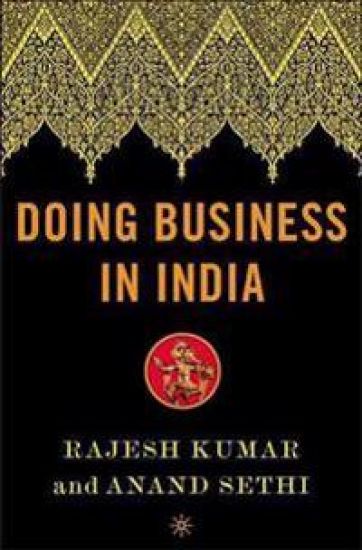
Doing Business in India

Doing Business in India

Rajesh Kumar; A. Sethi

Palgrave Macmillan
2012
nidottu
The aim of this book is to analyze the nature of European and North American firms' business experience in India with a particular emphasis on understanding the causes of their successes and failure. Part of this is due to the fact that although India resembles the West in some ways, the institutional environment is radically different from that of Euro-American societies. Differences in culture, politics, the economy, and business structure all make it difficult for a Western manager to act accordingly. This book strives to offer Western managers the knowledge they will need to succeed in business in India.
Fundamentals of Ornamental Horticulture and Landscape Gardening

Fundamentals of Ornamental Horticulture and Landscape Gardening

Ajai Kumar Tiwari; Rajesh Kumar

New India Publishing Agency
2012
sidottu
Ornamental Horticulture is a subfield of Horticulture that focuses on the commercial cultivation of flowers, ornamental plants, and the enhancement of surroundings. This field plays a significant role in enhancing the overall environment and reducing visual pollution through beautification efforts. Poets and artists have long celebrated the beauty and therapeutic properties of flowers.The study of Ornamental Horticulture encompasses two main aspects: the cultivation of plants such as annuals, shrubs, climbers, trees, bulbous plants, succulents, cacti, shade-loving plants, and lawns, as well as their application in beautification programs. However, information on these topics is scattered across various books, making it difficult for students, landscapers, and scientists to access. Therefore, there is a growing demand for a comprehensive textbook on the introduction, cultivation, and management of ornamental plants in India, particularly among Horticulture students and florists.This book provides a comprehensive overview of the collection, identification, propagation, cultivation, nutritional and weed management, and senescence management of annuals, herbs, shrubs, climbers, and ornamental trees. As beautification involves the principles of art and gardening styles, the book also covers bioaesthetic planning, the basics of landscaping, and flower arrangement in detail. The subject matter is presented in a simple and clear manner to ensure easy understanding. The book includes the latest information available and features illustrations drawn from the authors own specimens, along with photographs.
Fundamentals of Ornamental Horticulture and Landscape Gardening

Fundamentals of Ornamental Horticulture and Landscape Gardening

Ajai Kumar Tiwari; Rajesh Kumar

New India Publishing Agency
2012
nidottu
Ornamental Horticulture is a specialized branch of horticulture that deals with the commercial cultivation of ornamental plants and the enhancement of the aesthetic appeal of the surrounding environment. It plays a crucial role in improving the overall environment and combating visual pollution through the use of ornamental plants. Flowers, in particular, have been admired by poets and artists for generations not only for their beauty but also for their medicinal properties.The study of ornamental horticulture encompasses two aspects: the cultivation of a wide variety of plants, including annuals, shrubs, climbers, trees, bulbous plants, succulents, cacti, shade-loving plants, and lawns, and their application in beautification programs. However, information on these topics is scattered across different books, making it difficult for students, landscape designers, and scientists to access. Therefore, there is a pressing need for a comprehensive book on the introduction, cultivation, and management of ornamental plants that can meet the demands of horticulture students and florists in India.This book provides a comprehensive guide to the collection, identification, propagation, cultivation, nutritional management, weed control, and plant and flower senescence management of annuals, herbs, shrubs, climbers, and ornamental trees. In addition to these topics, the book also covers bio-aesthetic planning, the basics of landscape design, and flower arrangement. The content is presented in a simple and clear style to make it easily accessible to readers. The book includes the latest available information, and the illustrations have been created using specimens and photographs.
Global Trends in Health & Medical Tourism
Offers an introductory overview of health and medical tourism, besides dental tourism. This book discusses the identification of related destinations, the involved risks and rewards with respect to medical travel. It provides reflections on growth of medical tourism worldwide with an Indian perspective.
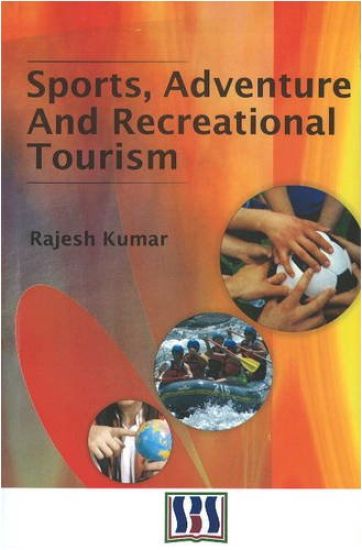
Sports, Adventure & Recreational Tourism

Sports, Adventure & Recreational Tourism

Rajesh Kumar

SBS Publishers
2009
nidottu
Sports Tourism is defined as any activity in which people are attracted to a particular centre as an event participant, an event spectator, or to attend sports attractions and business meetings. This book provides readers with an introduction to tourism, sport, adventure, recreation and sports tourism.
Doing Business in India

Doing Business in India

Rajesh Kumar; A. Sethi

Palgrave Macmillan
2005
sidottu
The aim of this book is to analyze the nature of European and North American firms' business experience in India with a particular emphasis on understanding the causes of their successes and failure. Part of this is due to the fact that although India resembles the West in some ways, the institutional environment is radically different from that of Euro-American societies. Differences in culture, politics, the economy, and business structure all make it difficult for a Western manager to act accordingly. This book strives to offer Western managers the knowledge they will need to succeed in business in India.