Kirjojen hintavertailu. Mukana 12 595 353 kirjaa ja 12 kauppaa.

Kirjailija

Ralph A. Litzinger

Kirjat ja teokset yhdessä paikassa: 4 kirjaa, julkaisuja vuosilta 2000-2014, suosituimpien joukossa Mapping Shangrila. Vertaile teosten hintoja ja tarkista saatavuus suomalaisista kirjakaupoista.

4 kirjaa

Kirjojen julkaisuhaarukka 2000-2014.

Mapping Shangrila

Mapping Shangrila

Stevan Harrell; Ralph A. Litzinger

University of Washington Press
2014
sidottu
Open-access edition: DOI 10.6069/9780295805023In 2001 the Chinese government announced that the precise location of Shangrila—a place that previously had existed only in fiction—had been identified in Zhongdian County, Yunnan. Since then, Sino-Tibetan borderlands in Yunnan, Sichuan, Gansu, Qinghai, and the Tibet Autonomous Region have been the sites of numerous state projects of tourism development and nature conservation, which have in turn attracted throngs of backpackers, environmentalists, and entrepreneurs who seek to experience, protect, and profit from the region's landscapes.Mapping Shangrila advances a view of landscapes as media of governance, representation, and resistance, examining how they are reshaping cultural economies, political ecologies of resource use, subjectivities, and interethnic relations. Chapters illuminate topics such as the role of Han and Tibetan literary representations of border landscapes in the formation of ethnic identities; the remaking of Chinese national geographic imaginaries through tourism in the Yading Nature Reserve; the role of The Nature Conservancy and other transnational environmental organizations in struggles over culture and environmental governance; the way in which matsutake mushroom and caterpillar fungus commodity chains are reshaping montane landscapes; and contestations over the changing roles of mountain deities and their mediums as both interact with increasingly intensive nature conservation and state-sponsored capitalism.

Mapping Shangrila

Mapping Shangrila

Stevan Harrell; Ralph A. Litzinger

University of Washington Press
2014
pokkari
Open-access edition: DOI 10.6069/9780295805023In 2001 the Chinese government announced that the precise location of Shangrila—a place that previously had existed only in fiction—had been identified in Zhongdian County, Yunnan. Since then, Sino-Tibetan borderlands in Yunnan, Sichuan, Gansu, Qinghai, and the Tibet Autonomous Region have been the sites of numerous state projects of tourism development and nature conservation, which have in turn attracted throngs of backpackers, environmentalists, and entrepreneurs who seek to experience, protect, and profit from the region's landscapes.Mapping Shangrila advances a view of landscapes as media of governance, representation, and resistance, examining how they are reshaping cultural economies, political ecologies of resource use, subjectivities, and interethnic relations. Chapters illuminate topics such as the role of Han and Tibetan literary representations of border landscapes in the formation of ethnic identities; the remaking of Chinese national geographic imaginaries through tourism in the Yading Nature Reserve; the role of The Nature Conservancy and other transnational environmental organizations in struggles over culture and environmental governance; the way in which matsutake mushroom and caterpillar fungus commodity chains are reshaping montane landscapes; and contestations over the changing roles of mountain deities and their mediums as both interact with increasingly intensive nature conservation and state-sponsored capitalism.
Other Chinas

Other Chinas

Ralph A. Litzinger

Duke University Press
2000
pokkari
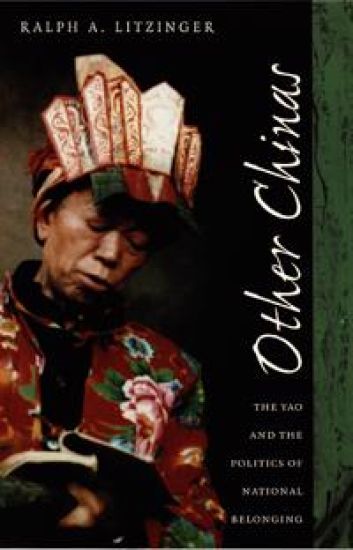
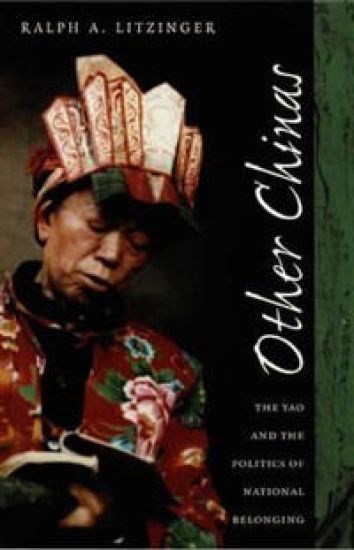
In Other Chinas Ralph A. Litzinger investigates the politics of ethnic identity in postsocialist China. By combining innovative research with extensive fieldwork conducted during the late 1980s and early 1990s in south-central and southwestern China, Litzinger provides a detailed ethnography of the region’s Yao population in order to question how minority groups are represented in China. In particular, he focuses on how elite members of this minority population have represented their own culture, history, and identity to a range of Chinese and Western observers. Litzinger begins by describing how during the Republican period the Yao were considered a dangerous people who preferred to consort with beasts and goblins rather than join in the making of a modern nation. He then compares this to the communist revolutionaries’ view of the Yao as impressive rebels and positive examples of subaltern agency. Litzinger shows how scholars, government workers, communist party officials, and Taoist ritual specialists have influenced the varied depictions of the Yao and, in doing so, he advances a new understanding of both the Yao and the effects of official discourse, written histories, state policy, and practices of minority empowerment. In addition to analyzing issues of ritual practice, social order, morality, and the governance of ethnic populations, Litzinger considers the Yao’s role in the cultural reforms of the 1980s. By distancing his study from romanticized depictions of minorities Litzinger is able to focus on how minority representation, struggle, and agency have influenced the history of the People’s Republic, cultural debates within contemporary Chinese society, and China’s rapidly changing role in the global order. This book will be of interest to Asianists in both anthropology and cultural studies and should appeal more generally to scholars invested in issues of ethnic identity, minority politics, and transnationalism.
Other Chinas

Other Chinas

Ralph A. Litzinger

Duke University Press
2000
sidottu
In Other Chinas Ralph A. Litzinger investigates the politics of ethnic identity in postsocialist China. By combining innovative research with extensive fieldwork conducted during the late 1980s and early 1990s in south-central and southwestern China, Litzinger provides a detailed ethnography of the region’s Yao population in order to question how minority groups are represented in China. In particular, he focuses on how elite members of this minority population have represented their own culture, history, and identity to a range of Chinese and Western observers. Litzinger begins by describing how during the Republican period the Yao were considered a dangerous people who preferred to consort with beasts and goblins rather than join in the making of a modern nation. He then compares this to the communist revolutionaries’ view of the Yao as impressive rebels and positive examples of subaltern agency. Litzinger shows how scholars, government workers, communist party officials, and Taoist ritual specialists have influenced the varied depictions of the Yao and, in doing so, he advances a new understanding of both the Yao and the effects of official discourse, written histories, state policy, and practices of minority empowerment. In addition to analyzing issues of ritual practice, social order, morality, and the governance of ethnic populations, Litzinger considers the Yao’s role in the cultural reforms of the 1980s. By distancing his study from romanticized depictions of minorities Litzinger is able to focus on how minority representation, struggle, and agency have influenced the history of the People’s Republic, cultural debates within contemporary Chinese society, and China’s rapidly changing role in the global order. This book will be of interest to Asianists in both anthropology and cultural studies and should appeal more generally to scholars invested in issues of ethnic identity, minority politics, and transnationalism.