Kirjojen hintavertailu. Mukana 12 207 188 kirjaa ja 12 kauppaa.

Kirjailija

Ralph Nader

Kirjat ja teokset yhdessä paikassa: 30 kirjaa, julkaisuja vuosilta 1993-2025, suosituimpien joukossa United States of Distraction. Vertaile teosten hintoja ja tarkista saatavuus suomalaisista kirjakaupoista.

30 kirjaa

Kirjojen julkaisuhaarukka 1993-2025.

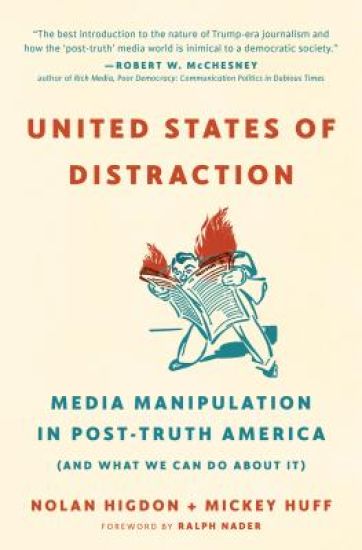
United States of Distraction

United States of Distraction

Mickey Huff; Nolan Higdon; Ralph Nader

City Lights Books
2019
pokkari
A powerful critique of how manipulation of media gives rise to disinformation, intolerance, and divisiveness, and what can be done to change direction."Mickey Huff and Nolan Higdon emphasize what we can do today to restore the power of facts, truth, and fair, inclusive journalism as tools for people to keep political and corporate power subordinate to the engaged citizenry and the common good."—Ralph NaderThe role of news media in a free society is to investigate, inform, and provide a crucial check on political power. But does it?It's no secret that the goal of corporate-owned media is to increase the profits of the few, not to empower the many. As a result, people are increasingly immersed in an information system structured to reinforce their social biases and market to their buying preferences. Journalism’s essential role has been drastically compromised, and Donald Trump’s repeated claims of "fake news" and framing of the media as “an enemy of the people” have made a bad scenario worse.Written in the spirit of resistance and hope, United States of Distraction offers a clear, concise appraisal of our current situation, and presents readers with action items for how to improve it. Praise for United States of Distraction:"A war of distraction is underway, media is the weapon, and our minds are the battlefield. Higdon and Huff have written a brilliant book of how we’ve gotten to this point, and how to educate ourselves to fight back and win."—Henry A. Giroux, author of American Nightmare: Facing the Challenge of Fascism"A timely and urgent demand re-asserting the central importance of civic pursuits—not commercialism—in U.S. media and society."—Ralph Nader"Higdon and Huff have produced the best short introduction to the nature of Trump-era journalism and how the 'Post-Truth' media world is inimical to a democratic society that I have seen. The book is provocative and an entertaining read. Best of all, the analysis in United States of Distraction leads to concrete and do-able recommendations for how we can rectify this deplorable situation."—Robert W. McChesney, author of Rich Media, Poor Democracy: Communication Politics in Dubious Times"The U.S. wouldn't be able to hide its empire in plain sight were it not for the subservient 'free' press. United States of Distraction shows, in chilling detail, America's major media dysfunction—how the gutting of the fourth estate paved the road for fascism and what tools are critical to salvage our democracy."—Abby Martin, The Empire Files"Nolan Higdon and Mickey Huff provides us with a fearless and dangerous text that refuses the post-truth proliferation of fake news, disinformation, and media that serve the interests of the few. This is a vital wake-up call for how the public can protect itself against manipulation and authoritarianism through education and public interest media.”—George Yancy, author of Backlash: What Happens When We Talk Honestly about Racism in America and Professor of Philosophy at Emory University"United States of Distraction challenges our hegemon-media’s ideological mind control and the occupation of human thought. … Huff and Higdon correctly call for mass critical resistance through truth telling by free minds. Power to the people!"—Peter Phillips, author of Giants: The Global Power Elite

Exposed

Exposed

Becky McClain; Ralph Nader

Skyhorse Publishing
2025
sidottu
A powerful memoir of a molecular biologist’s courageous fight against corporate retaliation after revealing dangerous biosafety failures in biotech labs.When molecular biologist Becky McClain raised urgent alarms about biosafety lapses at her biotech lab at Pfizer, she expected concern--not retaliation. Instead, her warnings about dangerous, genetically engineered viruses that were handled without following standard safety protocols were met with hostility, intimidation, and ultimately, devastating illness after a workplace exposure changed her life forever.Exposed is McClain’s riveting memoir of her transformation from dedicated scientist to the nation’s first successful biotech whistleblower. Chronicling her battle against a powerful industry and its culture of secrecy, McClain reveals the high personal cost of speaking out, the legal showdown that rocked Pfizer, and the alarming gaps in biosafety and regulatory oversight that put workers--and the public--at risk.In a post-pandemic world, McClain’s story is more urgent than ever: a wake-up call to the dangers lurking behind laboratory doors, a testament to the power of truth, and a courageous demand for accountability in science. Exposed is not just a personal journey--it’s a public reckoning with the ethical failures and hidden hazards of 21st-century biotechnology.
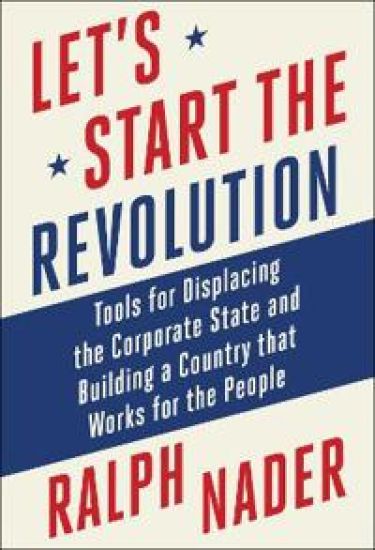
Let's Start the Revolution

Let's Start the Revolution

Ralph Nader

Skyhorse Publishing
2024
sidottu
In his latest eye-opening exploration, political maverick Ralph Nader dissects the astonishing twists and turns of the 2020 presidential election, a race that left the nation on the edge of its seat. Although Joe Biden clinched victory with a substantial popular vote lead, Nader unveils the precarious nature of the outcome, where a mere 100,000 votes in key swing states could have catapulted Donald Trump back to the presidency. In Let's Start the Revolution Nader asks: How did the Democrats, despite winning the 2020 election, find themselves teetering on the edge of defeat? The answers, he finds, lie in the Democratic Party's gradual decline into decrepitude—a self-isolation from blue-collar America, an unhealthy fixation on corporate funding, and an alarming aversion to introspection. Nader argues that the Democrats' abandonment of their base and failure to address critical issues allowed the Republicans to solidify their hold on key states. Let's Start the Revolution exposes the insular nature of the Democratic Party apparatus, adept at fundraising but detached from the grassroots movements that truly define the political landscape. Nader argues that the focus on dollars over principles has eroded the authenticity of the Democratic Party's rhetoric on workers, consumers, and children. Drawing on historical parallels and real-life examples, Nader unearths the pitfalls of relying on political and media consultants who prioritize corporate interests over the needs of the people, isolating candidates from progressive citizen organizations and obstructing crucial, campaign-winning agendas. As Nader dissects the Democratic Party's stagnation, he offers a compelling narrative on its post-2010 decline, exploring the devastating impact of gerrymandering and the loss of over 1000 state legislative seats. The book highlights the party's inability to connect with voters, missing opportunities for meaningful engagement, and perpetuating a cycle of defeat. The Democrats have written off competing in half the country and have ceased to be a true national party. Let's Start the Revolution is not just a critique but a call to action. Nader advocates for a genuine relationship between the Democratic Party and the everyday lives of the people it seeks to represent. Based on his deep understanding of the necessities, anxieties, and dreams of millions of families, Nader charts a path forward—a path that prioritizes authenticity, community engagement, and a relentless pursuit of the common good. In a political landscape marred by a "divide and rule" polarization emanating from the power struggle between the major parties, this book serves as a vital roadmap for revitalizing democracy, empowering all citizens, and steering the Democratic Party away from cronyism and complacency. Ralph Nader's latest work is a rallying cry for those who believe in the power of the people to arouse the heart of American democracy.
Out of Darkness

Out of Darkness

Ralph Nader

SEVEN STORIES PRESS,U.S.
2024
nidottu
A collection of columns and essays that reveal Ralph Nader at his outspoken and prescient best, fighting the good fight against corporate corruption, unbalanced political power, consumer dangers, big pharma, and climate deniers. Features an introduction by Lewis Lapham. This collection is classic Nader--exhorting us to make our world and nation a better place, even when faced with unchecked political and corporate power, and perverse market and regulatory incentives. He starts with the declaration that the national Democratic Party bureaucrats are either inept or bewildered. With its record-setting campaign fundraising, he bemoans how the Party can't seem to figure out how to go on the offensive against the overtly lying, cruel, corrupt, law-breaking, Wall Street over Main Street, Trumpian Republican Party. In another essay he praises Canada, explaining that the majority of citizens love their health care system--Medicare-for-all, free choice of doctor and hospital, everybody in, nobody out and far less expensive with better outcomes overall. Highlighting heroes like Pete Seeger, Wendell Berry, the journalist Helen Thomas, Nader also celebrates citizens like the lesser-known charismatic George S. Hawkins, general manager of the District of Columbia Water and Sewer Authority who brought immense energy, vision, and ambitious, overdue plans to the forefront for American's public drinking water. Meanwhile, he doesn't shy away from enemies--for example Nader slams the evils of Big Pharma's strength and hold over Congress and infinite greed. Nader also brings American history to the present day with creative twists. "We need to remember Ben Franklin, our frugal forebear, who coined the phrase 'a penny saved is a penny earned, '" he writes. "Today he would say 'a trillion BTUs saved is a trillion BTUs earned.'" Ranging from hernia repair to auto safety reports and warnings about lethal super-bugs and global pandemics from 2013, Nader's essays and newspaper columns will inform and activate his legions of fans.
The Rebellious Ceo

The Rebellious Ceo

Ralph Nader

Melville House Publishing
2023
sidottu
One of corporate America's greatest foes shows how 12 CEOs he has known uniquely rejected narrow yardsticks of shareholder value by leading companies to larger models of prosperity and justice Over the course of 7 decades Ralph Nader has been Corporate America's fiercest critic. Supreme Court Justice William Powell singled out Nader in his infamous memo as the "single most effective antagonist of American business... the] target of his hatred... is corporate power." But now, in a book that will surprise both his fans and critics, Nader profiles a small group of CEOS who he believes performed extraordinarily well as business leaders and civic reformers, some well-known, some not, who should be celebrated as exceptions whose life and career should be a course of emulation and inspiration for students of business, executives and the wider citizenry. This select group of mavericks and iconoclasts -- which includes The Body Shop's Anita Roddick, Patagonia's Yvon Chouinard, Vanguard's John Bogle and Busboys and Poets' Andy Shallal --give us, Nader writes, "a sense of what might have been and what still could be if business were rigorously framed as a process that was not only about making money and selling things but improving our social and natural world."
How We Can Save Sports

How We Can Save Sports

Ken Reed; Ralph Nader

BLOOMSBURY PUBLISHING PLC
2023
nidottu
Many sports fans are conflicted—they may love the games, the players, and their communities, but they are often alarmed by issues such as academic corruption, athlete health, and the overarching emphasis on winning and profit. In How We Can Save Sports: A Game Plan, with a New Introduction, Ken Reed argues that much of our sports culture is broken, driven by ego and greed. Written to inform and empower those who care deeply about the impact of sports on individuals and society as a whole, Reed introduces readers to the most pressing problems in sports and shows how they largely derive from the mentalities of profit-at-all-costs and win-at-all-costs. Chapters dig into issues such as concussions, overzealous adults in youth sports, the disappearance of PE from many school curriculums, the focus on profit in college athletics, discrimination in sports, and more. With a new introduction to bring this perennial topic up to the present, and featuring helpful resources and practical solutions for readers interested in change at all levels, How We Can Save Sports is an invaluable tool for addressing the many challenges in sports today.
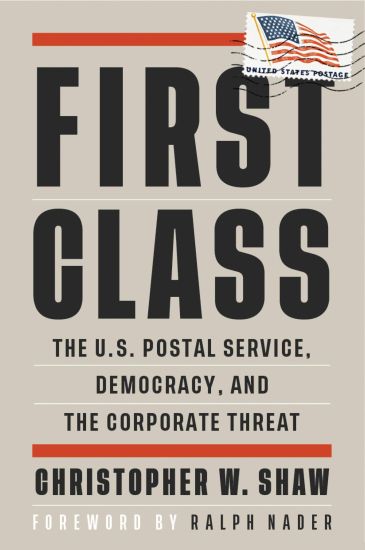
First Class

First Class

Christopher W. Shaw; Ralph Nader

City Lights Books
2021
pokkari
Investigating the essential role that the postal system plays in American democracy and how the corporate sector has attempted to destroy it."With First Class: The U.S. Postal Service, Democracy, and the Corporate Threat, Christopher Shaw makes a brilliant case for polishing the USPS up and letting it shine in the 21st century."—John Nichols, national affairs correspondent for The Nation and author of Coronavirus Criminals and Pandemic Profiteers: Accountability for Those Who Caused the Crisis"First Class is essential reading for all postal workers and for our allies who seek to defend and strengthen our public Postal Service."—Mark Dimondstein, President, American Postal Workers Union, AFL-CIOThe fight over the future of the U.S. Postal Service is on. For years, corporate interests and political ideologues have pushed to remake the USPS, turning it from a public institution into a private business—and now, with mail-in voting playing a key role in local, state, and federal elections, the attacks have escalated. Leadership at the USPS has been handed over to special interests whose plan for the future includes higher postage costs, slower delivery times, and fewer post offices, policies that will inevitably weaken this invaluable public service and source of employment.Despite the general shift to digital communication, the vast majority of the American people—and small businesses—still rely heavily on the U.S. postal system, and many are rallying to defend it. First Class brings readers to the front lines of the struggle, explaining the various forces at work for and against a strong postal system, and presenting reasonable ideas for strengthening and expanding its capacity, services, and workforce. Emphasizing the essential role the USPS has played ever since Benjamin Franklin served as our first Postmaster General, author Christopher Shaw warns of the consequences for the country—and for our democracy—if we don’t win this fight.Praise for First Class:"Piece by piece, an essential national infrastructure is being dismantled without our consent. Shaw makes an eloquent case for why the post office is worth saving and why, for the sake of American democracy, it must be saved."—Steve Hutkins, founder/editor of Save the Post Office and Professor of English at New York University"The USPS is essential for a democratic American society; thank goodness we have this new book from Christopher W. Shaw explaining why."—Danny Caine, author of Save the USPS and owner of the Raven Book Store, Lawrence, KS"Shaw's excellent analysis of the Postal Service and its vital role in American Democracy couldn't be more timely. … First Class should serve as a clarion call for Americans to halt the dismantling and to, instead, preserve and enhance the institution that can bind the nation together."—Ruth Y. Goldway, Retired Chair and Commissioner, U.S. Postal Regulatory Commission, responsible for the Forever Stamps"In a time of community fracture and corporate predation, Shaw argues, a first-class post office of the future can bring communities together and offer exploitation-free banking and other services."—Robert Weissman, president of Public Citizen
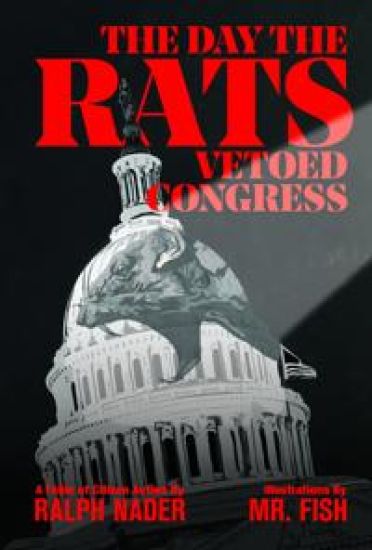
The Day The Rats Vetoed Congress

The Day The Rats Vetoed Congress

Ralph Nader

Fantagraphics
2020
sidottu
When a reporter breaks the news that "Rats have invaded the toilet bowls" of the halls of Congress, it sparks a national frenzy. Activists see the rats upending "business as usual," and turn the invasion into a symbol against the lobbyists who hold Congress in their sway. A massive citizen uprising follows, which threatens to sweep Congress clean of Wall Street's chokehold of corruption -- but the corporate titans have ways of fighting back Gleefully and generously illustrated by famed political cartoonist Mr. Fish, and more than just a story, this is a "how to" guide to effect political change -- from a pied piper who's done it time and time again.
Animal Envy

Animal Envy

Ralph Nader

Seven Stories Press,U.S.
2016
sidottu
Ralph Nader's newest work of the imagination, Animal Envy, is a fable about the kinds of intelligences that are all around us in other animals. What would animals tell us--about themselves, about us--if there were a common language among all animal species? A bracingly simple idea, one that has been used before in books like George Orwell's Animal Farm and E. B. White's Charlotte's Web among others, but never like this. In Animal Envy, Ralph Nader proposes, quite plausibly, that a programmer has created a "digital translation" app whereby animals of different species, from insects to whales, can speak to one another, and through a "hyper-advanced converter" these animals can then also speak, both collectively and individually, to humans. It is decided that there will be a global assembly. It will be called "The Great Talkout." Humans are persuaded to reserve 100 hours of network coverage so The Great Talkout may begin and will be viewed by humans everywhere, in all human languages, as well as all animal languages. The narrative that ensues is deeply felt and powerfully informed. Just as he did when he wrote Only the Super-Rich Can Save Us, Nader shows here that his visionary genius knows no limits.
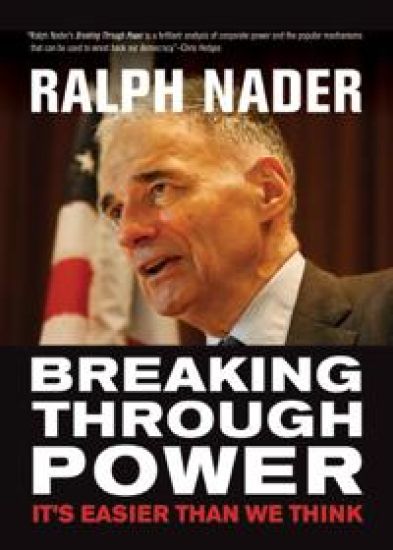
Breaking Through Power

Breaking Through Power

Ralph Nader

City Lights Books
2016
pokkari
"Nader's assessment of how concentrated wealth and power undermine democracy is clear and compelling, but it's his substantive vision of how we ought to respond that makes Breaking Through Power essential reading. Written just before Donald Trump's Electoral College victory, Nader's latest book reads with even greater urgency now."--Yes Magazine In Breaking Through Power, Ralph Nader draws from a lifetime waging--and often winning--David vs. Goliath battles against big corporations and the United States government. In this succinct, Tom Paine-style wake-up call, the iconic consumer advocate highlights the success stories of fellow Americans who organize change and work together to derail the many ways in which wealth manipulates politics, labor, media, the environment, and the quality of national life today. Nader makes an inspired case about how the nation can--and must--be democratically managed by communities guided by the United States Constitution, not by the dictates of big businesses and the wealthy few. This is classic Ralph Nader, a crystallization of the core political beliefs and commitments that have driven his lifetime of advocacy for greater democracy. "Ralph Nader is the grand progressive of our time. We overlook his words at our own peril! This book is required reading."--Cornel West "Ralph Nader's Breaking Through Power is a brilliant analysis of corporate power and the popular mechanisms that can be used to wrest back our democracy. No one has been fighting corporate domination longer, or understands it better, than Nader, who will go down in history not only as a prophet but an example of what it means to live the moral life. We disregard his wisdom and his courage at our peril."--Chris Hedges, Pulitzer-Prize winner and author of Wages of Rebellion: The Moral Imperative of Revolt "Nader goes beyond delineating the problem and provides a critical prescription to battle the toxicity of unjust power--one that every individual can, and must, embrace."--Nomi Prins, author, All the Presidents' Bankers "People are recognizing that our founding, fundamental values of fairness, justice, and opportunity for all--the very values that define our America--are being shoved aside to create an un-America of plutocracy and autocracy. Ralph Nader's new book Breaking Through Power provides progressive boat-rockers with inspiration and a plan for reclaiming America from the greedy Plutocrats and Fat Cats who think democracy is for sale to the highest bidder."--Jim Hightower "I read Ralph Nader for the same reasons that I read Tom Paine. He knows what he thinks, says what he means, and his courage is a lesson for us all."--Lewis Lapham "Nader insists on speaking up for the little people and backs his arguments and decent sentiments with hard facts."--Publishers Weekly About Ralph Nader: Named by The Atlantic as one of the hundred most influential figures in American history, and by Time and Life magazines as one of the most influential Americans of the twentieth century, Ralph Nader has helped us drive safer cars, eat healthier food, breathe better air, drink cleaner water, and work in safer environments for more than four decades. Nader's recent books include Animal Envy, Unstoppable, The Good Fight, and the bestseller, Seventeen Traditions. Nader writes a syndicated column, has his own radio show, and gives lectures and interviews year round.
Unstoppable

Unstoppable

Ralph Nader

Nation Books
2015
pokkari
Ralph Nader has fought for over fifty years on behalf of American citizens against the reckless influence of corporations and their government patrons on our society. In Unstoppable , he ramps up the fight and shows how Left-Right coalitions can prevail over the corporate state and crony capitalism.Nader reveals the many surprising victories won by united progressive and conservative forces throughout history and up to the present. As a participator in, and keen observer of, these budding alliances, he breaks new ground by showing how such coalitions can overcome specific obstacles that divide them, and how they can expand their power.
Return To Sender

Return To Sender

Ralph Nader

Seven Stories Press,U.S.
2015
sidottu
In letters addressed to Presidents George Bush and Barack Obama, Ralph Nader provides incisive critiques of more than a decade of American policy decision and indecision. Each letter offers frank advice and shines light on government mishaps and missed opportunities for progress. With his signature dry wit, Nader holds these Presidents to their campaign promises. He also boldly points to the ignoble and sometimes heinous decisions made in pursuit of party platforms and misguided ideals. Covering a range of still-current topics--including the Iraq war, torture, the Crimean annexation, the minimum wage, worker's health legislation, and corporatism--these letters were wholesale ignored on receipt. Here they are reproduced to refute that fate in the spirit of true and healthy democracy. "From the eBook edition."
How We Can Save Sports

How We Can Save Sports

Ken Reed; Ralph Nader

Rowman Littlefield
2015
sidottu
Many sports fans are conflicted—they may love the games, the players, and their communities, but may be alarmed by issues including academic corruption, athlete health, and the overarching emphasis on winning and profit at all costs. From disturbing new research about the long-term impact of sports concussions to publicly financed stadiums that drive profits to team owners but not communities, author Ken Reed argues that much of our sports culture is broken, driven by ego and greed. How We Can Save Sports is written to inform and empower sports stakeholders who care deeply about the impact of sports today on individuals and society as a whole. Reed, sports policy director for the League of Fans, introduces readers to ten of the most pressing problems in sports today and shows how they largely derive from the mentalities of profit-at-all-costs and win-at-all-costs. Chapters dig into issues such as concussions, overzealous adults in youth sports, the disappearance of PE from many school curriculums, the focus on profit objectives in college sports, discrimination in sports, and more. Each chapter outlines key challenges and provides concrete steps that readers can take to work for change. The book includes lists of helpful resources for readers interested in change at various levels—from youth and high school sports, to AAU and college athletics, to professional sports.
The GMO Deception

The GMO Deception

Ralph Nader

Skyhorse Publishing
2014
sidottu
Seventy-five percent of processed foods on supermarket shelves?from soda to soup, crackers to condiments?contain genetically engineered ingredients. The long-term effects of these foods on human health and ecology are still unknown, and public concern has been steadily intensifying. This new book from the Council for Responsible Genetics gathers the best, most thought-provoking essays by the leading scientists, science writers, and public health advocates. Collectively, they address such questions as: Are GM foods safe and healthy for us? Will GM food really solve world hunger? Who really controls the power structure of food production? Are GM foods ecologically safe and sustainable? Why is it so difficult to get GM foods labeled in the US? What kinds of regulations and policies should be instituted? How is seed biodiversity, of lack thereof, affecting developing countries? Should animals be genetically modified for food? How are other countries handling GM crops? Ultimately, this definitive book encourages us to think about the social, environmental, and moral ramifications of where this particular branch of biotechnology is taking us, and what we should do about it.
The Seventeen Traditions

The Seventeen Traditions

Ralph Nader

HarperPaperbacks
2012
nidottu
Ralph Nader is known for his lifetime of progressive activism and fearless critique of corruption in American politics and society. Yet in this fresh and inspiring new book, Nader takes a look backward - at a serene and enriching childhood spent in bucolic Winsted, Connecticut, and at the traditions he absorbed within his family. From listening to learning, from patriotism to argument, from work to simple enjoyment, Nader revisits seventeen traditions he learned from his parents, his siblings, and the people in his community, and draws from them inspiring lessons for today's society. Blending memoir and thoughtful inspiration, Nader offers readers a chance to look back on a time in American history when the family and the natural world were central in a child's understanding of how to be a conscientious adult. Among the seventeen traditions he celebrates: The Tradition of Listening; The Tradition of Charity; The Tradition of Civics; The Tradition of Work; The Tradition of Patriotism; and The Tradition of Simple Enjoyment. In his warmest and most personal writing to date, Nader fondly describes his father's restaurant business and how it taught him about work, community and how to share in the spirits of others; the value of his mother's ethnic cooking and how it defined his relationship with his heritage, and the hours he spent as a child wondering through the undeveloped forests of Connecticut where he learned the value of solitude. In doing so, he reawakens our own memories of the blessings of a simpler time - and of the enduring values of family, community, and love that gave him the courage to lead a meaningful life.
The Seventeen Solutions

The Seventeen Solutions

Ralph Nader

HarperPaperbacks
2012
nidottu
In 2007, Ralph Nader published "The Seventeen Traditions", a small-format, thoughtful survey of seventeen lessons in ethics and values he took away from his small-town Connecticut childhood. Now, five years later - in a much more desperate time - he returns to this bite-size, accessible format to offer seventeen ambitious but common-sense solutions to the nation's seemingly intractable economic and social problems. In "The Seventeen Solutions", Nader surveys the stark, concrete contrasts between the kind of society and economy America can and should have, and the way most people now have to live - and live without. In a hard-hitting introduction and seventeen tightly focused chapters, he chastises corporate America (of which the government is now essentially a subset) for the dispossession of the American people. His solutions include: Cracking Down on Corporate Crime; Getting Corporations Off Welfare; Requiring National Charters for Corporations; Fundamental Tax Reform; Reducing the Massive Military Budget; Innovative New Programs to Create Job Growth; Returning Control of the Public Forum to the People; Returning Control of Science and Academia to the People; Overthrowing the Hydrocarbon Empire; Ending the Commercialization of Childhood; Replacing Spectator Sports with Participatory Sports; Fostering Community Control of Health, Housing, Credit, and more; Rebooting Civic Education; Reforming the Criminal and Judicial Systems; Facilitating Large-Scale Recruitment into Civic Reform Groups; Promoting Organized Watchdog Groups Nationwide; Starting The Engine-Recruiting Wealthy; and Progressive Citizens to Make a Difference. In an age when the Occupy movement is raising consciousness about the inherent potential for excess and cruelty within the American economic system - yet still struggling to provide solutions - Ralph Nader's radical yet practical "Seventeen Solutions" offer fodder for debate, and important ideas designed to save the country before it's too late.
People's Warrior

People's Warrior

Michael R. Lemov; Ralph Nader

Fairleigh Dickinson University Press
2011
nidottu
It is hard to believe that there was a time, not long ago, when there was no right to obtain government information, no protection against hazards in children's toys and other consumer products, no federal safety standards for motor vehicles, and no insurance to protect an investors' money and securities in brokerage accounts. These and other consumer rights were created only after fierce political battles in the decade between 1966 and 1976. People's Warrior is the untold story of that era and one of its towering leaders, Congressman John Moss. Based on previously undisclosed materials and interviews with key players of the time People's Warrior tells the story of a stormy decade in America, one in which key laws, such as the Freedom of Information Act and the Consumer Product Safety Act were enacted by Congress, despite overwhelming political opposition. It is also the improbable story of one man's life and determination. Moss fought for twelve years, against three presidents and at times his own party, for a freedom of information law that has stood the test of time and been copied around the world. Although at first stymied by special interests, he won sweeping consumer protection reforms. He went on to challenge Wall Street in an intense battle to enact major new investor protection laws. What happened to Moss and his progressive agenda in later decades, and what the future may bring for that agenda, make up the final part of this compelling story of a man and an era.
People's Warrior

People's Warrior

Michael R. Lemov; Ralph Nader

Fairleigh Dickinson University Press
2011
sidottu
It is hard to believe that there was a time, not long ago, when there was no right to obtain government information, no protection against hazards in children's toys and other consumer products, no federal safety standards for motor vehicles, and no insurance to protect an investors' money and securities in brokerage accounts. These and other consumer rights were created only after fierce political battles in the decade between 1966 and 1976. People's Warrior is the untold story of that era and one of its towering leaders, Congressman John Moss. Based on previously undisclosed materials and interviews with key players of the time People's Warrior tells the story of a stormy decade in America, one in which key laws, such as the Freedom of Information Act and the Consumer Product Safety Act were enacted by Congress, despite overwhelming political opposition. It is also the improbable story of one man's life and determination. Moss fought for twelve years, against three presidents and at times his own party, for a freedom of information law that has stood the test of time and been copied around the world. Although at first stymied by special interests, he won sweeping consumer protection reforms. He went on to challenge Wall Street in an intense battle to enact major new investor protection laws. What happened to Moss and his progressive agenda in later decades, and what the future may bring for that agenda, make up the final part of this compelling story of a man and an era.
Only The Super-rich Can Save Us!

Only The Super-rich Can Save Us!

Ralph Nader

Seven Stories Press,U.S.
2011
nidottu
"One of the unlikeliest books of last year was "Only the Super-Rich Can Save Us ," a fictional account by Ralph Nader, a veteran left-wing campaigner, of a movement of billionaires led by Warren Buffett . . . who use their fortunes to clean up America. . . . Perhaps the Sage of Omaha, as Mr. Buffett is known, was listening."--The Economist on GivingPledge.org, started by Warren Buffett and the Gates Foundation"Clever, fanciful, thought-provoking."--"The New York Times""Nader poses a genuinely interesting question: in a society ravaged by thirty years of free-market fundamentalism, might it be true that big capitalists can most effectively challenge the reign of capital?"--"London Review of Books"Named by "The Atlantic" as one of the hundred most influential figures in American history, and by "Time" and "Life" magazines as one of the hundred most influential Americans of the twentieth century, Ralph Nader has helped us lead healthier, safer, better lives for more than four decades.