

Kirjailija
Ralph Scott
Kirjat ja teokset yhdessä paikassa: 8 kirjaa, julkaisuja vuosilta 2004-2025, suosituimpien joukossa The Wilmington Shipyard: Welding a Fleet for Victory in World War II. Vertaile teosten hintoja ja tarkista saatavuus suomalaisista kirjakaupoista.
8 kirjaa
Kirjojen julkaisuhaarukka 2004-2025.

Variétés Historiques et Littéraires (01/10); Recueil de pièces volantes rares et curieuses en prose et en vers (Edition1)
Ralph Scott
Alpha Editions
2023
nidottu
A Soldier's Diary, a classical book, has been considered important throughout the human history, and so that this work is never forgotten we at Alpha Editions have made efforts in its preservation by republishing this book in a modern format for present and future generations. This whole book has been reformatted, retyped and designed. These books are not made of scanned copies of their original work and hence the text is clear and readable.

A Soldier'S Diary has been considered by academicians and scholars of great significance and value to literature. This forms a part of the knowledge base for future generations. So that the book is never forgotten we have represented this book in a print format as the same form as it was originally first published. Hence any marks or annotations seen are left intentionally to preserve its true nature.

A brilliant account of life and death in the trenchesAll military memoirs are valuable because they offer an authentic view of the events they describe. Some works transcend simple records to become fine works of literary craftsmanship. Some, and this book is one of them, possess the ability to transport the reader--often in unsparing detail--to the wartime world the author experienced. Though this book has an uninspiring title, it has become highly regarded as a first-hand account of the brutal fighting on the Western Front in the last year of the war. The author was a Royal Engineer officer, engaged in bridging and railway projects, but he and his men were also on occasions engaged in a hand-to-hand battle with the enemy in the trenches--which is described in visceral detail within these pages. This Leonaur edition contains maps and images not present in the original edition.Leonaur editions are newly typeset and are not facsimiles; each title is available in softcover and hardback with dustjacket.

A brilliant account of life and death in the trenchesAll military memoirs are valuable because they offer an authentic view of the events they describe. Some works transcend simple records to become fine works of literary craftsmanship. Some, and this book is one of them, possess the ability to transport the reader--often in unsparing detail--to the wartime world the author experienced. Though this book has an uninspiring title, it has become highly regarded as a first-hand account of the brutal fighting on the Western Front in the last year of the war. The author was a Royal Engineer officer, engaged in bridging and railway projects, but he and his men were also on occasions engaged in a hand-to-hand battle with the enemy in the trenches--which is described in visceral detail within these pages. This Leonaur edition contains maps and images not present in the original edition.Leonaur editions are newly typeset and are not facsimiles; each title is available in softcover and hardback with dustjacket.

The Wilmington Shipyard: Welding a Fleet for Victory in World War II
Ralph Scott
History Press
2008
nidottu
As the nation launched into World War II, the North Carolina Shipbuilding Corporation began building the vessels to ensure victory. Although the brief life of the North Carolina Shipbuilding Company was surrounded by controversy, including location and labor disputes, some 243 Liberty- and Victory-class ships were built in Wilmington between 1942 and 1946 to bolster the United States Navy's World War II fleet. Author Ralph Lee Scott examines the impact of this shipyard and its effect on Wilmington's transformation from a sleepy post-Depression coastal town into a major state industrial center. Workers from around the Southeast pitched in and pulled together to build the ships that would help win the largest global conflict of the twentieth century.
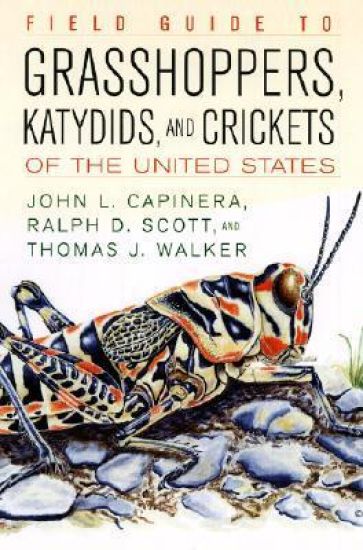
Field Guide to Grasshoppers, Katydids, and Crickets of the United States
John L. Capinera; Ralph Scott; Thomas J. Walker
Comstock Publishing Associates
2004
pokkari
In much of North America, crickets and katydids provide the soundtrack to summer nights, and grasshoppers frequent the fields and roadsides of midsummer days. Although insects from this group have long been the bane of those who make their living from the land, grasshoppers, katydids, and crickets are themselves crucial food sources for many species of birds, reptiles and amphibians, and other creatures. Field Guide to Grasshoppers, Katydids, and Crickets of the United States introduces readers to the biology, behavior, and ecological significance of one of the most obvious (abundant, large, and colorful) and important (ecologically and economically significant) insect groups in North America, the order Orthoptera. A simple, illustrated identification guide assists the reader in distinguishing among the various groups and narrows down the options to expedite identification. The book treats more than a third of the species found in the United States and Canada in brief, easy-to-understand sections that provide information on distribution, identification, ecology, and similar species. Distribution maps accompany each profile, and 206 species are pictured in color. Black-and-white drawings highlight distinguishing characteristics of some of the more difficult-to-identify species. Sonograms provide a graphic representation of the insects' distinctive sounds, which may be heard on Thomas J. Walker's website: Singing Insects of North America. This is the first treatment of North American grasshoppers, katydids, and crickets to portray the insects in full color, and it will be the first time many amateur naturalists and students have the opportunity to see the amazing and colorful world of Orthoptera, because many are cryptically colored (their bright colors evident only in flight) or cryptic in behavior (nocturnal in their habits). John L. Capinera, Ralph D. Scott, and Thomas J. Walker designed their book for amateur naturalists who wish to know the local fauna, for students who seek to identify insects as part of entomology and natural history courses, and for professional biologists who need to identify invertebrates. This invaluable field guide will be a useful supplement for laboratory and field activities and a reference for classrooms at every level.