Kirjojen hintavertailu. Mukana 12 493 327 kirjaa ja 12 kauppaa.

Kirjailija

Ramachandra Guha

Kirjat ja teokset yhdessä paikassa: 28 kirjaa, julkaisuja vuosilta 1993-2026, suosituimpien joukossa Ecology and Equity. Vertaile teosten hintoja ja tarkista saatavuus suomalaisista kirjakaupoista.

28 kirjaa

Kirjojen julkaisuhaarukka 1993-2026.

Liberties Journal of Culture and Politics

Liberties Journal of Culture and Politics

Michael Ignatieff; Laura Kipnis; David Grossman; Ramachandra Guha; Thomas Chatterton Williams; Hannah Sullivan; Mark Lilla; Helen Vendler; Sean Wilentz; Adam Zagajewski; Louise Glück; James Wolcott; Andrea Marcolongo; Eli Lake; Sally Satel; Moshe Halbertal; Joshua Bennett; David Thomson; Julius Margolin; Clara Collier; Shawn McCreesh

Liberties Journal Foundation
2021
pokkari
Liberties - A Journal of Culture and Politics features new essays and poetry from some of today’s best writers and artists, along with introducing new talent, to inspire and impact the intellectual and creative lifeblood of culture and politics. This inaugural issue of Liberties includes: Michael Ignatieff on liberalism and the environment; Laura Kipnis cheers transgression; David Grossman on literature and peace; Ramachandra Guha on the Indian tragedy; Thomas Chatterton Williams on the real James Baldwin; Mark Lilla on the power of indifference; Helen Vendler on Yeats' The Second Coming; Sean Wilentz on abolition and American origins; Adam Zagajeweski on Gustav Mahler; James Wolcott on America’s modern Jacobins; Andrea Marcolongo on how language defines us; Eli Lake on the birth of American unexceptionalism; Sally Satel on the riddle of addiction; Moshe Halbertal on creating a democratic Jewish state; David Thomson on the wonder of Terrence Malick; Julius Margolin’s memoir confronting hatred; Clara Collier on plague literature; Shawn McCreesh’s personal look at a youthful community of addiction; new poetry from the most recent winner of the Nobel Prize in Literature, Louise Glück, Joshua Bennett, and Hannah Sullivan; and, Leon Wieseltier (editor) and Celeste Marcus (managing editor).
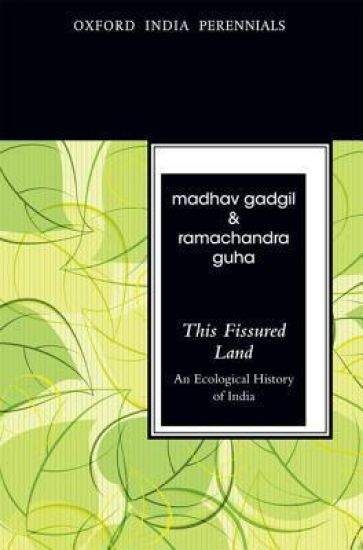
This Fissured Land, Second Edition

This Fissured Land, Second Edition

Madhav Gadgil; Ramachandra Guha

OUP India
2014
nidottu
This Fissured Land, first published in 1992, presents an interpretative history ecological history of the Indian subcontinent. It offers a theory of ecological prudence and profligacy, testing this theory across the wide sweep of South Asian history. The book especially focuses on the use and abuse of forest resources. In Part One, the authors present a general theory of ecological history. Part Two provides a fresh interpretative history of pre-modern India along with an ecological interpretation of the caste system. In Part Three, the authors draw upon a huge wealth of source material in their socio-ecological analysis of the modes of resource use introduced in India by the British. The Second Edition comes with a new Preface by the authors.
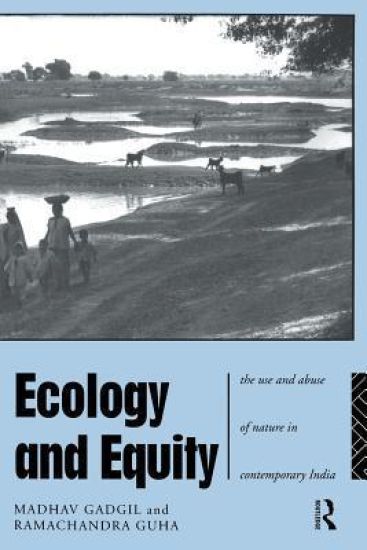
Ecology and Equity

Ecology and Equity

Madhav Gadgil; Ramachandra Guha

Routledge
1995
nidottu
Environmental destruction is seen a matter of worldwide concern but as a Third World problem.Ecology and Equity explores the most ecologically complex country in the world. India's peoples range from technocrats to hunter-gathers and its environments from dense forest to wasteland. The bookanalyses the use and abuse of nature on the sub-continent to reveal the interconnections of social and environmental conflict on the global scale. The authors argue that the root of this conflict is competition within different social groups and between different economic interests for natural resources. Radical both in its critique of the causes of crisis in India and in its proposals for ecological reform, Ecology and Equity is essential reading for all concerned for the Third World's in the world.
This Fissured Land

This Fissured Land

Madhav Gadgil; Ramachandra Guha

University of California Press
1993
pokkari
Ecologist Madhav Gadgil and historian Ramachandra Guha offer fresh perspectives both on the ecological history of India and on theoretical issues of interest to environmental historians regardless of geographical specialization. Juxtaposing data from India with the ecological literature on lifestyles as diverse as those of modern Americans and Amazonian Indians, the authors analyze the social conflicts that have emerged over environmental exploitation and explore the impact of changing patterns of resource use on human societies. They present a socio-ecological analysis of the modes of resource use introduced to India by the British, and explore popular resistance to state environmental policies in both the colonial and post-colonial periods.
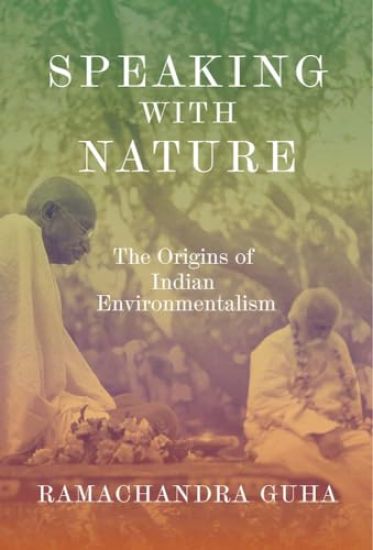
Speaking with Nature

Speaking with Nature

Ramachandra Guha

YALE UNIVERSITY PRESS
2025
sidottu
From one of the world’s leading historians comes the first substantial study of environmentalism set in any country outside the Euro-American world By the canons of orthodox social science, countries like India are not supposed to have an environmental consciousness. They are, as it were, “too poor to be green.” In this deeply researched book, Ramachandra Guha challenges this narrative by revealing a virtually unknown prehistory of the global movement set far outside Europe or America. Long before the publication of Rachel Carson’s Silent Spring and well before climate change, ten remarkable individuals wrote with deep insight about the dangers of environmental abuse from within an Indian context. In strikingly contemporary language, Rabindranath Tagore, Radhakamal Mukerjee, J. C. Kumarappa, Patrick Geddes, Albert and Gabrielle Howard, Mira, Verrier Elwin, K. M. Munshi, and M. Krishnan wrote about the forest and the wild, soil and water, urbanization and industrialization. Positing the idea of what Guha calls “livelihood environmentalism” in contrast to the “full-stomach environmentalism” of the affluent world, these writers, activists, and scientists played a pioneering role in shaping global conversations about humanity’s relationship with nature. Spanning more than a century of Indian history, and decidedly transnational in reference, this book offers rich resources for considering the threat of climate change today.
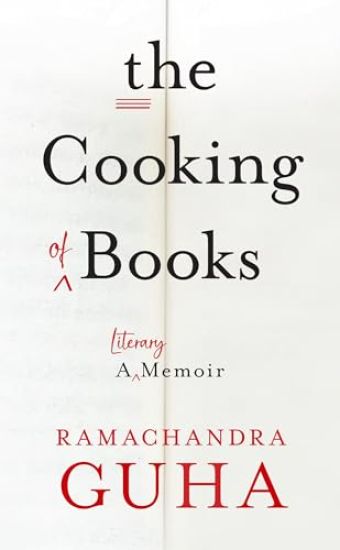
The Cooking of Books

The Cooking of Books

Ramachandra Guha

HARPERCOLLINS PUBLISHERS
2025
nidottu
It is not often that an author and his editor strike up a relationship which survives forty years of epistolary exchanges and intellectual sparring. The strangely enduring and occasionally fractious friendship which developed between the famously outspoken historian Ramachandra Guha and his reticent editor Rukun Advani is the subject of this quite eccentric and thoroughly compelling literary memoir. It started in Delhi in the early 1980s, when Guha was an unpublished PhD scholar, and Advani a greenhorn editor with Oxford University Press. It blossomed through the 1990s, when Guha grew into a pioneering historian of the environment and of cricket, while also writing his pathbreaking biography of Verrier Elwin. Over these years Advani was Guha’s most constant confidant, his most reliable reader. He encouraged him to craft and refine the literary style for which Guha became internationally known – narrative histories which have made vast areas of scholarship popular and accessible. Four decades later, though he no longer publishes his books, Advani remains Guha’s most trusted literary adviser. Yet they also disagree ferociously on politics, human nature, and the shape of their commitment to India. They usually make up – because it just wouldn’t do to allow such an odd relationship to die. Built around letters and emails between an outgoing and occasionally combative scholar and a reclusive editor prone to private outbursts of savage sarcasm, this book is never short of the kind of wit, humour, and drollery that has been strangled by contemporary political correctness.
The Cooking of Books

The Cooking of Books

Ramachandra Guha

HARPERCOLLINS PUBLISHERS
2024
sidottu
It is not often that an author and his editor strike up a relationship which survives forty years of epistolary exchanges and intellectual sparring. The strangely enduring and occasionally fractious friendship which developed between the famously outspoken historian Ramachandra Guha and his reticent editor Rukun Advani is the subject of this quite eccentric and thoroughly compelling literary memoir. It started in Delhi in the early 1980s, when Guha was an unpublished PhD scholar, and Advani a greenhorn editor with Oxford University Press. It blossomed through the 1990s, when Guha grew into a pioneering historian of the environment and of cricket, while also writing his pathbreaking biography of Verrier Elwin. Over these years Advani was Guha’s most constant confidant, his most reliable reader. He encouraged him to craft and refine the literary style for which Guha became internationally known – narrative histories which have made vast areas of scholarship popular and accessible. Four decades later, though he no longer publishes his books, Advani remains Guha’s most trusted literary adviser. Yet they also disagree ferociously on politics, human nature, and the shape of their commitment to India. They usually make up – because it just wouldn’t do to allow such an odd relationship to die. Built around letters and emails between an outgoing and occasionally combative scholar and a reclusive editor prone to private outbursts of savage sarcasm, this book is never short of the kind of wit, humour, and drollery that has been strangled by contemporary political correctness.
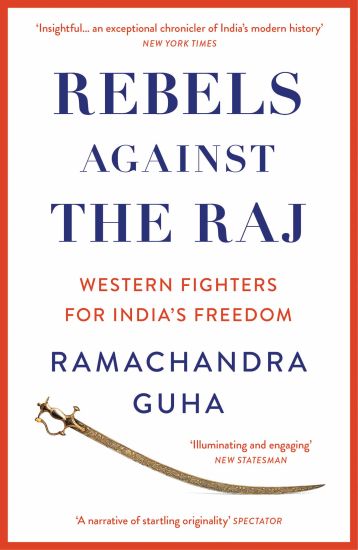
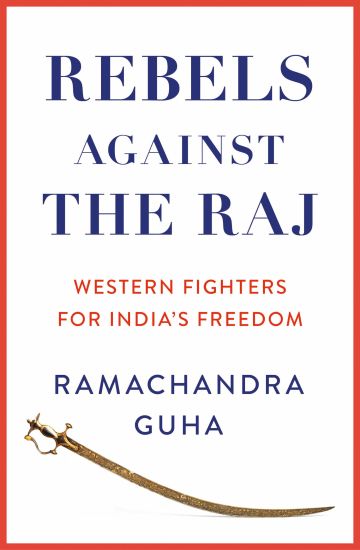
Rebels Against the Raj

Rebels Against the Raj

Ramachandra Guha

HARPERCOLLINS PUBLISHERS
2023
nidottu
WINNER OF THE ELIZABETH LONGFORD PRIZE FOR HISTORICAL BIOGRAPHY ‘A narrative of startling originality … As discussions of Britain’s colonial legacy become increasingly polarised, we are in ever more need of nuanced books like this one’ SAM DALRYMPLE, SPECTATOR Rebels Against the Raj tells the little-known story of seven people who chose to struggle for a country other than their own: foreigners to India who across the late 19th to late 20th century arrived to join the freedom movement fighting for independence. Of the seven, four were British, two American, and one Irish. Four men, three women. Before and after being jailed or deported they did remarkable and pioneering work in a variety of fields: journalism, social reform, education, organic agriculture, environmentalism. This book tells their stories, each renegade motivated by idealism and genuine sacrifice; each connected to Gandhi, though some as acolytes where others found endless infuriation in his views; each understanding they would likely face prison sentences for their resistance, and likely live and die in India; each one leaving a profound impact on the region in which they worked, their legacies continuing through the institutions they founded and the generations and individuals they inspired. Through the entwined lives, wonderfully told by one of the world’s finest historians, we reach deep insights into relations between India and the West, and India’s story as a country searching for its identity and liberty beyond British colonial rule.
Rebels Against the Raj: Western Fighters for India's Freedom
An extraordinary history of resistance and the fight for Indian independence--the little-known story of seven foreigners to India who joined the movement fighting for freedom from British colonial rule. Rebels Against the Raj tells the story of seven people who chose to struggle for a country other than their own: foreigners to India who across the late 19th to late 20th century arrived to join the freedom movement fighting for independence from British colonial rule. Of the seven, four were British, two American, and one Irish. Four men, three women. Before and after being jailed or deported they did remarkable and pioneering work in a variety of fields: journalism, social reform, education, the emancipation of women, environmentalism. This book tells their stories, each renegade motivated by idealism and genuine sacrifice; each connected to Gandhi, though some as acolytes where others found endless infuriation in his views; each understanding they would likely face prison sentences for their resistance, and likely live and die in India; each one leaving a profound impact on the region in which they worked, their legacies continuing through the institutions they founded and the generations and individuals they inspired. Through these entwined lives, wonderfully told by one of the world's finest historians, we reach deep insights into relations between India and the West, and India's story as a country searching for its identity and liberty beyond British colonial rule.
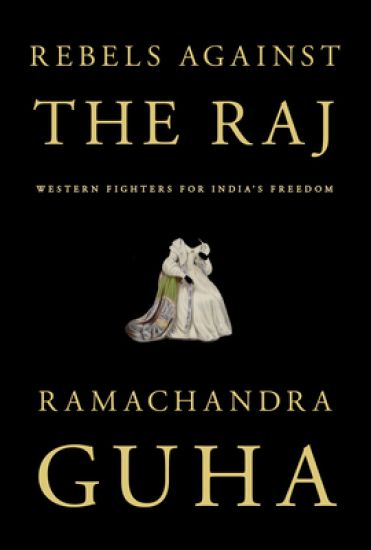
Rebels Against the Raj

Rebels Against the Raj

Ramachandra Guha

William Collins
2022
sidottu
WINNER OF THE ELIZABETH LONGFORD PRIZE FOR HISTORICAL BIOGRAPHY ‘A narrative of startling originality … As discussions of Britain’s colonial legacy become increasingly polarised, we are in ever more need of nuanced books like this one’ SAM DALRYMPLE, SPECTATOR Rebels Against the Raj tells the little-known story of seven people who chose to struggle for a country other than their own: foreigners to India who across the late 19th to late 20th century arrived to join the freedom movement fighting for independence. Of the seven, four were British, two American, and one Irish. Four men, three women. Before and after being jailed or deported they did remarkable and pioneering work in a variety of fields: journalism, social reform, education, organic agriculture, environmentalism. This book tells their stories, each renegade motivated by idealism and genuine sacrifice; each connected to Gandhi, though some as acolytes where others found endless infuriation in his views; each understanding they would likely face prison sentences for their resistance, and likely live and die in India; each one leaving a profound impact on the region in which they worked, their legacies continuing through the institutions they founded and the generations and individuals they inspired. Through the entwined lives, wonderfully told by one of the world’s finest historians, we reach deep insights into relations between India and the West, and India’s story as a country searching for its identity and liberty beyond British colonial rule.
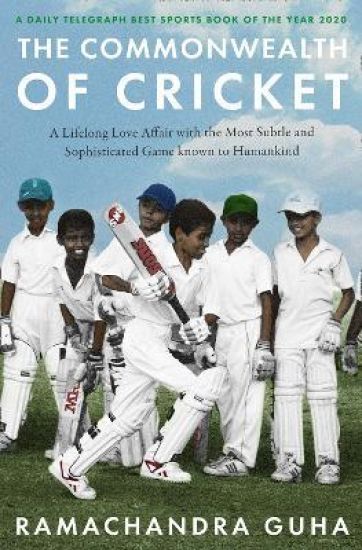
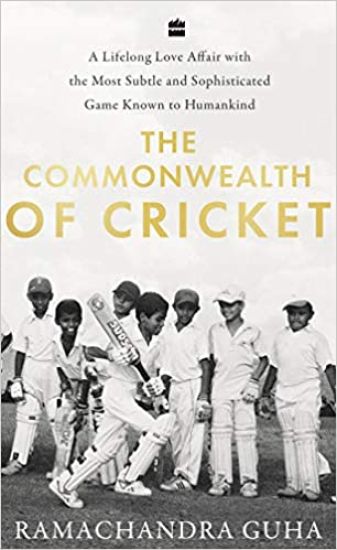
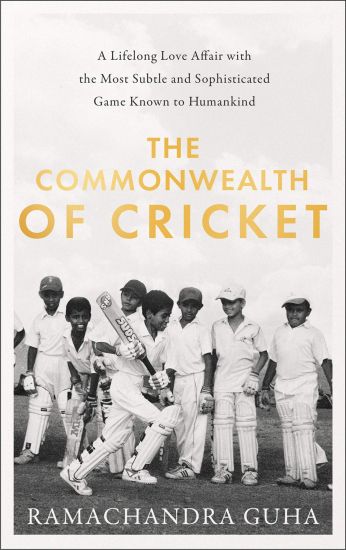
The Commonwealth of Cricket

The Commonwealth of Cricket

Ramachandra Guha

William Collins
2021
nidottu
From one of India’s finest writers, thinkers and commentators, a memoir of a love affair with cricket. As a fan, player, writer, scholar, controversialist and administrator, Ram Guha has spent a life with cricket. In this book, Guha offers both a brilliantly charming memoir and a charter of the life of cricket in India. He traces the game across every level at which it is played: school, college, club, state and country. He offers vivid portraits of local heroes, provincial icons and international stars. Following the narrative of his life intertwined and in love with the sport, Guha captures the magic of bat and ball that has ensnared billions.
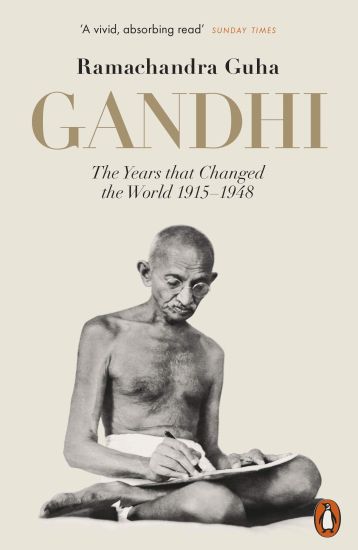
Gandhi 1914-1948

Gandhi 1914-1948

Ramachandra Guha

Penguin Books Ltd
2019
pokkari
'Essential reading ... will not be bettered' Ferdinand Mount, Wall Street Journal'Gandhi's finest biographer' David Kynaston, GuardianThe magnificent new biography of Gandhi by India's leading historianA New York Times Notable Book of 2018Gandhi lived one of the great 20th-century lives. He inspired and enraged, challenged and galvanized many millions of men and women around the world. He lived almost entirely in the shadow of the British Raj, which for much of his life seemed a permanent fact, but which he did more than anyone else to destroy, using revolutionary tactics. In a world defined by violence on a scale never imagined before and by ferocious Fascist and Communist dictatorship, he was armed with nothing more than his arguments and example.This magnificent book tells the story of Gandhi's life, from his departure from South Africa to his assassination in 1948. It is a book with a Tolstoyan sweep, both allowing us to see Gandhi as he was understood by his contemporaries and the vast, varied Indian societies and landscapes which he travelled through and changed beyond measure. Drawing on many new sources and animated by its author's wonderful sense of drama and politics, Gandhi is a major reappraisal of the crucial years in this titanic figure's story.
Gandhi: The Years That Changed the World, 1914-1948
Opening in July 1914, as Mohandas Gandhi leaves South Africa to return to India, Gandhi: The Years That Changed the World, 1914-1918 traces the Mahatma's life over the three decades preceding his assassination. Drawing on new archival materials, acclaimed historian Ramachandra Guha follows Gandhi's struggle to deliver India from British rule, to forge harmonious relations between India's Hindus and Muslims, to end the pernicious practice of untouchability, and to nurture India's economic and moral self-reliance. He shows how in each of these campaigns, Gandhi adapted methods of nonviolence that successfully challenged British authority and would influence revolutionary movements throughout the world. A revelatory look at the complexity of Gandhi's thinking and motives, the book is a luminous portrait of not only the man himself, but also those closest to him--family, friends, and political and social leaders.
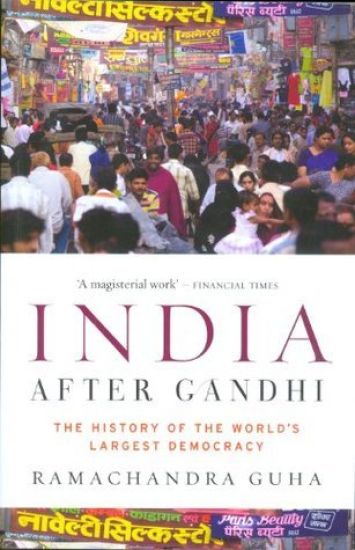
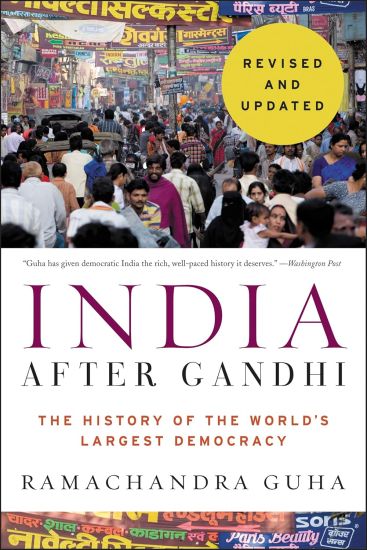
India After Gandhi: The History of the World's Largest Democracy
From one of the subcontinent's most important and controversial writers comes this definitive history of post-Partition India, published on the 60th anniversary of IndependenceTold in lucid and beautiful prose, the story of India's wild ride toward and since Independence is a riveting one. Taking full advantage of the dramatic details of the protests and conflicts that helped shape the nation, politically, socially, and economically, Guha writes of the factors and processes that have kept the country together, and kept it democratic, defying the numerous prophets of doom.Moving between history and biography, this story provides fresh insights into the lives and public careers of those legendary and long-serving Prime Ministers, Jawaharlal Nehru and his daughter, Indira Gandhi. Guha includes vivid sketches of the major "provincial" leaders, but also writes with feeling and sensitivity about lesser-known Indians--peasants, tribals, women, workers, and Untouchables.Massively researched and elegantly written, this is the work of a major scholar at the height of his powers, a brilliant and definitive history of what is possibly the most important, occasionally the most exasperating, and certainly the most interesting country in the world.