Kirjojen hintavertailu. Mukana 12 595 353 kirjaa ja 12 kauppaa.

Kirjailija

Rami Shapiro

Kirjat ja teokset yhdessä paikassa: 21 kirjaa, julkaisuja vuosilta 2005-2025, suosituimpien joukossa Nectar of Non-Dual Truth #35. Vertaile teosten hintoja ja tarkista saatavuus suomalaisista kirjakaupoista.

21 kirjaa

Kirjojen julkaisuhaarukka 2005-2025.

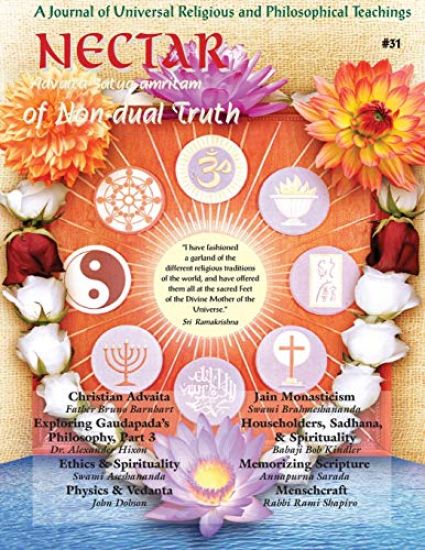
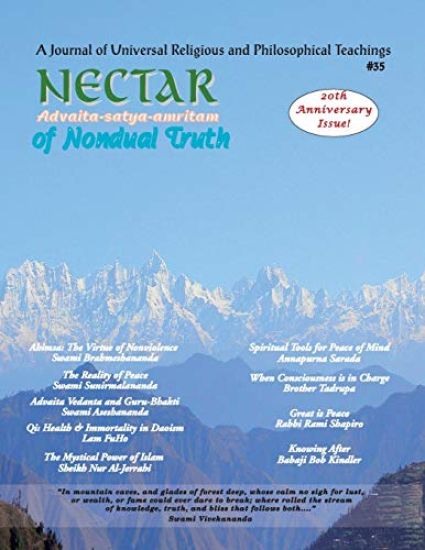
Nectar of Non-Dual Truth #35

Nectar of Non-Dual Truth #35

Babaji Bob Kindler; Lex Hixon; Rami Shapiro

SRV Associations
2020
pokkari
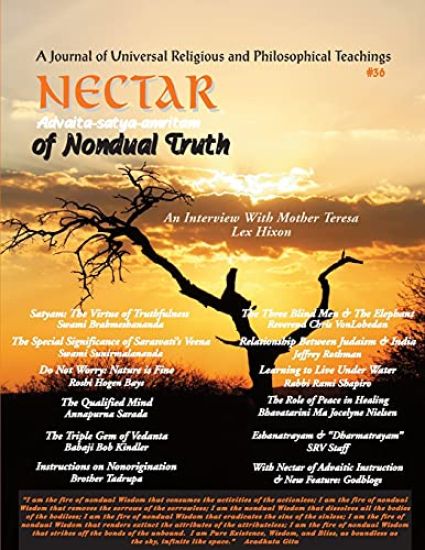
Nectar of Non-Dual Truth, A Journal of Universal Religious and Philosophical Teachings is an annual publication that contains articles on the philosophy and spirituality of Vedanta and other religious traditions by authentic practitioners. Issue #35 is dedicated to the methods, practice, and experience of divine life and practice across a variety of religious and spiritual Traditions, with a particular focus on peace and nonviolence. In this issue we include teachings from Vedanta, Advaita Vedanta, Judaism, Islam, and Taoism. Teachers and practitioners include: Lex Hixon/Sheikh Nur Al-Jerrahi, Rabbi Rami Shapiro, Swami Aseshananda, Swami Brahmeshananda, Lam FuHo, Brother Tadrupa, Babaji Bob Kindler, and Annapurna Sarada. The always popular feature, Nectar of Advaitic Instruction, along with Wisdom Facets from the Gem of Truth, and quotes from the Worlds Religious Traditions complete this special issue. Nectar #35, published in 2020, represents 20 years of publication.
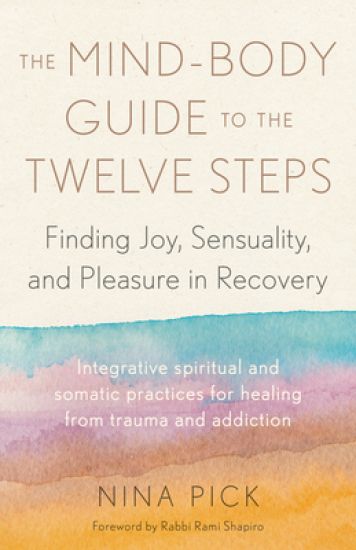
The Mind-Body Guide to the Twelve Steps

The Mind-Body Guide to the Twelve Steps

Nina Pick; Rami Shapiro

NORTH ATLANTIC BOOKS,U.S.
2023
nidottu
An embodied, trauma-sensitive companion to the Twelve Steps: body-based exercises for enhancing recovery, preventing relapse, and understanding the root of your addiction. For readers of In the Realm of Hungry Ghosts and Trauma and the 12 Steps. Considering addiction through a trauma-informed lens, The Mind-Body Guide to the Twelve Steps offers an accessible, lyrical, and practical guide to Twelve-Step recovery that elevates a somatic approach rooted in healing, relationship, and Earth connection. Somatic and spiritual counselor, educator, and writer Nina Pick shows how addiction is rooted in survival strategies that protect us from overwhelmingly painful experiences. Pick draws on attachment theory, polyvagal theory, somatics, trauma therapy, Jewish and integrative spirituality, and her own long-time experience in recovery to expand Twelve-Step practice beyond the conventional cognitive approach into one that centers relationship, ecological connection, and mind-body healing. With practices designed to complement the literature and tools offered by your specific program, The Mind-Body Guide to the Twelve Steps shows you how to: Explore powerlessness and unmanageability Develop Earth-based and body-centered practices to cultivate self-compassion Explore dance, vocalization, and other creative arts to enhance your recovery Create transformative ritual and ancestral healing practices Expand your ideas of Higher Power and prayer Forgive yourself and others Cultivate daily practices for reflection and meditation Understand the intersections of addiction, developmental trauma, and intergenerational trauma Drawing on plant medicine, mindfulness, poetry, touch, ritual, and guided imagery, the reflections and exercises in The Mind-Body Guide to the Twelve Steps nurture an embodied and heart-centered path to recovery and healing in the vein of Peter Levine, Bessel van der Kolk, and Arielle Schwartz.
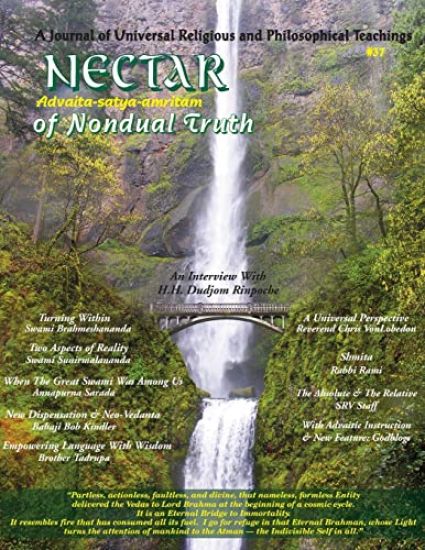
Nectar of Non-Dual Truth #37

Nectar of Non-Dual Truth #37

Babaji Bob Kindler; Swami Sunirmalananda; Rami Shapiro

SRV Associations
2021
pokkari
Nectar of Non-Dual Truth, A Journal of Universal Religious and Philosophical Teachings is an annual publication that contains articles on the philosophy and spirituality of Vedanta and other religious traditions by authentic practitioners and teachers. Issue #37 is dedicated to the methods, practice, and experience of divine life and practice across a variety of religious and spiritual Traditions, with a particular focus on the practices that transform one's mind and its perceptions, leading to inner peace and the capacity for selfless service and ultimately, Enlightenment. In this issue we include teachings from Vedanta, Advaita Vedanta, Judaism, Tibetan Buddhism, and Christianity. Teachers and practitioners include: Rabbi Rami Shapiro, Dudjom Rinpoche (in an interview with Lex Hixon), Swami Brahmeshananda, Swami Sunirmalananda, Rev. Chris VonLobedan, Brother Tadrupa, Babaji Bob Kindler, and Annapurna Sarada. The always popular feature, Nectar of Advaitic Instruction, along with Wisdom Facets from the Gem of Truth, Vedanta 101, and quotes from the Worlds Religious Traditions complete this special issue.
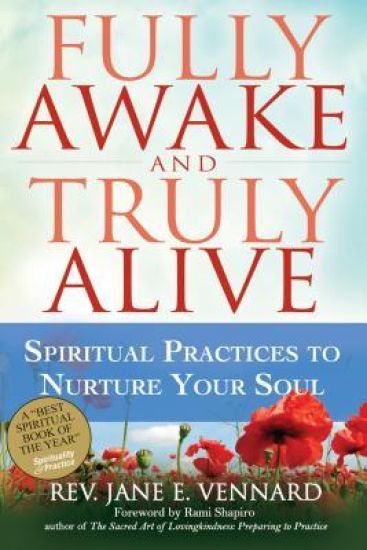
Fully Awake and Truly Alive

Fully Awake and Truly Alive

Jane E. Vennard; Rami Shapiro

Skylight Paths Publishing
2013
sidottu
Fulfill the reality that the glory of God is the human fully alive. "Reverend Vennard is fearlessly awake to the wild dance of life. Rather than sleeping through life, she awakens to it. Rather than escaping from reality, she embraces it. Rather than distracting herself with a life to come, she dares to live the life that is. And she wants you to do all this as well. Read this book. Live this book. Wake up." —from the Foreword In a culture enthralled with technology, striving and speed, people of many faith traditions and no faith tradition long to slow down, pay attention and wake up to the present moment. They want help in realizing their hope that they can become more truly alive. This engaging and highly readable book offers you guidance for the journey. Sharing stories from her personal life as a spiritual seeker and from her professional career as a retreat leader, spiritual director and teacher, Reverend Jane Vennard illustrates the joys and frustrations of spiritual practice, offers insights from various religious traditions, and provides step-by-step exercises and meditations to practice: Caring for the body • Rest • Silence Solitude • Letting go • Community • Hospitality • Service • Living gratefully
Let Us Break Bread Together

Let Us Break Bread Together

Michael A. Smith; Rami Shapiro

Paraclete Press
2005
pokkari
Christians have the unique opportunity to experience a Jewish Passover seder from a distinctly Christian perspective in this guide co-authored by a rabbi and a pastor that also provides a plan and script for a Christian seder while remaining respectful of the differences between Judaism and Christianity. Original.
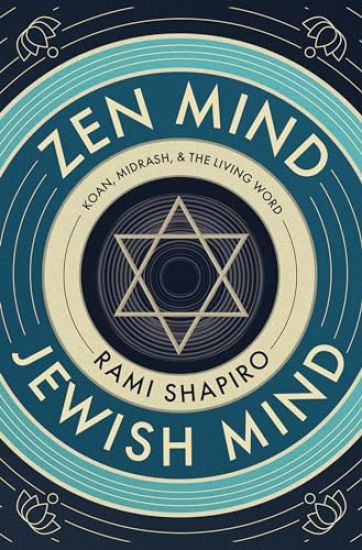
Zen Mind Jewish Mind

Zen Mind Jewish Mind

Rami Shapiro

Monkfish Book Publishing Company
2025
pokkari
A book for locating an authentic spirituality, realizing the deep I, eradicating the surface Me.With reference to Shunryu Suzuki Roshi's classic Zen Mind, Beginner's Mind, Rami Shapiro begins with beginner's mind as "empty, free of the habits of the expert, ready to accept, to doubt, and open to all the possibilities. It is the kind of mind which can see things as they are, which step by step and in a flash can realize the original nature of everything." Then, Rami ponders beginner's mind in the child of the Passover Haggadah "who knows not how to ask." The parents of this child are told to open (patach) the child to the art of questioning. Asking questions is key to Jewish mind.The questioning perennial beginner is central to both Zen and Jewish, Rami demonstrates: a daring, iconoclastic, often humorous mind devoted to shattering the words, texts, isms, and ideologies on which expert mind--closed to inquiry--depends.Zen Mind / Jewish Mind is not a scholarly study of anything, let alone Zen or Judaism, and despite all the footnotes, the book rests solely on Shapiro's fifty-plus years of playing in the garden of Judaism, Zen, and advaita/nonduality. Chapters include "Dharma Eye, God's I" (1), "Koan and Midrash" (4), and "The Yoga of Conversation" (7).
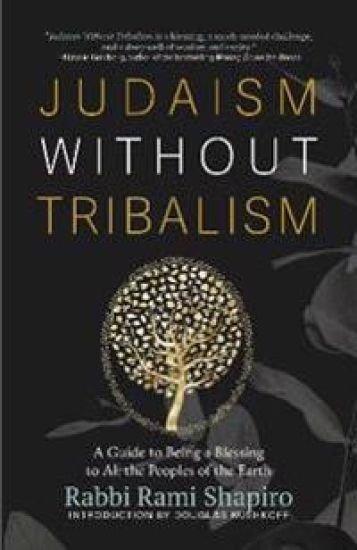
Judaism Without Tribalism

Judaism Without Tribalism

Rami Shapiro; Douglas Rushkoff

Monkfish Book Publishing Company
2022
pokkari
"Judaism Without Tribalism is a blessing, a much-needed challenge, and a deep well of wisdom and sanity." --Natalie Goldberg, author of Writing Down the BonesThis book investigates Judaism at its best--and sanest. It strips away outdated and harmful beliefs that have accrued over the centuries and returns to the essential truths that are too-often ignored in favor of tradition, tribal identity, or the claims of the powerful.The result is a vibrant Judaism for the 21st century and beyond--a Judaism that draws deeply from history and scripture yet addresses the unmet needs of the present and the future. It is a Judaism that is open and accessible to everyone.Judaism without tribalism is a call to be a light unto the nations, and a blessing to all the people of the earth. It is a Judaism free from legalism and tribalism--a Judaism that refuses to serve patriarchy and power.Written by one of today's most respected--and most unconventional--Jewish thinkers, Judaism Without Tribalism is a manifesto, an invitation to completeness, and a call for inner and outer spiritual revolution. It is also a deeply practical guide to living authentically, breath by breath and day by day.
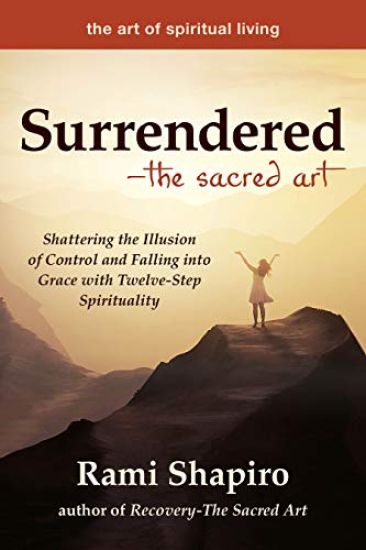
Surrendered—The Sacred Art

Surrendered—The Sacred Art

Rami Shapiro

Skylight Paths Publishing
2019
pokkari
In Surrendered—The Sacred Art, Rabbi Rami Shapiro explores what it means to live the surrendered life—a life no longer centered on control and hence no longer at odds with the ordinary suffering of everyday living. Rabbi Rami closely examines the first three steps of Twelve-Step recovery to help us cut through the denial, illusions, and falsehoods that bind us in our fight with addictions of all kinds. He draws upon his half-century engagement with Christianity, Judaism, Buddhism, Taoism, Hinduism, and Islam, as well as his own and other people’s struggles in Twelve-Step recovery, to guide us in our awakening to reality’s freedom and the path to living joyously and well.
Surrendered—The Sacred Art

Surrendered—The Sacred Art

Rami Shapiro

Turner Publishing Company
2019
sidottu
To live the surrendered life—a life no longer centered on control and hence no longer at odds with the ordinary suffering of everyday living. Rabbi Rami closely examines the first three steps of Twelve-Step recovery to help us cut through the denial, illusions, and falsehoods that bind us in our fight with addictions of all kinds. He draws upon his half-century engagement with Christianity, Judaism, Buddhism, Taoism, Hinduism, and Islam, as well as his own and other people’s struggles in Twelve-Step recovery, to guide us in our awakening to reality’s freedom and the path to living joyously and well.
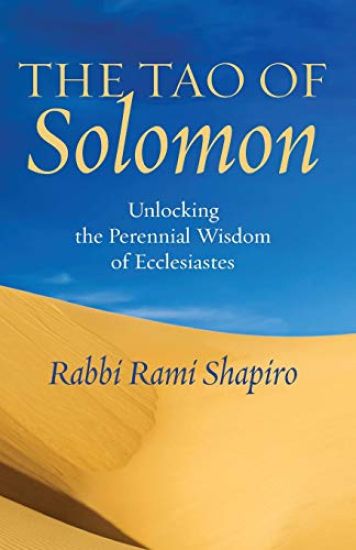
The Tao of Solomon

The Tao of Solomon

Rami Shapiro

Ben Yehuda Press
2018
pokkari
In The Tao of Solomon, Rabbi Rami Shapiro unravels the golden philosophical threads of wisdom in the book of Ecclesiastes, reweaving the vibrant book of the Bible into a 21st century tapestry. Shapiro explores the timeless truth that we are merely a drop in the endless river of time, and reveals a path to finding personal and spiritual fulfillment even as we embrace our impermanent place in the universe.The Tao of Solomon is not a new translation of Ecclesiastes; rather, it is a re-visioning of the sacred text that acknowledges that the only constant in life is change, that nothing lasts forever, and that only by releasing our hold on permanence can we finding personal peace.
The Golden Rule and the Games People Play

The Golden Rule and the Games People Play

Rami Shapiro

Skylight Paths Publishing
2015
sidottu
Does the Golden Rule matter? It depends on the game. "We have to shift the game before we can promote the Rule. This is why teaching morality alone is insufficient. Educating our children in the Golden Rule without teaching about finite and infinite games and zero-sum and nonzero worldviews is a waste of time. Doing so would be like teaching them the rules of chess while insisting they play only checkers." —from Chapter 10, “Play Different” This provocative and challenging exploration of the Golden Rule, widely accepted as humanity's moral true north, neither praises the Rule uncritically nor naively insists that it is applicable in every situation. Rather, it looks critically at the Rule in the context of game theory to see where it works and where it doesn’t, when it is applicable and when it isn’t. It shows you why knowing the difference can offer you a powerful way to transform your life from one driven by fear to one driven by love. This philosophical game changer is written for people of all faiths or none who praise the Rule and yet violate it over and over again. It invites you into the fascinating world of ethical decision making in a way that helps you use the Golden Rule as a fulcrum for shifting your life from often unethical competition to compassionate and even loving cooperation.
Mount and Mountain

Mount and Mountain

Rami Shapiro; Michael Smith

Smyth Helwys,U.S.
2013
pokkari
Here's the story: a reverend and a rabbi start a blog. In 2008, Baptist minister Michael Smith and Jewish rabbi Rami M. Shapiro began a virtual conversation via blogspot.com. Called "Mount and Mountain," the blog recorded a long-running dialogue between Mike and Rami in which the pair interpreted, argued about, and interrogated two key texts drawn from the canons of their respective religions: the Ten Commandments from the Torah, and the Sermon on the Mount from the Gospel of St. Matthew.This book, focused on the Sermon on the Mount, represents the second half of Mike and Rami's dialogue. In it, Mike and Rami explore the text of Jesus' sermon cooperatively, contributing perspectives drawn from their lives and religious traditions and seeking moments of illumination. They are, like all of us, audience members, contemplating the words of Jesus together in the hope that we can discern Truth not only through revelation but also through conversation.As readers, we are a part of their conversation. We think and respond, we question and wonder, we entertain doubt and affirm faith. Reading their discussion, we are encouraged to begin our own.
Amazing Chesed

Amazing Chesed

Rami Shapiro

Jewish Lights Publishing
2012
sidottu
The question isn't whether grace is there for you in Judaism. The question is, do you have the courage to accept it?"Chesed isn't a reward; it is reality. God's grace isn't limited to what we want to happen or might like to happen. God's grace is what is happening whether we like it or not. In short, God's grace is the giving of all to all."--from the IntroductionAsk almost any Jew whether grace is a central concept in Judaism and an essential element in living Jewishly and, chances are, their answer will be "no." But that's the wrong answer. This fascinating foray into God's love freely given offers you--regardless of your level of Jewish involvement--a way to answer that question in the affirmative.Drawing from ancient and contemporary, traditional and non-traditional Jewish wisdom, this book reclaims the idea of grace in Judaism in three ways: It offers a view of God that helps you understand what grace is, why grace is, and how grace manifests in the world.It sets forth a reading of Judaism that is grace-filled: an understanding of creation, Shabbat and other Jewish practices from a grace-filled perspective.It challenges you to be embraced and transformed by grace, and to live life as a vehicle for God's grace, thereby fulfilling the promise of being created in God's image and likeness.
Mount and Mountain

Mount and Mountain

Michael Smith; Rami Shapiro

Smyth Helwys,U.S.
2012
pokkari
A reverend and a rabbi start a blog... (stop us if you've heard this one before). As it happens, not long ago Baptist minister Michael Smith and Jewish rabbi Rami M. Shapiro actually did initiate the blog conversation "Mount and Mountain." The blog recorded a long-running dialogue between Mike and Rami in which the pair interpreted, argued about, and interrogated two key texts drawn from the canons of their respective religions: the Ten Commandments from the Torah, and the Sermon on the Mount from the Gospel of St. Matthew.This book, focused on the Ten Commandments, represents the first half of that dialogue. In Mount and Mountain, Volume One, Mike and Rami discuss the nature of divinity, the power of faith, and the necessity of doubt. From the beauty of myth and story to the achievements, failings, and future of religion, above all they both wrestle with the struggle to live ethically and in harmony with the way of God.Reading along, we are invited to take part, to add our own voices and experience to the task of interpretation, and to craft our own meanings from the text of Exodus. And if, as readers, we take that text in our own directions, we move toward a richer understanding not only of Scripture but also of God and godliness.
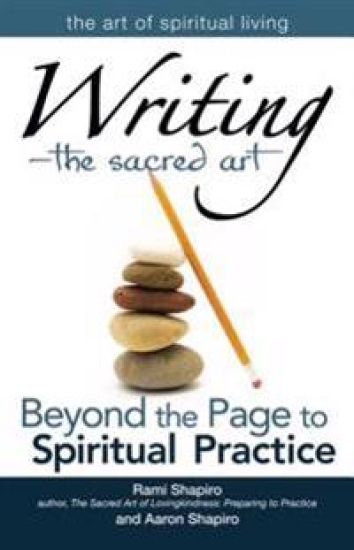
Writing—The Sacred Art

Writing—The Sacred Art

Rami Shapiro; Aaron Shapiro

Skylight Paths Publishing
2012
sidottu
Push your writing through the trite and the boring to something fresh, something transformative. "Writing as spiritual practice has nothing to do with readers per se. You aren't writing to be read; you are writing to be freed. Writing as spiritual practice is conspiratorial rather than inspirational. It conspires to strip away everything you use to maintain the illusion of certainty, security and self-identity. Where spiritual writing seeks to bind you all the more tightly to the self you imagine yourself to be, writing as spiritual practice intends to free you from it." —from Rami’s Preface This isn’t about how to write spiritual books. It isn’t about the romance of writing. It doesn’t cover the ins and outs of publishing and building a brand. Instead, this fresh and unapologetic guide to writing as a spiritual practice approaches writing as a way to turn the spiral of body, heart, mind, soul and spirit that leads to spiritual awakening. Lead by renowned spirituality teacher Rami Shapiro and award-winning writer and writing coach Aaron Shapiro—and featuring over fifty unique, practical exercises—it takes you beyond assigning inspirational words to the page. It shows you how to use your writing to unlock the joy of life and the infinite perspectives and possibilities that living provides.
The Angelic Way

The Angelic Way

Rami Shapiro

BlueBridge
2009
pokkari
Examining angels as metaphors--not only of God reaching out to humankind but also of humankind reaching out to God--this comprehensive study illuminates the philosophical, psychological, and spiritual implications of angels, both heavenly and fallen, for readers and seekers of every faith or none. It gives both an overview of angels in various religious traditions, and an explanation of angels as expressions of human spiritual awareness, and shows that the fascination with winged spirits is universal. Offering an accessible history of angels, an exploration of the contemporary implications of angelology, and a means to make sense of angels and the divine in life, this stunning addition to angelic studies is a beautiful invitation to embrace the angelic in the everyday.
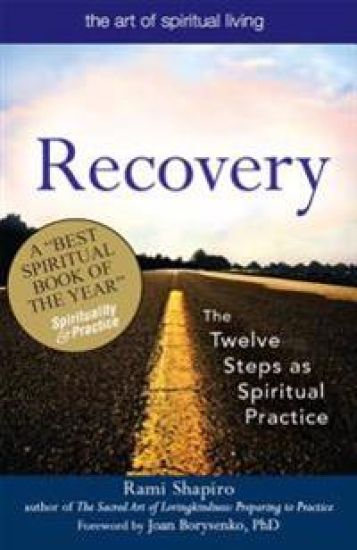
Recovery—The Sacred Art

Recovery—The Sacred Art

Rami Shapiro; Joan Borysenko

Skylight Paths Publishing
2009
sidottu
Deepen Your Capacity to Live Free from Addiction—and from Self and Selfishness "Twelve Step recovery is much more than a way to escape the clutches of addictive behaviors. Twelve Step recovery is about freeing yourself from playing God, and since almost everyone is addicted to this game, Twelve Step recovery is something from which everyone can benefit." —from the Introduction In this hope-filled approach to spiritual and personal growth, the Twelve Steps of Alcoholics Anonymous are uniquely interpreted to speak to everyone seeking a freer and more God-centered life. This special rendering makes them relevant to those suffering from specific addictions—alcohol, drugs, gambling, food, sex, shopping—as well as the general addictions we wrestle with daily, such as anger, greed, and selfishness. Rami Shapiro describes his personal experience working the Twelve Steps as adapted by Overeaters Anonymous and shares anecdotes from many people working the Steps in a variety of settings. Drawing on the insights and practices of Christianity, Judaism, Buddhism, Taoism, Hinduism, and Islam, he offers supplementary practices from different religious traditions to help you move more deeply into the universal spirituality of the Twelve Step system.