Kirjailija
Ramin Jahanbegloo
Kirjat ja teokset yhdessä paikassa: 44 kirjaa, julkaisuja vuosilta 2007-2025, suosituimpien joukossa Albert Camus. Vertaile teosten hintoja ja tarkista saatavuus suomalaisista kirjakaupoista.
44 kirjaa
Kirjojen julkaisuhaarukka 2007-2025.
This book highlights the problem of one-dimensional, reductionistic life of the modern individual. An expression of crisis in our world, it discusses the imperative need to have a more comprehensive, non-reductionist life where the Other is incorporated, especially the relationship between the Other and the Self, based on virtues like love, empathy, equality, and compassion.The volume sheds light on how the world has forgone the art of living for a mutilated sense of well-being, the rise of conformity and complacency in human thought, and the lack of democratic dissent and citizenry responsibility in our contemporary societies, which is now characterized by mass immaturity, propelled by a process of thoughtlessness. It discusses how humans need to be aware of the life they lead, to think about Otherness of the Other not just as another virtue but also as a crucial element in the survival of humanity, for people to coexist with the world around them as equals. Furthermore, it advocates meaningful and thoughtful existence, in touch with the Nature we coexist with, to ensure that humanity is not robbed of its noble spirit as we live to survive in our techno-capitalist societies.An introspective read, this book will be of great interest to scholars and researchers of moral and ethical philosophy, political philosophy, and political science.
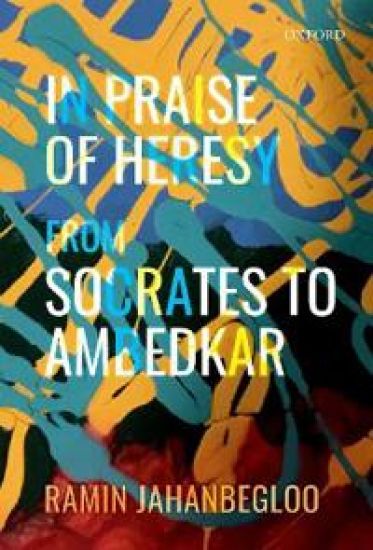
In today's global climate of pre-packaged opinions, every effort of original thinking is an act of dissent. To think radically today is to be a heretic: committing 'heresy' not in its theological sense, but in relation to its ancient Greek roots, which means 'choice'. With the rise of the post-industrial global village dominated by media networks and technology-led communication, the 'epidemic of conformism' has completely paralysed intellectuals' ability to question. It has now become critical to examine the central role of heresy in the formation of critical thinking and anti-dogmatism. Since the time of Socrates to the present, public intellectuals have aligned themselves with the heretical imperative by questioning organized power and opened up social, political, economic, and cultural life to public scrutiny and accountability. This effort is described in this volume through the self-examined lives of philosophers such as Socrates and José Ortega y Gasset, Albert Camus, and Yukio Mishima. They serve to elaborate the context of the author's bold claim that B.R. Ambedkar, the central character of the author's research, is the boldest heretic in Indian political history.
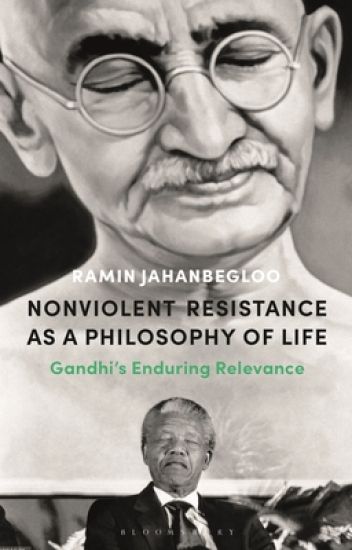
What do we mean by nonviolence? What can nonviolence achieve? Are there limits to nonviolence and, if so, what are they? These are the questions the Iranian political philosopher and activist Ramin Jahanbegloo tackles in his journey through the major political advocates of nonviolence during the 20th century. While nonviolent resistance has accompanied human culture from its earliest beginnings, and representations of nonviolence in Eastern religions like Jainism, Buddhism and Hinduism are ubiquitous, it is only in 20th century that it emerged as a major preoccupation of figures such as Gandhi, Martin Luther King Jr., Nelson Mandela, Mother Teresa and Václav Havel. Focusing on examples of their way of thinking in different cultural, geographic and political contexts, from the Indian Independence Movement and US Civil rights and Anti-Apartheid movement to the Velvet Revolution in Czechoslovakia and nonviolent protests in Tunisia, Iran, Serbia and Hong-Kong, Jahanbegloo explores why nonviolence remains relevant as a form of resistance against injustice and oppression around the world.With balanced readings of central players and events, this comparative study of a pivotal form of resistance written by accomplished scholar of Gandhi presents convincing reasons to commit to nonviolence, reminding us why it matters to the development of contemporary political thought.
This book is a comparative study of Gandhi’s philosophy and analyzes his relevance to modern political thought. It traces the intellectual origins of Gandhi’s nonviolence as well as his engagement with Western thinkers – ancient as well as his contemporaries. The author discusses Gandhi’s exchanges with eminent thinkers like Tolstoy and Thoreau, and looks at his vision of pluralism, democracy, and violence through the lens of philosophers like Hannah Arendt, Isaiah Berlin, and Cornelius Castoriadis. Further, it explores Gandhi’s association with Abdul Ghaffar Khan and the Khilafat Movement. Finally, the book examines Gandhian thought in the light of his global followers like Martin Luther King Jr and Nelson Mandela.An invaluable resource for the contemporary mind, this book will be of great interest to scholars and researchers of politics, political thought, Gandhi studies, and philosophy.
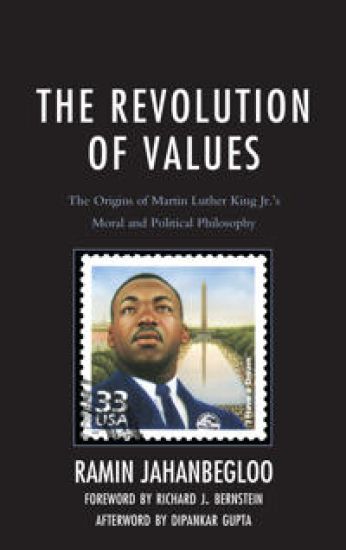
The Revolution of Values
Ramin Jahanbegloo; Richard J. Bernstein; Dipankar Gupta
Lexington Books
2020
nidottu
In this book, Professor Ramin Jahanbegloo elucidates the central concepts in the moral and political thought of Martin Luther King, Jr., bringing out the subtlety, potency, and universal importance of his concepts of Agape love and non-violence, the Beloved Community and revolution of values, and his view of the relation between justice and compassion in politics. King’s political philosophy integrates the ethical, the moral and the spiritual into a political way of being that is not only best suited for the American society, but also for any society in quest of an inclusive democracy. Jahanbegloo’s account of King’s moral and political philosophy demands those of us confronted by the challenges of today’s world to have a fresh look at the pragmatic and non-utopian thoughts of one of the prophetic voices of twentieth century.
Talking Architecture (Revised Edition) is one of the latest additions in the series of Ramin Jahanbegloo's interviews of prominent intellectuals who have influenced modern Indian thought. Focusing on the life, work, and ideas of Raj Rewal, one of India's leading contemporary architects, the dialogue flows effortlessly from Rewal's descriptions of his early life and experiences in Europe to discussions encompassing the aesthetic foundations of Indian architecture as well as the role of architecture in the twenty-first century. This revised edition includes an extended conversation between Rewal and Jahanbegloo and also about 40 additional visuals.
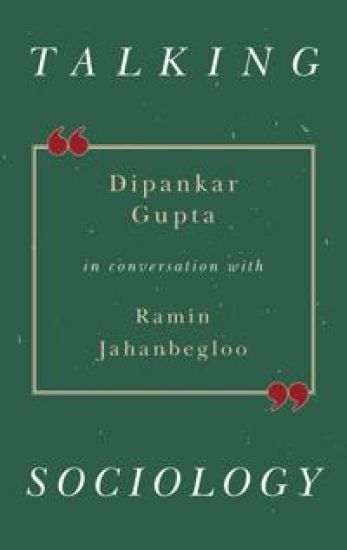
Talking Sociology is the ninth title in the OUP series of Ramin Jahanbegloo's conversations with prominent intellectuals who have made significant contribution in shaping the modern Indian thought. The present volume covers the life and works of the influential Indian sociologist and public intellectual, Dipankar Gupta. As a social scientist, Gupta has made remarkable contribution to contemporary social theory by redefining and reconstructing the central concepts of the past masters and taking sociology beyond its disciplinary boundaries by helping several generations of Indians understand contemporary social change and transformation of institutions. He is considered the most insightful analyst of modernity and modernization in India. The conversation in this volume revolves around Gupta's career and contribution to the field, and discusses the key areas of sociology such as the problem of social stratification, citizenship and democracy, and the caste system and ethnic groups in India.
The Revolution of Values
Ramin Jahanbegloo; Richard J. Bernstein; Dipankar Gupta
Lexington Books
2018
sidottu
In this book, Professor Ramin Jahanbegloo elucidates the central concepts in the moral and political thought of Martin Luther King, Jr., bringing out the subtlety, potency, and universal importance of his concepts of Agape love and non-violence, the Beloved Community and revolution of values, and his view of the relation between justice and compassion in politics. King’s political philosophy integrates the ethical, the moral and the spiritual into a political way of being that is not only best suited for the American society, but also for any society in quest of an inclusive democracy. Jahanbegloo’s account of King’s moral and political philosophy demands those of us confronted by the challenges of today’s world to have a fresh look at the pragmatic and non-utopian thoughts of one of the prophetic voices of twentieth century.
' This] book succeeds in making us see the poetics of disobedience in the utterly illiberal prosaic ethos of our times, in the light of giving Gandhi a new radical and transformative significance.' --Ashok Vajpeyi, from the ForewordIn this original and timely book, Ramin Jahanbegloo, one of the world's leading political philosophers, engages with the most pressing question facing all of us today: is it not our duty, as free and autonomous citizens of democracy, to question and speak out against all authority? Should we not take back the power from self-interested political actors in the true spirit of Gandhi, for whom Swaraj was more than mere freedom from oppression?The core idea of Gandhi's philosophy of resistance, Jahanbegloo argues, is his unshakeable conviction that it is no longer possible to organize political action without disobedience. Democracy, to be worthy of obedience, he says, must be structured so that every citizen can question and disobey unjust laws and institutions. This is what Mahatma Gandhi still tells us, more forcefully than any other thinker of the twentieth century.The Disobedient Indian is a compellingly argued, persuasive handbook about the history, philosophy and necessity of disobedience. It is a vital tract for our times.
This book is a comparative study of Gandhi’s philosophy and analyzes his relevance to modern political thought. It traces the intellectual origins of Gandhi’s nonviolence as well as his engagement with Western thinkers – ancient as well as his contemporaries. The author discusses Gandhi’s exchanges with eminent thinkers like Tolstoy and Thoreau, and looks at his vision of pluralism, democracy, and violence through the lens of philosophers like Hannah Arendt, Isaiah Berlin, and Cornelius Castoriadis. Further, it explores Gandhi’s association with Abdul Ghaffar Khan and the Khilafat Movement. Finally, the book examines Gandhian thought in the light of his global followers like Martin Luther King Jr and Nelson Mandela.An invaluable resource for the contemporary mind, this book will be of great interest to scholars and researchers of politics, political thought, Gandhi studies, and philosophy.
"As I walked out the door toward the gate that would lead to my freedom, I knew if I didn't leave my bitterness and hatred behind, I'd still be in prison." - Nelson Mandela Upon his release from Iran's notorious Evin Prison, philosopher Ramin Jahanbegloo contemplated the words of Mandela as he grappled with demons arising from being unjustly imprisoned. He then began to wrestle with ideas of forgiveness versus revenge, and wondered if the politics of forgiveness could offer salvation in a world where revenge endangers the social and political fabric of our lives. "What is forgiveness, and how do we get there?" Jahanbegloo asks, in this follow-up to his internationally celebrated book Time Will Say Nothing: A Philosopher Survives an Iranian Prison. Prevailing upon the wisdom of the Ancients, the Dalai Lama, and other great thinkers, this meditation on forgiveness and revenge offers insights into building a more peaceful world during this time of nationalism and exclusion.
This work is in the form of letters written by an old philosopher, at the end of his career and life, to a young student. The letters cover a comprehensive introduction to philosophy, wisdom, and the art of thinking. Inspired from Letters to a Young Poet by Rainer Maria Rilke, the letters of the old philosopher guide, instruct, and pass on wisdom to the student. In a lucid and conversational style, the old philosopher instructs the student on a range of issues such as love, education, friendship, violence, ignorance, mediocrity, and happiness. The style is both philosophical and literary.
This book examines two main concepts – harmony and exchange – in relation to the social, political, economic, and cultural dimensions of human life. As such, what differentiates humans from other living species are the possibility of understanding a context and the willingness to collaborate and create complex models of exchange. Specifically, emotion and intellect are established as fundamental dimensions of our being which play key roles in exchange with others and dealing with our environment. This text provides a new perspective that examines «being and becoming» in a multidimensional exchange framework, concentrating on the analysis of a utilitarian society which reduces human beings to operators and servants of techno-scientific machinery. This approach to validity demands conformity to social and political norms which have lost touch with the intellectual and emotional expressions of the citizens of the world, resulting in an environment of alienation, violence, and subordination of humans to meaningless institutions and positivistic ideologies. The quest for true harmony and collaborative exchange in contemporary societies requires the recognition of multiple sites of subjectivity, self-certainty, and global domination of techno-scientific rationality. This book’s primary application towards a Legoic society is built on a critical pedagogy committed to dialogue and exchange, and is an environment that is accompanied by the process of development of a critical consciousness based on new systems of agency, moving toward a fundamentally non-reductionist praxis of the socio-political dimension of living together.
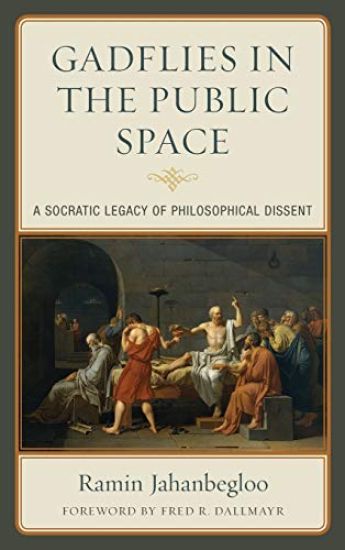
Gadflies in the Public Space
Ramin Jahanbegloo; Tatiana Yu. Danilchenko
Lexington Books
2016
sidottu
The concept of disobedient consciousness and the rebellious Socratic mind that grows out of this book is, above all, a product of Ramin Jahanbegloo’s life meetings with the two apparently contradictory worlds of philosophy and politics. More precisely, it is the result of approaching the public realm in terms of a philosophical quest for truth and justice. This restless quest for truth and justice has a history that continues to bear upon us, however much we choose to ignore it. We can think about the current situation of philosophy by exploring that history. The image of Socrates represents a mid-point between politics and philosophy; the Socratic mind, exemplified by the presence of the public gadfly in history, finds itself at the beginning of a new struggle for truth. The journey to this struggle started with the trial of Socrates, followed by the experiences of Henry David Thoreau, Mahatma Gandhi, Martin Luther King Jr., and Albert Camus. But the forging of the rebellious mind and the sustaining of the civic task of philosophy are goals which impose themselves to each of us whenever we are reminded by the urgency of critical thinking in our own dark times. The future of humankind necessarily requires convictions and commitments, but it also requires Socratic rebels, of the mind and of action, who have the courage to swim against the tide. Examining dissent in the history of philosophy, this book will appeal to scholars of political theory and political philosophy and to scholars and students of political and intellectual history.
Flowing effortlessly from Sudhir Kakar's descriptions of his early life in undivided India to discussions on the Indian psyche and sexuality, India Analysed discusses Kakar's views on secularism and modern Indian leaders such as Gandhi and Nehru wherein he brings to bear his intellect on a wide range of issues such as philosophy, Indian culture and tradition, and the Partition, and, in doing so, reveals the psychological make-up of the contemporary Indian. Part of Ramin Jahanbegloo's series of interviews with prominent intellectuals who have influenced modern Indian thought, this candid and freewheeling conversation demystifies many of the complex ideas of the eminent psychoanalyst Sudhir Kakar.
Sorbonne-educated and the author of almost 30 books, Ramin Jahanbegloo, a philosopher of non-violence in the tradition of Tolstoy and Gandhi, was arrested and detained in Iran's notorious Evin prison in 2006. A petition against his imprisonment was initiated, with Umberto Eco, Jurgen Habermas, and Noam Chomsky among the signatories. International organizations joined in, and media around the world reported his case extensively. Finally, after four months, he was released. In this memoir Jahanbegloo recounts his confinement, his fear for his life, and his concern for the well-being of his family. With cockroaches his only companions, he is sustained by the wisdom of the great philosophers and by his memories of childhood in Tehran and coming-of-age in Paris. Now exiled to Canada, Jahanbegloo wryly observes that he "traded the danger and violence of an Iranian prison for the mediocrity and hypocrisy of a late capitalist society" and finds himself struggling yet again--this time against banality--in his continued quest for freedom.
Non-violent movements, under figures like Gandhi and the Dalai Lama, led to some of the great social changes of the 20th century, and some argue it offers solutions for this century's problems. This book explores non-violence from its roots in diverse religious and philosophical traditions to its role in bringing social and political change today.