Kirjojen hintavertailu. Mukana 12 390 323 kirjaa ja 12 kauppaa.

Kirjailija

Ramón Eduardo Ruíz

Kirjat ja teokset yhdessä paikassa: 6 kirjaa, julkaisuja vuosilta 1970-2019, suosituimpien joukossa Triumphs and Tragedy. Vertaile teosten hintoja ja tarkista saatavuus suomalaisista kirjakaupoista.

Mukana myös kirjoitusasut: Ramon Eduardo Ruiz, Ramón Eduardo Ruiz

6 kirjaa

Kirjojen julkaisuhaarukka 1970-2019.

On The Rim Of Mexico

On The Rim Of Mexico

Ramon Eduardo Ruiz

Routledge
2019
sidottu
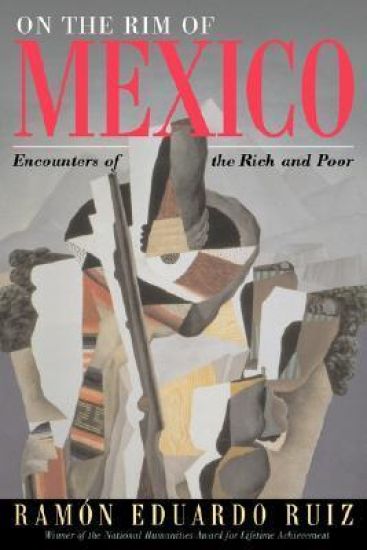
The vast stretch of mostly arid lands and deserts that makes up the border between Mexico and the United States is not only one of the longest international boundaries in the world, setting apart two entirely different countries for more than two thousand miles, it is the backdrop for a seemingly endless series of major binational news stories. Witness the headline-grabbing attention garnered by NAFTA and the global economy; the assembly plants labeled saviors of the Mexican poor; the accounts applauding the capture of Mexican drug lords; and the columns upon columns devoted to stories about illegal immigration. Nowhere else does a poor, Third World country, like Mexico, share a common border with a wealthy, powerful neighbor del otro lado (on the other side). Here, as one goes, so goes the other.On the Rim of Mexico: Encounters of the Rich and Poor addresses the ties and asymmetries across the Mexico-U.S. border, from Tijuana/San Diego to Matamoros/Brownsville. Based on author Ram-duardo Ruiz's extensive research, travels, remembrances, and first-hand interviews with the people on the Mexican side, the book probes the history, economics, and customs which have shaped this region today. While the author considers many timely issues (the impact of drug trafficking, legal and illegal immigration, assembly plants and the global economy, and the ecological disaster in the making), the book is also an examination of the borderlands themselves: what they are, how they came to be, and salient aspects of life in this region of the world. Moreover, it is an exploration of binational themes. For Mexicans who live and die next door to the almighty Uncle Sam, nearly everything has a binational ring?even personal identity. On the Rim of Mexico is a moving portrait of the people, places, and issues which make-up border life today.
The People of Sonora and Yankee Capitalists

The People of Sonora and Yankee Capitalists

Ramón Eduardo Ruiz

University of Arizona Press
2017
nidottu
Capitalism, the economic system of Western Europe and the United States at the turn of the century, had a major impact on every country of the Third World. In the Western Hemisphere, no country escaped its influence, particularly the North American version, increasingly omnipotent. Mexico, next door to the powerful colossus, often felt the brunt of that impact. The People of Sonora and Yankee Capitalists examines how the advent of North American dollars between 1882 and 1910 helped reshape the economic, social, and political contours of a Mexican province on the border of Arizona. The activity of Yankee promoters, particularly miners, land speculators, and cattle barons, altered dramatically the colonial structure left behind by its former Spanish masters. Even the psychology of the inhabitants of Sonora underwent a kind of metamorphosis. This book, in short, explains what happened to Mexico’s traditional society when Yankee capitalists made their appearance.
On The Rim Of Mexico

On The Rim Of Mexico

Ramon Eduardo Ruiz

Westview Press Inc
1999
nidottu
The vast stretch of mostly arid lands and deserts that makes up the border between Mexico and the United States is not only one of the longest international boundaries in the world, setting apart two entirely different countries for more than two thousand miles, it is the backdrop for a seemingly endless series of major binational news stories. Witness the headline-grabbing attention garnered by NAFTA and the global economy; the assembly plants labeled saviors of the Mexican poor; the accounts applauding the capture of Mexican drug lords; and the columns upon columns devoted to stories about illegal immigration. Nowhere else does a poor, Third World country, like Mexico, share a common border with a wealthy, powerful neighbor del otro lado (on the other side). Here, as one goes, so goes the other.On the Rim of Mexico: Encounters of the Rich and Poor addresses the ties and asymmetries across the Mexico-U.S. border, from Tijuana/San Diego to Matamoros/Brownsville. Based on author Ram-duardo Ruiz's extensive research, travels, remembrances, and first-hand interviews with the people on the Mexican side, the book probes the history, economics, and customs which have shaped this region today. While the author considers many timely issues (the impact of drug trafficking, legal and illegal immigration, assembly plants and the global economy, and the ecological disaster in the making), the book is also an examination of the borderlands themselves: what they are, how they came to be, and salient aspects of life in this region of the world. Moreover, it is an exploration of binational themes. For Mexicans who live and die next door to the almighty Uncle Sam, nearly everything has a binational ring?even personal identity. On the Rim of Mexico is a moving portrait of the people, places, and issues which make-up border life today.
Triumphs and Tragedy

Triumphs and Tragedy

Ramón Eduardo Ruíz

WW Norton Co
1994
nidottu
Chronicles the history of Mexico from the Olmec, Mayan, and Aztec civilizations through the arrival of the Spanish in the sixteenth century and their subsequent domination of the Indians, to the religious transformations and the revolutions that laid thefoundations of modern Mexico
The Great Rebellion

The Great Rebellion

Ramón Eduardo Ruíz

WW Norton Co
1983
nidottu
It is widely held that the struggle to overthrow the corrupt regime of Porfirio Diaz fundamentally transformed the structure of Mexican society, bringing social justice for downtrodden peasants and workers. Ramón Eduardo Ruíz refutes the traditional view. Drawing on numerous archival sources, he carefully examines the economic consequences of the Diaz regime and traces the growth of widespread social discontent. He describes the backgrounds and professed aims of the Revolution's colorful leaders—Madero, Venustiano Carranza, Pancho Villa, Alvaro Obregón, and Emiliano Zapata—and then sets out to discover what, behind the superficial paper changes and the rhetoric, they actually did. He concludes that the so-called Revolution was led by elements of the dissatisfied middle class whose goals were narrow and bourgeois in character. Despite important paper reforms, many of the old political, economic, and social injustices and inequalities survived.
Cuba

Cuba

Ramón Eduardo Ruíz

WW Norton Co
1970
nidottu
Professor Ruiz's analysis begins with Cuba's historic relationship with the United States, examining the effect of the sugar industry and U.S. foreign policy on Cuba's economy, social structure, and political development. He shows how the lack of cohesion in Cuban society affected the courses of events, and analyzes the sources of Cuban nationalism and anti-Americanism. Focusing on issues of economic development and social justice in Cuban history, he traces Cuba's revolutionary tradition and leaders, from the struggle for independence from Spain in the 1890's, through the revolution led by José Marti in 1933, up to Fidel Castro. He takes up the question why--and when--Castro turned to Communism, and discusses the ideology of the Revolution in the perspective of the history of socialist ideas in Cuba. By placing the events of 1959 in the context of Cuban history, Cuba: The Making of a Revolution meets the need for an authoritative analysis of the background of the Revolution, and sheds new light on its causes and outcome.