Kirjojen hintavertailu. Mukana 12 390 323 kirjaa ja 12 kauppaa.

Kirjailija

Ramon Pacheco Pardo

Kirjat ja teokset yhdessä paikassa: 20 kirjaa, julkaisuja vuosilta 2017-2025, suosituimpien joukossa An Analysis of Hans J. Morgenthau's Politics Among Nations. Vertaile teosten hintoja ja tarkista saatavuus suomalaisista kirjakaupoista.

20 kirjaa

Kirjojen julkaisuhaarukka 2017-2025.

An Analysis of Hans J. Morgenthau's Politics Among Nations

An Analysis of Hans J. Morgenthau's Politics Among Nations

Ramon Pacheco Pardo

Macat International Limited
2017
nidottu
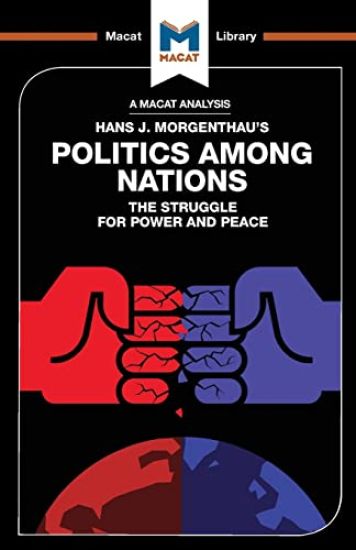
Hans Morgenthau’s Politics Among Nations is a classic of political science, built on the firm foundation of Morgenthau’s watertight reasoning skills.The central aim of reasoning is to construct a logical and persuasive argument that carefully organizes and supports its conclusions – often around a central concept or scheme of argumentation. Morgenthau’s subject was international relations – the way in which the world’s nations interact, and come into conflict or peace – a topic which was of vital importance during the unstable wake of the Second World War. To the complex problem of understanding the ways in which the post-war nations were jostling for power, Morgenthau brought a comprehensive schema: the concept of “realism” – or, in other words, the idea that every nation will act so as to maximise its own interests. From this basis, Morgenthau builds a systematic argument for a pragmatic approach to international relations in which nations seeking consensus should aim for a balance of power, grounding relations between states in understandings of how the interests of individual nations can be maximized.Though seismic shifts in international politics after the Cold War undeniably altered the landscape of international relations, Morgenthau’s dispassionate reasoning about the nature of our world remains influential to this day.
Startup Capitalism

Startup Capitalism

Robyn Klingler-Vidra; Ramon Pacheco Pardo

CORNELL UNIVERSITY PRESS
2025
pokkari
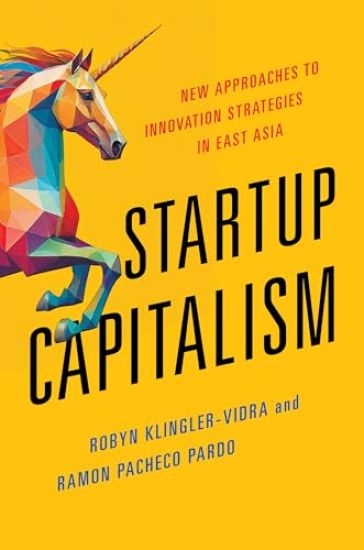
In Startup Capitalism, Robyn Klingler-Vidra and Ramon Pacheco Pardo explore the place of startups in contemporary East Asian economies. The last few decades have seen East Asian governments provide increasing support for startups—new, high-growth, technologically oriented firms. Yet, as the authors observe, such initiatives do not necessarily benefit the growth of startups as challengers to large, established firms. Rather, they often enable startups to function as boosters for the competitiveness of these firms. Startups, in short, are both disruptors to and resources for big businesses. Klingler-Vidra and Pacheco Pardo demonstrate this dual role by examining the evolution of startup-centric policies in Japan, South Korea, Taiwan, and China. They show that in the region, what they call startup capitalism—an economic and political system in which startups contribute to employment, innovation, and growth—can take multiple forms. Rich with empirical detail, Startup Capitalism reveals how and why startups can end up working with—or even for—large firms to drive a country's technological capabilities.
Startup Capitalism

Startup Capitalism

Robyn Klingler-Vidra; Ramon Pacheco Pardo

CORNELL UNIVERSITY PRESS
2025
sidottu
In Startup Capitalism, Robyn Klingler-Vidra and Ramon Pacheco Pardo explore the place of startups in contemporary East Asian economies. The last few decades have seen East Asian governments provide increasing support for startups—new, high-growth, technologically oriented firms. Yet, as the authors observe, such initiatives do not necessarily benefit the growth of startups as challengers to large, established firms. Rather, they often enable startups to function as boosters for the competitiveness of these firms. Startups, in short, are both disruptors to and resources for big businesses. Klingler-Vidra and Pacheco Pardo demonstrate this dual role by examining the evolution of startup-centric policies in Japan, South Korea, Taiwan, and China. They show that in the region, what they call startup capitalism—an economic and political system in which startups contribute to employment, innovation, and growth—can take multiple forms. Rich with empirical detail, Startup Capitalism reveals how and why startups can end up working with—or even for—large firms to drive a country's technological capabilities.
North Korea

North Korea

Ramon Pacheco Pardo

AGENDA PUBLISHING
2024
sidottu
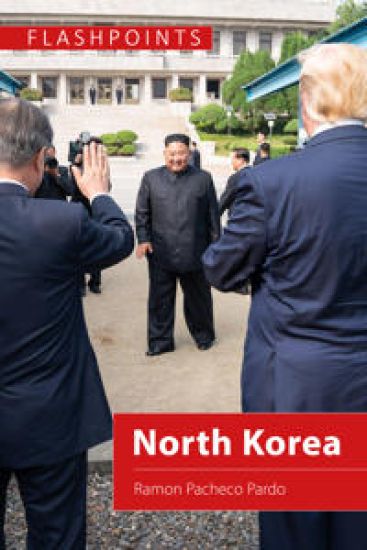
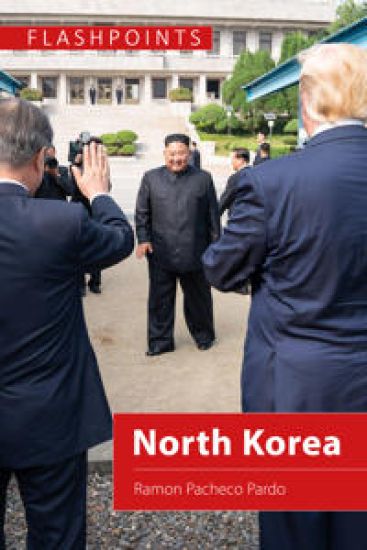
The Kim family of North Korea is the most successful political dynasty of the twentieth century, and it shows no signs of loosening its grip on power. A communist dictatorship formed in the embers of the Second World War, it heads one of the most repressive regimes in the world with human rights abuses and the sophisticated surveillance of its population deployed as tools of state control. Deliberately isolated from the world, North Korea is an anomaly in the international system. It survives through the sale of weapons, while its people often starve because of the refusal to take in international trade or aid. Ramon Pacheco Pardo offers insight and first-hand experience of North Korea today. In seeking to explore the threat North Korea might pose to global security, he shows how the regime has been shaped by its own sense of insecurity and animosity towards the United States. As the regime continues to develop its own nuclear capabilities and export arms to Russia, Iran and Syria, Pacheco Pardo considers its tense relations with the United States, Japan and South Korea as well as its more ambiguous relationship with China.
North Korea

North Korea

Ramon Pacheco Pardo

AGENDA PUBLISHING
2024
nidottu
The Kim family of North Korea is the most successful political dynasty of the twentieth century, and it shows no signs of loosening its grip on power. A communist dictatorship formed in the embers of the Second World War, it heads one of the most repressive regimes in the world with human rights abuses and the sophisticated surveillance of its population deployed as tools of state control. Deliberately isolated from the world, North Korea is an anomaly in the international system. It survives through the sale of weapons, while its people often starve because of the refusal to take in international trade or aid. Ramon Pacheco Pardo offers insight and first-hand experience of North Korea today. In seeking to explore the threat North Korea might pose to global security, he shows how the regime has been shaped by its own sense of insecurity and animosity towards the United States. As the regime continues to develop its own nuclear capabilities and export arms to Russia, Iran and Syria, Pacheco Pardo considers its tense relations with the United States, Japan and South Korea as well as its more ambiguous relationship with China.
Korea

Korea

Victor Cha; Ramon Pacheco Pardo

YALE UNIVERSITY PRESS
2024
pokkari
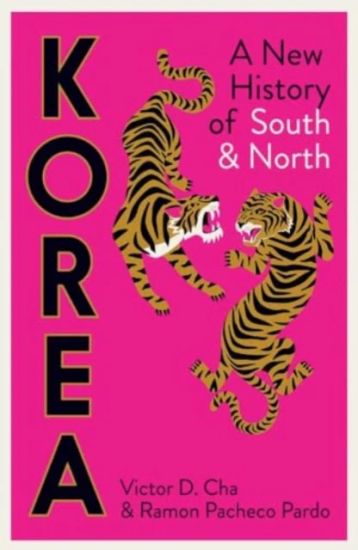
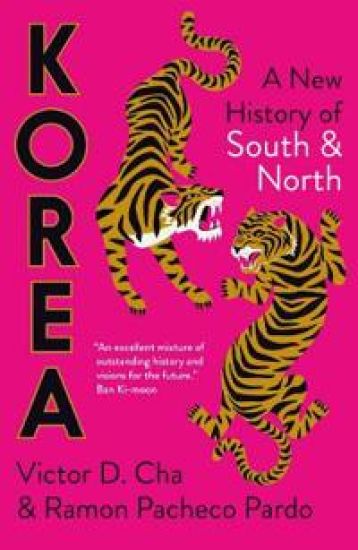
A major new history of North and South Korea, from the late nineteenth century to the present day “Cha and Pacheco Pardo have years of expertise in Korean international relations. . . . A crisp and balanced account.”—Christopher Harding, The Telegraph Korea has a long, riveting history—it is also a divided nation. South Korea is a vibrant democracy, the tenth largest economy, and is home to a world-renowned culture. North Korea is ruled by the most authoritarian regime in the world, a poor country in a rich region, and is best known for the cult of personality surrounding the ruling Kim family. But both Koreas share a unique common history. Victor Cha and Ramon Pacheco Pardo draw on decades of research to explore the history of modern Korea, from the late nineteenth century, Japanese occupation, and Cold War division to the present day. A small country caught amongst the world’s largest powers—including China, Japan, Russia, and the United States—Korea’s fate has been closely connected to its geography and the strength of its leadership and society. This comprehensive history sheds light on the evolving identities of the two Koreas, explaining the sharp differences between North and South, and prospects for unification.
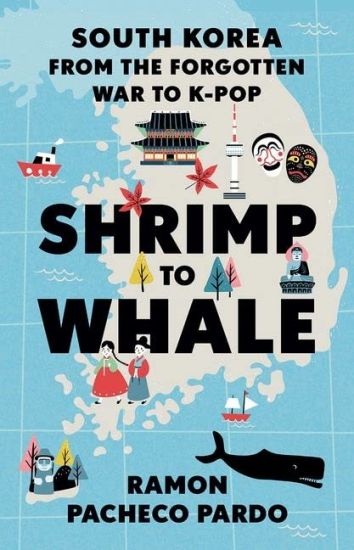
Shrimp to Whale: South Korea from the Forgotten War to K-Pop

Shrimp to Whale: South Korea from the Forgotten War to K-Pop

Ramon Pacheco Pardo

Oxford University Press
2023
nidottu
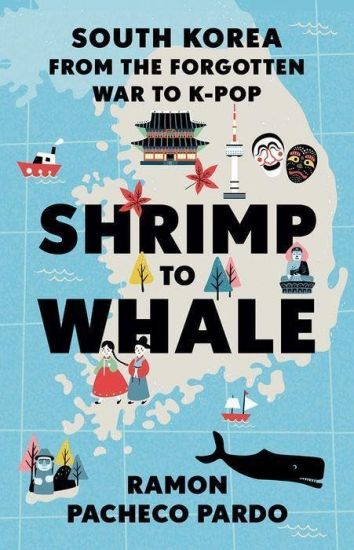
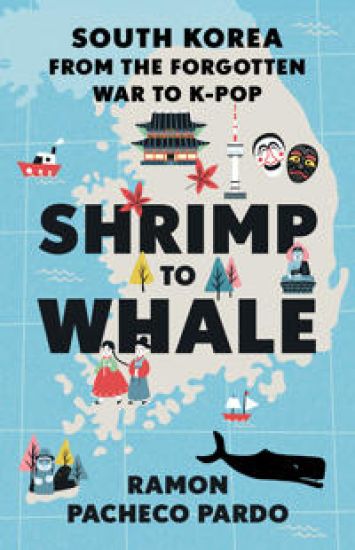
South Korea has the most remarkable of histories. Born from the ashes of colonialism, partition and a devastating war, back in the 1950s there were real doubts about its survival as an independent state. Yet South Korea did survive, and first became known globally for the export of cheap toys, shoes and clothing. Today, South Korea is a boisterous democracy, a vibrant market economy, a tech powerhouse, and home to the coolest of cultures. In just seventy years, this society has grown from a shrimp into a whale. What explains this extraordinary transformation? For some, it was ordinary South Koreans who fought to change their country, and still strive to continue shaping it. For others, it was all down to forward-looking political and business leaders, who had the vision that their country would one day be different. Whichever version you prefer, it's clear that, at its core, South Korea's is the story of a people who dreamt big, and saw their dreams coming true. This is the history of South Korea, from its millennia-old roots, through its foundation as a nation-state and economic development under dictatorship, to its present as a rich, free and cool country on the world stage.
South Korea's Grand Strategy

South Korea's Grand Strategy

Ramon Pacheco Pardo

Columbia University Press
2023
sidottu
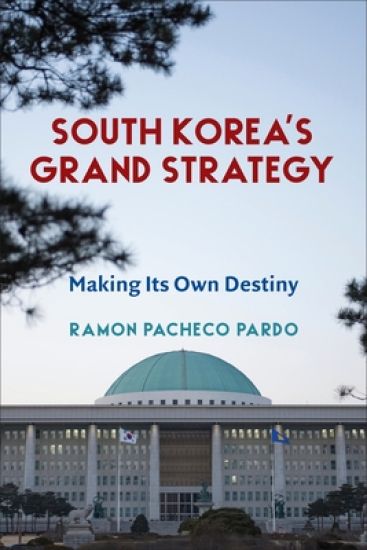
Since the end of the Cold War, South Korea has taken on a greater role in global affairs. Ramon Pacheco Pardo provides a groundbreaking analysis of South Korea’s foreign policy from its transition to democracy in the late 1980s through the present day, arguing that the country’s approach to the world constitutes a grand strategy.This book examines the key factors and goals that shape South Korea’s long-term strategy, with analysis that brings together its diplomatic, military, economic, and soft-power components. Pacheco Pardo shows that South Korea’s fundamental aim has been to move beyond its past as a “shrimp among whales” and instead attain autonomy and freedom of action. He explores how South Korean leaders across parties and governments have pursued security, prosperity, and status. Pacheco Pardo tracks South Korea’s core relationships with North Korea, the United States, and China, and he details the country’s objectives and policies across East Asia, the Asia-Pacific region, and the rest of the world.Drawing on in-depth interviews with past and present policy makers, this book presents an analytical account of how South Korean strategy is made and practiced. It expertly lays out South Korea’s grand strategy and, more broadly, makes a compelling case that middle powers like South Korea can implement grand strategies.
South Korea's Grand Strategy

South Korea's Grand Strategy

Ramon Pacheco Pardo

Columbia University Press
2023
pokkari
Since the end of the Cold War, South Korea has taken on a greater role in global affairs. Ramon Pacheco Pardo provides a groundbreaking analysis of South Korea’s foreign policy from its transition to democracy in the late 1980s through the present day, arguing that the country’s approach to the world constitutes a grand strategy.This book examines the key factors and goals that shape South Korea’s long-term strategy, with analysis that brings together its diplomatic, military, economic, and soft-power components. Pacheco Pardo shows that South Korea’s fundamental aim has been to move beyond its past as a “shrimp among whales” and instead attain autonomy and freedom of action. He explores how South Korean leaders across parties and governments have pursued security, prosperity, and status. Pacheco Pardo tracks South Korea’s core relationships with North Korea, the United States, and China, and he details the country’s objectives and policies across East Asia, the Asia-Pacific region, and the rest of the world.Drawing on in-depth interviews with past and present policy makers, this book presents an analytical account of how South Korean strategy is made and practiced. It expertly lays out South Korea’s grand strategy and, more broadly, makes a compelling case that middle powers like South Korea can implement grand strategies.
Shrimp to Whale

Shrimp to Whale

Ramon Pacheco Pardo

C HURST CO PUBLISHERS LTD
2023
nidottu
Charts the incredible rise of South Korea, from colonisation and civil war to today’s thriving nation. South Korea has a remarkable history. Born from the ashes of imperial domination, partition and a devastating war, back in the 1950s there were real doubts about its survival as an independent state. Yet South Korea endures: today it is a boisterous democracy, a vibrant market economy, a tech powerhouse, and home to the coolest of cultures. In just seventy years, this society has grown from a shrimp into a whale. What explains this extraordinary transformation? For some, it was individual South Koreans who fought to change their country, and still strive to shape it. For others, it was forward-looking political and business leaders with a vision. Either way, it’s clear that this is the story of a people who dreamt big, and whose dreams came true. Shrimp to Whale is a lively history of South Korea, from its millennia-old roots, through the division of the Peninsula, dictatorship and economic growth, to today’s global powerhouse.
Korea

Korea

Victor Cha; Ramon Pacheco Pardo

YALE UNIVERSITY PRESS
2023
sidottu
A major new history of North and South Korea, from the late nineteenth century to the present day “Cha and Pacheco Pardo have years of expertise in Korean international relations. . . . A crisp and balanced account.”—Christopher Harding, The Telegraph Korea has a long, riveting history—it is also a divided nation. South Korea is a vibrant democracy, the tenth largest economy, and is home to a world-renowned culture. North Korea is ruled by the most authoritarian regime in the world, a poor country in a rich region, and is best known for the cult of personality surrounding the ruling Kim family. But both Koreas share a unique common history. Victor Cha and Ramon Pacheco Pardo draw on decades of research to explore the history of modern Korea, from the late nineteenth century, Japanese occupation, and Cold War division to the present day. A small country caught amongst the world’s largest powers—including China, Japan, Russia, and the United States—Korea’s fate has been closely connected to its geography and the strength of its leadership and society. This comprehensive history sheds light on the evolving identities of the two Koreas, explaining the sharp differences between North and South, and prospects for unification.
Shrimp to Whale: South Korea from the Forgotten War to K-Pop

Shrimp to Whale: South Korea from the Forgotten War to K-Pop

Ramon Pacheco Pardo

Oxford University Press
2022
sidottu
South Korea has the most remarkable of histories. Born from the ashes of colonialism, partition and a devastating war, back in the 1950s there were real doubts about its survival as an independent state. Yet South Korea did survive, and first became known globally for the export of cheap toys, shoes and clothing. Today, South Korea is a boisterous democracy, a vibrant market economy, a tech powerhouse, and home to the coolest of cultures. In just seventy years, this society has grown from a shrimp into a whale. What explains this extraordinary transformation? For some, it was ordinary South Koreans who fought to change their country, and still strive to continue shaping it. For others, it was all down to forward-looking political and business leaders, who had the vision that their country would one day be different. Whichever version you prefer, it's clear that, at its core, South Korea's is the story of a people who dreamt big, and saw their dreams coming true. This is the history of South Korea, from its millennia-old roots, through its foundation as a nation-state and economic development under dictatorship, to its present as a rich, free and cool country on the world stage.
Shrimp to Whale

Shrimp to Whale

Ramon Pacheco Pardo

C HURST CO PUBLISHERS LTD
2022
sidottu
Charts the incredible rise of South Korea, from colonisation and civil war to today’s thriving nation. South Korea has a remarkable history. Born from the ashes of imperial domination, partition and a devastating war, back in the 1950s there were real doubts about its survival as an independent state. Yet South Korea endures: today it is a boisterous democracy, a vibrant market economy, a tech powerhouse, and home to the coolest of cultures. In just seventy years, this society has grown from a shrimp into a whale. What explains this extraordinary transformation? For some, it was individual South Koreans who fought to change their country, and still strive to shape it. For others, it was forward-looking political and business leaders with a vision. Either way, it’s clear that this is the story of a people who dreamt big, and whose dreams came true. Shrimp to Whale is a lively history of South Korea, from its millennia-old roots, through the division of the Peninsula, dictatorship and economic growth, to today’s global powerhouse.
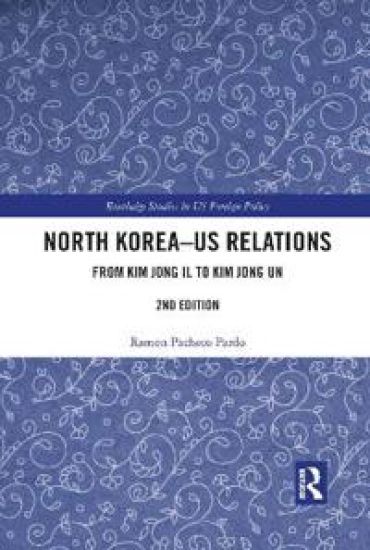
North Korea - US Relations

North Korea - US Relations

Ramon Pacheco Pardo

Taylor Francis Ltd
2021
nidottu
How has North Korea sought to normalize diplomatic relations with the US? Explaining the continuities between the Kim Jong-un and Kim Jong-il governments, as well as the discontinuities, especially the decisive move towards brinkmanship under Kim Jong-un culminating in 2017 and subsequent turn towards diplomacy, this book shows how North Korea has constantly learnt from its own experience and the experience of others to evolve and adapt its policy towards the US. This fully revised and expanded second edition draws on interviews and conversations with American, North and South Korean, Chinese and other countries’ policy-makers and experts and North Korean official media stories. It has been updated to include discussion of the post-2012 period when Kim Jong-un replaced his father to become the leader of North Korea, and provides detailed analysis of both presidencies, concluding with a study of the two bilateral summits held with President Donald Trump. Showing how weaker powers can try to achieve their main foreign policy goals with respect to great powers, this book will be of interest to scholars and students of the international relations of East Asia, US Foreign Policy, Korean Studies and Foreign Policy Analysis. It should also prove relevant to those studying international bargaining and negotiation.
North Korea - US Relations

North Korea - US Relations

Ramon Pacheco Pardo

Routledge
2019
sidottu
How has North Korea sought to normalize diplomatic relations with the US? Explaining the continuities between the Kim Jong-un and Kim Jong-il governments, as well as the discontinuities, especially the decisive move towards brinkmanship under Kim Jong-un culminating in 2017 and subsequent turn towards diplomacy, this book shows how North Korea has constantly learnt from its own experience and the experience of others to evolve and adapt its policy towards the US. This fully revised and expanded second edition draws on interviews and conversations with American, North and South Korean, Chinese and other countries’ policy-makers and experts and North Korean official media stories. It has been updated to include discussion of the post-2012 period when Kim Jong-un replaced his father to become the leader of North Korea, and provides detailed analysis of both presidencies, concluding with a study of the two bilateral summits held with President Donald Trump. Showing how weaker powers can try to achieve their main foreign policy goals with respect to great powers, this book will be of interest to scholars and students of the international relations of East Asia, US Foreign Policy, Korean Studies and Foreign Policy Analysis. It should also prove relevant to those studying international bargaining and negotiation.
Politics Among Nations

Politics Among Nations

Ramon Pacheco Pardo

Macat International Limited
2017
sidottu
Hans Morgenthau’s Politics Among Nations is a classic of political science, built on the firm foundation of Morgenthau’s watertight reasoning skills.The central aim of reasoning is to construct a logical and persuasive argument that carefully organizes and supports its conclusions – often around a central concept or scheme of argumentation. Morgenthau’s subject was international relations – the way in which the world’s nations interact, and come into conflict or peace – a topic which was of vital importance during the unstable wake of the Second World War. To the complex problem of understanding the ways in which the post-war nations were jostling for power, Morgenthau brought a comprehensive schema: the concept of “realism” – or, in other words, the idea that every nation will act so as to maximise its own interests. From this basis, Morgenthau builds a systematic argument for a pragmatic approach to international relations in which nations seeking consensus should aim for a balance of power, grounding relations between states in understandings of how the interests of individual nations can be maximized.Though seismic shifts in international politics after the Cold War undeniably altered the landscape of international relations, Morgenthau’s dispassionate reasoning about the nature of our world remains influential to this day.
After Hegemony

After Hegemony

Ramon Pacheco Pardo

Macat International Limited
2017
sidottu
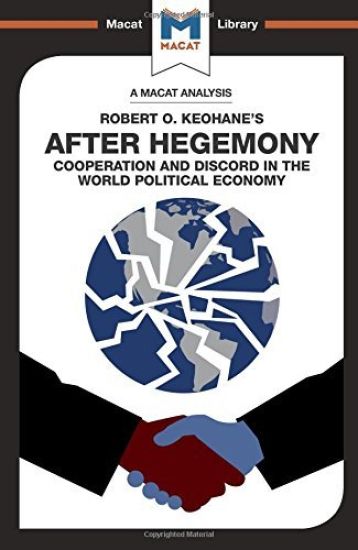
Robert O. Keohane’s After Hegemony is both a classic of international relations scholarship and an example of how creative thinking can help shed new light on the world. Since the end of World War II, the global political landscape had been dominated by two superpowers, the USA and the USSR, and the tense stand-off of the Cold War. But, as the Cold War began to thaw, it became clear that a new global model might emerge. The commonly held belief amongst those studying international relations was that it was impossible for nations to work together without the influence of a hegemon (a dominant international power) to act as both referee and ultimate decision-maker. This paradigm – neorealism – worked on the basis that every nation will do all it can to maximize its power, with such processes only checked by a balance of competing powers. Keohane, however, examined the evidence afresh and came up with novel explanations for what was likely to come next. He went outside the dominant paradigm, and argued for what came to be known as the neoliberal conception of international politics. States, Keohane said, can and will cooperate without the influence of a hegemonic power, so long as doing so brings them absolute gains in the shape of economic and cultural benefits. In Keohane’s highly-creative view, the pursuit of national self-interest leads naturally to international cooperation – and to the formation of global regimes (such as the United Nations) that can reinforce and foster it.
The Art of War

The Art of War

Ramon Pacheco Pardo

Macat International Limited
2017
sidottu
Sun Tzu's The Art of War is a series of lessons in the applied art of problem solving. Sun (544 BC-496 BC), an experienced general from the Warring States period of Chinese history, saw war as an inevitable problem – indeed, the ultimate problem confronting the state. The Art of War summarises his lessons on how to solve the problems raised by conflict.The work comprises a series of pithy discussions of the different strategic situations that might arise, and the best responses for each. In many ways it is a masterclass in the application of critical thinking to practical affairs. Aspiring generals are advised to 'appraise the situation' according to five separate criteria, and to plan accordingly. 'The expert at battle seeks his victory from strategic advantage', Sun writes, so every general must assess their situation from every angle, and establish not only the best way to give themselves the strategic advantage – but also of preventing the other side from giving itself the advantage. Throughout the text, Sun epitomises the qualities of a good problem solver by focusing on the nature of the problem; asking productive questions about it; and making sound decisions.
An Analysis of Sun Tzu's The Art of War

An Analysis of Sun Tzu's The Art of War

Ramon Pacheco Pardo

Macat International Limited
2017
nidottu
Sun Tzu's The Art of War is a series of lessons in the applied art of problem solving. Sun (544 BC-496 BC), an experienced general from the Warring States period of Chinese history, saw war as an inevitable problem – indeed, the ultimate problem confronting the state. The Art of War summarises his lessons on how to solve the problems raised by conflict.The work comprises a series of pithy discussions of the different strategic situations that might arise, and the best responses for each. In many ways it is a masterclass in the application of critical thinking to practical affairs. Aspiring generals are advised to 'appraise the situation' according to five separate criteria, and to plan accordingly. 'The expert at battle seeks his victory from strategic advantage', Sun writes, so every general must assess their situation from every angle, and establish not only the best way to give themselves the strategic advantage – but also of preventing the other side from giving itself the advantage. Throughout the text, Sun epitomises the qualities of a good problem solver by focusing on the nature of the problem; asking productive questions about it; and making sound decisions.
An Analysis of Robert O. Keohane's After Hegemony

An Analysis of Robert O. Keohane's After Hegemony

Ramon Pacheco Pardo

Macat International Limited
2017
nidottu
Robert O. Keohane’s After Hegemony is both a classic of international relations scholarship and an example of how creative thinking can help shed new light on the world. Since the end of World War II, the global political landscape had been dominated by two superpowers, the USA and the USSR, and the tense stand-off of the Cold War. But, as the Cold War began to thaw, it became clear that a new global model might emerge. The commonly held belief amongst those studying international relations was that it was impossible for nations to work together without the influence of a hegemon (a dominant international power) to act as both referee and ultimate decision-maker. This paradigm – neorealism – worked on the basis that every nation will do all it can to maximize its power, with such processes only checked by a balance of competing powers. Keohane, however, examined the evidence afresh and came up with novel explanations for what was likely to come next. He went outside the dominant paradigm, and argued for what came to be known as the neoliberal conception of international politics. States, Keohane said, can and will cooperate without the influence of a hegemonic power, so long as doing so brings them absolute gains in the shape of economic and cultural benefits. In Keohane’s highly-creative view, the pursuit of national self-interest leads naturally to international cooperation – and to the formation of global regimes (such as the United Nations) that can reinforce and foster it.