Kirjojen hintavertailu. Mukana 12 390 323 kirjaa ja 12 kauppaa.

Kirjailija

Randal D. Day

Kirjat ja teokset yhdessä paikassa: 10 kirjaa, julkaisuja vuosilta 2000-2026, suosituimpien joukossa Introduction to Family Processes. Vertaile teosten hintoja ja tarkista saatavuus suomalaisista kirjakaupoista.

Mukana myös kirjoitusasut: Randal D Day

10 kirjaa

Kirjojen julkaisuhaarukka 2000-2026.

Introduction to Family Processes

Introduction to Family Processes

Denise Ann Bodman; Bethany Bustamante Van Vleet; Randal D. Day

TAYLOR FRANCIS LTD
2026
sidottu
Now in its seventh edition, and fully revised with a complete reimagining of voice, structure, and purpose, Introduction to Family Processes explores the complex workings of inner family life. Focusing on family processes and dynamics, rather than sociological trends, political topics, or the individual psychological approach, the text presents the research underlying core family processes and offers practical strategies to enhance family well-being and strengthen positive relationships. Key features of this edition include: A new chapter focused on parenting and intergenerational relationships, exploring how family roles evolve and shift over time. A contemporary focus, fully reflecting the values of inclusivity and diversity in the study of families, and including topics that speak directly to the lives of today’s students, including digital life, family formation, identity, and resilience. A wealth of pedagogical features throughout, including ‘Points to Ponder’ and TL;DR’ summary boxes, a ‘Family Toolbox’ of activities, study questions, and suggested readings. Tailored for students across undergraduate, postgraduate, and professional programs related to family studies, this book provides essential insights into the complex dynamics that shape how families function and thrive.
Introduction to Family Processes

Introduction to Family Processes

Denise Ann Bodman; Bethany Bustamante Van Vleet; Randal D. Day

TAYLOR FRANCIS LTD
2026
nidottu
Now in its seventh edition, and fully revised with a complete reimagining of voice, structure, and purpose, Introduction to Family Processes explores the complex workings of inner family life. Focusing on family processes and dynamics, rather than sociological trends, political topics, or the individual psychological approach, the text presents the research underlying core family processes and offers practical strategies to enhance family well-being and strengthen positive relationships. Key features of this edition include: A new chapter focused on parenting and intergenerational relationships, exploring how family roles evolve and shift over time. A contemporary focus, fully reflecting the values of inclusivity and diversity in the study of families, and including topics that speak directly to the lives of today’s students, including digital life, family formation, identity, and resilience. A wealth of pedagogical features throughout, including ‘Points to Ponder’ and TL;DR’ summary boxes, a ‘Family Toolbox’ of activities, study questions, and suggested readings. Tailored for students across undergraduate, postgraduate, and professional programs related to family studies, this book provides essential insights into the complex dynamics that shape how families function and thrive.
Introduction to Family Processes

Introduction to Family Processes

Denise Ann Bodman; Bethany Bustamante Van Vleet; Randal D. Day

TAYLOR FRANCIS LTD
2022
nidottu
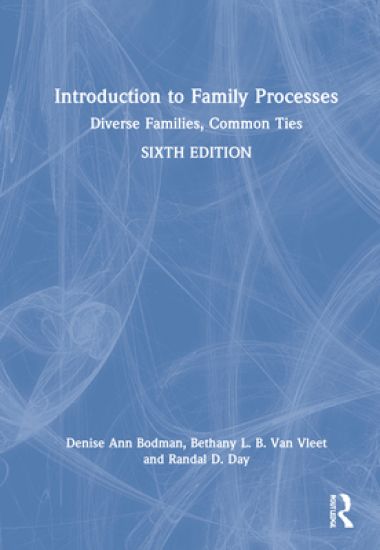
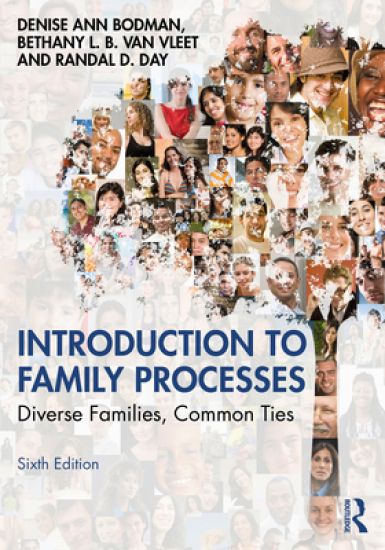
Introduction to Family Processes: Diverse Families, Common Ties serves to provide an explanation of the complex workings of inner family life. The text primarily focuses on family processes and dynamics (the "inside" of families) as opposed to sociological trends, political topics, or the individual psychological approach. The text further presents the research underlying these processes and effectively presents ways to increase the positive aspects of family life.This edition has been updated to include current research and contemporary topics. The text has been divided into four parts: Foundations, Building and Establishing Families, Maintaining Families, and Change/Turbulence/Gains/Losses. While the research methods chapter still provides an introductory examination of family science research, it now includes an expanded discussion on research design, methods, and advances in the area. A new chapter, titled "Forgiveness, Kindness, Hope, and Gratitude" has been incorporated to amplify positive family processes and highlight emerging research. This edition provides added emphasis on diverse families (e.g., race/ethnicity, family structure, LGBTQIA, ability, culture, and family formation), and each chapter includes a new "Discussions in Diversity" section related to that chapter. The authors have consciously included an epilogue as a way of reflecting on what they have learned, along with what they hope to learn in the future.Aimed at courses related to family studies and family dynamics, this text provides a comprehensive review of family processes. Whether it is used for undergraduate or graduate classes, professional growth, or personal enrichment, the text assists readers in enhancing the positive aspects of family life, avoiding undesirable aspects, and more effectively managing the challenges and obstacles families face that cannot be avoided. Thus, the text holds an appeal for people who live (or will live) in families, as well as those who want to work with families.
Introduction to Family Processes

Introduction to Family Processes

Denise Ann Bodman; Bethany Bustamante Van Vleet; Randal D. Day

TAYLOR FRANCIS LTD
2022
sidottu
Introduction to Family Processes: Diverse Families, Common Ties serves to provide an explanation of the complex workings of inner family life. The text primarily focuses on family processes and dynamics (the "inside" of families) as opposed to sociological trends, political topics, or the individual psychological approach. The text further presents the research underlying these processes and effectively presents ways to increase the positive aspects of family life.This edition has been updated to include current research and contemporary topics. The text has been divided into four parts: Foundations, Building and Establishing Families, Maintaining Families, and Change/Turbulence/Gains/Losses. While the research methods chapter still provides an introductory examination of family science research, it now includes an expanded discussion on research design, methods, and advances in the area. A new chapter, titled "Forgiveness, Kindness, Hope, and Gratitude" has been incorporated to amplify positive family processes and highlight emerging research. This edition provides added emphasis on diverse families (e.g., race/ethnicity, family structure, LGBTQIA, ability, culture, and family formation), and each chapter includes a new "Discussions in Diversity" section related to that chapter. The authors have consciously included an epilogue as a way of reflecting on what they have learned, along with what they hope to learn in the future.Aimed at courses related to family studies and family dynamics, this text provides a comprehensive review of family processes. Whether it is used for undergraduate or graduate classes, professional growth, or personal enrichment, the text assists readers in enhancing the positive aspects of family life, avoiding undesirable aspects, and more effectively managing the challenges and obstacles families face that cannot be avoided. Thus, the text holds an appeal for people who live (or will live) in families, as well as those who want to work with families.
Leading and Managing People in the Dynamic Organization
The current business environment requires that individuals, teams, and organizations are equipped to cope with an unpredictable marketplace and increasing competition. Organizations are forced to be kinetic, organic, and without boundaries if they are to remain successful. Given these environmental and marketplace demands, scholars must rethink the applicability of existing organizational theories and frameworks. In March 2001, a conference was held with the aim of developing and articulating this new model of organizations. Scholars contributed their expertise in areas, such as leadership, human resource management, negotiation and conflict, teams, entrepreneurship, organizational change, power and influence, and diversity. The contributors focused on their own area of expertise and considered how existing theories must be altered to fit a more agile, organizational form. Theoretical and empirical questions were raised, testable hypotheses were developed, and emerging themes were uncovered. The end result of the conference is this volume. It brings together the reflections of a diverse collection of organizational theorists and researchers on the implications of this new business model within their own areas of expertise. The book's goal is to inspire organizational scholars to develop a new theory and produce sound managerial advice for how to build and maintain a successful organization in a dynamic workplace. The chapters include a review of research literature with the highlights and citations that everybody working in a field must know, followed by how the research agenda is affected by the increasingly dynamic marketplace.
Sacred Matters

Sacred Matters

Wesley R. Burr; Loren D. Marks; Randal D. Day

Routledge
2011
nidottu
Sacred Matters explores the multi-disciplinary literature about the role of religion in family life and provides new research and a new theory about ways various aspects of the sacred are helpful and harmful. The authors hope that their new conceptual framework will stimulate new research and encourage the creation of new intervention programs designed to help families.Sacred Matters features:a new conceptual framework and theory about how, when, and why sacred matters influence family processes and outcomesnew qualitative and quantitative research collected in a variety of ways from people with different religious perspectives in different geographical areasan expansion in theory and research about the role of forgiveness, sacrifice, prayer, and sanctification in family lifethe integration of studies and issues from psychology, sociology, family studies, anthropology, and religion.This book raises the bar in creating new theories about family processes and in the integration of theory, research, and application. It begins with a review of the previous literature and then expands the research about sanctification to create a new general theory (or model) about ways sacred processes help and hinder families. Next the authors expand the theory and research about the role of forgiveness, sacrifice, and prayer in families. New theory and research are then added about loving, coping with conflict, dealing with undesirable behavior, generational relationships, morality, and the psychosocial aspects of religion. The authors then describe ways sacred theory can be integrated with other theories and ways it provides new explanations about broader social problems. The book concludes with new quantitative research and suggestions for future research.Researchers, practitioners, and advanced students in several disciplines will find this volume valuable. It will expand and enrich the reading in graduate and advanced undergraduate courses in areas such as family studies, human development, marriage and family therapy, the psychology of the family and the psychology of religion, the sociology of the family and the sociology of religion, pastoral counseling, anthropology, and social work.
Sacred Matters

Sacred Matters

Wesley R. Burr; Loren D. Marks; Randal D. Day

Routledge
2011
sidottu
Sacred Matters explores the multi-disciplinary literature about the role of religion in family life and provides new research and a new theory about ways various aspects of the sacred are helpful and harmful. The authors hope that their new conceptual framework will stimulate new research and encourage the creation of new intervention programs designed to help families.Sacred Matters features:a new conceptual framework and theory about how, when, and why sacred matters influence family processes and outcomesnew qualitative and quantitative research collected in a variety of ways from people with different religious perspectives in different geographical areasan expansion in theory and research about the role of forgiveness, sacrifice, prayer, and sanctification in family lifethe integration of studies and issues from psychology, sociology, family studies, anthropology, and religion.This book raises the bar in creating new theories about family processes and in the integration of theory, research, and application. It begins with a review of the previous literature and then expands the research about sanctification to create a new general theory (or model) about ways sacred processes help and hinder families. Next the authors expand the theory and research about the role of forgiveness, sacrifice, and prayer in families. New theory and research are then added about loving, coping with conflict, dealing with undesirable behavior, generational relationships, morality, and the psychosocial aspects of religion. The authors then describe ways sacred theory can be integrated with other theories and ways it provides new explanations about broader social problems. The book concludes with new quantitative research and suggestions for future research.Researchers, practitioners, and advanced students in several disciplines will find this volume valuable. It will expand and enrich the reading in graduate and advanced undergraduate courses in areas such as family studies, human development, marriage and family therapy, the psychology of the family and the psychology of religion, the sociology of the family and the sociology of religion, pastoral counseling, anthropology, and social work.
Leading and Managing People in the Dynamic Organization
The current business environment requires that individuals, teams, and organizations are equipped to cope with an unpredictable marketplace and increasing competition. Organizations are forced to be kinetic, organic, and without boundaries if they are to remain successful. Given these environmental and marketplace demands, scholars must rethink the applicability of existing organizational theories and frameworks. In March 2001, a conference was held with the aim of developing and articulating this new model of organizations. Scholars contributed their expertise in areas, such as leadership, human resource management, negotiation and conflict, teams, entrepreneurship, organizational change, power and influence, and diversity. The contributors focused on their own area of expertise and considered how existing theories must be altered to fit a more agile, organizational form. Theoretical and empirical questions were raised, testable hypotheses were developed, and emerging themes were uncovered. The end result of the conference is this volume. It brings together the reflections of a diverse collection of organizational theorists and researchers on the implications of this new business model within their own areas of expertise. The book's goal is to inspire organizational scholars to develop a new theory and produce sound managerial advice for how to build and maintain a successful organization in a dynamic workplace. The chapters include a review of research literature with the highlights and citations that everybody working in a field must know, followed by how the research agenda is affected by the increasingly dynamic marketplace.
Fatherhood

Fatherhood

H. Elizabeth Peters; Randal D Day; Gary W Peterson; Suzanne Steinmetz

Routledge Member of the Taylor and Francis Group
2000
sidottu
How much power does a father have to influence his children's development? A lively and often heated public debate on the role and value of the father in a family has been underway in the United States for the past decade. Nevertheless, we are far from understanding the complex ways in which fathers make contributions to their families and children. Fatherhood: Research, Interventions, and Policies addresses the central questions of the role of fathers: What is the impact of father involvement on child outcomes? What factors predict increased involvement of fathers?Bringing together papers presented at the Conference on Father Involvement, this volume includes contributions by leading scholars in anthropology, demography, economics, family science, psychology, and sociology. Many of the contributors also address the implications of father involvement for family policy issues, including family leave, child care, and child support. Furthermore, the discussion of fatherhood ranges well beyond the case of intact, middle-class, white families to include fathers from various ethnic groups and socioeconomic classes and of varied marital status, including fathers of nonmarital children, single-father families, and nonresident fathers. Fatherhood: Research, Interventions, and Policies addresses both practical and theoretical concerns, including:the redefinition of fatherhood changes over time in research on fatherhood the predictive power of fathers’activities on their children's adult outcomes the correlation between fathers’income and their involvement with their nonmarital children the influence of fathers on their sons’probability of growing up to become responsible fathers the effects of divorce on father-son and father-daughter relationships interventions that help to keep divorced fathers in touch with their childrenThis comprehensive, powerful book combines pioneering empirical research with thoughtful consideration of the social and psychological implications of fatherhood. It is essential reading for researchers, policymakers, psychologists, and students of family studies, human development, gender studies, social policy, sociology, and human ecology.
Fatherhood

Fatherhood

H. Elizabeth Peters; Randal D Day; Gary W Peterson; Suzanne Steinmetz

Routledge Member of the Taylor and Francis Group
2000
nidottu
How much power does a father have to influence his children's development? A lively and often heated public debate on the role and value of the father in a family has been underway in the United States for the past decade. Nevertheless, we are far from understanding the complex ways in which fathers make contributions to their families and children. Fatherhood: Research, Interventions, and Policies addresses the central questions of the role of fathers: What is the impact of father involvement on child outcomes? What factors predict increased involvement of fathers?Bringing together papers presented at the Conference on Father Involvement, this volume includes contributions by leading scholars in anthropology, demography, economics, family science, psychology, and sociology. Many of the contributors also address the implications of father involvement for family policy issues, including family leave, child care, and child support. Furthermore, the discussion of fatherhood ranges well beyond the case of intact, middle-class, white families to include fathers from various ethnic groups and socioeconomic classes and of varied marital status, including fathers of nonmarital children, single-father families, and nonresident fathers. Fatherhood: Research, Interventions, and Policies addresses both practical and theoretical concerns, including:the redefinition of fatherhood changes over time in research on fatherhood the predictive power of fathers’activities on their children's adult outcomes the correlation between fathers’income and their involvement with their nonmarital children the influence of fathers on their sons’probability of growing up to become responsible fathers the effects of divorce on father-son and father-daughter relationships interventions that help to keep divorced fathers in touch with their childrenThis comprehensive, powerful book combines pioneering empirical research with thoughtful consideration of the social and psychological implications of fatherhood. It is essential reading for researchers, policymakers, psychologists, and students of family studies, human development, gender studies, social policy, sociology, and human ecology.