Kirjojen hintavertailu. Mukana 12 595 353 kirjaa ja 12 kauppaa.

Kirjailija

Randall Collins

Kirjat ja teokset yhdessä paikassa: 28 kirjaa, julkaisuja vuosilta 1986-2026, suosituimpien joukossa Max Weber. Vertaile teosten hintoja ja tarkista saatavuus suomalaisista kirjakaupoista.

28 kirjaa

Kirjojen julkaisuhaarukka 1986-2026.

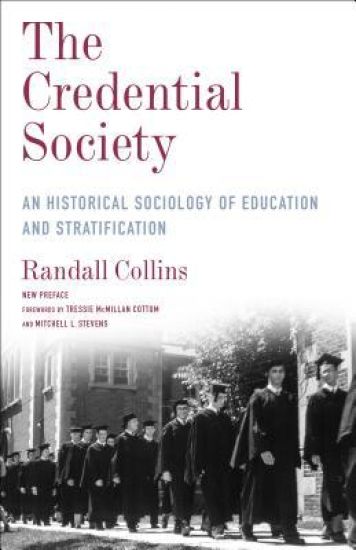
The Credential Society

The Credential Society

Randall Collins; Tressie McMillan Cottom; Mitchell L. Stevens

Columbia University Press
2019
sidottu
The Credential Society is a classic on the role of higher education in American society and an essential text for understanding the reproduction of inequality. Controversial at the time, Randall Collins’s claim that the expansion of American education has not increased social mobility, but rather created a cycle of credential inflation, has proven remarkably prescient.Collins shows how credential inflation stymies mass education’s promises of upward mobility. An unacknowledged spiral of the rising production of credentials and job requirements was brought about by the expansion of high school and then undergraduate education, with consequences including grade inflation, rising educational costs, and misleading job promises dangled by for-profit schools. Collins examines medicine, law, and engineering to show the ways in which credentialing closed these high-status professions to new arrivals. In an era marked by the devaluation of high school diplomas, outcry about the value of expensive undergraduate degrees, and the proliferation of new professional degrees like the MBA, The Credential Society has more than stood the test of time. In a new preface, Collins discusses recent developments, debunks claims that credentialization is driven by technological change, and points to alternative pathways for the future of education.
Onko kapitalismilla tulevaisuutta?

Onko kapitalismilla tulevaisuutta?

Immanuel Wallerstein; Randall Collins; Michael Mann; Georgi Derluguian; Craig Calhoun

VASTAPAINO
2014
nidottu
Onko kapitalismilla tulevaisuutta? on viiden maailmankuulun yhteiskunnan ja globalisaation tutkijan yhteisteos, jossa kirjoittajat pohtivat eri näkökulmista kapitalismin tulevaisuutta. Romahtaako kapitalismi aiempien yhteiskuntajärjestelmien tavoin? Romahtihan Rooman valtakunta, samoin Euroopan vanhat monarkiat neuvostoimperiumista puhumattakaan. Mitä tapahtuu Yhdysvaltojen globaalille hegemonialle? Kirjoittajien mukaansa nyky-yhteiskunta on joka tapauksessa tullut historialliseen käännekohtaan. Vaikka vallanpitäjät ovat aina kuvitelleet hallitsevansa historian käännekohdissa, poliittinen eliitti ei ole koskaan kirjoittajien mukaan kyennyt näkemään aiheuttamiensa kriisien seurauksia. Siksi vain harvat 2000-luvullakaan käsittävät tulevien vuosikymmenten suuria muutoksia. Teos esittää läpileikkauksen maailman mahdollisista tulevaisuuksista. Kirjoittajat vertaavat menneisyyttä ja nykyisyyttä ennustaessaan tulevia globaaleja rakennemuutoksia. Taloudellisen ja yhteiskunnallisen analyysin ohella kirjoittajat tarkastelevat neuvostokommunismin luhistumista seurauksineen, keskiluokkaisen työn loppua, ydinsodan uhkaa ja ympäristökriisiä. Viisikkomme päätti kirjoittaa epätavallisen kirjan, koska jotain suurta häämöttää taivaanrannassa: kriisi, joka on paljon suurempi kuin viimeinen suuri lama, joka jälkikäteen tarkasteltuna vaikuttaa pelkältä alkusoitolta suurten huolten ja muutosten aikakaudelle. Synkkyydestään huolimatta kirjassa on optimistinen vire. Kirjoittajat korostavatkin, että historian suunta on vielä avoin ja että ihmisten toiminnalla on yhä merkitystä. Ehkä tästä teoksesta on apua talouskriisin ratkaisemisessa? Onko kapitalismilla tulevaisuutta? on ensimmäinen kerta, kun kansainvälisesti tunnettujen sosiologien joukko on tehnyt yhdessä teoksen, joka osallistuu nykykeskusteluun vailla akateemisen keskustelun vaikeaselkoisuutta ja kiemuroita. Teos on sosiologisen ajattelun huipentuma, mutta samalla kirja, jota on nautinnollista lukea. Ajankohtaisuudessaan ja iskevyydessään se on vertaansa vailla. Kirja julkaistaan suomeksi Vastapainon ja Gaudeamuksen yhteistyönä.
Max Weber

Max Weber

Randall Collins

SAGE Publications Inc
1986
sidottu
A concise overview of sociology's greatest classic thinker. Weber emerges as a multisided intellectual personality, whose intellectual ambivalence is related to a neurotic breakdown in mid career and to the compromises he was forced to make among the conflicting politievanscal and intellectual currents of his time. Here we see what kinds of philosophical idealism Weber favored and what kinds he rejected, as well as his position on the "battle of methods" among the economists of his day. Weber's famous "Protestant Ethic" thesis is put in proper perspective as an intellectual gambit in one particular period of his life, rather than as his central achievement. Weber's overall view of social change is examined, drawing on several of his crucial but little-known works, on the sociology of ancient agrarian societies and on the long chain of organizational conditions that finally led to modern capitalism. Also treated are Weber's major works on the sociology of religion and his contributions to systematic theory, especially social stratification. The many strands of Weber's theorizing, and his tremendous scope of comparisons across world history, are here brought into a clear and manageable focus. "Randall Collins is the leading sociological theorist of his generation. He has also done more than anyone else to use and develop Weberian sociology. Accordingly we expect much from Collins on Weber and Max Weber does not disappoint." --Whitney Pope, Indiana University "A lively, efficient, reliable interpretation, captivating for the novice, provocative for the expert. . . . Typical Collins." --Alan Sica, University of Kansas "A good introductory survey of Weber's major writings. It is interesting reading and highly informative." --Contemporary Sociology "A good capsule biography . . . very readable . . . honors clarity, style, and the value of popular understanding." --The Madison Independent Books in Review "Ideal for an introductory course on Weber." --Ethics
Charisma

Charisma

Randall Collins

TAYLOR FRANCIS LTD
2026
sidottu
This new edition of Charisma: Micro-Sociology of Power and Influence is thoroughly updated and revised for today's classroom and contemporary cultural context. New to this edition is the inclusion of fresh case studies of cultural power and influential figures, new chapters on Taylor Swift and Steve Jobs, and a theoretical introduction to illuminate key processes of personal influence, public image, and expanding social movements. Randall Collins, one of the premiere sociologists of the contemporary era, shines critical light on how leadership works in today’s fast-paced and changing society, as it evolves beyond the pandemic era. This book asks the vital questions of what is charisma? And how does it relate to the media of communications and the pace of technological innovation? What do charismatic leaders look like under the micro-sociological microscope? World-renowned sociologist Randall Collins provides a highly readable exploration of the various forms of charisma and how they elevated Jesus, Cleopatra, Joan of Arc, Lawrence of Arabia, Hitler, Churchill, Franklin and Eleanor Roosevelt, Madame Mao Zedong, Taylor Swift, and others. He explores four types of charisma: frontstage, backstage, success-magic, and network-building charisma. The book exemplifies Collins’s sophisticated micro-sociology in accessible and compelling prose, to show how sociology unveils hidden discoveries. This will be an essential resource for students, instructors, and researchers in sociology, social theory, cultural sociology, political science, cultural studies, communications, and business management.
Charisma

Charisma

Randall Collins

TAYLOR FRANCIS LTD
2026
nidottu
This new edition of Charisma: Micro-Sociology of Power and Influence is thoroughly updated and revised for today's classroom and contemporary cultural context. New to this edition is the inclusion of fresh case studies of cultural power and influential figures, new chapters on Taylor Swift and Steve Jobs, and a theoretical introduction to illuminate key processes of personal influence, public image, and expanding social movements. Randall Collins, one of the premiere sociologists of the contemporary era, shines critical light on how leadership works in today’s fast-paced and changing society, as it evolves beyond the pandemic era. This book asks the vital questions of what is charisma? And how does it relate to the media of communications and the pace of technological innovation? What do charismatic leaders look like under the micro-sociological microscope? World-renowned sociologist Randall Collins provides a highly readable exploration of the various forms of charisma and how they elevated Jesus, Cleopatra, Joan of Arc, Lawrence of Arabia, Hitler, Churchill, Franklin and Eleanor Roosevelt, Madame Mao Zedong, Taylor Swift, and others. He explores four types of charisma: frontstage, backstage, success-magic, and network-building charisma. The book exemplifies Collins’s sophisticated micro-sociology in accessible and compelling prose, to show how sociology unveils hidden discoveries. This will be an essential resource for students, instructors, and researchers in sociology, social theory, cultural sociology, political science, cultural studies, communications, and business management.
Explosive Conflict

Explosive Conflict

Randall Collins

TAYLOR FRANCIS LTD
2022
sidottu
This sequel to Randall Collins' world-influential micro-sociology of violence introduces the question of time-dynamics: what determines how long conflict lasts and how much damage it does. Inequality and hostility are not enough to explain when and where violence breaks out. Time-dynamics are the time-bubbles when people are most nationalistic; the hours after a protest starts when violence is most likely to happen. Ranging from the three months of nationalism and hysteria after 9/11 to the assault on the Capitol in 2021, Randall Collins shows what makes some protests more violent than others and why some revolutions are swift and non-violent tipping-points while others devolve into lengthy civil wars. Winning or losing are emotional processes, continuing in the era of computerized war, while high-tech spawns terrorist tactics of hiding in the civilian population and using cheap features of the Internet as substitutes for military organization. Nevertheless, Explosive Conflict offers some optimistic discoveries on clues to mass rampages and heading off police atrocities, with practical lessons from time-dynamics of violence.
Explosive Conflict

Explosive Conflict

Randall Collins

TAYLOR FRANCIS LTD
2022
nidottu
This sequel to Randall Collins' world-influential micro-sociology of violence introduces the question of time-dynamics: what determines how long conflict lasts and how much damage it does. Inequality and hostility are not enough to explain when and where violence breaks out. Time-dynamics are the time-bubbles when people are most nationalistic; the hours after a protest starts when violence is most likely to happen. Ranging from the three months of nationalism and hysteria after 9/11 to the assault on the Capitol in 2021, Randall Collins shows what makes some protests more violent than others and why some revolutions are swift and non-violent tipping-points while others devolve into lengthy civil wars. Winning or losing are emotional processes, continuing in the era of computerized war, while high-tech spawns terrorist tactics of hiding in the civilian population and using cheap features of the Internet as substitutes for military organization. Nevertheless, Explosive Conflict offers some optimistic discoveries on clues to mass rampages and heading off police atrocities, with practical lessons from time-dynamics of violence.
Charisma

Charisma

Randall Collins

Routledge
2020
nidottu
What is charisma? And how does it generate influence and power? World-renowned sociologist Randall Collins explores these and many other questions in a highly readable exploration of the various forms of charisma and how charisma elevated Jesus, Cleopatra, Lawrence of Arabia, Queen Elizabeth, Hitler, Churchill, Franklin and Eleanor Roosevelt, Madame Mao Zedong, and others. He explores four types of charisma: frontstage, backstage, success-magic, and reputational charisma. Not everyone has the same kind of charisma and Collin’s identifies important differences and their relations to power. The book exemplifies Collin’s sophisticated micro-sociology in accessible and compelling prose, quietly building subtle matrices of analysis that show how sociology unveils hidden discoveries.
Charisma

Charisma

Randall Collins

Routledge
2020
sidottu
What is charisma? And how does it generate influence and power? World-renowned sociologist Randall Collins explores these and many other questions in a highly readable exploration of the various forms of charisma and how charisma elevated Jesus, Cleopatra, Lawrence of Arabia, Queen Elizabeth, Hitler, Churchill, Franklin and Eleanor Roosevelt, Madame Mao Zedong, and others. He explores four types of charisma: frontstage, backstage, success-magic, and reputational charisma. Not everyone has the same kind of charisma and Collin’s identifies important differences and their relations to power. The book exemplifies Collin’s sophisticated micro-sociology in accessible and compelling prose, quietly building subtle matrices of analysis that show how sociology unveils hidden discoveries.
The Credential Society

The Credential Society

Randall Collins; Tressie McMillan Cottom; Mitchell L. Stevens

Columbia University Press
2019
pokkari
The Credential Society is a classic on the role of higher education in American society and an essential text for understanding the reproduction of inequality. Controversial at the time, Randall Collins’s claim that the expansion of American education has not increased social mobility, but rather created a cycle of credential inflation, has proven remarkably prescient.Collins shows how credential inflation stymies mass education’s promises of upward mobility. An unacknowledged spiral of the rising production of credentials and job requirements was brought about by the expansion of high school and then undergraduate education, with consequences including grade inflation, rising educational costs, and misleading job promises dangled by for-profit schools. Collins examines medicine, law, and engineering to show the ways in which credentialing closed these high-status professions to new arrivals. In an era marked by the devaluation of high school diplomas, outcry about the value of expensive undergraduate degrees, and the proliferation of new professional degrees like the MBA, The Credential Society has more than stood the test of time. In a new preface, Collins discusses recent developments, debunks claims that credentialization is driven by technological change, and points to alternative pathways for the future of education.
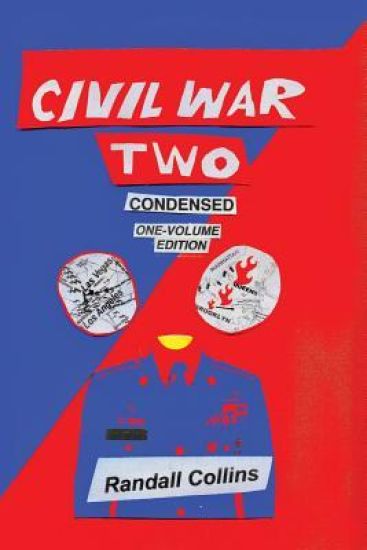
Civil War Two, Condensed: America Elects a President Determined to Restore Religion to Public Life, and the Nation Splits
The United States of America are united no more.CIVIL WAR TWO is a what-if story: What if the USA splits in two? How might a new Civil War play out?Are we facing the end of America?2018's CIVIL WAR TWO was an epic of over 700 pages presented in two volumes. Now for the first time, the meat and bones of America's future have been distilled into a single volume of concentrated force: CIVIL WAR TWO: The Condensed One-Volume Edition. "Civil War Two is a first-rate thriller, an epic history of a possible American future, and a compelling read you will be unable to put down."- Paul DiMaggio, Professor of Sociology, NYU Department of Sociology "In the world of sociologists, Randall Collins enjoys a unique professional reputation. This is far from mere fantasy; it is a solidly built, scary hypothesis about a possible future of America."- Georgi Derluguian, expert on modern civil wars, Carnegie Scholar, and Professor of Social Research and Public Policy NYU Abu Dhabi "In this perfectly timed and engaging prophetic novel, Randall Collins revisits themes central to his sociology-history, violence, war, emotions, human interactions-to give a troubling picture of the world ahead. A must for those looking for a most engaging read "- Mich le Lamont, Harvard University, Professor of Sociology and of African and African American Studies "In Civil War Two, Collins provides a believable and timely account of a country divided between secularists and religious zealots. The politics of romance and espionage, of human frailty and ambition, all jump from the page-Collins provides a masterful account ofwhat a second US civil war would feel like from the inside."- Randol Contreras, University of Toronto, AssistantProfessor of Sociology, author of The Stickup Kids "Civil War 2 is a timely and compelling novel about what could beAmerica's next Civil War. The writing is exceptional. Collins has created vivid characters that superbly weave his narrative andpowerfully brings his story home-an engrossing read." - Elijah Anderson, Yale University, author of Code of the Street "Collins has channeled his deep knowledge of human violence and the intricacies of combat into a taut and compelling what if fantasy that takes the cultural fissures of our nation to full scale rupture."- Alice Goffman, author ofOn The Run: Fugitive Life in an American City
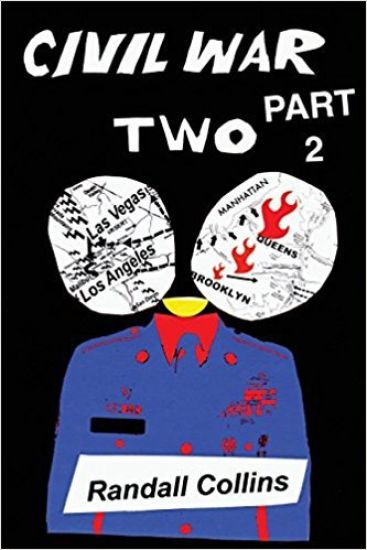
Civil War Two, Part 2: America Elects a President Determined to Restore Religion to Public Life, and the Nation Splits
In Part 1 of Civil War Two, President Jennings tried to Make America Christian Again. The Secular States would have none of it.The President declared war to stop America's dissolution, no matter the consequences.Now America has been killing itself for 2 long years; Christian states versus secular. The world's most advanced military has divided against itself. New York City is under attack.There's no end in sight and seemingly no hope of the nation ever healing.America survived one Civil War--but are the divisions now just too great? How bad do things have to get before everyone has had enough?When Americans turn on each other, there's no turning back. Can America be saved?
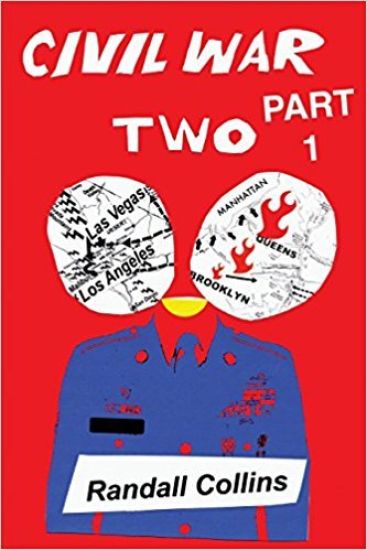
Civil War Two, Part 1: America Elects a President Determined to Restore Religion to Public Life, and the Nation Splits
President Joshua Maccabee Jennings has just taken office, vowing to Make America Christian Again.When a Supreme Court Justice dies unexpectedly, the government falls into crisis, and the secular states start seceding, forming the Coalition of Secular States of America. President Jennings declares war to stop America's dissolution--no matter what the consequences.The new Civil War will be like nothing America has faced before.And in Part 2, find out America's fate.
The Discovery of Society with Connect Access Card

The Discovery of Society with Connect Access Card

Randall Collins; Michael Makowsky

McGraw-Hill Companies
2015
sidottu
This classic text explores the lives and ideas of the social thinkers who have shaped and continue to forge traditions in sociology. Focusing on the great names in the field, it weaves biographical and conceptual details into a tapestry of the history of social thought of the 19th and 20th centuries. Written in a narrative style that is accessible and exciting, this text serves as an excellent supplement for courses in social and sociological theory, the history of social thought, the history of sociology, and introduction to sociology. McGraw-Hill Connect(R) is a subscription-based learning service accessible online through your personal computer or tablet. Choose this option if your instructor will require Connect to be used in the course. Your subscription to Connect includes the following: - SmartBook(R) - an adaptive digital version of the course textbook that personalizes your reading experience based on how well you are learning the content. - Access to your instructor's homework assignments, quizzes, syllabus, notes, reminders, and other important files for the course. - Progress dashboards that quickly show how you are performing on your assignments and tips for improvement. - The option to purchase (for a small fee) a print version of the book. This binder-ready, loose-leaf version includes free shipping. Complete system requirements to use Connect can be found here: http: //www.mheducation.com/highered/platforms/connect/training-support-students.html
Conflict Sociology

Conflict Sociology

Randall Collins; Stephen K. Sanderson

Paradigm
2010
nidottu
This new edition is a substantial abridgment and update of Randall Collins's 1975 classic, Conflict Sociology. The first edition represented the most powerful and comprehensive statement of conflict theory in its time. Here, Sanderson has retained the core chapters and added discussions on Collins's and others' work in recent years. An afterword summarizes Collins's latest forays into microsociological theorizing and attempts to demonstrate how his newer microsociology and older macrosociology are connected.
Violence

Violence

Randall Collins

Princeton University Press
2009
pokkari
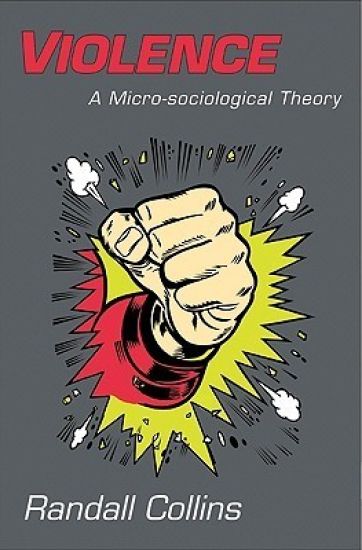
In the popular misconception fostered by blockbuster action movies and best-selling thrillers--not to mention conventional explanations by social scientists--violence is easy under certain conditions, like poverty, racial or ideological hatreds, or family pathologies. Randall Collins challenges this view in Violence, arguing that violent confrontation goes against human physiological hardwiring. It is the exception, not the rule--regardless of the underlying conditions or motivations. Collins gives a comprehensive explanation of violence and its dynamics, drawing upon video footage, cutting-edge forensics, and ethnography to examine violent situations up close as they actually happen--and his conclusions will surprise you. Violence comes neither easily nor automatically. Antagonists are by nature tense and fearful, and their confrontational anxieties put up a powerful emotional barrier against violence. Collins guides readers into the very real and disturbing worlds of human discord--from domestic abuse and schoolyard bullying to muggings, violent sports, and armed conflicts. He reveals how the fog of war pervades all violent encounters, limiting people mostly to bluster and bluff, and making violence, when it does occur, largely incompetent, often injuring someone other than its intended target. Collins shows how violence can be triggered only when pathways around this emotional barrier are presented. He explains why violence typically comes in the form of atrocities against the weak, ritualized exhibitions before audiences, or clandestine acts of terrorism and murder--and why a small number of individuals are competent at violence. Violence overturns standard views about the root causes of violence and offers solutions for confronting it in the future.
The Discovery of Society

The Discovery of Society

Randall Collins; Michael Makowsky

McGraw Hill Higher Education
2009
nidottu
This classic text explores the lives and ideas of the social thinkers who have shaped and continue to forge traditions in sociology. Focusing on the great names in the field, it weaves biographical and conceptual details into a tapestry of the history of social thought of the 19th and 20th centuries. Written in a narrative style that is accessible and exciting, this text serves as an excellent supplement for courses in social and sociological theory, the history of social thought, the history of sociology, and introduction to sociology.
Conflict Sociology

Conflict Sociology

Randall Collins; Stephen K. Sanderson

Paradigm
2009
sidottu
This new edition is a substantial abridgment and update of Randall Collins's 1975 classic, Conflict Sociology. The first edition represented the most powerful and comprehensive statement of conflict theory in its time. Here, Sanderson has retained the core chapters and added discussions on Collins's and others' work in recent years. An afterword summarizes Collins's latest forays into microsociological theorizing and attempts to demonstrate how his newer microsociology and older macrosociology are connected.