Kirjojen hintavertailu. Mukana 12 595 353 kirjaa ja 12 kauppaa.

Kirjailija

Randy J. Nelson

Kirjat ja teokset yhdessä paikassa: 7 kirjaa, julkaisuja vuosilta 2002-2025, suosituimpien joukossa Seasonal Patterns of Stress, Immune Function, and Disease. Vertaile teosten hintoja ja tarkista saatavuus suomalaisista kirjakaupoista.

7 kirjaa

Kirjojen julkaisuhaarukka 2002-2025.

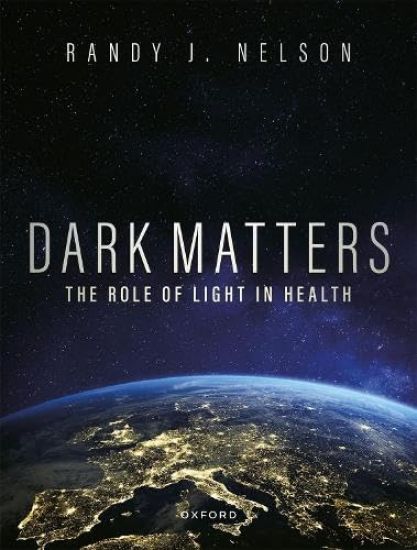
Dark Matters

Dark Matters

Randy J. Nelson

OXFORD UNIVERSITY PRESS INC
2025
sidottu
Work in clinical and laboratory settings has indicated that lack of bright light during the day can compromise mood, accelerate cancer growth, and impair cognition. Even sustained exposure to the equivalent of a child's night light has been shown to have an impact on everything from how well our brains function every day to how well our bodies recover from injury. Professor Randy J. Nelson brings together the most reliable research on the different ways exposure to light at night affects how our bodies function and, ultimately, our health. Each chapter explores the role of light and dark in our bodies' most important regulatory processes. In humans, virtually every aspect of our physiology and behavior is mediated by our internal biological clocks. One feature of modern life that may have negative consequences for our health is exposure to light levels that are not aligned with the 24-hour solar day. Circadian rhythms, the internal biological rhythms of our body's processes, require short wavelength (blue) light early during the day to optimize their temporal regulation. Experiencing light at night or insufficient light during the day can lead to a host of problems such as obesity, major depression, bipolar depressive disorder, seasonal affective disorder, sleep disorders, cancer, heart disease and more. Dark Matters sets out to shine a light on the health and well-being consequences of poor circadian hygiene and provide strategies to offset the negative health effects of disrupted circadian rhythms.
The Oxford Encyclopedia of Neuroendocrine and Autonomic Systems

The Oxford Encyclopedia of Neuroendocrine and Autonomic Systems

Randy J. Nelson

OXFORD UNIVERSITY PRESS INC
2023
sidottu
The Oxford Encyclopedia of Neuroendocrine and Autonomic Systems provides an up-to-date survey of the wide range of scholarship being conducted on these two systems in the field of neuroendocrinology. The Encyclopedia includes more than 50 articles--each approximately 8,000 words in length--that provide thorough overviews of a diverse set of topics in neuroendocrine regulation, neuroimmunology, behavioral neuroendocrinology, autonomic regulation, stress, thirst and water balance, regulation of food intake, and biological rhythms and sleep, among many others. All authors were commissioned specifically for the Encyclopedia, and all articles received blind peer reviews. The articles provide critical and synthetic examinations, as well as the history, progress, direction, and debates about research on a given topic, surveying developments and different perspectives, and discussing important contributors and contributions. The Encyclopedia offers coverage of core and emerging areas of research to provide readers a reliable source of specialist information on topics not discussed in existing reference works. As such, The Oxford Encyclopedia of Neuroendocrine and Autonomic Systems represents a unique contribution to scholarship in neuroendocrinology and will be a standard reference for researchers, students, and professionals in the field.
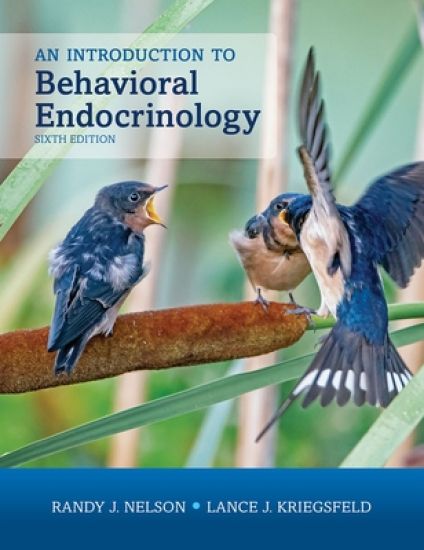
An Introduction to Behavioral Endocrinology, Sixth Edition

An Introduction to Behavioral Endocrinology, Sixth Edition

Randy J. Nelson; Lance J. Kriegsfeld

OXFORD UNIVERSITY PRESS INC
2022
sidottu
The market-leading text, An Introduction to Behavioral Endocrinology, Sixth Edition provides an updated, integrated presentation of the study of hormone-behavior-brain interactions. Maintaining a comparative approach, the text explores the endocrine mechanisms that have evolved in both human and nonhuman animals to solve common problems in survival and reproduction. The text describes interactions among hormones, brain, and behavior from a historical perspective, emphasizing connections among key theories and tracing the emergence of important hypotheses. The book is organized around the conceptual theme that hormones affect behavior by influencing one or more of three "components" of behaving animals--input mechanisms (such as sensory or perceptual processes), the central processing mechanisms of the nervous system (either directly, or by affecting its development or structure), and output mechanisms (such as effectors or peripheral structures). Despite increased coverage of molecular and cellular approaches, the book strives for accessibility for non-biological science students. An Introduction to Behavioral Endocrinology, Sixth Edition, is appropriate for upper-level undergraduate and graduate courses in psychology, biology, anthropology, or zoology. It contains several important pedagogical features: *Learning objectives are set out at the beginning of each chapter and now include 3 multiple choice questions per objective in the enhanced ebook. *Learning Activity in each chapter (new to this edition) *Key terms are defined in the margins throughout the text. *The text is richly illustrated with color photographs and drawings. *Chapter-end summaries restate important points. *Discussion questions and suggested further readings are also included in each chapter. *The text contains nearly 2,400 references to the literature in behavioral endocrinology. RESOURCES For Students As with previous editions, the book is accompanied by animations, video, web links, sound files, a complete glossary, and graphics--accessible via Oxford Learning Link--to aid in understanding the material in the text. This edition will also include an enhanced ebook. For Instructors -The Instructor's Resource Library includes electronic versions of all the textbook's figures and tables. All images are provided as both high- and low-resolution JPEGs, formatted and optimized for excellent legibility when projected. All figures and tables are also provided in ready-to-use PowerPoint presentations. -The Test Bank includes multiple-choice, short-answer, and essay questions for each chapter of the textbook. Prepared by the author, these questions are a helpful resource that can greatly speed the process of preparing exams and quizzes for the course.
An Introduction to Behavioral Endocrinology

An Introduction to Behavioral Endocrinology

Randy J. Nelson; Lance J. Kriegsfeld

Oxford University Press Inc
2016
sidottu
Published by Sinauer Associates, an imprint of Oxford University Press. An Introduction to Behavioral Endocrinology, Fifth Edition, retains all of the features of the bestselling prior editions, and provides an updated, integrated presentation of the study of hormone-behavior-brain interactions. Continuing to emphasize a comparative approach, the text explores the endocrine mechanisms that have evolved in both human and nonhuman animals to solve common problems in survival and reproduction. The fifth edition benefits by the addition of a new coauthor, Lance Kriegsfeld (The University of California, Berkeley), who brings additional expertise and teaching experience in behavioral endocrinology. The text describes interactions among hormones, brain, and behavior from a historical perspective, emphasizing connections among key theories and tracing the emergence of important hypotheses. The book is organized around the conceptual theme that hormones affect behavior by influencing one or more of three "components" of behaving animals—input mechanisms (such as sensory or perceptual processes), the central processing mechanisms of the nervous system (either directly, or by affecting its development or structure), and output mechanisms (such as effectors or peripheral structures). Despite increased coverage of molecular and cellular approaches, the book strives for accessibility for non-biological science students. An Introduction to Behavioral Endocrinology, Fifth Edition, is appropriate for upper-level undergraduate and graduate courses in psychology, biology, anthropology, or zoology. It contains several important pedagogical features: *Learning objectives (new to this edition) are set out at the beginning of each chapter. *Key terms are defined in the margins throughout the text. *The text is richly illustrated with color photographs and drawings. *Chapter-end summaries restate important points. *Discussion questions and suggested further readings are also included in each chapter. *The text contains nearly 2,400 references to the literature in behavioral endocrinology.
Handbook of Psychology, Behavioral Neuroscience

Handbook of Psychology, Behavioral Neuroscience

Irving B. Weiner; Randy J. Nelson; Sheri Mizumori

John Wiley Sons Inc
2012
sidottu
Psychology is of interest to academics from many fields, as well as to the thousands of academic and clinical psychologists and general public who can't help but be interested in learning more about why humans think and behave as they do. This award-winning twelve-volume reference covers every aspect of the ever-fascinating discipline of psychology and represents the most current knowledge in the field. This ten-year revision now covers discoveries based in neuroscience, clinical psychology's new interest in evidence-based practice and mindfulness, and new findings in social, developmental, and forensic psychology.
Seasonal Patterns of Stress, Immune Function, and Disease

Seasonal Patterns of Stress, Immune Function, and Disease

Randy J. Nelson; Gregory E. Demas; Sabra L. Klein; Lance J. Kriegsfeld; Frank Bronson

Cambridge University Press
2005
pokkari
This book presents evidence that infection is cyclical with the seasons, and that this phenomenon is mirrored in cycles of immune function. The book identifies the mechanisms by which immune systems are bolstered to counteract seasonally-recurrent stressors, such as extreme temperature reductions and food shortages. Stress, infectious diseases, autoimmune diseases, and human cancers are examined, and the role of hormones such as melatonin and glucocorticoids is considered. The book begins with an overview of seasonality, biological rhythms and photoperiodism, and basic immunology, and then discusses seasonal fluctuations in disease prevalence, immune function, and energetics and endocrinology as they relate to immune function. The clinical significance of this issue is also addressed, as such seasonal changes may play an important role in the development and treatment of infections. This first monograph to examine seasonal immune function from an interdisciplinary perspective will serve practitioners as well as advanced undergraduates and graduate students in biology, immunology, human and veterinary medicine, neuroscience, endocrinology, and zoology.
Seasonal Patterns of Stress, Immune Function, and Disease

Seasonal Patterns of Stress, Immune Function, and Disease

Randy J. Nelson; Gregory E. Demas; Sabra L. Klein; Lance J. Kriegsfeld; Frank Bronson

Cambridge University Press
2002
sidottu
This book presents evidence that infection is cyclical with the seasons, and that this phenomenon is mirrored in cycles of immune function. The book identifies the mechanisms by which immune systems are bolstered to counteract seasonally-recurrent stressors, such as extreme temperature reductions and food shortages. Stress, infectious diseases, autoimmune diseases, and human cancers are examined, and the role of hormones such as melatonin and glucocorticoids is considered. The book begins with an overview of seasonality, biological rhythms and photoperiodism, and basic immunology, and then discusses seasonal fluctuations in disease prevalence, immune function, and energetics and endocrinology as they relate to immune function. The clinical significance of this issue is also addressed, as such seasonal changes may play an important role in the development and treatment of infections. This first monograph to examine seasonal immune function from an interdisciplinary perspective will serve practitioners as well as advanced undergraduates and graduate students in biology, immunology, human and veterinary medicine, neuroscience, endocrinology, and zoology.