Kirjojen hintavertailu. Mukana 12 152 606 kirjaa ja 12 kauppaa.

Kirjailija

Randy J. Sparks

Kirjat ja teokset yhdessä paikassa: 5 kirjaa, julkaisuja vuosilta 2008-2016, suosituimpien joukossa Religion in Mississippi. Vertaile teosten hintoja ja tarkista saatavuus suomalaisista kirjakaupoista.

5 kirjaa

Kirjojen julkaisuhaarukka 2008-2016.

Africans in the Old South

Africans in the Old South

Randy J. Sparks

Harvard University Press
2016
sidottu
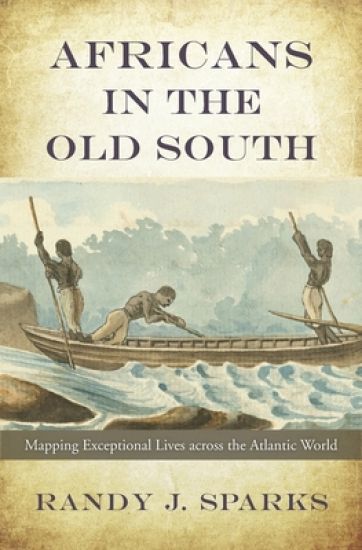
The Atlantic slave trade was the largest forced migration in history, and its toll in lives damaged or destroyed is incalculable. Most of those stories are lost to history, making the few that can be reconstructed critical to understanding the trade in all its breadth and variety. Randy J. Sparks examines the experiences of a range of West Africans who lived in the American South between 1740 and 1860. Their stories highlight the diversity of struggles that confronted every African who arrived on American shores.The subjects of Africans in the Old South include Elizabeth Cleveland Hardcastle, the mixed-race daughter of an African slave-trading family who invested in South Carolina rice plantations and slaves, passed as white, and integrated herself into the Lowcountry planter elite; Robert Johnson, kidnapped as a child and sold into slavery in Georgia, who later learned English, won his freedom, and joined the abolition movement in the North; Dimmock Charlton, who bought his freedom after being illegally enslaved in Savannah; and a group of unidentified Africans who were picked up by a British ship in the Caribbean, escaped in Mobile’s port, and were recaptured and eventually returned to their homeland.These exceptional lives challenge long-held assumptions about how the slave trade operated and who was involved. The African Atlantic was a complex world characterized by constant movement, intricate hierarchies, and shifting identities. Not all Africans who crossed the Atlantic were enslaved, nor was the voyage always one-way.
Where the Negroes Are Masters

Where the Negroes Are Masters

Randy J. Sparks

Harvard University Press
2014
sidottu
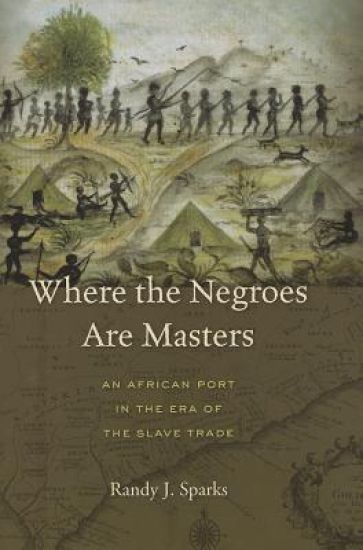
Annamaboe was the largest slave trading port on the eighteenth-century Gold Coast, and it was home to successful, wily African merchants whose unusual partnerships with their European counterparts made the town and its people an integral part of the Atlantic’s webs of exchange. Where the Negroes Are Masters brings to life the outpost’s feverish commercial bustle and continual brutality, recovering the experiences of the entrepreneurial black and white men who thrived on the lucrative traffic in human beings.Located in present-day Ghana, the port of Annamaboe brought the town’s Fante merchants into daily contact with diverse peoples: Englishmen of the Royal African Company, Rhode Island Rum Men, European slave traders, and captured Africans from neighboring nations. Operating on their own turf, Annamaboe’s African leaders could bend negotiations with Europeans to their own advantage, as they funneled imported goods from across the Atlantic deep into the African interior and shipped vast cargoes of enslaved Africans to labor in the Americas.Far from mere pawns in the hands of the colonial powers, African men and women were major players in the complex networks of the slave trade. Randy Sparks captures their collective experience in vivid detail, uncovering how the slave trade arose, how it functioned from day to day, and how it transformed life in Annamaboe and made the port itself a hub of Atlantic commerce. From the personal, commercial, and cultural encounters that unfolded along Annamaboe’s shore emerges a dynamic new vision of the early modern Atlantic world.
On Jordan's Stormy Banks

On Jordan's Stormy Banks

Randy J. Sparks

University of Georgia Press
2012
pokkari
On Jordan’s Stormy Banks is a social history of southern evangelicalism from the late eighteenth century to the end of Reconstruction. By focusing on the three largest evangelical denominations in a single state—Baptist, Methodist, and Presbyterian—Randy J. Sparks charts the rise of evangelicals on the southern frontier and their remarkable increase in numbers, wealth, and influence throughout the remainder of the period.
Religion in Mississippi

Religion in Mississippi

Randy J. Sparks

University Press of Mississippi
2012
nidottu
In the 1600s Colonial French settlers brought Christianity into the lands that are now the state of Mississippi. Throughout the period of French rule and the period of Spanish dominion that followed, Roman Catholicism remained the principal religion. By the time that statehood was achieved in 1817, Mississippi was attracting Methodists, Baptists, Presbyterians, and other Protestant evangelical faiths at a remarkable pace, and by the twentieth century, religion in Mississippi was dominantly Protestant and evangelical.In this book, Randy J. Sparks traces the roots of evangelical Christianity in the state and shows how the evangelicals became a force of cultural revolution. They embraced the poorer segments of society, welcomed high populations of both women and African Americans, and deeply influenced ritual and belief in the state's vision of Christianity. In the 1830s as the Mississippi economy boomed, so did evangelicalism. As Protestant faiths became wedded to patriarchal standards, slaveholding, and southern political tradition, seeds were sown for the war that would erupt three decades later.Until Reconstruction many Mississippi churches comprised biracial congregations and featured women in prominent roles, but as the Civil War and the racial split cooled the evangelicals' liberal fervor and drastically changed the democratic character of their religion into archconservatism, a strong but separate black church emerged. As dominance by Protestant conservatives solidified, Jews, Catholics, and Mormons struggled to retain their religious identities while conforming to standards set by white Protestant society.As Sparks explores the dissonance between the state's powerful evangelical voice and Mississippi's social and cultural mores, he reveals the striking irony of faith and society in conflict. By the time of the Civil Rights movement of the 1960s, religion, formerly a liberal force, had become one of the leading proponents of segregation, gender inequality, and ethnic animosity among whites in the Magnolia State. Among blacks, however, the churches were bastions of racial pride and resistance to the forces of oppression.
The Two Princes of Calabar

The Two Princes of Calabar

Randy J. Sparks

Harvard University Press
2008
nidottu
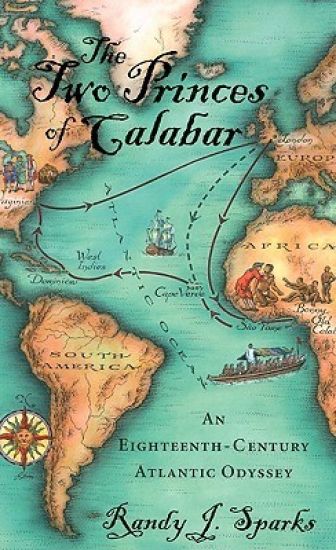
In 1767, two “princes” of a ruling family in the port of Old Calabar, on the slave coast of Africa, were ambushed and captured by English slavers. The princes, Little Ephraim Robin John and Ancona Robin Robin John, were themselves slave traders who were betrayed by African competitors—and so began their own extraordinary odyssey of enslavement. Their story, written in their own hand, survives as a rare firsthand account of the Atlantic slave experience.Randy J. Sparks made the remarkable discovery of the princes’ correspondence and has managed to reconstruct their adventures from it. They were transported from the coast of Africa to Dominica, where they were sold to a French physician. By employing their considerable language and interpersonal skills, they cleverly negotiated several escapes that took them from the Caribbean to Virginia, and to England, but always ended in their being enslaved again. Finally, in England, they sued for, and remarkably won, their freedom. Eventually, they found their way back to Old Calabar and, evidence suggests, resumed their business of slave trading.The Two Princes of Calabar offers a rare glimpse into the eighteenth-century Atlantic World and slave trade from an African perspective. It brings us into the trading communities along the coast of Africa and follows the regular movement of goods, people, and ideas across and around the Atlantic. It is an extraordinary tale of slaves’ relentless quest for freedom and their important role in the creation of the modern Atlantic World.