Kirjojen hintavertailu. Mukana 12 595 353 kirjaa ja 12 kauppaa.
Kirjailija
Randy Nichols
Kirjat ja teokset yhdessä paikassa: 5 kirjaa, julkaisuja vuosilta 2016-2025, suosituimpien joukossa Nintendo. Vertaile teosten hintoja ja tarkista saatavuus suomalaisista kirjakaupoista.
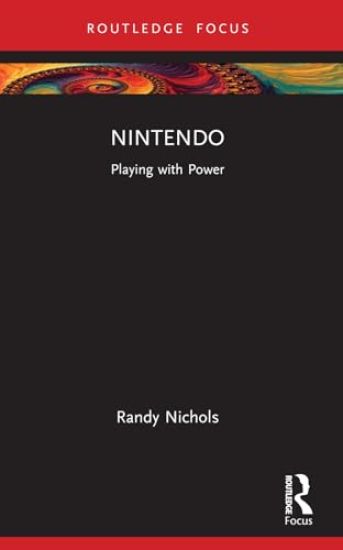
Originally founded in 1889 as a manufacturer of playing cards, this book examines the history and political economic status of the multinational consumer electronics and video game giant Nintendo. This book offers a deeper examination into Nintendo as a global media giant, with some of the industry’s best-selling consoles and most recognizable intellectual property including Mario, Pokémon, and Zelda. Drawing upon the theory of the political economy of communication, which seeks to understand how communication and media serve as key mechanisms of economic and political power, Randy Nichols examines how Nintendo has maintained its dominance in the global video game industry and how it has used its position to shape that industry. This book argues that while the company’s key figures and main franchises are important, Nintendo’s impact as a company – and what we can learn from its evolution – is instructive beyond the video game industry. This book is perfect for students and scholars of media and cultural industries, critical political economy of media, production studies, and games studies.
Health education and physical education teachers are the champions of wellness in schools, but often health and physical activity are taught separately in the K-12 environment. The School Wellness Education (SWE) model is a unique approach that teaches students why physical activity benefits their well-being to holistically influence students toward healthy lifestyles. K-12 School Wellness Education prepares future physical education teachers with strategies to use a whole school approach to promote health, wellness, and fitness. Authors Hannah Holl and Randy Nichols, the educators who developed the SWE model, have based K-12 School Wellness Education on the Whole School, Whole Community, Whole Child (WSCC) model and aligned the content with SHAPE America’s most recent National Physical Education Standards. The text incorporates traditional areas of games, sports, and fitness performance and, more importantly, focuses on why physical activity matters. Units are not based on games or fitness activities but are instead focused on the National Physical Education Standards and the five components of Living Well: nutrition, social and emotional wellness, the human body and responses to physical activity, health-related fitness, and injury prevention and safety. The Living Well focus helps elementary, middle school, and high school students progress along their physical literacy journey and health literacy journey. It demonstrates for students how a physically active lifestyle is associated with wellness, disease prevention, and an overall improved quality of life.K-12 School Wellness Education offers physical education teacher education (PETE) students and in-service teachers the following: Information on how SWE (and its related evidence-based research) differs from other models Curriculum development tools such as templates for unit plans, unit storyboards, and lesson plans K-12 grade-level benchmarks to measure student progress on their physical and health literacy journeys Over 30 success stories and leadership examples to guide strategies for collaboration, garner administrative support, and create a culture of wellness in schools Special features such as learning objectives, key term lists, sidebars, and chapter wrap-up sections to support reader comprehension K-12 School Wellness Education prepares future educators and current physical education teachers to take a school wellness approach by integrating physical activity and well-being into their program at every instructional level.
Originally founded in 1889 as a manufacturer of playing cards, this book examines the history and political economic status of the multinational consumer electronics and video game giant Nintendo.This book offers a deeper examination into Nintendo as a global media giant, with some of the industry’s best-selling consoles and most recognizable intellectual property including Mario, Pokémon, and Zelda. Drawing upon the theory of the political economy of communication, which seeks to understand how communication and media serve as key mechanisms of economic and political power, Randy Nichols examines how Nintendo has maintained its dominance in the global video game industry and how it has used its position to shape that industry. This book argues that while the company’s key figures and main franchises are important, Nintendo’s impact as a company – and what we can learn from its evolution – is instructive beyond the video game industry. This book is perfect for students and scholars of media and cultural industries, critical political economy of media, production studies, and games studies.
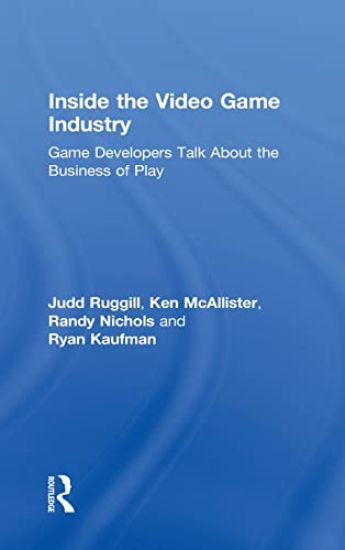
Inside the Video Game Industry offers a provocative look into one of today's most dynamic and creative businesses. Through in-depth structured interviews, industry professionals discuss their roles, providing invaluable insight into game programming, art, animation, design, production, quality assurance, audio and business professions. From hiring and firing conventions, attitudes about gender disparity, goals for work-life balance, and a span of legal, psychological, and communal intellectual property protection mechanisms, the book's combination of accessible industry talk and incisive thematic overviews is ideal for anyone interested in games as a global industry, a site of cultural study, or a prospective career path. Designed for researchers, educators, and students, this book provides a critical perspective on an often opaque business and its highly mobile workforce.Additional teaching materials, including activities and study questions, can be found at https://www.routledge.com/9780415828284.
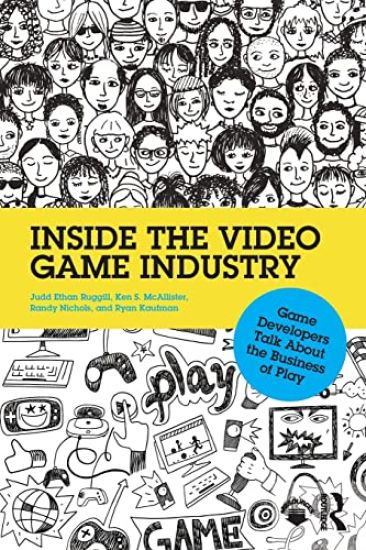
Inside the Video Game Industry offers a provocative look into one of today's most dynamic and creative businesses. Through in-depth structured interviews, industry professionals discuss their roles, providing invaluable insight into game programming, art, animation, design, production, quality assurance, audio and business professions. From hiring and firing conventions, attitudes about gender disparity, goals for work-life balance, and a span of legal, psychological, and communal intellectual property protection mechanisms, the book's combination of accessible industry talk and incisive thematic overviews is ideal for anyone interested in games as a global industry, a site of cultural study, or a prospective career path. Designed for researchers, educators, and students, this book provides a critical perspective on an often opaque business and its highly mobile workforce.Additional teaching materials, including activities and study questions, can be found at https://www.routledge.com/9780415828284.