Kirjojen hintavertailu. Mukana 12 595 353 kirjaa ja 12 kauppaa.

Kirjailija

Ranjan Roy

Kirjat ja teokset yhdessä paikassa: 14 kirjaa, julkaisuja vuosilta 1998-2021, suosituimpien joukossa Series and Products in the Development of Mathematics: Volume 1. Vertaile teosten hintoja ja tarkista saatavuus suomalaisista kirjakaupoista.

14 kirjaa

Kirjojen julkaisuhaarukka 1998-2021.

Series and Products in the Development of Mathematics: Volume 1
This is the first volume of a two-volume work that traces the development of series and products from 1380 to 2000 by presenting and explaining the interconnected concepts and results of hundreds of unsung as well as celebrated mathematicians. Some chapters deal with the work of primarily one mathematician on a pivotal topic, and other chapters chronicle the progress over time of a given topic. This updated second edition of Sources in the Development of Mathematics adds extensive context, detail, and primary source material, with many sections rewritten to more clearly reveal the significance of key developments and arguments. Volume 1, accessible to even advanced undergraduate students, discusses the development of the methods in series and products that do not employ complex analytic methods or sophisticated machinery. Volume 2 treats more recent work, including deBranges' solution of Bieberbach's conjecture, and requires more advanced mathematical knowledge.

Series and Products in the Development of Mathematics: Volume 2
This is the second volume of a two-volume work that traces the development of series and products from 1380 to 2000 by presenting and explaining the interconnected concepts and results of hundreds of unsung as well as celebrated mathematicians. Some chapters deal with the work of primarily one mathematician on a pivotal topic, and other chapters chronicle the progress over time of a given topic. This updated second edition of Sources in the Development of Mathematics adds extensive context, detail, and primary source material, with many sections rewritten to more clearly reveal the significance of key developments and arguments. Volume 1, accessible even to advanced undergraduate students, discusses the development of the methods in series and products that do not employ complex analytic methods or sophisticated machinery. Volume 2 examines more recent results, including deBranges' resolution of Bieberbach's conjecture and Nevanlinna's theory of meromorphic functions.
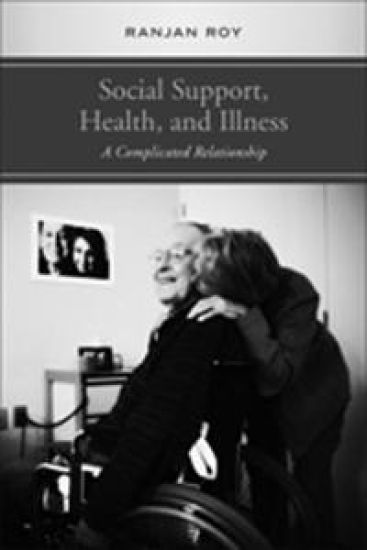
Social Support, Health, and Illness

Social Support, Health, and Illness

Ranjan Roy

University of Toronto Press
2011
sidottu
When a person faces serious illness, having the support of one's partner can help protect against the full ravages of disease, and even hasten recovery. However, too much support can have grave clinical consequences for sufferers and exact a heavy emotional and financial toll on caregivers. Social Support, Health, and Illness is an up-to-date analysis of how social support can either help or hinder recovery for patients. A useful resource for clinical practitioners and researchers, Social Support, Health, and Illness addresses the effects of intimate support on a wide variety of medical and psychiatric conditions, including cancer, dementia, and chronic pain. Ranjan Roy uncovers the complexities underlying social support by tracing the concept's historical and theoretical development. Synthesizing insights from the latest research findings, Social Support, Health, and Illness offers a comprehensive look at the modifying and mitigating factors of intimacy on the outcomes of disease.
Social Relations and Chronic Pain

Social Relations and Chronic Pain

Ranjan Roy

Springer-Verlag New York Inc.
2010
nidottu
This book is an extension of my 1992 book entitled The Social Context of Chronic Pain Sufferers. Many ideas nominally explored there are elaborated in this volume, which is an attempt to fill a major gap in the chronic pain literature. Although there has been a virtual flood of new works on the medical and psychological aspects of chronic pain, such enthusiasm is somewhat muted in relation to the social environment of the patient. Although there is universal recognitionamongpain expertsthat biological, psychological,and socialfactors influence the experience ofpain, the social component (forreasons that are - clear) has failed to attract much attention. Theneed forabook focusedonsocialrelationsisobvious.Thepatientisnot merelyacarrierof symptoms.Thereis alargesocialrealityinthe background of each patient; that reality can have multidimensional consequences, from the way pain is perceivedto seriousfinancialhardshipand other sourcesof stress, c- plicating treatment, management, and, ultimately, the prognosis. Clinicians rec- nize the value of incorporating the social dimension in the overall evaluation and treatment of the patient. This book attempts to accomplish that task. In order to achieve that objective, this volume addresses many important e- ments inthepatient'ssocial environment-the mostsignificantbeingthefamily. Beyond the family, for a vast majority of patients, work represents a major source of economic security and self-esteem. Job loss, common in this population and a major cause of much personal and family distress, needs critical examination.
Psychosocial Interventions for Chronic Pain

Psychosocial Interventions for Chronic Pain

Ranjan Roy

Springer-Verlag New York Inc.
2010
nidottu
Recently, there has been a significant and healthy shift to establish the effectiveness of clinical practice, widely referred to as “evidence-based medicine.” This book fills a major gap in the practice literature for healthcare professionals engaged in providing psychosocial care for their patients suffering from chronic pain or illness. Oxford University, a leader in evidence-based medicine, now has a master’s program in evidence-based social work, the only one of its kind. Much of the practice of medicine is evidence based; however, much of the psychosocial care provided to patients is not. This is not due to the absence of such evidence; rather, practice has traditionally relied on clinical evidence, common sense, and practitioner “wisdom.” However, given the demand for results from governments, from insurance companies, and, most importantly, from patients, psychosocial care must move in the direction of evidence-based practice, for which a great deal of research is available. This book will (1) provide empirically derived support and understanding of psychosocial problems encountered by patients and (2) explore the efficacy of the interventions available for patient care. Chapter 1 will take a historical view of the development of evidence-based practice in medicine and psychology. Chapter 2 will examine the concept of empirically supported evidence, ie, the extent to which the impact of psychosocial problems on health has been measured. The remaining eight chapters will explore a range of psychosocial issues through case illustration and examine both the problems and their management from an evidence-based approach. This book is a departure from reports on evidence-based practice to the extent that the empirical bases of the problems reported, and not just their treatment, are subjected to scrutiny.
Chronic Pain and Family

Chronic Pain and Family

Ranjan Roy

Springer-Verlag New York Inc.
2010
nidottu
Chronic pain affects every facet of a patient’s life, and nowhere is this more evident than in the complex arena of family life. Chronic Pain and Family: a Clinical Perspective examines typical family issues associated with prolonged illness, offering realistic ways to approach them in therapy. Informed by current practice and his own experience, noted author/clinician Ranjan Roy brings fresh insights to common pain scenarios and therapeutic impasses, and provides a framework for assessing marital and family relationships when chronic pain is a defining factor. Clinicians will get not only a clearer understanding of sensitive issues, but also effective strategies for engaging clients without turning them off. Coverage includes: - Meanings of pain in relationships - "Who Does What?": exploring changes in family roles - Resistance to treatment: why it occurs and how to work through it - Health concerns and other burdens on well spouses and children - Sexuality, domestic abuse, and other "silent" issues - Case examples demonstrating therapy step-by-step with a range of couples and families For therapists and social workers who deal with this growing population of patients, Chronic Pain and Family: A Clinical Perspective stands at a unique intersection of pain/disability and family resources. Roy’s recognition of the family’s changing demographics together with his synthesis of clinical knowledge make the book suitable for graduate-level courses as well.
Psychosocial Interventions for Chronic Pain

Psychosocial Interventions for Chronic Pain

Ranjan Roy

Springer-Verlag New York Inc.
2008
sidottu
Recently, there has been a significant and healthy shift to establish the effectiveness of clinical practice, widely referred to as “evidence-based medicine.” This book fills a major gap in the practice literature for healthcare professionals engaged in providing psychosocial care for their patients suffering from chronic pain or illness. Oxford University, a leader in evidence-based medicine, now has a master’s program in evidence-based social work, the only one of its kind. Much of the practice of medicine is evidence based; however, much of the psychosocial care provided to patients is not. This is not due to the absence of such evidence; rather, practice has traditionally relied on clinical evidence, common sense, and practitioner “wisdom.” However, given the demand for results from governments, from insurance companies, and, most importantly, from patients, psychosocial care must move in the direction of evidence-based practice, for which a great deal of research is available. This book will (1) provide empirically derived support and understanding of psychosocial problems encountered by patients and (2) explore the efficacy of the interventions available for patient care. Chapter 1 will take a historical view of the development of evidence-based practice in medicine and psychology. Chapter 2 will examine the concept of empirically supported evidence, ie, the extent to which the impact of psychosocial problems on health has been measured. The remaining eight chapters will explore a range of psychosocial issues through case illustration and examine both the problems and their management from an evidence-based approach. This book is a departure from reports on evidence-based practice to the extent that the empirical bases of the problems reported, and not just their treatment, are subjected to scrutiny.
Chronic Pain and Family

Chronic Pain and Family

Ranjan Roy

Springer-Verlag New York Inc.
2006
sidottu
Chronic pain affects every facet of a patient’s life, and nowhere is this more evident than in the complex arena of family life. Chronic Pain and Family: a Clinical Perspective examines typical family issues associated with prolonged illness, offering realistic ways to approach them in therapy. Informed by current practice and his own experience, noted author/clinician Ranjan Roy brings fresh insights to common pain scenarios and therapeutic impasses, and provides a framework for assessing marital and family relationships when chronic pain is a defining factor. Clinicians will get not only a clearer understanding of sensitive issues, but also effective strategies for engaging clients without turning them off. Coverage includes: - Meanings of pain in relationships - "Who Does What?": exploring changes in family roles - Resistance to treatment: why it occurs and how to work through it - Health concerns and other burdens on well spouses and children - Sexuality, domestic abuse, and other "silent" issues - Case examples demonstrating therapy step-by-step with a range of couples and families For therapists and social workers who deal with this growing population of patients, Chronic Pain and Family: A Clinical Perspective stands at a unique intersection of pain/disability and family resources. Roy’s recognition of the family’s changing demographics together with his synthesis of clinical knowledge make the book suitable for graduate-level courses as well.
Chronic Pain, Loss, and Suffering

Chronic Pain, Loss, and Suffering

Ranjan Roy

University of Toronto Press
2004
sidottu
Loss and grief are an inherent part of chronic illness. But while much has been written on grief associated with death and dying, the grief and losses accompanying chronic illness have received relatively little scholarly attention. In Chronic Pain, Loss, and Suffering, Ranjan Roy, a leading expert on chronic pain, addresses the complex issues related to loss among those with chronic illness. For many patients with chronic intractable pain disorders, the course of their illness is unpredictable and varied. Many seeming losses are transient and can be redeemed over time, for instance, through retraining and physical therapy, but are still serious and pose a challenge to the common understanding of the grief process. Clinical understanding of grief is undergoing a revolution. From its Freudian roots, it is shifting more and more to a social-psychological perspective. The phase-task orientation of grief has come under serious scrutiny, and this book demonstrates some of the problems inherent in that conceptualization in its application to the chronically ill. The author attempts to combine the current state of knowledge through an examination of contemporary literature and clinical application. He presents a series of comprehensive case studies, which together indicate that the key challenge for many patients is loss of self-esteem and control. The chapters deal with a range of losses such as job loss, declining ability to function, loss of family and sexual roles, old age and its related losses, and suicide. Through discussion of the trials and tribulations and successes that chronically ill patients encounter in their journey, this work will assist clinicians in helping patients come to terms with their new reality and establish a renewed sense of self.
Social Relations and Chronic Pain

Social Relations and Chronic Pain

Ranjan Roy

Kluwer Academic/Plenum Publishers
2001
sidottu
This book is an extension of my 1992 book entitled The Social Context of Chronic Pain Sufferers. Many ideas nominally explored there are elaborated in this volume, which is an attempt to fill a major gap in the chronic pain literature. Although there has been a virtual flood of new works on the medical and psychological aspects of chronic pain, such enthusiasm is somewhat muted in relation to the social environment of the patient. Although there is universal recognitionamongpain expertsthat biological, psychological,and socialfactors influence the experience ofpain, the social component (forreasons that are - clear) has failed to attract much attention. Theneed forabook focusedonsocialrelationsisobvious.Thepatientisnot merelyacarrierof symptoms.Thereis alargesocialrealityinthe background of each patient; that reality can have multidimensional consequences, from the way pain is perceivedto seriousfinancialhardshipand other sourcesof stress, c- plicating treatment, management, and, ultimately, the prognosis. Clinicians rec- nize the value of incorporating the social dimension in the overall evaluation and treatment of the patient. This book attempts to accomplish that task. In order to achieve that objective, this volume addresses many important e- ments inthepatient'ssocial environment-the mostsignificantbeingthefamily. Beyond the family, for a vast majority of patients, work represents a major source of economic security and self-esteem. Job loss, common in this population and a major cause of much personal and family distress, needs critical examination.
Childhood Abuse and Chronic Pain

Childhood Abuse and Chronic Pain

Ranjan Roy

University of Toronto Press
1998
pokkari
Empirical evidence is mounting to support the theory that certain individuals are prone to suffering from chronic pain as a result of childhood abuse. This is the first book devoted to a comprehensive exploration of abuse and its role in the genesis of pain. In a review of different types of abuse - childhood, spousal, sexual, physical, and emotional - Ranjan Roy probes the psychological and social consequences of abuse over time. He discusses variety in clinical presentation, course of treatment, and the failure or adverse effects of treatment. An experienced and highly recognized psychotherapist, Roy also presents case studies from his own clinical experience to illustrate his therapeutic approach. Written by a practitioner for practitioners, this book will enable clinicians to identify pain-prone behaviour and to deal with the complex issues and challenges that patients with this condition present.
The Changing Nature of Pain Complaints over the Lifespan

The Changing Nature of Pain Complaints over the Lifespan

Michael R. Thomas; Ranjan Roy

Springer-Verlag New York Inc.
2013
nidottu
A landmark contribution to chronic pain literature, this contemporary text measures the intricate relationship between chronic pain and life transition events. Researchers and clinicians will appreciate The Changing Nature of Pain Complaints Over the Lifespan for its linking of life transition theories to health and illness. Drawing on nearly 20 years of research, the authors bring together the epidemiological and psychosocial aspects of chronic pain and suggest expanding options for pain management. Their coverage encompasses every stage of the human life cycle.
The Changing Nature of Pain Complaints over the Lifespan

The Changing Nature of Pain Complaints over the Lifespan

Michael R. Thomas; Ranjan Roy

Kluwer Academic/Plenum Publishers
1999
sidottu
A landmark contribution to chronic pain literature, this contemporary text measures the intricate relationship between chronic pain and life transition events. Researchers and clinicians will appreciate The Changing Nature of Pain Complaints Over the Lifespan for its linking of life transition theories to health and illness. Drawing on nearly 20 years of research, the authors bring together the epidemiological and psychosocial aspects of chronic pain and suggest expanding options for pain management. Their coverage encompasses every stage of the human life cycle.
Special Functions

Special Functions

George E. Andrews; Richard Askey; Ranjan Roy

Cambridge University Press
1999
sidottu
Special functions, natural generalizations of the elementary functions, have been studied for centuries. The greatest mathematicians, among them Euler, Gauss, Legendre, Eisenstein, Riemann, and Ramanujan, have laid the foundations for this beautiful and useful area of mathematics. This treatise presents an overview of special functions, focusing primarily on hypergeometric functions and the associated hypergeometric series, including Bessel functions and classical orthogonal polynomials, using the basic building block of the gamma function. In addition to relatively new work on gamma and beta functions, such as Selberg’s multidimensional integrals, many important but relatively unknown nineteenth century results are included. Other topics include q-extensions of beta integrals and of hypergeometric series, Bailey chains, spherical harmonics, and applications to combinatorial problems. The authors provide organizing ideas, motivation, and historical background for the study and application of some important special functions. This clearly expressed and readable work can serve as a learning tool and lasting reference for students and researchers in special functions, mathematical physics, differential equations, mathematical computing, number theory, and combinatorics.