
Kirjailija
Rashmi Singh
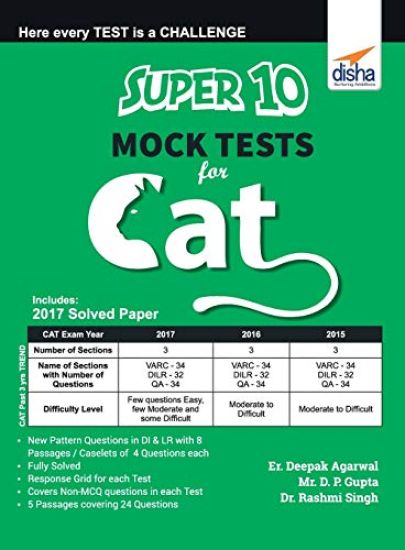
Kirjat ja teokset yhdessä paikassa: 18 kirjaa, julkaisuja vuosilta 2010-2025, suosituimpien joukossa Super 10 Mock Tests for CAT. Vertaile teosten hintoja ja tarkista saatavuus suomalaisista kirjakaupoista.
18 kirjaa
Kirjojen julkaisuhaarukka 2010-2025.

Terapia periodontal em pacientes do sexo feminino
Rashmi Singh; Nitin Tomar
Edicoes Nosso Conhecimento
2025
pokkari
Terapia parodontale nelle pazienti di sesso femminile
Rashmi Singh; Nitin Tomar
Edizioni Sapienza
2025
pokkari
Thérapie parodontale chez les patientes féminines
Rashmi Singh; Nitin Tomar
Editions Notre Savoir
2025
pokkari
Parodontaltherapie bei weiblichen Patienten
Rashmi Singh; Nitin Tomar
Verlag Unser Wissen
2025
pokkari





Utilización del suero de leche
Shikha Singh; Rashmi Singh
Ediciones Nuestro Conocimiento
2021
nidottu

Whey is one of the major by-products of the dairy industry all over the world. It contains about 40% of the total solids present in milk and is rich in organic matter that commands high Biological Oxygen Demand (BOD) of about 30,000 to 50,000 mg/liter, for which it is considered as a serious pollutant and entails expensive treatment before its disposal. Even though many attempts have been made to utilize whey successfully in food products, it has still not been utilized effectively in items of mass consumption. The low nutritive value of cookies is an issue of great concern because cookies are the most commonly eaten snacks by school children and elder ones. The need of production of cookies with a suitable amount and high biological value of protein will help in developing nutritionally balanced cookies and to produce high density protein biscuits.

Periodontal Therapy In Female Patients
Rashmi Singh; Nitin Tomar
Lap Lambert Academic Publishing
2016
nidottu

This book analyses the root causes of suicide terrorism at both the elite and rank-and- file levels of the Hamas and also explains why this tactic has disappeared in the post-2006 period.This volume adopts a multi-causal, multi-level approach to analyse the use of suicide bombings by Hamas and its individual operatives in the Israeli-Palestinian conflict. It uses extensive fieldwork and on-the-ground interviews in order to delve beneath the surface and understand why and how suicide operations were adopted as a sustained mechanism of engagement within the Israeli-Palestinian conflict. Three core factors fuelled Hamas’s suicide bombing campaigns. First, Palestinian suicide operations are a complex combination of instrumental and expressive violence adopted by both organisations and individuals to achieve political and/or societal survival, retaliation and competition. In other words, suicide bombings not only serve distinct political and strategic goals for both Hamas and its operatives but they also serve to convey a symbolic message to various audiences, within Israel, the Palestinian territories and around the world. Second, suicide operations perform a crucial role in the formation and consolidation of Palestinian national identity and are also the latest manifestation of the historically entrenched cultural norm of militant heroic martyrdom. Finally, Hamas’s use of political Islam also facilitates the articulation, justification and legitimisation of suicide operations as a modern-day jihad against Israel through the means of modern interpretations and fatwas. This approach not only facilitates a much needed, multifaceted, holistic understanding of suicide bombings in this particular region but also yields policy-relevant lessons to address extreme political violence in other parts of the world. This book will be of much interest to students of Hamas, terrorism, Middle East politics and security studies.
This book analyses the root causes of suicide terrorism at both the elite and rank-and- file levels of the Hamas and also explains why this tactic has disappeared in the post-2006 period.This volume adopts a multi-causal, multi-level approach to analyse the use of suicide bombings by Hamas and its individual operatives in the Israeli-Palestinian conflict. It uses extensive fieldwork and on-the-ground interviews in order to delve beneath the surface and understand why and how suicide operations were adopted as a sustained mechanism of engagement within the Israeli-Palestinian conflict. Three core factors fuelled Hamas’s suicide bombing campaigns. First, Palestinian suicide operations are a complex combination of instrumental and expressive violence adopted by both organisations and individuals to achieve political and/or societal survival, retaliation and competition. In other words, suicide bombings not only serve distinct political and strategic goals for both Hamas and its operatives but they also serve to convey a symbolic message to various audiences, within Israel, the Palestinian territories and around the world. Second, suicide operations perform a crucial role in the formation and consolidation of Palestinian national identity and are also the latest manifestation of the historically entrenched cultural norm of militant heroic martyrdom. Finally, Hamas’s use of political Islam also facilitates the articulation, justification and legitimisation of suicide operations as a modern-day jihad against Israel through the means of modern interpretations and fatwas. This approach not only facilitates a much needed, multifaceted, holistic understanding of suicide bombings in this particular region but also yields policy-relevant lessons to address extreme political violence in other parts of the world. This book will be of much interest to students of Hamas, terrorism, Middle East politics and security studies.
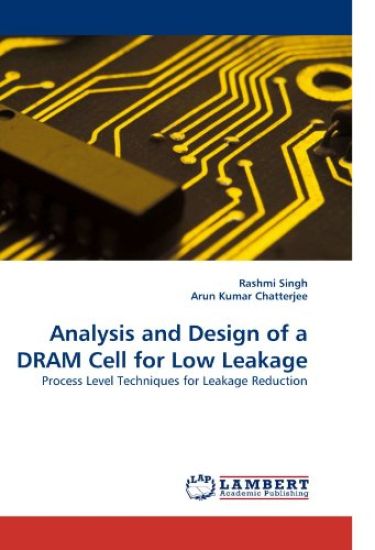
Analysis and Design of a DRAM Cell for Low Leakage
Rashmi Singh; Arun Kumar Chatterjee
LAP Lambert Academic Publishing
2010
pokkari