Kirjojen hintavertailu. Mukana 12 390 323 kirjaa ja 12 kauppaa.

Kirjailija

Raul Moncayo

Kirjat ja teokset yhdessä paikassa: 23 kirjaa, julkaisuja vuosilta 2008-2026, suosituimpien joukossa The Concept of the Individual in Psychoanalysis. Vertaile teosten hintoja ja tarkista saatavuus suomalaisista kirjakaupoista.

23 kirjaa

Kirjojen julkaisuhaarukka 2008-2026.

The Emptiness of Oedipus

The Emptiness of Oedipus

Raul Moncayo

Routledge
2011
sidottu
Lacan's seminar on identification marks a turning point from the early to the later years of his work. In this book, Raul Moncayo builds on many of the concepts that Lacan developed in his seminar, focusing on the relationship between the unary trait and narcissism that occurs via ruling ideas, master signifiers, and the objet a as a part object and a partial form of identification. Moncayo advances Lacanian psychoanalysis not only for its scholarly value, but also for its bearing on the clinical practice of psychoanalysis today.The question of Oedipus as a myth of Freud is the touchstone from which Lacan proposed to go beyond Freud and beyond the rock of castration. The Emptiness of Oedipus examines how the interpretation of Oedipus as a myth or dream, rather than a complex, provides a new way of understanding the end of analysis as the end of the identification with the analyst. The concept is proposed as Lacan’s postmodern or poststructuralist turn and as a fourth moment of Oedipus that is organized around the lack or emptiness of the Other.The Emptiness of Oedipus offers a fresh approach to Lacanian psychoanalysis and will appeal to analysts and psychotherapists as well as academics and postgraduates with an interest in Lacan.
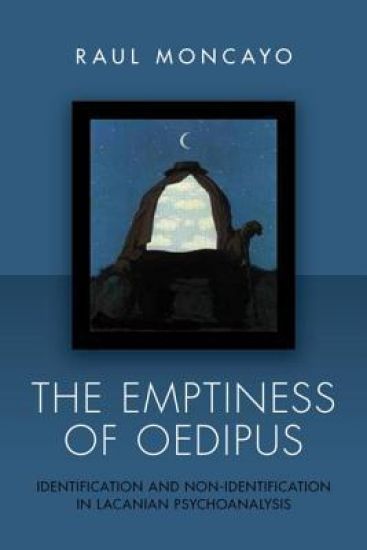
The Emptiness of Oedipus

The Emptiness of Oedipus

Raul Moncayo

Routledge
2011
nidottu
Lacan's seminar on identification marks a turning point from the early to the later years of his work. In this book, Raul Moncayo builds on many of the concepts that Lacan developed in his seminar, focusing on the relationship between the unary trait and narcissism that occurs via ruling ideas, master signifiers, and the objet a as a part object and a partial form of identification. Moncayo advances Lacanian psychoanalysis not only for its scholarly value, but also for its bearing on the clinical practice of psychoanalysis today.The question of Oedipus as a myth of Freud is the touchstone from which Lacan proposed to go beyond Freud and beyond the rock of castration. The Emptiness of Oedipus examines how the interpretation of Oedipus as a myth or dream, rather than a complex, provides a new way of understanding the end of analysis as the end of the identification with the analyst. The concept is proposed as Lacan’s postmodern or poststructuralist turn and as a fourth moment of Oedipus that is organized around the lack or emptiness of the Other.The Emptiness of Oedipus offers a fresh approach to Lacanian psychoanalysis and will appeal to analysts and psychotherapists as well as academics and postgraduates with an interest in Lacan.
Evolving Lacanian Perspectives for Clinical Psychoanalysis
This book presents an evolving Lacanian reading of the psychoanalytic theory of narcissism, of the phases within Oedipus, transference, and within different types of analytic treatments. Sexual difference between psychical masculinity and femininity is formulated as a negative dialectic: both sexes are not without having and not having the phallus across levels of logical organization and the three registers of experience. Many clinical examples and vignettes are offered to illustrate Lacanian theory, the permutations within sexuation, as well as the various principles of Lacanian clinical practice.The Lacanian multiform criterion for the practice of psychoanalysis is presented as an alternative to the post-Freudian notions of a standard frame, or a holding environment. The criterion extends the use of psychoanalysis to a larger group of clinical, socio-economic, and multicultural populations. Finally, the book explores the criteria used for the authorization of the analyst, and how supervision differs from analysis, and from the teacher-student and lover-beloved relationships.