
Kirjojen hintavertailu. Mukana 12 595 353 kirjaa ja 12 kauppaa.

Kirjailija

Raul Zibechi

Kirjat ja teokset yhdessä paikassa: 4 kirjaa, julkaisuja vuosilta 2010-2024, suosituimpien joukossa The New Brazil. Vertaile teosten hintoja ja tarkista saatavuus suomalaisista kirjakaupoista.

4 kirjaa

Kirjojen julkaisuhaarukka 2010-2024.

Constructing Worlds Otherwise

Constructing Worlds Otherwise

Raul Zibechi

AK PRESS
2024
nidottu
A new collection from one of Latin America's most dynamic radical thinkers--in the tradition of Frantz Fanon and Eduardo Galeano.Constructing Worlds Otherwise sets itself against the recolonization of Latin America by one-dimensional, ethnocentric perspectives that permeate the North American left and block fundamental social change in the Global South. In a provocative mix of polemic and on-the-ground analysis, Ra l Zibechi argues that it is time for radicals in the Global North to learn from the people their governments have colonized and oppressed for centuries. Through a survey of the most marginalized voices across Latin America--feminists, the Indigenous, people of African descent, and inhabitants of urban favelas and shantytowns--he introduces the Anglo world to a range of critical perspectives and new forms of struggle. For Zibechi, real change comes from "societies in movement," the people already fighting for their survival using egalitarian and traditional models of world-building, without the state, without official representatives, and without vanguards of political experts. His book contributes to global geographies of autonomous and anti-state thinking, with Zibechi placing his work in conversation with the ideological theorist of Kurdish resistance, Abdullah calan, for a rich and dynamic survey of global movements of decolonization. Now more urgent than ever, this translation by George Ygarza Quispe comes at a time when the global left--struggling to expand its vision in a time of climate chaos and rising authoritarianism--finds itself at an impasse, desperate to animate and renew its critical imaginary.
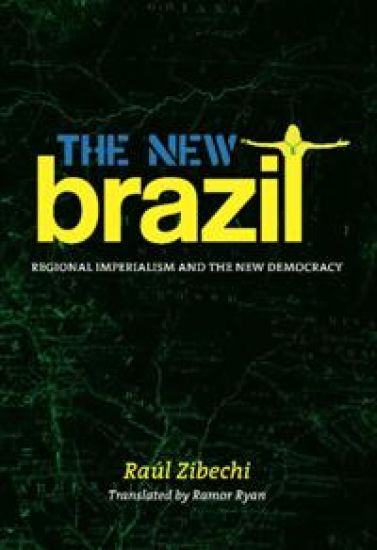
The New Brazil

The New Brazil

Raul Zibechi

AK Press
2014
nidottu
In the midst of a rapidly shifting global economy, Brazil has emerged as a powerful new player on the geopolitical stage. Against all odds, the Latin American nation managed, in just three years, to repay a 2002 $15.5 billion IMF bailout loan thanks to aggressive economic restructuring and a series of alliances that have placed it at the center of political and economic power in the region. From the outside, Brazil is a poster child for neoliberal capitalism. Yet inside the country, the lives of the Brazilian people are still marked by vast inequities in wealth and access to social services--a striking disparity with the nation's newfound power in the global economy. In June of 2013, protests against the increasing costs of public transportation swelled to mass demonstrations against the Rousseff government's failure to address this disparity, leading many to wonder whether the popular movements in Brazil may be just powerful enough to shift the nation's influence towards a wholly new economic model based in regional integration. "The New Brazil" explores this disparity. Will the nation serve as the glue that holds together the Latin American states, distancing themselves from the neoliberalism of the United States and Canada? Or will Brazil simply become another world superpower, able to subject the rest of Latin American to its will? Only time will tell. Raul Zibechi is a journalist and social-movement analyst based in Montevideo, Uruguay. He is the author of numerous books including "Dispersing Power" and "Territories in Resistance," both published by AK Press.
Until The Rulers Obey

Until The Rulers Obey

Raul Zibechi

PM Press
2013
nidottu
Bringing together voices from the movements behind the wave of change that swept Latin America at the turn of the 21st century, this unique collection of interviews features five dozen leaders and grassroots activists from 15 countries, presenting their work and debating pressing questions of power, organizational forms, and relations with the state. These movements have galvanized long-silent--or silenced--sectors of society: indigenous people, campesinos, students, the LGBT community, the unemployed, and all those left out of the promised utopia of a globalized economy. They have deployed a wide range of strategies and actions, sometimes building schools or clinics, sometimes occupying factories or fields, sometimes organizing political parties to take the reins of the state, and sometimes resisting government policies in order to protect their new-found power in community. This indispensable compilation of primary source material is organized in chapters by country, with each chapter introduced by a solidarity activist, writer, or academic with deep knowledge of the place. It addresses a wide range of issues, from fighting against mines and agribusiness to demanding equal participation through the recognition of language and culture, giving participants, students, and observers of social movements a chance to learn from their experiences.
Dispersing Power

Dispersing Power

Raul Zibechi

AK Press
2010
nidottu
"Zibechi goes to Bolivia to learn. Like us, he goes with questions, questions that stretch far beyond the borders of Bolivia. How do we change the world and create a different one? How do we get rid of capitalism? How do we create a society based on dignity? What is the role of the state and what are the possibilities of changing society through anti-state movements?... the most important practical and theoretical questions that have risen from the struggles in Latin America and the world in the last fifteen years or so.... The book is beautiful, exciting, stimulating.... Do read it and also give it your friends."--John Holloway, from the Foreword "Raul Zibechi recounts in wonderful detail how dynamic and innovative Bolivian social movements succeeded in transforming the country. Even more inspiring than the practical exploits, though, are the theoretical innovations of the movements, which Zibechi highlights, giving us new understandings of community, political organization, institution, and a series of other concepts vital to contemporary political thought."--Michael Hardt, co-author of Empire, Multitude, and Commonwealth This, Raul Zibechi's first book translated into English, is an historical analysis of social struggles in Bolivia and the forms of community power instituted by that country's indigenous Aymara. Dispersing Power, like the movements it describes, explores new ways of doing politics beyond the state, gracefully mapping the "how" of revolution, offering valuable lessons to activists and new theoretical frameworks for understanding how social movements can and do operate independently of state-centered models for social change.