
Kirjailija
Rawi Hage
Kirjat ja teokset yhdessä paikassa: 9 kirjaa, julkaisuja vuosilta 2008-2025, suosituimpien joukossa Der Ruf. Vertaile teosten hintoja ja tarkista saatavuus suomalaisista kirjakaupoista.
9 kirjaa
Kirjojen julkaisuhaarukka 2008-2025.
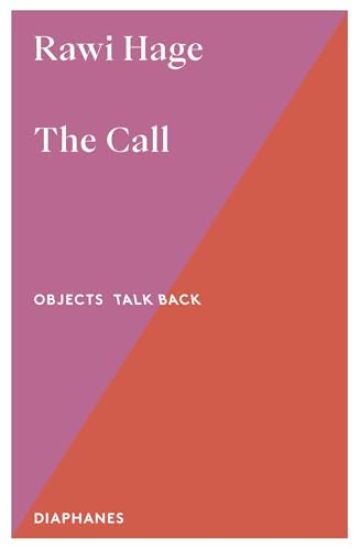
A personal reflection on fragmentation, language, and place. Following one of the Turfan archaeological expeditions in the early 1900s, a fragment of a Manichaean text written in Uighur and Old Turkic found its way to the Asian Art Museum in Berlin. Originating from the Northern Silk Road region (now the Xinjiang Uighur Region in China), these “loose leaves” became a source of inspiration for Rawi Hage. Hage writes, “I was born near Byblos in Lebanon. The ancient city of Byblos is believed to be the place where the first alphabet was invented.” Encountering this rare and precious manuscript, with its layered and multicolored words, Hage reflects on the movement, uprooting, displacement, and migration of both objects and people.
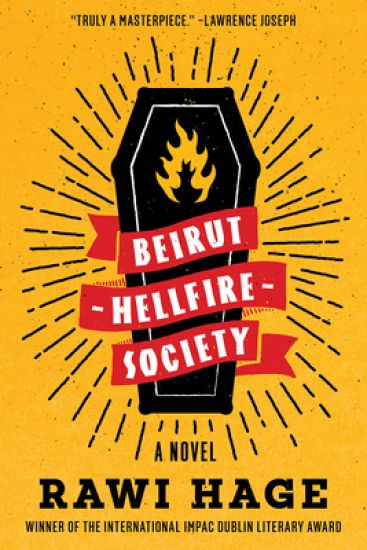
On a ravaged street overlooking a cemetery in a Christian enclave in war-torn 1970s Beirut, we meet Pavlov, the son of a local undertaker. When his father dies suddenly, Pavlov is approached by a member of the mysterious Hellfire Society--an anti-religious sect that arranges secret burial for outcasts denied last rites because of their religion or sexuality. Pavlov agrees to take on his father's work for the society, and over the course of the novel he becomes a survivor-chronicler of his embattled and faded community at the heart of Lebanon's civil war.

Documenting German performance duo Prinz Gholam's choreographic workSince 2001 Berlin-based performance artists Wolfgang Prinz and Michel Gholam, otherwise known as Prinz Gholam, have been critiquing constructs of the self and the body. Following in the spirit of their self-published booklets, this artist's book catalogs their performances.
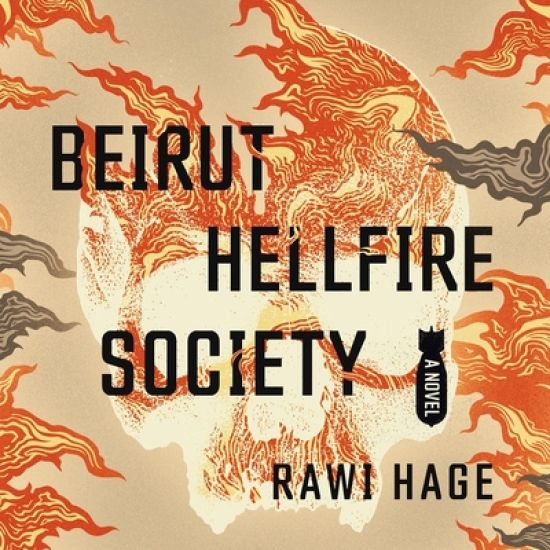
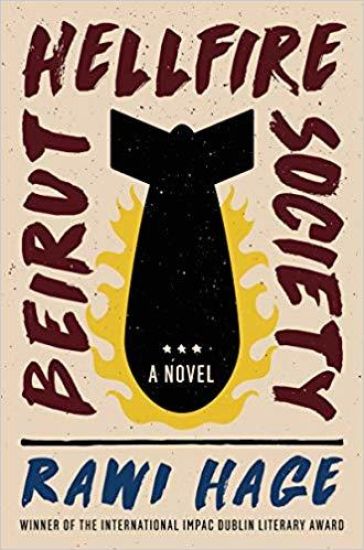
On a ravaged street overlooking a cemetery in Beirut's Christian enclave, we meet an eccentric young man named Pavlov, the son of a local undertaker. When his father meets a sudden and untimely death, Pavlov is approached by a colorful member of the mysterious Hellfire Society--an anti-religious sect that, among many rebellious and often salacious activities, arranges secret burial for outcasts who have been denied last rites because of their religion or sexuality.Pavlov agrees to take on his father's work for the society, and over the course of the novel he becomes a survivor-chronicler of his embattled and fading community at the heart of Lebanon's civil war. His new role introduces him to an unconventional cast of characters, including a father searching for his son's body, a mysterious woman who takes up residence on Pavlov's stairs after a bombing, and the flamboyant head of the Hellfire Society, El-Marquis.Deftly combining comedy with tragedy, gritty reality with surreal absurdity, Beirut Hellfire Society asks: What, after all, can be preserved in the face of certain change and imminent death? The answer is at once propulsive, elegiac, outrageous, profane, and transcendent--and a profoundly moving fable on what it means to live through war.
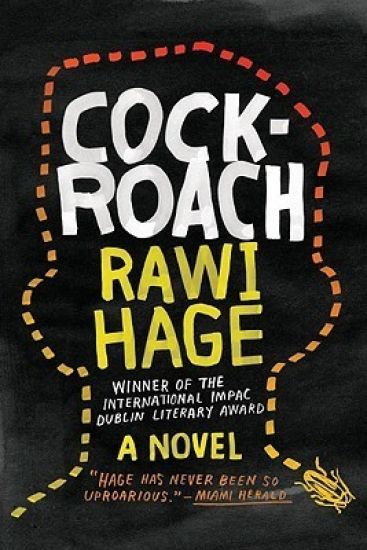
Hage's look at the underbelly of organized religion and immigrant life in Canada is unflinching and grim. . . . Cockroach's finely wrought scenes build in tension toward a conclusion that's fitting and yet unpredictable.--Kevin Chong.
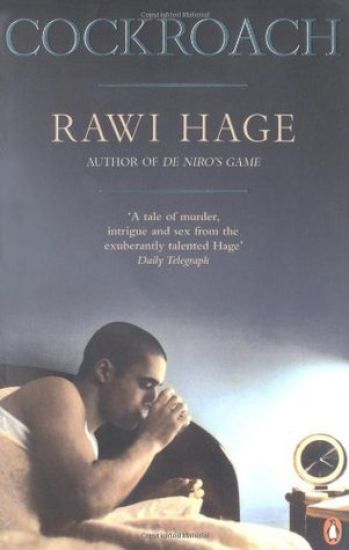
Our unnamed narrator has left his Middle-Eastern home and settled in a chilly, western city. He lives as an exile, untrusted, unwanted, foreign. A stranger trying to make sense of a strange land. But he brings with him secrets - of a family tragedy that he failed to prevent and a childhood overshadowed by war. And as he wanders snowy streets, falling in love with fellow exile Shoreh, he realizes that to find a place in this alien world it is necessary to become someone else. Someone he never dared to be in his past life . . .

Childhood best friends Bassam and George have grown to be men in war-ravaged Beirut. Now they must choose between the only two futures available to them: to stay in the devastated city and consolidate power through crime or to go into exile abroad, alienated from the only existence they have ever known. Told in a distinctive, captivating voice that fuses vivid cinematic imagery, a page-turning plot, and exquisite, dark poetry, De Niro's Game is an explosive portrait of life in a war zone and a powerful meditation on what comes after. It won the prestigious International IMPAC Dublin Literary Award in 2008.