Kirjojen hintavertailu. Mukana 12 390 323 kirjaa ja 12 kauppaa.

Kirjailija

Ray E. Boomhower

Kirjat ja teokset yhdessä paikassa: 20 kirjaa, julkaisuja vuosilta 2008-2026, suosituimpien joukossa No Place Like Murder. Vertaile teosten hintoja ja tarkista saatavuus suomalaisista kirjakaupoista.

Mukana myös kirjoitusasut: Ray E Boomhower

20 kirjaa

Kirjojen julkaisuhaarukka 2008-2026.

No Place Like Murder

No Place Like Murder

Janis Thornton; Larry Sweazy; Ray E. Boomhower

Indiana University Press
2020
pokkari
A modern retelling of 20 sensational true crimes, No Place Like Murder reveals the inside details behind nefarious acts that shocked the Midwest between 1869 and 1950. The stories chronicle the misdeeds, examining the perpetrators' mindsets, motives, lives, apprehensions, and trials, as well as what became of them long after. True crime author Janis Thornton profiles notorious murderers such as Frankie Miller, who was fed up when her fiancé stood her up for another woman. As fans of the song "Frankie and Johnny" already know, Frankie met her former lover at the door with a shotgun. Thornton's tales reveal the darker side of life in the Midwest, including the account of Isabelle Messmer, a plucky young woman who dreamed of escaping her quiet farm-town life. After she nearly took down two tough Pittsburgh policemen in 1933, she was dubbed "Gun Girl" and went on to make headlines from coast to coast. In 1942, however, after a murder conviction in Texas, she vowed to do her time and go straight. Full of intrigue and revelations, No Place Like Murder also features such folks as Chirka and Rasico, the first two Hoosier men to die in the electric chair after they brutally murdered their wives in 1913. The two didn't meet until their fateful last night. An enthralling and chilling collection, No Place Like Murder is sure to thrill true crime lovers.
The Ultimate Protest

The Ultimate Protest

Ray E. Boomhower

UNIVERSITY OF NEW MEXICO PRESS
2026
pokkari
The Ultimate Protest: Malcolm W. Browne, Thich Quang Duc, and the News Photograph That Stunned the World examines how the most unlikely of war correspondents, Malcolm W. Browne, became the only Western reporter to capture Buddhist monk Thich Quang Duc’s horrific self-immolation on June 11, 1963. Quang Duc made his ultimate sacrifice to protest the perceived anti-Buddhist policies of the Catholic-dominated administration of South Vietnam’s president Ngo Dinh Diem. Biographer Ray E. Boomhower’s The Ultimate Protest explores the background of the Buddhist crisis in South Vietnam in the spring of 1963 that led to Quang Duc’s self-sacrifice as well as the worldwide reaction to Browne’s photograph, how it affected American policy toward Diem’s government, and the role the image played in the violent coup on November 1, 1963, that deposed Diem and led to his assassination. The book also delves into the dynamics involved in covering the Vietnam War in the early days of the American presence and the pressures placed on the journalists to stop raising doubts about how the war was going. Browne and his colleague David Halberstam shared the 1964 Pulitzer Prize for international reporting for their work in Vietnam.
Richard Tregaskis

Richard Tregaskis

Ray E. Boomhower

UNIVERSITY OF NEW MEXICO PRESS
2024
nidottu
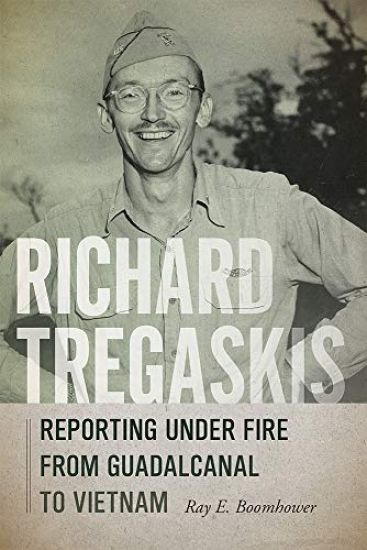
In the late summer of 1942, more than ten thousand members of the First Marine Division held a tenuous toehold on the Pacific island of Guadalcanal. As American marines battled Japanese forces for control of the island, they were joined by war correspondent Richard Tregaskis. Tregaskis was one of only two civilian reporters to land and stay with the marines, and in his notebook he captured the daily and nightly terrors faced by American forces in one of World War II's most legendary battles - and it served as the premise for his bestselling book, Guadalcanal Diary.One of the most distinguished combat reporters to cover World War II, Tregaskis later reported on Cold War conflicts in Korea and Vietnam. In 1964 the Overseas Press Club recognized his first-person reporting under hazardous circumstances by awarding him its George Polk Award for his book Vietnam Diary. Boomhower's riveting book is the first to tell Tregaskis's gripping life story, concentrating on his intrepid reporting experiences during World War II and his fascination with war and its effect on the men who fought it.
The Ultimate Protest

The Ultimate Protest

Ray E. Boomhower

UNIVERSITY OF NEW MEXICO PRESS
2024
sidottu
The Ultimate Protest: Malcolm W. Browne, Thich Quang Duc, and the News Photograph That Stunned the World examines how the most unlikely of war correspondents, Malcolm W. Browne, became the only Western reporter to capture Buddhist monk Thich Quang Duc's horrific self-immolation on June 11, 1963. Quang Duc made his ultimate sacrifice to protest the perceived anti-Buddhist policies of the Catholic-dominated administration of South Vietnam's president Ngo Dinh Diem.Biographer Ray E. Boomhower's The Ultimate Protest explores the background of the Buddhist crisis in South Vietnam in the spring of 1963 that led to Quang Duc's self-sacrifice as well as the worldwide reaction to Browne's photograph, how it affected American policy toward Diem's government, and the role the image played in the violent coup on November 1, 1963, that deposed Diem and led to his assassination. The book also delves into the dynamics involved in covering the Vietnam War in the early days of the American presence and the pressures placed on the journalists to stop raising doubts about how the war was going. Browne and his colleague David Halberstam shared the 1964 Pulitzer Prize for international reporting for their work in Vietnam.
Richard Tregaskis

Richard Tregaskis

Ray E. Boomhower

University of New Mexico Press
2021
sidottu
In the late summer of 1942, more than ten thousand members of the First Marine Division held a tenuous toehold on the Pacific island of Guadalcanal. As American marines battled Japanese forces for control of the island, they were joined by war correspondent Richard Tregaskis. Only one of two civilian reporters to land and stay with the marines, Tregaskis's notebook captured the daily and nightly terrors faced by American forces in one of World War II's most legendary battles--and it served as the premise for his bestselling book, Guadalcanal Diary.One of the most distinguished combat reporters to cover World War II, Tregaskis later reported on Cold War conflicts in Korea and Vietnam. In 1964 the Overseas Press Club recognized his first-person reporting under hazardous circumstances by awarding him its George Polk Award for his book Vietnam Diary. Boomhower's riveting book is the first to tell Tregaskis's gripping life story, concentrating on his intrepid reporting experiences during World War II and his fascination with war and its effect on the men who fought it.
Invasion Diary

Invasion Diary

Richard Tregaskis; Ray E Boomhower

JMFDEA PRESS
2021
pokkari
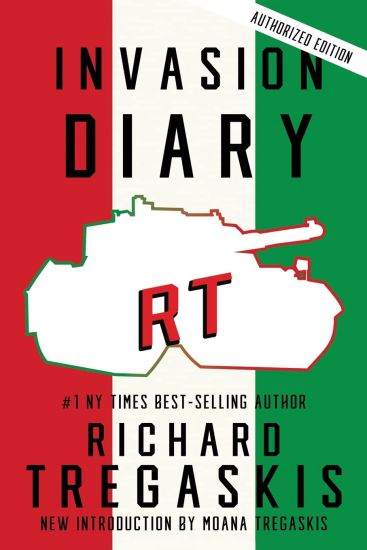
Invasion Diary is a personal account of the US Forces as they secured Sicily and Italy by famed war correspondent, Richard Tregaskis. It was a miracle he wrote about it all, after narrowly surviving a blast to his head. He immediately continued writing to share these vital stories. The helmet he wore that fateful day is on display at the National Museum of the Marine Corps."Tregaskis has a personal intimate sort of way of telling his story that made Guadaicanal Diary hugely popular. He is himself very much part of the story he is telling, not because he is using other people's experiences to build himself up, but because he is actually right in the fight -- and this time came off badly with a serious head wound, paralysis of the right side, etc. One feels that one goes right along with him, -- in this case on flights across the newly invaded Sicily, then actually with the men at various parts of the Sicilian front -- sometimes even ahead of invasion forces; then at Balerno, and on towards the ill-starred Caino, which at that time seemed within grasp. He writes in highlighted diary form, day by day happenings, anecdotal, human interest bits, but not in the Ernie Pyle behind the lines sense, but rather a close-up, photographic, phonographic record of the front. One gets a feeling of a new sort of war, as different from the Guadal campaign as that was from previous fighting, a war where the front is seemingly a scattering of men, scarcely seen -- but where death is sudden and violent and impersonal." Kirkus Reviews, 1944.
Stronger Than Fear

Stronger Than Fear

Richard Tregaskis; Moana Tregaskis; Ray E Boomhower

JMFDEA PRESS
2021
pokkari
"'Bravery and honor and decency cannot and will not die' --but it took Paul Krieder a bitter battle with fear before he proved it with the supreme sacrifice...This small book -- no longer than A Walk in the Sun, and with somewhat that same market appeal -- gives one a sense of intimate knowledge of what war is today, in terms of fighting an unseen enemy in devastated towns, where a sniper's bullet may catch the fighting man unaware. It is a story told around a Captain Krieder, winner of the Purple Heart, now finding himself on the jittery edge of collapse when confronted with another day of house to house, street by street, fighting, and the necessity of pushing his platoon over more territory than he had keyed himself to in a German town where the foe had not yet realized how few were the assailants. He found himself hunting excuses to hide -- to take shelter -- to go back to headquarters. But Jerry Bull, one time schoolmate, and now parachuter, steadies him at the exact moment when "battle fatigue" might have proved too great. His innate gallantry won over the urge to return to safety and Suzy and the baby he had not seen -- and he went forward, and won. A holding story of one segment of war that is repeated a thousand times in Europe today. Tregaskis' name will win a very special audience for this." -Kirkus Reviews, 1945.
China Bomb

China Bomb

Richard Tregaskis; Ray E Boomhower

JMFDEA PRESS
2021
pokkari
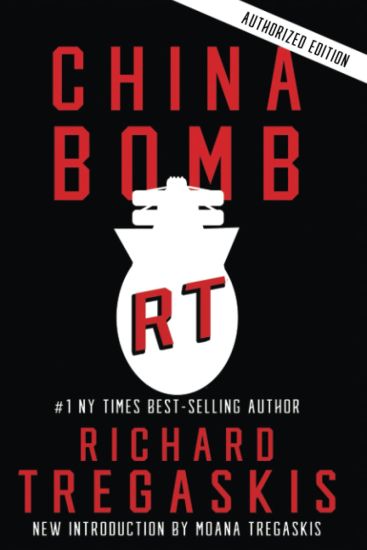
When American military intelligence sources discover that the Chinese Communists developed their first and only H-bomb and intend to drop it on the U.S. Seventh Fleet, extraordinary and top-secret plans are immediately put in motion in Hong Kong and Washington. A small group of American commandos called Typhoon Force, most of them highly trained Green Beret troopers, are entrusted with the job of putting the H-bomb out of commission. The plans for the operation are incredibly complicated and dependent on the dovetailing of so many factors that the outcome is completely unpredictable. Local people, a muddle-headed but powerful Senator in Washington, and determined Communists in Hong Kong become obstacles to a successful completion of the mission before it even gets underway. The story focuses on Hank Musgrave, press correspondent of long experience in Southeast Asia, who happens to be in Hong Kong for "R and R"-rest and recreation-as the Force is being activated. A fascinating and beautiful Chinese girl, Mary Wu, the first person Hank plans to see when he reaches Hong Kong, becomes involved as a source of intelligence on Communist activities. Intrigue and warfare in the Far East are brought home to the western reader in this thriller story of mounting tension and suspense. "Big, lusty, adventure...international politics, battle and love"-Los Angeles Times
No Place Like Murder

No Place Like Murder

Janis Thornton; Larry Sweazy; Ray E. Boomhower

Indiana University Press
2020
sidottu
A modern retelling of 20 sensational true crimes, No Place Like Murder reveals the inside details behind nefarious acts that shocked the Midwest between 1869 and 1950. The stories chronicle the misdeeds, examining the perpetrators' mindsets, motives, lives, apprehensions, and trials, as well as what became of them long after. True crime author Janis Thornton profiles notorious murderers such as Frankie Miller, who was fed up when her fiancé stood her up for another woman. As fans of the song "Frankie and Johnny" already know, Frankie met her former lover at the door with a shotgun. Thornton's tales reveal the darker side of life in the Midwest, including the account of Isabelle Messmer, a plucky young woman who dreamed of escaping her quiet farm-town life. After she nearly took down two tough Pittsburgh policemen in 1933, she was dubbed "Gun Girl" and went on to make headlines from coast to coast. In 1942, however, after a murder conviction in Texas, she vowed to do her time and go straight. Full of intrigue and revelations, No Place Like Murder also features such folks as Chirka and Rasico, the first two Hoosier men to die in the electric chair after they brutally murdered their wives in 1913. The two didn't meet until their fateful last night. An enthralling and chilling collection, No Place Like Murder is sure to thrill true crime lovers.
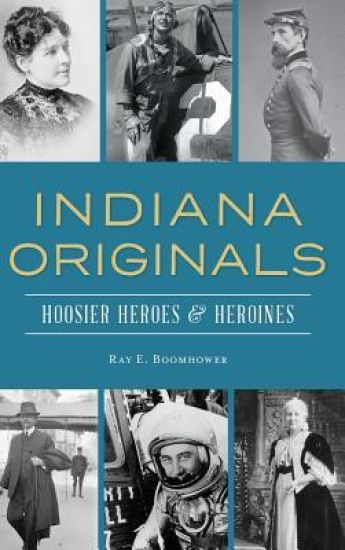
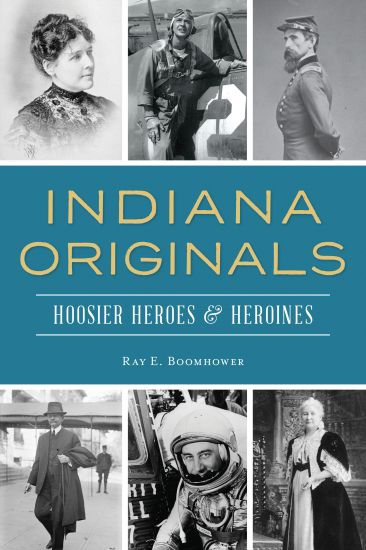
Indiana Originals: Hoosier Heroes & Heroines

Indiana Originals: Hoosier Heroes & Heroines

Ray E. Boomhower

History Press Library Editions
2018
sidottu
Hoosier history overflows with bold visionaries, noble heroes and lovable rogues. May Wright Sewall struggled to uplift womankind and unflinchingly called for peace in a world sleepwalking toward conflict. In the guise of Abe Martin, Kin Hubbard graced the Indianapolis News's back page for twenty-six years with folksy humor. Combat photographer John A. Bushemi bravely faced the terrors of war and perished capturing its violence. Audacious automotive pioneer Carl G. Fisher went to any length to promote himself, even flying a car via a hot-air balloon. Drawing on more than thirty years of experience, author Ray E. Boomhower, the dean of Hoosier biographers, brings together forty of the most notable figures from the nineteenth state.
Dispatches from the Pacific

Dispatches from the Pacific

Ray E. Boomhower

Indiana University Press
2017
pokkari
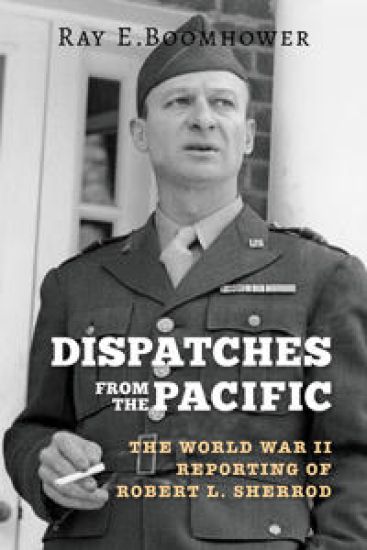
In the fall of 1943, armed with only his notebooks and pencils, Time and Life correspondent Robert L. Sherrod leapt from the safety of a landing craft and waded through neck-deep water and a hail of bullets to reach the shores of the Tarawa Atoll with the US Marine Corps. Living shoulder to shoulder with the marines, Sherrod chronicled combat and the marines' day-to-day struggles as they leapfrogged across the Central Pacific, battling the Japanese on Tarawa, Saipan, Iwo Jima, and Okinawa. While the marines courageously and doggedly confronted an enemy that at times seemed invincible, those left behind on the American home front desperately scanned Sherrod's columns for news of their loved ones. Following his death in 1994, the Washington Post heralded Sherrod's reporting as "some of the most vivid accounts of men at war ever produced by an American journalist." Now, for the first time, author Ray E. Boomhower tells the story of the journalist in Dispatches from the Pacific: The World War II Reporting of Robert L. Sherrod, an intimate account of the war efforts on the Pacific front.
Dispatches from the Pacific

Dispatches from the Pacific

Ray E. Boomhower

Indiana University Press
2017
sidottu
In the fall of 1943, armed with only his notebooks and pencils, Time and Life correspondent Robert L. Sherrod leapt from the safety of a landing craft and waded through neck-deep water and a hail of bullets to reach the shores of the Tarawa Atoll with the US Marine Corps. Living shoulder to shoulder with the marines, Sherrod chronicled combat and the marines' day-to-day struggles as they leapfrogged across the Central Pacific, battling the Japanese on Tarawa, Saipan, Iwo Jima, and Okinawa. While the marines courageously and doggedly confronted an enemy that at times seemed invincible, those left behind on the American home front desperately scanned Sherrod's columns for news of their loved ones. Following his death in 1994, the Washington Post heralded Sherrod's reporting as "some of the most vivid accounts of men at war ever produced by an American journalist." Now, for the first time, author Ray E. Boomhower tells the story of the journalist in Dispatches from the Pacific: The World War II Reporting of Robert L. Sherrod, an intimate account of the war efforts on the Pacific front.
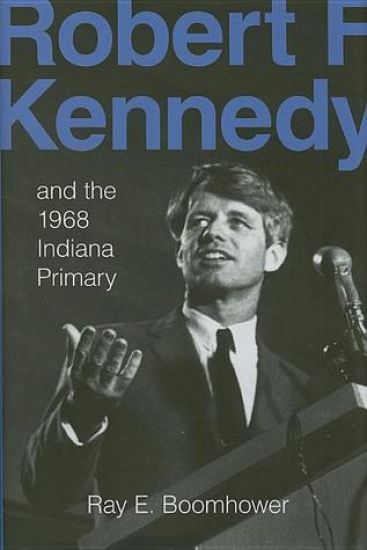
Robert F. Kennedy and the 1968 Indiana Primary

Robert F. Kennedy and the 1968 Indiana Primary

Ray E. Boomhower

Indiana University Press
2017
pokkari
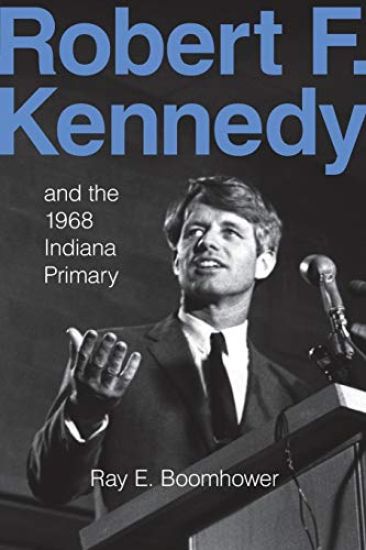
On April 4, 1968, Senator Robert F. Kennedy, Jr., arrived in Indiana to campaign for the Indiana Democratic presidential primary. As Kennedy prepared to fly from an appearance in Muncie to Indianapolis, he learned that civil rights leader Dr. Martin Luther King, Jr., had been shot outside his hotel in Memphis, Tennessee. Before his plane landed in Indianapolis, Kennedy heard the news that King had died. Despite warnings from Indianapolis police that they could not guarantee his safety, and brushing off concerns from his own staff, Kennedy decided to proceed with plans to address an outdoor rally to be held in the heart of the city's African American community. On that cold and windy evening, Kennedy broke the news of King's death in an impassioned, extemporaneous speech on the need for compassion in the face of violence. It has proven to be one of the great speeches in American political history. Marking the 40th anniversary of Kennedy's Indianapolis speech, this book explains what brought the politician to Indiana that day, and explores the characters and events of the 1968 Indiana Democratic presidential primary in which Kennedy, who was an underdog, had a decisive victory.
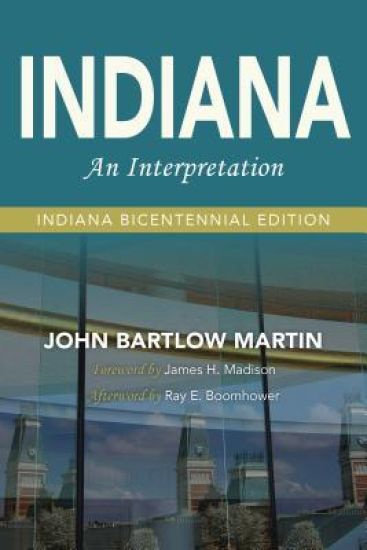
Indiana

Indiana

John Bartlow Martin; James H. Madison; Ray E. Boomhower

Indiana University Press
2016
pokkari
Indiana: An Interpretation is arguably the best single book about Indiana. Originally published in 1947, John Bartlow Martin's work sparked controversy in Indiana for challenging Hoosiers' assumptions about their history and how they saw themselves and their state. Although the book only covers the period from the Civil War to just after World War II, Martin's interpretation of the Hoosier character, thought, and way of living is still as relevant today as when it was first written. A new afterword by Martin biographer Ray E. Boomhower contextualizes the book for today's readers and reveals why it has become a modern Indiana classic.
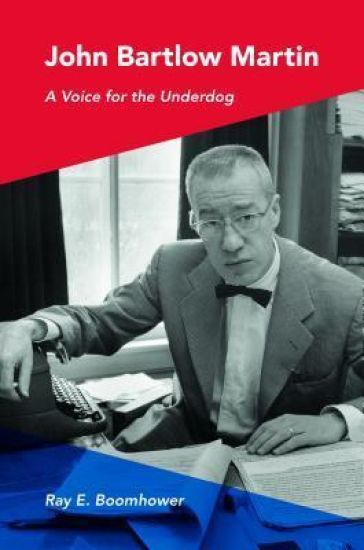
John Bartlow Martin

John Bartlow Martin

Ray E. Boomhower

Indiana University Press
2015
sidottu
During the 1940s and 1950s, one name, John Bartlow Martin, dominated the pages of the "big slicks," the Saturday Evening Post, LIFE, Harper's, Look, and Collier's. A former reporter for the Indianapolis Times, Martin was one of a handful of freelance writers able to survive solely on this writing. Over a career that spanned nearly fifty years, his peers lauded him as "the best living reporter," the "ablest crime reporter in America," and "one of America's premier seekers of fact." His deep and abiding concern for the working class, perhaps a result of his upbringing, set him apart from other reporters. Martin was a key speechwriter and adviser to the presidential campaigns of many prominent Democrats from 1950 into the 1970s, including those of Adlai Stevenson, John F. Kennedy, Lyndon B. Johnson, Robert F. Kennedy, Hubert Humphrey, and George McGovern. He served as U.S. ambassador to the Dominican Republic during the Kennedy administration and earned a small measure of fame when FCC Chairman Newton Minow introduced his description of television as "a vast wasteland" into the nation's vocabulary.
Robert F. Kennedy and the 1968 Indiana Primary

Robert F. Kennedy and the 1968 Indiana Primary

Ray E. Boomhower

Indiana University Press
2008
sidottu
On April 4, 1968, Senator Robert F. Kennedy, Jr., arrived in Indiana to campaign for the Indiana Democratic presidential primary. As Kennedy prepared to fly from an appearance in Muncie to Indianapolis, he learned that civil rights leader Dr. Martin Luther King, Jr., had been shot outside his hotel in Memphis, Tennessee. Before his plane landed in Indianapolis, Kennedy heard the news that King had died. Despite warnings from Indianapolis police that they could not guarantee his safety, and brushing off concerns from his own staff, Kennedy decided to proceed with plans to address an outdoor rally to be held in the heart of the city's African American community. On that cold and windy evening, Kennedy broke the news of King's death in an impassioned, extemporaneous speech on the need for compassion in the face of violence. It has proven to be one of the great speeches in American political history. Marking the 40th anniversary of Kennedy's Indianapolis speech, this book explains what brought the politician to Indiana that day, and explores the characters and events of the 1968 Indiana Democratic presidential primary in which Kennedy, who was an underdog, had a decisive victory.