Kirjojen hintavertailu. Mukana 12 152 606 kirjaa ja 12 kauppaa.

Kirjailija

Ray Laurence

Kirjat ja teokset yhdessä paikassa: 15 kirjaa, julkaisuja vuosilta 1999-2024, suosituimpien joukossa Roman Passions. Vertaile teosten hintoja ja tarkista saatavuus suomalaisista kirjakaupoista.

15 kirjaa

Kirjojen julkaisuhaarukka 1999-2024.

Mediterranean Timescapes

Mediterranean Timescapes

Ray Laurence; Francesco Trifilò

TAYLOR FRANCIS LTD
2024
nidottu
This book, built around the study of the representation of age and identity in 23,000 Latin funerary epitaphs from the Western Mediterranean in the Roman era, sets out how the use of age in inscriptions, and in turn, time, varied across this region.Discrepancies between the use of time to represent identity in death allow readers to begin to understand the differences between the cultures of Roman Italy and contemporary societies in North Africa, Spain and southern Gaul. The analysis focuses on the timescapes of cemeteries, a key urban phenomenon, in relation to other markers of time, including the Roman invention of the birthday, the revering of the dead at the Parentalia and the topoi of life’s stages. In doing so, the book contributes to our understanding of gender, the city, the family, the role of the military, freed slaves and cultural changes during this period. The concept of the timescape is seen to have varied geographically across the Mediterranean, bringing into question claims of cultural unity for the Western Mediterranean as a region.Mediterranean Timescapes is of interest to students and scholars of Roman history and archaeology, particularly that of the Western Mediterranean, and ancient social history.
Mediterranean Timescapes

Mediterranean Timescapes

Ray Laurence; Francesco Trifilò

Routledge
2023
sidottu
This book, built around the study of the representation of age and identity in 23,000 Latin funerary epitaphs from the Western Mediterranean in the Roman era, sets out how the use of age in inscriptions, and in turn, time, varied across this region.Discrepancies between the use of time to represent identity in death allow readers to begin to understand the differences between the cultures of Roman Italy and contemporary societies in North Africa, Spain and southern Gaul. The analysis focuses on the timescapes of cemeteries, a key urban phenomenon, in relation to other markers of time, including the Roman invention of the birthday, the revering of the dead at the Parentalia and the topoi of life’s stages. In doing so, the book contributes to our understanding of gender, the city, the family, the role of the military, freed slaves and cultural changes during this period. The concept of the timescape is seen to have varied geographically across the Mediterranean, bringing into question claims of cultural unity for the Western Mediterranean as a region.Mediterranean Timescapes is of interest to students and scholars of Roman history and archaeology, particularly that of the Western Mediterranean, and ancient social history.
Roman Archaeology for Historians

Roman Archaeology for Historians

Ray Laurence

Routledge
2012
sidottu
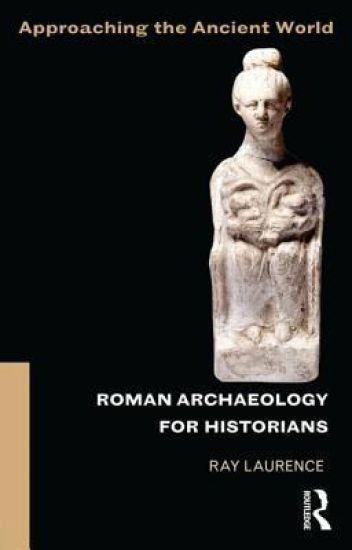
Roman Archaeology for Historians provides students of Roman history with a guide to the contribution of archaeology to the study of their subject. It discusses the issues with the use of material and textual evidence to explain the Roman past, and the importance of viewing this evidence in context. It also surveys the different approaches to the archaeological material of the period and examines key themes that have shaped Roman archaeology. At the heart of the book lies the question of how archaeological material can be interpreted and its relevance for the study of ancient history. It includes discussion of the study of landscape change, urban topography, the economy, the nature of cities, new approaches to skeletal evidence and artefacts in museums. Along the way, readers gain access to new findings and key sites - many of which have not been discussed in English before and many, for which, access may only be gained from technical reports.Roman Archaeology for Historians provides an accessible guide to the development of archaeology as a discipline and how the use of archaeological evidence of the Roman world can enrich the study of ancient history, while at the same time encouraging the integration of material evidence into the study of the period’s history. This work is a key resource for students of ancient history, and for those studying the archaeology of the Roman period.
Roman Archaeology for Historians

Roman Archaeology for Historians

Ray Laurence

Routledge
2012
nidottu
Roman Archaeology for Historians provides students of Roman history with a guide to the contribution of archaeology to the study of their subject. It discusses the issues with the use of material and textual evidence to explain the Roman past, and the importance of viewing this evidence in context. It also surveys the different approaches to the archaeological material of the period and examines key themes that have shaped Roman archaeology. At the heart of the book lies the question of how archaeological material can be interpreted and its relevance for the study of ancient history. It includes discussion of the study of landscape change, urban topography, the economy, the nature of cities, new approaches to skeletal evidence and artefacts in museums. Along the way, readers gain access to new findings and key sites - many of which have not been discussed in English before and many, for which, access may only be gained from technical reports.Roman Archaeology for Historians provides an accessible guide to the development of archaeology as a discipline and how the use of archaeological evidence of the Roman world can enrich the study of ancient history, while at the same time encouraging the integration of material evidence into the study of the period’s history. This work is a key resource for students of ancient history, and for those studying the archaeology of the Roman period.
The City in the Roman West, c.250 BC–c.AD 250

The City in the Roman West, c.250 BC–c.AD 250

Ray Laurence; Simon Esmonde Cleary; Gareth Sears

Cambridge University Press
2011
pokkari
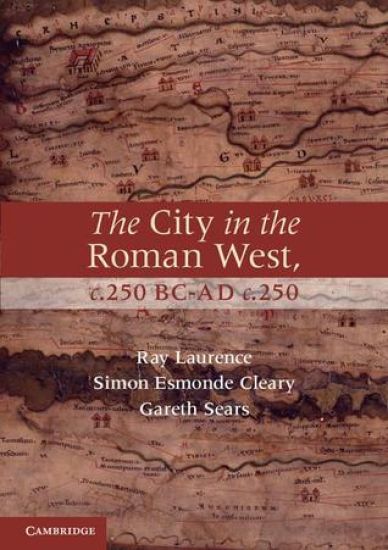
The city is widely regarded as the most characteristic expression of the social, cultural and economic formations of the Roman Empire. This was especially true in the Latin-speaking West, where urbanism was much less deeply ingrained than in the Greek-speaking East but where networks of cities grew up during the centuries following conquest and occupation. This well-illustrated synthesis provides students and specialists with an overview of the development of the city in Italy, Gaul, Britain, Germany, Spain and North Africa, whether their interests lie in ancient history, Roman archaeology or the wider history of urbanism. It accounts not only for the city's geographical and temporal spread and its associated monuments (such as amphitheatres and baths), but also for its importance to the rulers of the Empire as well as the provincials and locals.
The City in the Roman West, c.250 BC–c.AD 250

The City in the Roman West, c.250 BC–c.AD 250

Ray Laurence; Simon Esmonde Cleary; Gareth Sears

Cambridge University Press
2011
sidottu
The city is widely regarded as the most characteristic expression of the social, cultural and economic formations of the Roman Empire. This was especially true in the Latin-speaking West, where urbanism was much less deeply ingrained than in the Greek-speaking East but where networks of cities grew up during the centuries following conquest and occupation. This well-illustrated synthesis provides students and specialists with an overview of the development of the city in Italy, Gaul, Britain, Germany, Spain and North Africa, whether their interests lie in ancient history, Roman archaeology or the wider history of urbanism. It accounts not only for the city's geographical and temporal spread and its associated monuments (such as amphitheatres and baths), but also for its importance to the rulers of the Empire as well as the provincials and locals.
The Roads of Roman Italy

The Roads of Roman Italy

Ray Laurence

Routledge
2011
nidottu
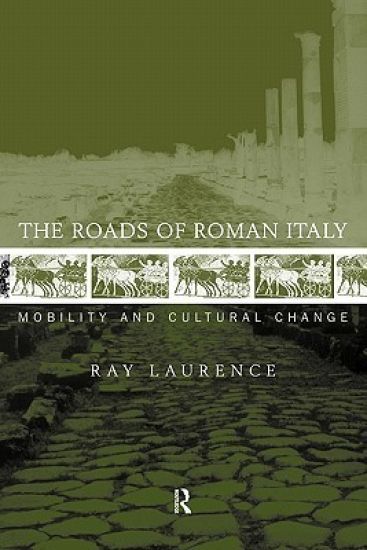
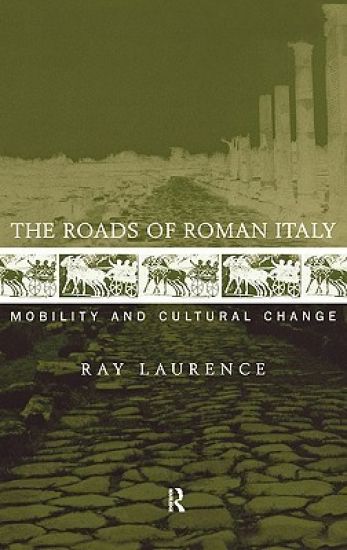
The Roads of Roman Italy offers a complete re-evaluation of both the evidence and the interpretation of Roman land transport. The book utilises archaeological, epigraphic and literary evidence for Roman communications, drawing on recent approaches to the human landscape developed by geographers. Among the topics considered are:* the relationship between the road and the human landscape* the administration and maintenance of the road system* the role of roads as imperial monuments* the economics of road construction and urban development.
Roman Passions

Roman Passions

Ray Laurence

Continuum Publishing Corporation
2010
nidottu
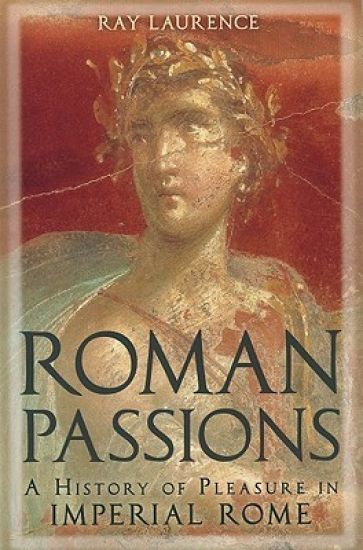
Immerse yourself in the sensual delights of Rome in all their guises. By the time of the emperors, the Romans had created the world's first global empire, and plundered the provinces for produce to be eaten, planted or displayed as novelties. At the same time the aesthetics of the city of Rome was being transferred to the provinces, establishing towns with public buildings, baths and the Latin language. With these attributes of civilisation came other trappings of Roman culture: lavish entertainments, elaborate dinner parties and vice. The world of pleasure became a defining feature of the Romans, and this book explores how they pursued sensual delights - from steamy bathhouses to stately country villas; the excesses of the festivals to the rich culture of music, dance and song and sex, as both unrestrained and puritanical.
Roman Passions

Roman Passions

Ray Laurence

Hambledon Continuum
2009
sidottu
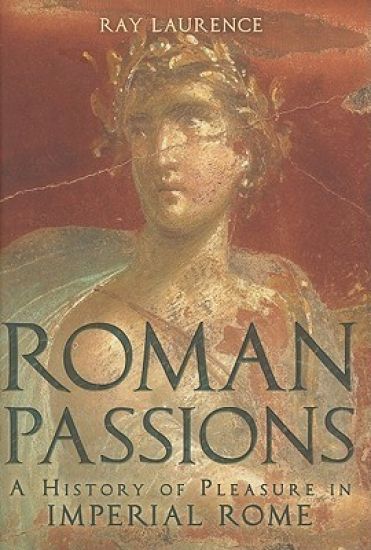
Immerse yourself in the sensual delights of Rome in all their guises. By the time of the emperors, the Romans had created the world's first global empire and plundered the provinces for produce to be eaten, planted or displayed as novelties. At the same time the aesthetics of the city of Rome was being transferred to the provinces, establishing towns with public buildings, baths and the Latin language. With these attributes of civilisation came other trappings of Roman culture: lavish entertainments, elaborate dinner parties and vice. The world of pleasure became a defining feature of the Romans and this book explores how they pursued sensual delights - from steamy bathhouses to stately country villas; the excesses of the festivals to the rich culture of music, dance and song and sex, as both unrestrained and puritanical.
Roman Pompeii

Roman Pompeii

Ray Laurence

Routledge
2006
sidottu
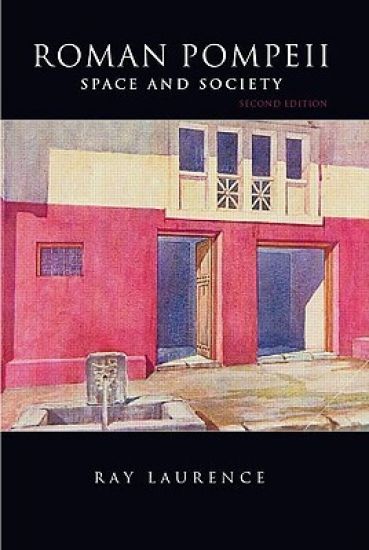
In this fully revised and updated edition of Roman Pompeii, Dr. Laurence looks at the latest archaeological and literary evidence relating to the city of Pompeii from the viewpoint of architect, geographer and social scientist.Enhancing our general understanding of the Roman world, this new edition includes new chapters that reveal how the young learnt the culture of the city and to investigate the role of property development and real estate in Pompeii’s growth. Showing how Pompeii has undergone considerable urban development, Dr. Laurence emphasizes the relationship between the fabric of the city and the society that produced it. Local activities are located in both time and space and Pompeii’s cultural identity is defined. This book is invaluable for students and scholars in the fields of archaeology and ancient history, as well as being rewarding reading for the many people who visit Pompeii.
Roman Pompeii

Roman Pompeii

Ray Laurence

Routledge
2006
nidottu
In this fully revised and updated edition of Roman Pompeii, Dr. Laurence looks at the latest archaeological and literary evidence relating to the city of Pompeii from the viewpoint of architect, geographer and social scientist.Enhancing our general understanding of the Roman world, this new edition includes new chapters that reveal how the young learnt the culture of the city and to investigate the role of property development and real estate in Pompeii’s growth. Showing how Pompeii has undergone considerable urban development, Dr. Laurence emphasizes the relationship between the fabric of the city and the society that produced it. Local activities are located in both time and space and Pompeii’s cultural identity is defined. This book is invaluable for students and scholars in the fields of archaeology and ancient history, as well as being rewarding reading for the many people who visit Pompeii.
Pompeii

Pompeii

Alex Butterworth; Ray Laurence

ORION PUBLISHING CO
2006
pokkari
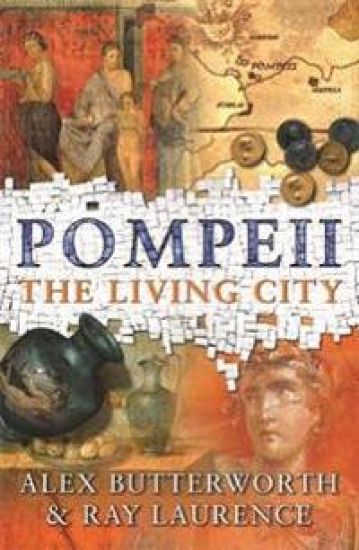
A visceral history of Pompeii - the living city brought back to life.This startling new book concentrates on the twenty years between 59 and 79AD, thus beginning with the earthquake which all but destroyed Pompeii and ending with the volcanic eruption which has become part of our collective popular imagination.Alex Butterworth and Ray Laurence have synthesised the latest research into Pompeii to bring this period of flux and instability back to life. By concentrating on key members from each strata of Pompeiian society we are plunged into the everyday life of a city rebuilding itself, in the knowledge that it will all be for nothing when Vesuvius erupts. So we follow Suedius Clemens who has been sent by Vespasian to settle disputes over land; Decimus Satrius Lucretius Valens who is set to join Pompeii's elite magistrates following the death of his protector; the Vettii brothers who were fabulously rich and ostentacious dealers in wine and perfume; Pherusa, the runaway slave; lusty young Rustus who is contemplating parricide...
Growing Up and Growing Old in Ancient Rome

Growing Up and Growing Old in Ancient Rome

Mary Harlow; Ray Laurence

Routledge
2001
sidottu
Throughout history, every culture has had its own ideas on what growing up and growing old means, with variations between chronological, biological and social ageing, and with different emphases on the critical stages and transitions from birth to death. This volume is the first to highlight the role of age in determining behaviour, and expectations of behaviour, across the life span of an inhabitant of ancient Rome. Drawing on developments in the social sciences, as well as ancient evidence, the authors focus on the period c.200BC - AD200, looking at childhood, the transition to adulthood, maturity, and old age. They explore how both the individual and society were involved in, and reacted to, these different stages, in terms of gender, wealth and status, and personal choice and empowerment.
Growing Up and Growing Old in Ancient Rome

Growing Up and Growing Old in Ancient Rome

Mary Harlow; Ray Laurence

Routledge
2001
nidottu
Throughout history, every culture has had its own ideas on what growing up and growing old means, with variations between chronological, biological and social ageing, and with different emphases on the critical stages and transitions from birth to death. This volume is the first to highlight the role of age in determining behaviour, and expectations of behaviour, across the life span of an inhabitant of ancient Rome. Drawing on developments in the social sciences, as well as ancient evidence, the authors focus on the period c.200BC - AD200, looking at childhood, the transition to adulthood, maturity, and old age. They explore how both the individual and society were involved in, and reacted to, these different stages, in terms of gender, wealth and status, and personal choice and empowerment.
The Roads of Roman Italy

The Roads of Roman Italy

Ray Laurence

Routledge
1999
sidottu
The Roads of Roman Italy offers a complete re-evaluation of both the evidence and the interpretation of Roman land transport. The book utilises archaeological, epigraphic and literary evidence for Roman communications, drawing on recent approaches to the human landscape developed by geographers. Among the topics considered are:* the relationship between the road and the human landscape* the administration and maintenance of the road system* the role of roads as imperial monuments* the economics of road construction and urban development.