Kirjojen hintavertailu. Mukana 12 390 323 kirjaa ja 12 kauppaa.

Kirjailija

Raymond Aron

Kirjat ja teokset yhdessä paikassa: 33 kirjaa, julkaisuja vuosilta 1960-2025, suosituimpien joukossa de Gaulle, Israel Et Les Juifs. Vertaile teosten hintoja ja tarkista saatavuus suomalaisista kirjakaupoista.

33 kirjaa

Kirjojen julkaisuhaarukka 1960-2025.

Main Currents in Sociological Thought: Volume Two
The second volume of the landmark study, examining the work of sociology's defining thinkers from the turn of the nineteenth century to the interwar periodMain Currents in Sociological Thought remains a foundational synthesis in the field. In this second and final volume of his classic survey, Raymond Aron explores the work of three figures who profoundly shaped sociology as it entered the twentieth century: Durkheim, who continued Comte's quest for a science of society and a scientific validation of morality; Pareto, the Italian "neo-Machiavellian" who emphasized the elitist character of all societies; and Weber, the German sociologist who reflected critically on the prospects for human freedom in an age of disenchantment. Bringing together penetrating intellectual portraits of these great thinkers and close readings of their most consequential texts, Main Currents in Sociological Thought highlights the historical and intellectual context within which each man wrote and draws out their works' enduring insights and influence in the field today.
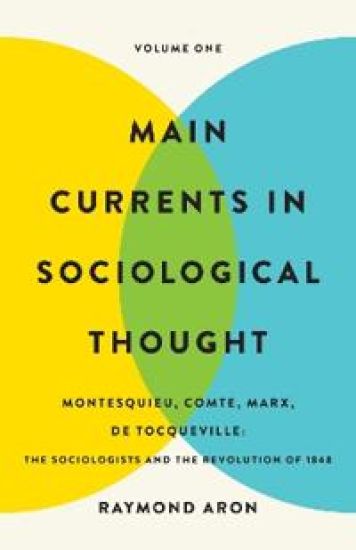
Main Currents in Sociological Thought: Volume One
The first volume of the landmark study, tracing the emergence and formation of sociological thought from the French liberal school to the Marxists Main Currents in Sociological Thought remains a foundational synthesis in the field. In this first part of his magisterial two-volume survey, Raymond Aron embraces an expansive definition of sociology that merges empirical inquiry with historical and social analysis. At its core, Aron's work is an engagement with the very question of modernity: How did the intellectual currents that emerged in the eighteenth century shape the modern political and philosophical order? With scrupulous fairness, Aron examines the thoughts and arguments of the discipline's major social thinkers to discern how they answered this question. Volume 1 explores three traditions: the French liberal school of political sociology, represented by Montesquieu and Tocqueville; the Comtean tradition, anticipating Durkheim in its elevation of social unity and consensus; and the Marxists, who posited the struggle between classes and placed their faith in historical necessity. Written with his customary lucid elegance of thought and style, Aron's work is essential reading for students across the social sciences.
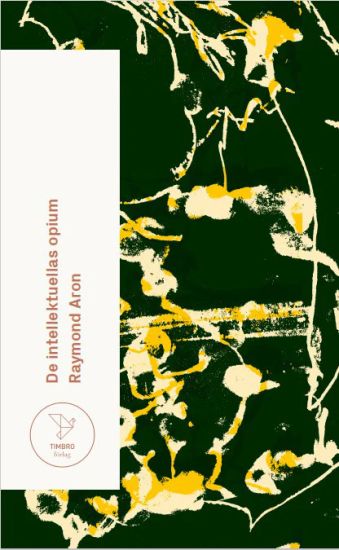
De intellektuellas opium

De intellektuellas opium

Raymond Aron

Timbro
2023
pokkari
»Det är bättre att ha fel med Sartre än att ha rätt med Aron«. Så löd ett populärt uttryck i Paris intellektuella cirklar under 1950-talet. Men det är Arons idéer som har stått emot tidens tand. Hans klassiska uppgörelse med marxismen De intellektuellas opium har översatts och kommit ut i ständigt nya upplagor världen över. Nu publiceras boken för första gången på svenska. I översättning av Bo Gustavsson.»De intellektuellas opium är en av de stora klassikerna från tiden när stalinismen av många intellektuella på allvar sågs som ett alternativ, och därtill rentav många gånger bättre, än den västerländska demokratin.«Torbjörn Elensky i bokens förord RAYMOND ARON (1905 1983) var en fransk författare, skribent och filosof, ständigt redo att ta strid mot totalitära idéer.
Liberty and Equality

Liberty and Equality

Raymond Aron

PRINCETON UNIVERSITY PRESS
2023
sidottu
An invaluable reflection on the essence of liberal democracy—and an ideal introduction to the work of political philosopher Raymond AronLiberty and Equality is the first English translation of the last lecture delivered at the Collège de France by Raymond Aron, one of the most influential political and social thinkers of the twentieth century. In this important work, the most prominent French liberal intellectual of the Cold War era presents his views on the core values of liberal democracy: liberty and equality. At the same time, he provides an ideal introduction to key aspects of his thought.Ranging from Soviet ideology to Watergate, Aron reflects on root concepts of democracy and representative government, articulates a notion of liberty or freedom as equal right as distinct from equal outcome, and discusses different kinds of liberties: personal, political, religious, and social. In search of a common truth or at least a common good, and analyzing what he perceives as the crisis of liberal democracies, Aron opens a space for reexamining the relation between liberty and equality.
Clausewitz

Clausewitz

Raymond Aron

TAYLOR FRANCIS LTD
2023
nidottu
In this edition, originally published in 1983, the late Professor Raymond Aron, one of France’s most distinguished social scientists, presented a major re-evaluation of Carl von Clausewitz, ‘the genius of war’. He sees in Clausewitz a political philosopher of major importance, whose impact and significance permeate many facets of modern society. Yet Clausewitz’s reputation was entirely posthumous, for his great work, On War, was published after his death, and in his lifetime he achieved only a limited reputation as a military thinker and planner. Even today he is more often quoted than closely read.Aron begins by elucidating the complexity of Clausewitz’s thought and by describing his main ideas. He gives an account of the successive phases in the development of On War, and traces the different interpretations of Clausewitz’s doctrine in Germany, in France and in Soviet Russia. Finally, Aron analyses many aspects of the present world using the concepts of Clausewitz, and is therefore able to examine such modern phenomena as the theory of the nuclear deterrent and ‘total war’ in Clausewitzian terms.This is a book of piercing insights by a writer of world-wide reputation, who used the Clausewitz world-view as a means of political analysis. It is thus still of great importance and interest to contemporary historians and to all who are concerned with military and political affairs.
Clausewitz

Clausewitz

Raymond Aron

TAYLOR FRANCIS LTD
2021
sidottu
In this edition, originally published in 1983, the late Professor Raymond Aron, one of France’s most distinguished social scientists, presented a major re-evaluation of Carl von Clausewitz, ‘the genius of war’. He sees in Clausewitz a political philosopher of major importance, whose impact and significance permeate many facets of modern society. Yet Clausewitz’s reputation was entirely posthumous, for his great work, On War, was published after his death, and in his lifetime he achieved only a limited reputation as a military thinker and planner. Even today he is more often quoted than closely read.Aron begins by elucidating the complexity of Clausewitz’s thought and by describing his main ideas. He gives an account of the successive phases in the development of On War, and traces the different interpretations of Clausewitz’s doctrine in Germany, in France and in Soviet Russia. Finally, Aron analyses many aspects of the present world using the concepts of Clausewitz, and is therefore able to examine such modern phenomena as the theory of the nuclear deterrent and ‘total war’ in Clausewitzian terms.This is a book of piercing insights by a writer of world-wide reputation, who used the Clausewitz world-view as a means of political analysis. It is thus still of great importance and interest to contemporary historians and to all who are concerned with military and political affairs.
Thinking Politically

Thinking Politically

Raymond Aron

Routledge
2020
sidottu
Thinking Politically brings together a series of remarkable interviews with Raymond Aron that form a political history of our time. Ranging over an entire lifetime, from his youthful experience with the rise of Nazi totalitarianism in Berlin to the denouement of the cold war, Aron meditates on the threats to liberty and reason in the bloody twentieth century. Originally published as The Commuted Observer, this volume provides one of the fullest accounts available of the dramatic events of the "short century," which began with the pistol shot in Sarajevo in 1914 and ended with the collapse of the Ideological monsters whose deadly nature Aron had ruthlessly exposed for a half-century.In addition to the interviews published in the original edition. Thinking Politically incorporates three interviews never before published in book form. This supplemental material clarifies Aron's role as a voice of prudential reason in an unreasonable age and allows unparalleled access to the principal influences on Aron's thought. The volume concludes with "Democratic States and Totalitarian States," an address by Aron to the French Philosophical Society as well as the accompanying debate with Jacques Maritaln, Victor Basch, and other intellectuals. Thinking Politically serves as an ideal gateway into Aron's reflections, and offers a superb single-volume introduction to the major events and conflicts of the twentieth century. It will be a welcome addition to the libraries of political theorists, historians, sociologists, philosophers, and citizens wishing to understand the political and intellectual currents of the age.
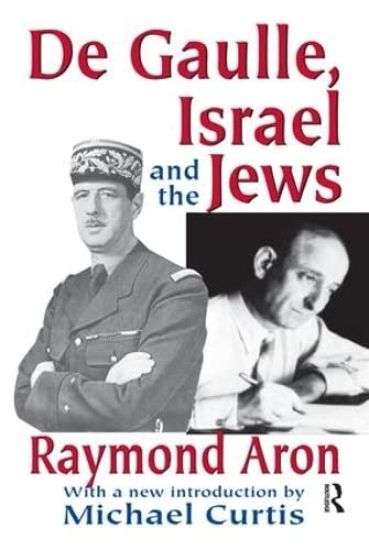
de Gaulle, Israel Et Les Juifs

de Gaulle, Israel Et Les Juifs

Raymond Aron

Les Belles Lettres
2020
nidottu
Avant d'ecrire Le Temps du soupcon, commentaire de la derniere conference de presse du President de la Republique, j'ai longuement hesite. Si certaines voix s'etaient elevees, si Francois Mauriac ou Andre Malraux avaient repondu au general de Gaulle ce qu'ils auraient repondu a tout autre homme d'Etat tenant de pareils propos, je serais reste en dehors d'un debat dans lequel je ne puis m'engager en toute serenite. Aucun des ecrivains, honneur des lettres francaises, n'a parle. Je me suis donc resolu ou resigne a plaider contre un requisitoire d'autant plus insidieux qu'il demeure camoufle. J'ai pense que ce temoignage ne prendrait sa pleine signification qu'a la condition d'y joindre les articles publies pendant la crise du printemps 1967 et deux etudes sur Israel et les Juifs, ecrites en 1960 et 1962, a l'epoque ou l'alliance franco-israelienne assurait aux Francais d'origine juive une securite morale dont les privent, aujourd'hui, les peripeties de l'Histoire. Raymond Aron, 1968 Ce livre a ete publie a la suite de la conference de presse du general de Gaulle du 27 novembre 1967 au cours de laquelle ce dernier s'exprima a propos des Juifs et d'Israel en un raccourci un peuple fier, sur de lui-meme et dominateur qui devait marquer les esprits et suscita chez Raymond Aron des reflexions restees d'actualite.
Main Currents in Sociological Thought: Volume 2
This is the second of Raymond Aron's classic two-volume survey of the sociological tradition – arguably the definitive work of its kind. Aron explores the work of three figures who profoundly shaped sociology as it entered the twentieth century: Émile Durkheim, who continued Auguste Comte's quest for a science of society and a scientific validation of morality; Vilfredo Pareto, the Italian "neo-Machiavellian" who emphasized the oligarchic or elitist character of all societies; and the German sociologist Max Weber, who reflected critically on the prospects for human freedom in an age marked by bureaucratization and rationalization. Aron presents rich portraits of these three thinkers, drawing out the enduring insights that remain in their work. At the same time he reflects critically on Durkheim's project for a science of society, Pareto's critique of humanitarianism, and Weber's tragic pessimism. Above all the book is remarkable for demonstrating Aron’s lifelong indebtedness to and divergence from the thought of Max Weber, the sociologist par excellence, in Aron's view.This Routledge Classics edition includes an introduction by Daniel J. Mahoney and Brian C. Anderson.
Main Currents in Sociological Thought
Raymond Aron's classic two-volume study of the sociological tradition is arguably the definitive work of its kind. More than a work of reconstruction, Aron's study is, at its deepest level, an engagement with the question of modernity: What constitutes the essence of the modern order that, having emerged in the eighteenth century, still shapes our experience? With scrupulous fairness, Aron examines the thought and arguments of the major social thinkers in this two volume set.Volume one explores three traditions: the French liberal school of political sociology, represented by Montesquieu and Tocqueville; the Comtean tradition, anticipating Durkheim in its its elevation of social unity and consensus; and the Marxists, who posited the struggle between classes and placed their faith in historical necessity. Volume two explores the work of three figures who profoundly shaped sociology as it entered the twentieth century: Emile Durkheim, who continued Auguste Comte's quest for a science of society and a scientific validation of morality; Vilfredo Pareto, the Italian "neo-Machiavellian" who emphasized the oligarchic or elitist character of all societies; and the German sociologist Max Weber, who reflected critically on the prospects for human freedom in an age marked by bureaucratization and rationalization.Both volumes of Main Currents of Sociological Thought are essential reading for any student of sociology, political thought and political philosophy, as well as any general reader interested in the ideas the thinkers who shaped modern social and political thought.
Main Currents in Sociological Thought: Volume 2
This is the second of Raymond Aron's classic two-volume survey of the sociological tradition – arguably the definitive work of its kind. Aron explores the work of three figures who profoundly shaped sociology as it entered the twentieth century: Émile Durkheim, who continued Auguste Comte's quest for a science of society and a scientific validation of morality; Vilfredo Pareto, the Italian "neo-Machiavellian" who emphasized the oligarchic or elitist character of all societies; and the German sociologist Max Weber, who reflected critically on the prospects for human freedom in an age marked by bureaucratization and rationalization. Aron presents rich portraits of these three thinkers, drawing out the enduring insights that remain in their work. At the same time he reflects critically on Durkheim's project for a science of society, Pareto's critique of humanitarianism, and Weber's tragic pessimism. Above all the book is remarkable for demonstrating Aron’s lifelong indebtedness to and divergence from the thought of Max Weber, the sociologist par excellence, in Aron's view.This Routledge Classics edition includes an introduction by Daniel J. Mahoney and Brian C. Anderson.
Main Currents in Sociological Thought: Volume One
This is the first part of Raymond Aron's landmark two-volume study of the sociological tradition—arguably the definitive work of its kind. More than a work of reconstruction, Aron's study is, at its deepest level, an engagement with the very question of modernity: how did the intellectual currents which emerged in the eighteenth century shape the modern political and philosophical order? With scrupulous fairness, Aron examines the thoughts and arguments of the major social thinkers to discern how they answered this question. Volume One explores three traditions: the French liberal school of political sociology, represented by Montesquieu and Tocqueville; the Comtean tradition, anticipating Durkheim in its elevation of social unity and consensus; and the Marxists, who posited the struggle between classes and placed their faith in historical necessity. In his customary clear and penetrating prose, Aron argues that each of these schools offers its own theory of the diversity of societies and that "each is inspired both by moral convictions and by scientific hypotheses."This Routledge Classics edition includes an introduction by Daniel J. Mahoney and Brian C. Anderson.
Peace and War

Peace and War

Raymond Aron

Routledge
2017
sidottu
Peace and War by Raymond Aron is one of the greatest books ever written on international relations. Aron's starting point is the state of nature that exists between nations, a condition that differs essentially from the civil state that holds within political communities. Ever keeping this brute fact about the life of nations in mind and ranging widely over political history and many disciplines, Aron develops the essential analytical tools to enable us to think clearly about the stakes and possibilities of international relations.In his first section, "Theory," Aron shows that, while international relations can be mapped, and probabilities discerned, no closed, global "science" of international relations is anything more than a mirage. In the second part, "Sociology," Aron studies the many ways various subpolitical forces influence foreign policy. He emphasizes that no rigorous determinism is at work: politics and thus the need for prudent statesmanship are inescapable in international relations. In part three, "History," Aron offers a magisterial survey of the twentieth century. He looks at key developments that have had an impact on foreign policy and the emergence of what he calls "universal history," which brings far-flung peoples into regular contact for the first time. In a final section, "Praxeology," Aron articulates a normative theory of international relations that rejects both the bleak vision of the Machiavellians, who hold that any means are legitimate, and the naivete of the idealists, who think foreign policy can be overcome.This new edition of Peace and War includes an informative introduction by Daniel J. Mahoney and Brian C. Anderson, situating Aron's thought in a new post-Cold War context, and evaluating his contribution to the study of politics and international relations.
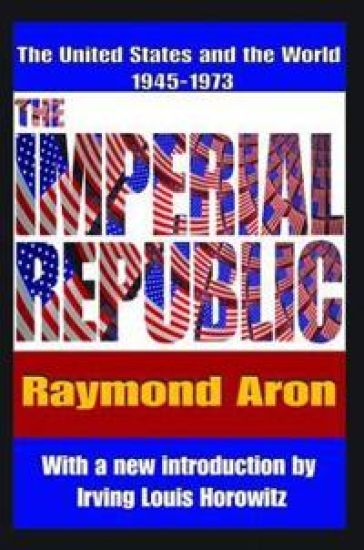
The Imperial Republic

The Imperial Republic

Raymond Aron

Routledge
2017
sidottu
The Imperial Republic based as it is on Raymond Aron's realist philosophy, is involved only indirectly or by implication in the disputes about moralism, revisionism, and even imperialism. Its main aim is to account for the diplomacy of the United States as it was in a special time period. Like all diplomacy, it can be explained only within the system of inter-state relations to which the protagonist belongs.United States diplomacy during the twenty- eight year period of 1945-73 is examined from strategic, political, and moral stand points were in diplomats openly declared their aim, and did they achieve it? Does the result justify accusations either of incompetence or of imperialism? Does not the reaction within the United States to a policy which had been a striking success now induce second thoughts about both the policy and its results? The imperial republic is trying to throw off its burden; once a missionary, it has lost the sense of mission; it is still capitalist, but its spoiled children no longer believe in money; it was puritan, but its cities abound in sex shops; it regards itself as scientific, yet mystical and nudist sects are common.The reader is not asked to endorse Aron's paradoxical interpretations, but to try to discover the reasons for any disagreement he may feel regarding differences in political judgment. People who have acquired the habit of thinking of the contemporary world in Manichaean terms-in terms of the reduction of whole populations to slavery by monsters, or in terms of capitalism, imperialism, or revisionism- may be out raged by a book that is not concerned with grounds for outrage and in which there are neither villains nor heroes; but rather with mixed messages by decent policymakers. At the time of its initial publication The Times Literary Supplement called The Imperial Republic "an important book . . . no other author does so much." It remains so!
The Opium of the Intellectuals

The Opium of the Intellectuals

Raymond Aron

Routledge
2017
sidottu
Raymond Aron's 1955 masterpiece The Opium of the Intellectuals, is one of the great works of twentieth- century political reflection. Aron shows how noble ideas can slide into the tyranny of "secular religion" and emphasizes how political thought has the profound responsibility of telling the truth about social and political reality-in all its mundane imperfections and tragic complexities.Aron explodes the three "myths" of radical thought: the Left, the Revolution, and the Proletariat. Each of these ideas, Aron shows, are ideological, mystifying rather than illuminating. He also provides a fascinating sociology of intellectual life and a powerful critique of historical determinism in the classically restrained prose for which he is justly famous.For this new edition, prepared by Daniel J. Mahoney and Brian C. Anderson as part of Transaction's ongoing "Aron Project," political scientist Harvey Mansfield provides a luminous introduction that underscores the permanent relevance of Aron's work. The new edition also includes as an appendix "Fanaticism, Prudence, and Faith," a remarkable essay that Aron wrote to defend Opium from its critics and to explain further his view of the proper role of political thinking. The book will be of interest to all students of political theory, history, and sociology.
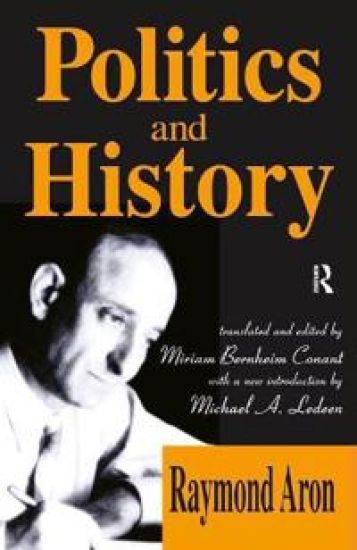
Politics and History

Politics and History

Raymond Aron

Routledge
2017
sidottu
Raymond Aron, French scholar, journalist, philosopher, sociologist, and historian, is internationally recognized as one of the great thinkers in the modern social sciences, bringing to contemporary history the insights of both philosophy and social science. This edition focuses on Aron's lifelong attempt to bridge the gap between knowledge and action and to understand the dialectical relationship between history and politics. It is an indispensable introduction to one of the most important thinkers of our century.This volume also contains an introduction by Aron, which presents an autobiographical account of his confrontation with many of the most important ideas of this century. Miriam Bernheim Conant provides perceptive commentary as well as a chronology of Aron's career and works.
De Gaulle, Israel and the Jews

De Gaulle, Israel and the Jews

Raymond Aron

Routledge
2017
sidottu
The lives of Raymond Aron and Charles de Gaulle intersected at significant moments in twentieth-century history, though they differed on many issues during World War II and over the subsequent decades. Aron, for example, distinguished between the attitude and responsibility of the Vichy government and the French Nazi collaborators in Paris, unlike de Gaulle, who regarded anyone who obeyed Marshal Petain as a traitor. In the postwar period, Aron differed from de Gaulle on a number of issues, including Algeria. But the strongest direct criticism by Aron of de Gaulle's language and policy resulted after a 1967 press conference, where he referred to Jews as "an elite people, self-assured and domineering."This comment led Aron to write DeGaulle, Israel and the Jews. Aron saw de Gaulle conflating the issues of Israel and that of French Jews, and the question of Israeli policy in 1967 and other times. He stressed the right of individuals to be, at the same time, French and Jewish, and raised the question of whether de Gaulle intended to deliver a message to the Jews in the Diaspora or simply wanted to attack those in Israel. While Aron did not accuse de Gaulle of anti-Semitism, he felt that for the first time in postwar Europe, a leader had used language that lent respectability to anti-Semitism and made it legitimate.De Gaulle, Israel and the Jews, translated from the French by John Sturrock and graced with a new introductory essay by Michael Curtis, allows us the opportunity to raise questions about de Gaulle and his policy in the Middle East. Was he anti-Semitic? What were his real attitudes and policies toward Israel, and how did they relate to his policies on the Middle East and on international affairs? This is a volume of contemporary relevance for students of political science, Middle East affairs, and international policy.