Kirjojen hintavertailu. Mukana 12 539 997 kirjaa ja 12 kauppaa.

Kirjailija

Raymond B Craib

Kirjat ja teokset yhdessä paikassa: 4 kirjaa, julkaisuja vuosilta 2004-2019, suosituimpien joukossa The Cry of the Renegade. Vertaile teosten hintoja ja tarkista saatavuus suomalaisista kirjakaupoista.

Mukana myös kirjoitusasut: Raymond B. Craib

4 kirjaa

Kirjojen julkaisuhaarukka 2004-2019.

The Cry of the Renegade

The Cry of the Renegade

Raymond B. Craib

Oxford University Press Inc
2019
nidottu
On October 1, 1920, the city of Santiago, Chile, came to a halt as tens of thousands stopped work and their daily activities to join the funeral procession of José Domingo Gómez Rojas, a 24 year old university student and acclaimed poet. Nicknamed "the firecracker poet" for his incendiary poems, such as "The Cry of the Renegade" Gómez Rojas was a member of the University of Chile's student federation (the FECh) which had come under repeated attack for its critiques of Chile's political system and ruling parties. Government officials accused the FECh's leaders of being advocates for the destruction of the social order, subversives who had the temerity to question national policy making, and insolent youths who did not know their place. Arrested for alleged sedition as part of a five-month-long "prosecution of subversives," Gómez Rojas joined other students and workers in Santiago's prison system. He never left. After two months in police custody, he died in Santiago's asylum, quickly to be reborn as a political martyr for students and workers alike. This microhistory recovers the context within which Gómez Rojas's arrest, imprisonment, and death unfolded and the experiences of men he counted as friends, comrades, colleagues, mentors, and pupils. Fifty years before the much-heralded student movements of 1968, Raymond Craib shows, university students and workers were active political collaborators and radicalized political subjects. In interwar Chile, members of Chile's sizeable working class marched side-by-side with students from the FECh. At the same time, increasingly radicalized university students, as well as former students, workers, and worker-intellectuals, gathered together to talk, read, and find common cause. Members of what Craib calls a "capacious Left" they shared a wide-ranging interest in works of sociology and political theory, a penchant for poetry, and an eclectic embrace of anarchist, socialist, and communist principles and practices. They also shared the experience of repression, an experience that ultimately cost Gómez Rojas his life and marked an entire generation of political organizers and agitators, including future president Salvador Allende and poet Pablo Neruda.
The Cry of the Renegade

The Cry of the Renegade

Raymond B. Craib

Oxford University Press Inc
2016
sidottu
On October 1, 1920, the city of Santiago, Chile, came to a halt as tens of thousands stopped work and their daily activities to join the funeral procession of José Domingo Gómez Rojas, a 24 year old university student and acclaimed poet. Nicknamed "the firecracker poet" for his incendiary poems, such as "The Cry of the Renegade", Gómez Rojas was a member of the University of Chile's student federation (the FECh) which had come under repeated attack for its critiques of Chile's political system and ruling parties. Government officials accused the FECh's leaders of being advocates for the destruction of the social order, subversives who had the temerity to question national policy making, and insolent youths who did not know their place. Arrested for alleged sedition as part of a five-month-long "prosecution of subversives", Gómez Rojas joined other students and workers in Santiago's prison system. He never left. After two months in police custody, he died in Santiago's asylum, quickly to be reborn as a political martyr for students and workers alike. This microhistory recovers the context within which Gómez Rojas's arrest, imprisonment, and death unfolded and the experiences of men he counted as friends, comrades, colleagues, mentors, and pupils. Fifty years before the much-heralded student movements of 1968, Raymond Craib shows, university students and workers were active political collaborators and radicalized political subjects. In interwar Chile, members of Chile's sizeable working class marched side-by-side with students from the FECh. At the same time, increasingly radicalized university students, as well as former students, workers, and worker-intellectuals, gathered together to talk, read, and find common cause. Members of what Craib calls a "capacious Left", they shared a wide-ranging interest in works of sociology and political theory, a penchant for poetry, and an eclectic embrace of anarchist, socialist, and communist principles and practices. They also shared the experience of repression, an experience that ultimately cost Gómez Rojas his life and marked an entire generation of political organizers and agitators, including future president Salvador Allende and poet Pablo Neruda.
Cartographic Mexico

Cartographic Mexico

Raymond B Craib

Duke University Press
2004
sidottu
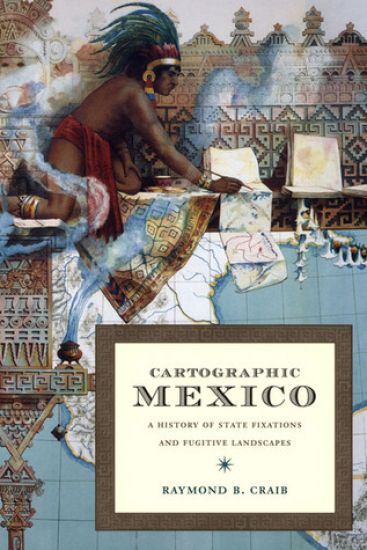
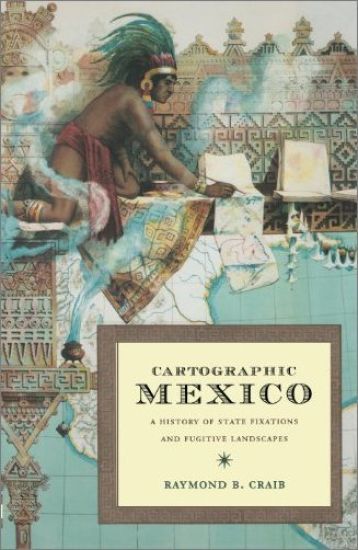
In Cartographic Mexico, Raymond B. Craib analyzes the powerful role cartographic routines such as exploration, surveying, and mapmaking played in the creation of the modern Mexican state in the nineteenth and early twentieth centuries. Such routines were part of a federal obsession-or “state fixation”-with determining and “fixing” geographic points, lines, and names in order to facilitate economic development and political administration. As well as analyzing the maps that resulted from such routines, Craib examines in close detail the processes that eventually generated them. Taking central Veracruz as a case in point, he shows how in the field, agrarian officials, military surveyors, and metropolitan geographers traversed a “fugitive landscape” of overlapping jurisdictions and use rights, ambiguous borders, shifting place names, and villagers with their own conceptions of history and territory. Drawing on an array of sources-including maps, letters from peasants, official reports, and surveyors’ journals and correspondence-Craib follows the everyday, contested processes through which officials attempted to redefine and codify such fugitive landscapes in struggle with the villagers they encountered in the field. In the process, he vividly demonstrates how surveying and mapmaking were never mere technical procedures: they were, and remain to this day, profoundly social and political practices in which surveyors, landowners, agrarian bureaucrats, and peasants all played powerful and complex roles.
Cartographic Mexico

Cartographic Mexico

Raymond B Craib

Duke University Press
2004
pokkari
In Cartographic Mexico, Raymond B. Craib analyzes the powerful role cartographic routines such as exploration, surveying, and mapmaking played in the creation of the modern Mexican state in the nineteenth and early twentieth centuries. Such routines were part of a federal obsession-or “state fixation”-with determining and “fixing” geographic points, lines, and names in order to facilitate economic development and political administration. As well as analyzing the maps that resulted from such routines, Craib examines in close detail the processes that eventually generated them. Taking central Veracruz as a case in point, he shows how in the field, agrarian officials, military surveyors, and metropolitan geographers traversed a “fugitive landscape” of overlapping jurisdictions and use rights, ambiguous borders, shifting place names, and villagers with their own conceptions of history and territory. Drawing on an array of sources-including maps, letters from peasants, official reports, and surveyors’ journals and correspondence-Craib follows the everyday, contested processes through which officials attempted to redefine and codify such fugitive landscapes in struggle with the villagers they encountered in the field. In the process, he vividly demonstrates how surveying and mapmaking were never mere technical procedures: they were, and remain to this day, profoundly social and political practices in which surveyors, landowners, agrarian bureaucrats, and peasants all played powerful and complex roles.