Kirjojen hintavertailu. Mukana 12 245 795 kirjaa ja 12 kauppaa.

Kirjailija

Raymond E. Brown

Kirjat ja teokset yhdessä paikassa: 25 kirjaa, julkaisuja vuosilta 1970-2024, suosituimpien joukossa The Community of the Beloved Disciple. Vertaile teosten hintoja ja tarkista saatavuus suomalaisista kirjakaupoista.

Mukana myös kirjoitusasut: Raymond E Brown

25 kirjaa

Kirjojen julkaisuhaarukka 1970-2024.

The Community of the Beloved Disciple

The Community of the Beloved Disciple

Raymond E. Brown

PAULIST PRESS INTERNATIONAL,U.S.
2024
nidottu
This study in Johannine ecclesiology reconstructs the history of one Christian community in the first century, a community whose life from its inception to its last hour is reflected in the Gospel and Epistles of John. It was a community that struggled with the world and eventually among its own ranks, not unlike the Church of today. Pulling together twenty-five years of Brown's research into the Johannine corpus, this book explains why Brown called Johannine thought "the most adventuresome theology in the New Testament." In a new introduction to the book, Paul N. Anderson provides an updated overview of the book's receptions and further developments in Johannine scholarship.Endorsements"The Community of the Beloved Disciple is one of the most influential works of twentieth-century Johannine scholarship. This new printing, assisted by Paul Anderson's helpful introduction, is poised to inspire another generation of students and scholars."—Christopher W. Skinner, Loyola University Chicago "The Community of the Beloved Disciple encapsulates much of Raymond Brown's work on the Fourth Gospel and the Johannine Epistles and continues to stimulate scholarly debate, as the useful introduction by Paul Anderson indicates."—Harold Attridge, Sterling Professor of Divinity, Emeritus, Yale University Divinity School"This new edition makes Raymond Brown's seminal work on Johannine literature available to the next generation of interpreters. Paul Anderson's introduction articulates the historical context and novel insights of Brown's work, making this volume a staple of contemporary study."—Sherri Brown, professor of New Testament, Creighton University, Omaha, NebraskaRaymond E. Brown, PSS (1928–1998), remains one of the best-known Johannine scholars in the world for his reconstruction of the community behind the Gospel and Epistles of John. He was the first Catholic professor to obtain tenure at Union Theological Seminary in New York City, where he taught for twenty years, and one of the first Catholic scholars to make extensive use of the historical critical method.Paul N. Anderson serves as professor of biblical and Quaker studies at George Fox University and as extraordinary professor of religion at the North-West University of Potchefstroom.†
An Introduction to the New Testament

An Introduction to the New Testament

Raymond E. Brown

Yale University Press
2016
pokkari
A long-awaited abridgement of Raymond Brown’s classic and best-selling introduction to the New Testament Since its publication in 1997, Raymond Brown’s Introduction to the New Testament has been widely embraced by modern readers seeking to understand the Christian Bible. Acknowledged as a paragon of New Testament studies in his lifetime, Brown was a gifted communicator who wrote with ease and clarity. Abridged by Marion Soards, who worked with Brown on the original text, this new, concise version maintains the essence and centrist interpretation of the original without tampering with Brown’s perspective, insights, or conclusions. The biblical writings themselves remain the focus, but there are also chapters dealing with the nature, origin, and interpretation of the New Testament texts, as well as chapters concerning the political, social, religious, and philosophical world of antiquity. Furthermore, augmenting Brown’s commentary on the New Testament itself are topics such as the Gospels’ relationship to one another; the form and function of ancient letters; Paul’s thought and life, along with his motivation, legacy, and theology; a reflection on the historical Jesus; and a survey of relevant Jewish and Christian writings. This comprehensive, reliable, and authoritative guidebook is now more accessible for novices, general readers, Bible study groups, ministers, scholars, and students alike.
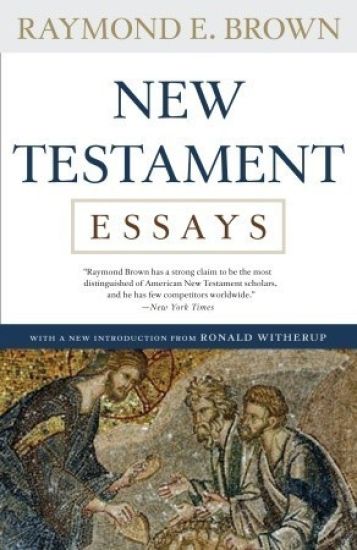
New Testament Essays

New Testament Essays

Raymond E. Brown

Image Books
2010
nidottu
Over the past fity years the Roman Catholic Church's understanding of the Bible opened up to modern scholarship in a way never before imaginable, and at the center of this shift is Raymond Brown. Today, both academic and general readers continue to find insight and inspiration in his publications. New Testament Essays brings together fourteen of Brown's early works on subjects ranging from the ecumenical possibilities raised by historical study of the Bible to the relationship between faith and biblical research to the theology and history of the Gospel of John, concisely capturing many of Brown's major concerns in the clear and accessible voice for which he was so beloved. Brown had a gift for bringing insightful scholarship to a wide audience, as this collection makes clear, and his work ultimately shows that, rather than posing a challenge to faith, historical criticism of Scripture provides a path to deeper understanding of the Word of God and its implications for the modern world. In this new edition of New Testament Essays, Father Ronald Witherup, Brown's colleague, provides an introduction describing Brown's life and work, his impact on biblical studies, and his powerful legacy.
The Sensus Plenior of Sacred Scripture

The Sensus Plenior of Sacred Scripture

Raymond E Brown

Wipf Stock Publishers
2008
pokkari
Raymond E. Brown (1928 - 1998), a Sulpician priest, was Auburn Distinguished Professor Emeritus of Biblical Studies at Union Theological Seminary, New York. He was twice appointed a member of the Pontifical Biblical Commission, by Pope Paul VI in 1972 and by Pope John Paul II in 1996. He wrote extensively on the Bible and was known worldwide as an expert in Johannine literature.
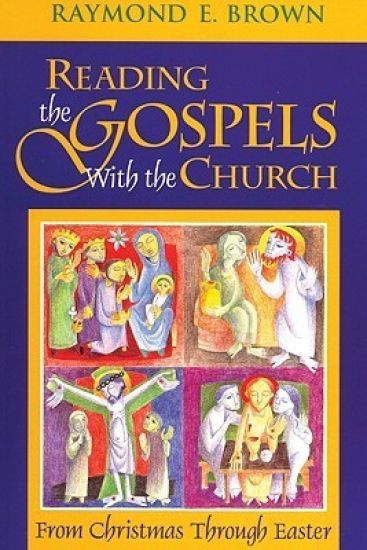
Reading the Gospels with the Church

Reading the Gospels with the Church

Raymond E Brown

Wipf Stock Publishers
2008
pokkari
What is the best way of getting interested in Bible reading? Why not start with the passages that the Church reads to us in the seasons dedicated to the great events in the life of Christ: Christmas, Lent, Holy Week, and Easter? That would truly be Reading the Gospels with the Church. This book with its reflections on the Gospels of these seasons offers a wonderful entry into appreciation of the Bible. And since many mainline Churches have the same Gospel readings on Sundays, it is a book that can serve all. Time magazine called Raymond E. Brown, ""probably the premier Catholic Scripture scholar in the U.S."" Brown wrote major books on those portions of the Gospels used by the Church in its most sacred seasons, and no surer guide can be found to their wealth. Best of all, he here digests his thought in the attractive syle employed in Catholic Update--a style aimed at enabling all to understand. This book is a fascinating introduction to the riches of the Gospels. Raymond E. Brown (1928 - 1998), a Sulpician priest, was Auburn Distinguished Professor Emeritus of Biblical Studies at Union Theological Seminary, New York. He was twice appointed a member of the Pontifical Biblical Commission, by Pope Paul VI in 1972 and by Pope John Paul II in 1996. He wrote extensively on the Bible and was known worldwide as an expert in Johannine literature.
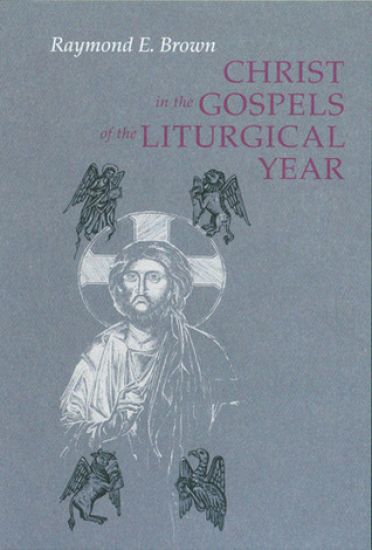
Christ in the Gospels of the Liturgical Year

Christ in the Gospels of the Liturgical Year

Raymond E. Brown

Liturgical Press
2008
pokkari
2009 Catholic Press Association Award Winner!A decade after the untimely death of renowned Scripture scholar Father Raymond E. Brown, SS, he continues to inspire and inform scholars and preachers, students and pastoral ministers, lay and ordained. It was only days after Father Brown's death that his final book was published by Liturgical Press. That book, Christ in the Gospels of the Ordinary Sundays, completed his six-volume series on preaching the Scriptures, a series that had begun in the mid-1970s with the publication of his popular An Adult Christ at Christmas. Those six volumes are collected here in one convenient commemorative edition to mark the tenth anniversary of Brown's death. Brown's work is left largely untouched, and readers will find that his wisdom is lasting. Yet Brown, being a scholar's scholar, would recognize the need for some enhancement in a work being republished some thirty years after the first volume appeared. Appropriately, then, this edition contains introductory essays by Brown's colleagues and friends John R. Donahue, SJ, and Ronald D. Witherup, SS, as well as useful indexes and a bibliography of resources for preaching the word of God in the context of the lectionary.As Witherup notes in his preface, Brown had the rare capacity to simplify complex biblical studies in a manner that did not 'dumb down ' the material but allowed it to be understood by a wide audience. . . . He did this in a fashion that was both inspiring and educational. That very broad audience 'those who grew up with Brown, so to speak, as well as a whole new generation of readers and preachers of the word 'will find this book to be a source of inspiration and knowledge that they will turn to again and again.Raymond E.Brown, S.S., (1928 -1998) was the Auburn Distinguished Professor of Biblical Studies at Union Theological Seminary in New York City. He was author of some forty books on the Bible and past president of three of the most important biblical societies in the world. By appointment of two popes (Pal VI in 1972, John Paul II in 1996) Brown was a member of the Roman Pontifical Biblical Commission. Time magazine called him probably the premier Catholic Scripture scholar of the U.S.
Antioch and Rome

Antioch and Rome

Raymond E. Brown; John P. Meier

Paulist Press International,U.S.
2004
nidottu
Two major New Testament scholars use the tools of modern biblical interpretation to reconstruct the history of two of the most important Christian centers of the first-century church. †
An Introduction to the Gospel of John

An Introduction to the Gospel of John

Raymond E. Brown; Francis J. Moloney

Yale University Press
2003
sidottu
When Raymond E. Brown died in 1998, less than a year after the publication of his masterpiece, An Introduction to the New Testament, he left behind a nearly completed revision of his acclaimed two-volume commentary on the Gospel of John. The manuscript, skillfully edited by Francis J. Moloney, displays the rare combination of meticulous scholarship and clear, engaging writing that made Father Brown’s books consistently outsell other works of biblical scholarship. An Introduction to the Gospel of John represents the culmination of Brown’s long and intense examination of part of the New Testament. One of the most important aspects of this new book, particularly to the scholarly community, is how it differs from the original commentary in several important ways. It presents, for example, a new perspective on the historical development of the Gospels, and shows how Brown decided to open his work to literary readings of the text, rather than relying primarily on the historical, which informed the original volumes. In addition, there is an entire section devoted to Christology, absent in the original, as well as a magisterial new section on the representation of Jews in the Gospel of John.
Biblical Exegesis and Church Doctrine

Biblical Exegesis and Church Doctrine

Raymond E Brown

Wipf Stock Publishers
2002
pokkari
In Roman Catholic circles the novelty of contemporary scripture interpretation has been grasped on a surface level. Clearly, to most scholars, the gospels were not written by eyewitnesses and are not necessarily literal accounts of Jesus' words. Scholars assert that the Bible is a diversified library and not necessarily all history, and that many of the dogmas of the church go beyond what the original biblical authors and audience would have thought. To some liberally minded Catholics these assertions lessen the authority of doctrine and free them to search out totally new positions while ignoring what has been traditionally taught. To some more conservatively minded Catholics, horrified by the possibility of doctrinal breakdown, the only answer is to reject contemporary biblical exegesis with its historical and critical components and to hold on stubbornly to past attitudes toward scripture as if such attitudes were themselves doctrine. This book argues that neither reaction has grasped the novelty of scripture interpretation at a depth level. Centrist Catholic New Testament interpretation, while firm in its historical approach to the scriptures, often detects lines of development that form an intelligible connective between the biblical period and the doctrines of the later church. Indeed the implications of such a centrist exegesis place the authority for doctrine where it has always been in genuine Catholic thought (as opposed to biblical fundamentalism): not in the book but in the church interpreting the book. As it faces new situations, the church under the guidance of the Spirit gains new insights into the revelation to which the Bible bears witness.
The Death of the Messiah, From Gethsemane to the Grave, Volume 2
Over his illustrious career, Raymond E. Brown, S.S., Ph.D., was internationally regarded as a dean of New Testament scholars. He was Auburn Distinguished Professor Emeritus of Biblical Studies at Union Theological Seminary in New York City. He received over thirty honorary degrees from Catholic and Protestant universities worldwide, and was elected a (Corresponding) Fellow of the British Academy and a member of the American Academy of Arts and Sciences.In addition to serving as president of the Society of Biblical Literature, the Catholic Biblical Association, and the Society of New Testament Studies, two popes appointed Father Brown as the sole American on the Pontifical Biblical Commission. Some of the best known of his more than thirty-five books on the Bible are three volumes in the "Anchor Bible" series on the Gospel and Epistles of John, as well as the Anchor Bible Reference Library volumes "The Birth of the Messiah", "The Death of the Messiah", and "An Introduction to the New Testament", winner of the 1998 Catholic Press Association Award for Biblical Studies. Father Brown's untimely death on August 8, 1998, saddened all who knew him.
The Death of the Messiah, From Gethsemane to the Grave, Volume 1
Over his illustrious career, Raymond E. Brown, S.S., Ph.D., was internationally regarded as a dean of New Testament scholars. He was Auburn Distinguished Professor Emeritus of Biblical Studies at Union Theological Seminary in New York City. He received over thirty honorary degrees from Catholic and Protestant universities worldwide, and was elected a (Corresponding) Fellow of the British Academy and a member of the American Academy of Arts and Sciences.In addition to serving as president of the Society of Biblical Literature, the Catholic Biblical Association, and the Society of New Testament Studies, two popes appointed Father Brown as the sole American on the Pontifical Biblical Commission. Some of the best known of his more than thirty-five books on the Bible are three volumes in the "Anchor Bible" series on the Gospel and Epistles of John, as well as the Anchor Bible Reference Library volumes "The Birth of the Messiah", "The Death of the Messiah", and "An Introduction to the New Testament", winner of the 1998 Catholic Press Association Award for Biblical Studies. Father Brown's untimely death on August 8, 1998, saddened all who knew him.
Christ in the Gospels of the Ordinary Sundays

Christ in the Gospels of the Ordinary Sundays

Raymond E. Brown

Liturgical Press
1998
pokkari
In Christ in the Gospels of the Ordinary Sundays, Father Brown discusses the Gospels as they are used in the Ordinary Time." It is the time the Church treats the Gospels consecutively and in detail, with Year A of the three-year cycle taking its readings from Matthew; Year B from Mark; and Year C from Luke. Father Brown discusses how a Gospel was formed and explains what is distinctive about each of the four Gospels. Then he fits the Sunday readings, one by one, into an overall picture of each Gospel, showing how the Gospel shapes the narrative, its theological emphases, and what it says to readers. With such an overview, the Sunday selections may be read in context and interpreted in their original sequence. During Ordinary time people turn from reflecting on the mystery of Christ to considering how that mystery affects their lives. In Christ in the Gospels of the Ordinary Sundays, Father Brown provides an overview of the meaning of the Gospels during the many weeks of Ordinary Time. Chapters are "Understanding How Gospels Were Written and Their Use in the Sunday Liturgy," "The Gospel According to Matthew," "The Gospel According to Mark," "The Gospel According to Luke," and "The Gospel According to John."
An Introduction to the New Testament

An Introduction to the New Testament

Raymond E. Brown

Yale University Press
1997
sidottu
A primer to the New Testament for those new to the material or those seeking deeper insights, from a master biblical scholar “A truly magnificent book, composed by our Catholic national treasure.”—Commonweal “This judicious and reassuring approach may comfort many.”—Anthony J. Saldarini, New York Times Book Review “A tour de force.”—America From the experience of a lifetime of scholarship, preaching, teaching, and writing, Raymond E. Brown covers the entire scope of the New Testament with ease and clarity. He walks readers book by book through the basic content and issues of the New Testament. While a wealth of information is contained in these pages, the work’s most impressive features are the basic summaries of each book, a historical overview of the ancient Greco-Roman world, discussions of key theological issues, and the rich supplementary materials, such as illustrative tables, maps, bibliographies, and appendixes. Using this basic data, Brown answers questions raised by today’s readers, relates the New Testament to our modern world, and responds to controversial issues, such as those raised by the Jesus Seminar. Every generation needs a comprehensive, reliable introduction to the New Testament that opens the biblical text to the novice. Raymond E. Brown’s An Introduction to the New Testament is the most trustworthy and authoritative guidebook for a generation seeking to understand the Christian Bible. Universally acknowledged as the dean of New Testament scholarship, Father Brown is a master of his discipline at the pinnacle of his career. Who else could cover the entire scope of the New Testament with such ease and clarity? This gifted communicator conveys the heartfelt concern of a beloved teacher for his students, as he walks the reader through the basic content and issues of the New Testament. Those opening to the New Testament for the first time and those seeking deeper insights could not ask for more in a primer to the Christian Bible.
The Epistles of John

The Epistles of John

Raymond E. Brown

Yale University Press
1995
pokkari
With this study—companion to the masterful two-volume The Gospel According to John—Raymond E. Brown completed his trilogy on the Johannine corpus. Meticulous in detail, exhaustive in analysis, persuasive in argument, it examines controversies that have long troubled both biblical scholars and lay readers. Questions of authorship, composition, and dating, as well as the debate over source theories, are discussed at length; but these are kept subordinate to the overall question of meaning.What gives this commentary special interest and excitement is the bold, imaginative reconstruction of the setting of the Johannine work—in particular of the “opposition figures,” who are only dimly sketched in the Epistles—so that we see clearly that the author is writing to his flock both about the dangers and difficulties confronting them, and about the eternal life that is theirs by the gift of God. In this way, the Epistles of John become intelligible as broadsides in a critical engagement between the forces of light and darkness.In addition to his superb textual analysis of the letters, Raymond Brown has brought to life the community in which these works were formed and shaped. We are forcefully reminded that the Gospel and the Epistles were addressed to very real people living in the first century a.d., people with religious problems not unlike our own. In all respects, The Epistles of John stands out as a model of biblical scholarship and study.
The Gospel According to John (I-XII)

The Gospel According to John (I-XII)

Raymond E. Brown

Yale University Press
1995
pokkari
In the first volume of Raymond E. Brown’s magisterial three-volume commentary on the Gospel According to John, all of the major Johannine questions—of authorship, composition, dating, the relationship of John to the Synoptics (Mark, Matthew, and Luke)—are discussed. The important theories of modern biblical scholarship concerning John are weighed against the evidence given in the text and against prevailing biblical research. In sum, what is attempted is a synthesis of the major scholarly insights that bear on the Fourth Gospel. The translation—as Father Brown states at the outset—strives not for any formal beauty but rather for an accurate and contemporary version: “the simple, everyday Greek of the Gospel has been rendered into the ordinary American English of today.” The result is a translation that will strike the reader with uncommon immediacy.Father Brown also analyzes, in the appendixes, the meaning, use, and frequency of certain key words and phrases that occur in John, and examines the differences between the Johannine and Synoptic treatments of the miracle stories.The chapters of the Gospel translated here in Volume 29 (1–12) comprise the Prologue, which opens with the famous “In the beginning was the Word,” and the Book of Signs, an account of the miracles of Jesus and of his ministry.
A Once-and-Coming Spirit at Pentecost

A Once-and-Coming Spirit at Pentecost

Raymond E. Brown

Liturgical Press
1994
pokkari
Father Brown completes his look at the great seasons of the liturgical year, making the rich insights of modern biblical exegesis conveniently available to all, with this volume for the season from Easter to Pentecost.During this season the Church reads consecutively from the Acts of the Apostles, recounting the external life of the Church after Pentecost. The accompanying readings from the Gospel according to John portray the internal life of Christian disciples and promise a coming Paraclete to be sent by the Father. Father Brown's title A Once-and-Coming Spirit signifies these two great biblical sources that he reflects on. He shows how these readings speak to our time as we live out the external history of a visible Church while internally drawing life from Jesus as branches on the vine. His comments offer an opportunity to appreciate the intent of the season after Easter and to prepare ourselves for the intensified gift of the spirit at Pentecost.
A Risen Christ in Eastertime

A Risen Christ in Eastertime

Raymond E. Brown

Liturgical Press
1991
pokkari
In his other books for Advent, Christmas, and Lent published by The Liturgical Press, Father Brown has made the rich insights of modern biblical exegesis conveniently available for reflection during the great feasts of the liturgical year. Here he does the same for the Easter season by commenting on the Gospel stories of the risen Christ.Rather than focusing on the differences between the evangelists' accounts of the resurrection, Father Brown instead concentrates on how each treatment of the resurrection fits the theology and plan of its Gospel. Those people who afford the Church's liturgical calendar a major role in their spiritual life will appreciate the added meaning Father Brown infuses into these stories that dwell at the heart of our faith.
A Coming Christ in Advent

A Coming Christ in Advent

Raymond E. Brown

Liturgical Press
1988
pokkari
Father Brown reflects here not only on those annunciations of Jesus' forthcoming birth in the Gospels of Matthew and Luke, but also on the beautiful canticles, the Magnificat and the Benedictus, and on the origins of Jesus as given in the first words of the New Testament.
A Crucified Christ in Holy Week

A Crucified Christ in Holy Week

Raymond E. Brown

Liturgical Press
1986
pokkari
This best-selling book is certain to remain in the forefront of Gospel exegesis for years to come. In it, Father Brown treats the Gospels, written thirty to sixty years after the life of Christ, as reflecting considerate theological and dramatic development and not simply as literal accounts of a historical event.